


A child’s growth isn’t just about physical development. As they grow, they gradually learn to sit, stand, and walk. They start babbling and eventually form sentences. However, not all children learn these skills at the same age. So, if another child starts walking at a certain age but yours doesn’t, there’s no need to panic. As a parent, you should know at what point a delay in walking becomes a concern. Similarly, if a child reaches a certain age but still doesn’t speak, it could be a symptom of a bigger issue. Seeking medical advice on time is crucial to avoid losing valuable developmental opportunities.
Important Developmental Stages in Children
Neck Control (3-4 Months)
By three to four months, babies usually gain control over their necks. This is commonly referred to as their neck becoming strong. Premature babies may take a little longer—up to five months at most.
Sitting (6-8 Months)
By six months, most babies can sit independently, though some may take up to eight months.
Standing and Walking (12-14 Months)
By their first birthday, babies can usually stand while holding onto something and may even take a few steps. Even if they start a little late, it is normal for them to take up to 14 months to reach this stage.
However, there are other developmental factors that, if significantly delayed, require medical consultation. According to Dr. Tasnuva Khan, a pediatric consultant at Dhaka Medical College Hospital, Bangladesh, parents should pay attention to these milestones.
Fine Motor Skills and Social Interaction
By six to seven months, babies can grasp objects using their palms. However, picking up small objects takes longer, usually around 10 to 11 months. At 18 months, children can start scribbling. Social interaction is also a key aspect of development. A major part of social interaction is communication.
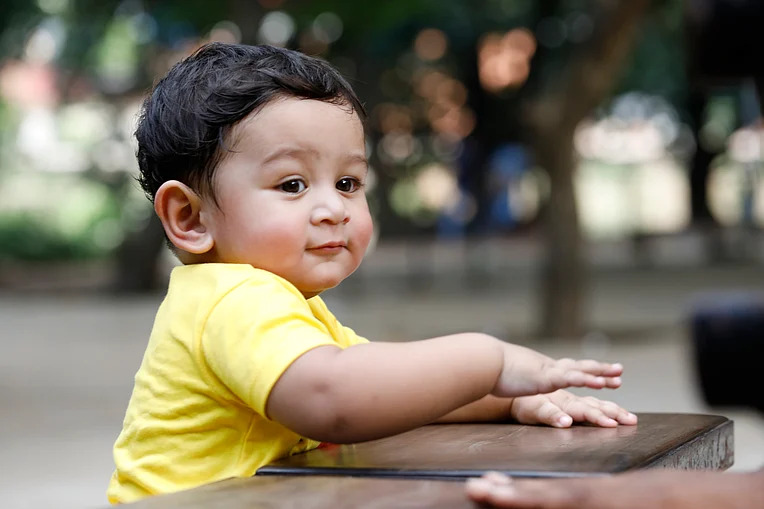
Dr. Lajina Sharmin, Associate Professor of Neurology at the Dr. M. R. Khan Children’s Hospital and Child Health Foundation in Mirpur, Dhaka, Bangladesh, explains that crying is a baby’s first language. Gradually, they begin to form words. However, not speaking at the expected age does not necessarily mean a child has autism—various factors could be responsible.
Speech Development
By three months, babies typically make cooing sounds. Around six months, they start saying simple repetitive syllables like "dada" or "baba." By the time they turn one, they usually know around ten words. By 15 months, their vocabulary expands to about 15 words. Between two and two-and-a-half years, they should be able to form simple two-word sentences.
If a child struggles at any of these stages, it could indicate hearing issues or speech development delays. Some children may compensate by using gestures instead of words. In some cases, parents unintentionally contribute to delayed speech by not engaging in conversation with their child.
The Impact of Digital Distractions
Excessive screen time is a major reason for delayed speech development. If parents speak one language while animated characters on the screen speak another, the child may struggle to decide which language to adopt. Additionally, a family history of late speech development can also be a contributing factor.
Recognizing Hearing and Vision Issues
You can observe whether your child hears properly by noticing their reaction to sounds like rattles. Similarly, by three months, babies should be able to track moving objects with their eyes. By six months, they should be able to identify the source of a sound. By their first birthday, babies start recognizing familiar people and may cry when they see a stranger, which is completely normal.
However, if a child never speaks or repeats the same words abnormally, or if they exhibit aggressive behavior, it’s important to seek medical advice promptly.