

It’s a common sight at Chinese universities to see couples studying together in quiet corners of the library or campus.
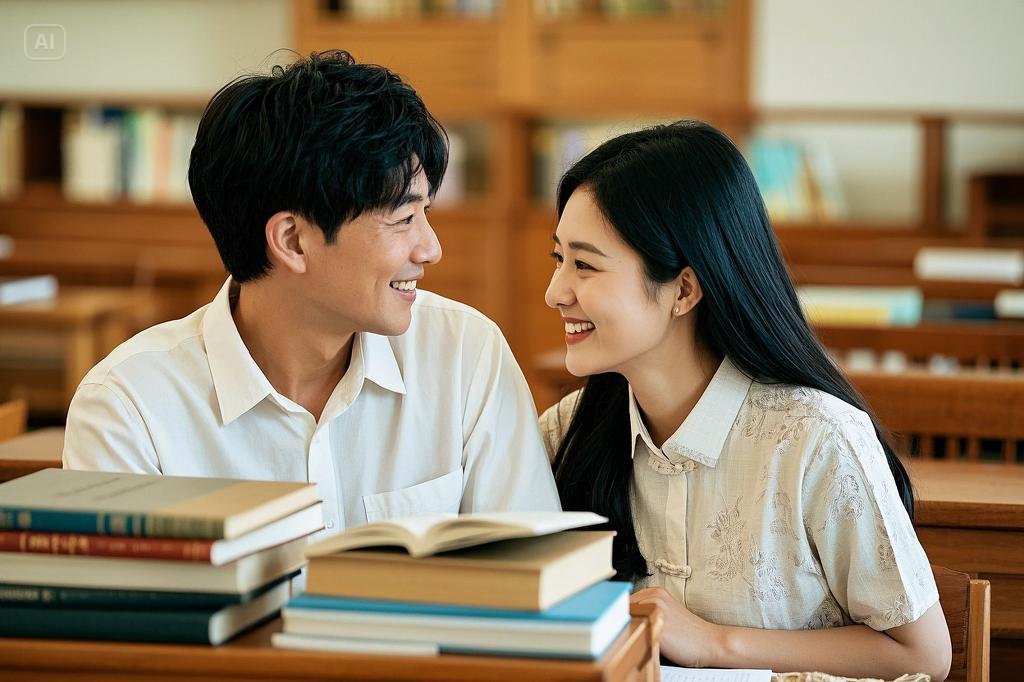
I came across this news recently: apparently, interest in marriage and having children has declined among China’s youth. In 2024, over 6.1 million couples registered their marriages across China, compared to nearly 7.68 million the previous year. Rising challenges in childrearing, high costs of education, and other factors have led young Chinese people to shy away from taking on the responsibilities of parenthood. Meanwhile, the country’s aging population continues to grow. To address this crisis, authorities are taking steps to foster positive attitudes toward marriage, love, and family life among young men and women. In fact, last year, instructions were reportedly issued to include teachings about love in college and university curricula.
So when I read this news, I became curious — were universities really teaching “love”? After some investigation, I’m sharing what I found.
Love and Happiness
Tianjin University has incorporated a course called “Love and Happiness” into its general elective curriculum. However, it’s important to note that this course doesn’t directly teach romance or marriage. Instead, it focuses on psychology and communication skills. Chinese universities seem to have realized that relationship complexities, uncontrolled emotions, or lack of communication skills negatively impact students’ academic and social lives. To address these issues, top-tier institutions like Tianjin University are placing significant emphasis on teaching “Love and Happiness.” Similar courses have also been spotted in the curricula of Wuhan University and Xiamen University.
According to China’s curriculum guidelines, students can choose courses outside their main field of study, such as sports or languages. For example, an engineering student might take additional courses from other departments. The “Love and Happiness” course falls into this category. Worth two credits, this course has already gained popularity, especially among those seeking both academic success and mental well-being. The program isn’t just about helping students find partners — it emphasizes self-love, building healthy relationships, and achieving emotional stability. On campuses, youthful energy is palpable, but like in other countries, students here also grapple with the complexities of relationships.
Socially, there aren’t many barriers to forming romantic relationships in China. In fact, once children reach adulthood, parents often ask, “Where’s your partner?” During Chinese New Year, or the Spring Festival, it’s not uncommon for young adults to introduce their significant others to their parents.
University professors in China emphasize mental health, communication skills, and regular practice of these competencies. Research shows that students in relationships experience less depression and monotony, while those searching for partners tend to feel more anxious. Courses like “Love and Happiness” use scientific methods to improve mental balance and social relationships that create a comfortable and enjoyable learning environment for students.
The Importance of Eye Contact
The environment on Chinese campuses is remarkable. Social values are prioritized, blending tradition with modernity, fostering meaningful connections between young men and women. Expressions of love are subtle yet noticeable — like sitting under a tree, enjoying nature together, or sharing meals, which plays a significant role in Chinese social life. It’s also common to see couples studying together in quiet spots on campus. Many believe romantic relationships are important for academic success because they provide mutual support in achieving goals. Teachers encourage these relationships to ensure students maintain good mental health.
However, the rise of messaging apps and social media has caused some to overlook the importance of face-to-face communication. While technology plays a crucial role in maintaining connections, in-person interactions remain vital — a realization Chinese universities have embraced. This is why they’re placing even greater emphasis on teaching communication skills.