
This is one of the hardest questions anyone can ask about God. Unbelievers throw it at us to mock the faith. “If your God knew they would burn forever, why did He make them at all?” But believers ask it too, quietly, with tears. A mother asks it while she prays for a son who wants nothing to do with Christ. A wife asks it while she sits beside a husband who laughs at the gospel. A young believer asks it after reading Romans 9 for the first time and closing the Bible because it was too heavy.
The question deserves an honest answer from the Word of God. Some soften God to make people feel comfortable. Others throw a verse at a hurting person and walk away. We will do neither. Let us go to the Scriptures and let God speak for Himself.
Did God really know before He created them?
Yes. God has never learned anything. He knew every person who would ever live, every sin they would commit, and where every soul would spend eternity, before He spoke the first word of creation. “I am God, and there is no one like Me, Declaring the end from the beginning, And from ancient times things which have not been done, Saying, ‘My purpose will be established, And I will accomplish all My good pleasure’” (Isaiah 46:9-10). David said, “In Your book were all written The days that were ordained for me, When as yet there was not one of them” (Psalm 139:16).
Some try to escape the question by saying God does not know the future, that He waits and watches like we do. Isaiah 46 shuts that door completely. A God who does not know tomorrow is not the God of the Bible.
Others, many of them our brothers who are not Reformed, say God looked ahead, saw who would freely believe and who would refuse, and simply allowed the lost to go their own way without planning it. I understand why they say it. They want to protect God’s goodness, and that is a right concern. But be honest about it. Even in their view, God still created people knowing exactly where they would end up. The question does not go away. And the Bible says more than that God simply foresaw. It says He “works all things after the counsel of His will” (Ephesians 1:11). Even the cross, the most wicked act in history, happened because Herod, Pilate, the Gentiles and the people of Israel did “whatever Your hand and Your purpose predestined to occur” (Acts 4:28). NOTHING IN THIS WORLD IS OUTSIDE GOD’S PURPOSE. So we cannot run from the question. We have to face it.
Why did God create anything at all?
Before we ask why God made the lost, we have to ask why God made anything. And the answer of the whole Bible is this. GOD CREATED ALL THINGS FOR HIS OWN GLORY.
“Worthy are You, our Lord and our God, to receive glory and honor and power; for You created all things, and because of Your will they existed, and were created.” (Revelation 4:11)
“For from Him and through Him and to Him are all things. To Him be the glory forever. Amen” (Romans 11:36). Paul says of Christ, “all things have been created through Him and for Him” (Colossians 1:16). God did not create the world because He was lonely or needed something. “Nor is He served by human hands, as though He needed anything, since He Himself gives to all people life and breath and all things” (Acts 17:25).
This is where most people go wrong from the very first step. We assume the universe exists for man. We assume the highest goal of everything is human happiness, so any person who ends up in hell must mean God failed. But the universe exists for GOD. The highest goal of everything is the display of who God is. Once we see that, the question begins to look different.
Does God owe salvation to anyone?
Here is a truth our proud hearts hate. Nobody deserves heaven. Not one person. “There is none righteous, not even one; There is none who understands, There is none who seeks for God; All have turned aside, together they have become useless; There is none who does good, There is not even one” (Romans 3:10-12). “For all have sinned and fall short of the glory of God” (Romans 3:23). “For the wages of sin is death” (Romans 6:23).
If God had sent every single human being to hell, He would have been perfectly just. He would have done no wrong to anyone. He would have given each of us exactly what we earned. So when we ask, “Why did God make people who would go to hell?” we are asking as if hell were the strange thing. But hell is exactly what sin deserves. The strange thing, the thing that should leave us on our faces, is that God saves ANYONE.
“The LORD’S lovingkindnesses indeed never cease, For His compassions never fail” (Lamentations 3:22). “He has not dealt with us according to our sins, Nor rewarded us according to our iniquities” (Psalm 103:10). Mercy by its very nature is something God does not owe. If He owed it, it would be wages. “So then it does not depend on the man who wills or the man who runs, but on God who has mercy” (Romans 9:16).
Is God then the cause of their sin?
No. And we must be very careful here, because this is where people slander God. God is holy. “Your eyes are too pure to approve evil, And You can not look on wickedness with favor” (Habakkuk 1:13). “Let no one say when he is tempted, ‘I am being tempted by God’; for God cannot be tempted by evil, and He Himself does not tempt anyone” (James 1:13). God does not reach into an innocent heart and put wickedness there.
Nobody goes to hell as an innocent victim. Every person in hell is there for their own sin, sin they loved and chose and would not let go of. “This is the judgment, that the Light has come into the world, and men loved the darkness rather than the Light, for their deeds were evil” (John 3:19). Jesus said to the religious men of His day, “You are unwilling to come to Me so that you may have life” (John 5:40). Paul says the wrath of God is revealed “against all ungodliness and unrighteousness of men who suppress the truth in unrighteousness” (Romans 1:18), and that because creation shows God’s power so clearly, “they are without excuse” (Romans 1:20). The unrepentant are “storing up wrath” for themselves (Romans 2:5). They are filling their own account.
So what does God do with the lost? He PASSES THEM BY. He leaves them in the sin they love. Three times in Romans 1 the Bible says “God gave them over” (Romans 1:24, 26, 28). He does not have to push anyone into rebellion. He only has to stop holding them back, and they run toward it with all their strength.
How God ordains all things without being guilty of sin is a deep thing, but the Bible shows us it is true. Joseph said to his brothers, “As for you, you meant evil against me, but God meant it for good” (Genesis 50:20). The same event, two purposes. They meant evil and were guilty. God meant good and was holy. And at the cross, Jesus was “delivered over by the predetermined plan and foreknowledge of God,” yet Peter still says to the crowd, “you nailed to a cross by the hands of godless men and put Him to death” (Acts 2:23). God planned it and remained righteous, while the men who carried it out were guilty of murder.
What does the Bible itself say about the lost?
We should not be afraid to read what God has written, even when it shakes us. When the question came up in Paul’s day, he did not run from it. He answered it.
Paul starts with two baby boys in the same womb. “For though the twins were not yet born and had not done anything good or bad, so that God’s purpose according to His choice would stand, not because of works but because of Him who calls, it was said to her, ‘The older will serve the younger.’ Just as it is written, ‘Jacob I loved, but Esau I hated’” (Romans 9:11-13). Before either boy did a single thing, God set His love on Jacob. Jacob did nothing to earn it, and that is the whole point. Yet Esau was no innocent. The Bible calls him a “godless person like Esau, who sold his own birthright for a single meal” (Hebrews 12:16). Jacob received mercy he never deserved, and Esau received what his own godless life deserved. Then Paul goes on.
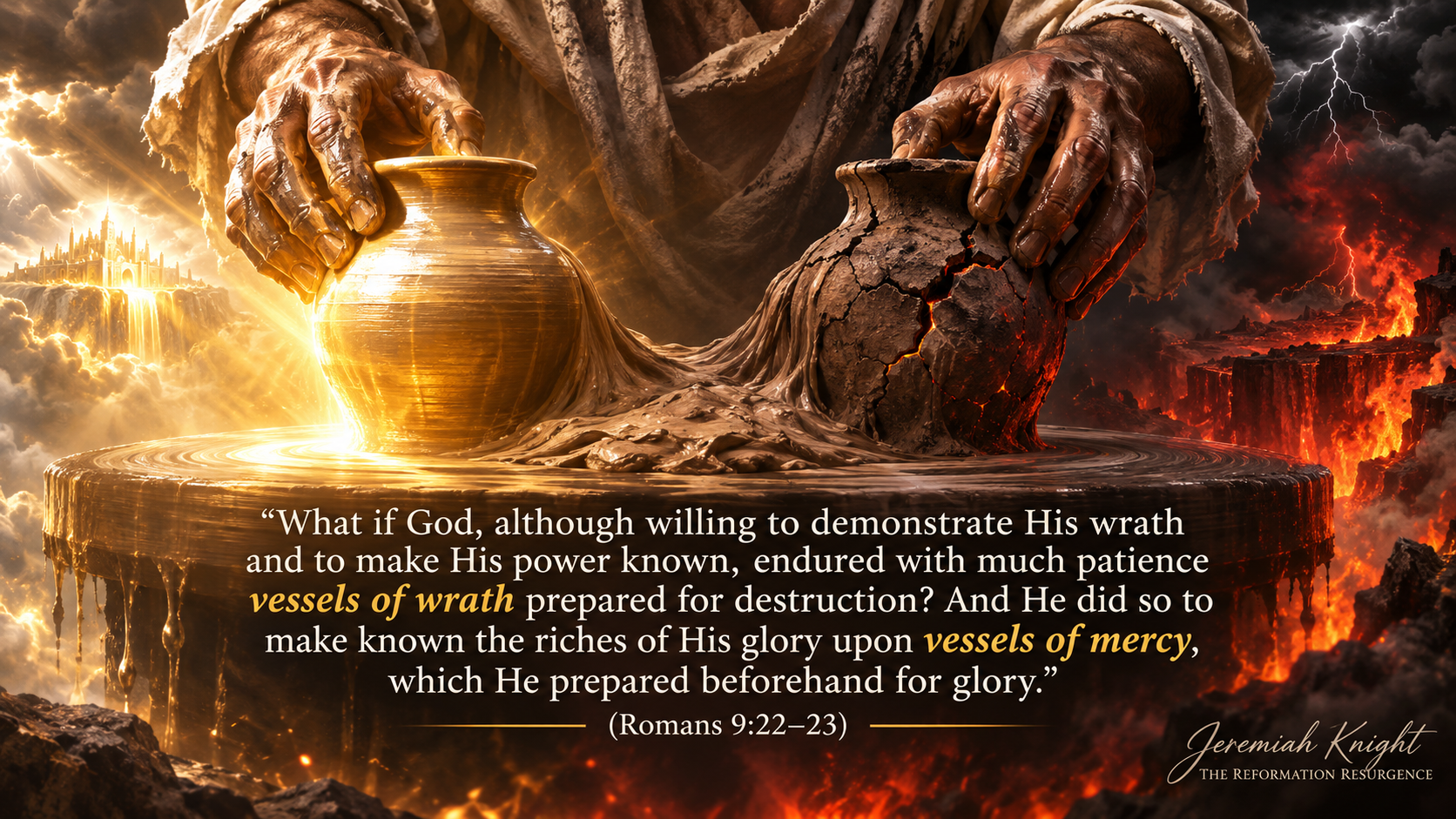
“For the Scripture says to Pharaoh, ‘For this very purpose I raised you up, to demonstrate My power in you, and that My name might be proclaimed throughout the whole earth.’ So then He has mercy on whom He desires, and He hardens whom He desires. You will say to me then, ‘Why does He still find fault? For who resists His will?’ On the contrary, who are you, O man, who answers back to God? The thing molded will not say to the molder, ‘Why did you make me like this,’ will it? Or does not the potter have a right over the clay, to make from the same lump one vessel for honorable use and another for common use? What if God, although willing to demonstrate His wrath and to make His power known, endured with much patience vessels of wrath prepared for destruction? And He did so to make known the riches of His glory upon vessels of mercy, which He prepared beforehand for glory.” (Romans 9:17-23)
Read that carefully. Paul heard the exact objection we are asking. “Why does He still find fault?” And his first answer is not a long philosophical argument. His first answer is, WHO ARE YOU, O MAN? The clay does not sit in judgment over the potter.
Notice also how carefully Paul writes. The vessels of mercy are ones “which HE prepared beforehand for glory.” God gets all the credit for every saved sinner. But the vessels of wrath are simply “prepared for destruction,” and God “endured with much patience” with them. He put up with their rebellion for years. Every saved sinner owes everything to God, and every lost sinner will have only himself to blame for his ruin.
The rest of the Bible says the same. “The LORD has made everything for its own purpose, Even the wicked for the day of evil” (Proverbs 16:4). Peter says of those who reject Christ, “they stumble because they are disobedient to the word, and to this doom they were also appointed” (1 Peter 2:8). Jude speaks of ungodly men “who were long beforehand marked out for this condemnation” (Jude 4). Notice that both Peter and Jude name the sin right beside the appointment. They stumble BECAUSE THEY ARE DISOBEDIENT. They are UNGODLY PERSONS who turn grace into sin. God’s purpose stands, and man’s guilt stands with it.
Look at JUDAS. He walked with Jesus for three years. He heard every sermon and saw every miracle. And Jesus said of him, “For indeed, the Son of Man is going as it has been determined; but woe to that man by whom He is betrayed!” (Luke 22:22). Read both halves of that verse. The betrayal was DETERMINED by God, and the betrayer still faced WOE for what he did. Jesus went further. “It would have been good for that man if he had not been born” (Mark 14:21). In His prayer to the Father He called Judas “the son of perdition, so that the Scripture would be fulfilled” (John 17:12). Jesus knew from the beginning who would betray Him (John 6:64). He chose Judas, washed his feet, and gave him bread at the table. And Judas went out into the night by his own choice, loving thirty pieces of silver more than the Son of God. If anyone wants to know how Jesus Himself thought about a man God knew would be lost, there it is.
How does hell bring glory to God?
This is the part many Christians are afraid to say out loud, but the Bible says it plainly. God’s glory is the shining out of everything He is. And God is not only loving and merciful. He is also holy and just. If no sin were ever punished, the world would never see His justice. If no sinner were ever saved, the world would never see His mercy. In the saved and the lost together, ALL OF GOD’S GLORY IS SEEN.
When God showed His glory to Moses, He said He is “compassionate and gracious, slow to anger, and abounding in lovingkindness and truth; who keeps lovingkindness for thousands, who forgives iniquity, transgression and sin; yet He will by no means leave the guilty unpunished” (Exodus 34:6-7). Both are His glory. Paul says God endured the vessels of wrath “to make known the riches of His glory upon vessels of mercy” (Romans 9:23). The saved will see what they were rescued from, and they will never stop thanking God for grace.
Think about it this way. A man pulled out of a burning house does not fully understand what he was saved from until he turns around and sees the flames. In eternity the redeemed will never once say, “I was better than them.” They will say, “I deserved the same, and He saved me anyway.” “But God, being rich in mercy, because of His great love with which He loved us, even when we were dead in our transgressions, made us alive together with Christ (by grace you have been saved)” (Ephesians 2:4-5).
And heaven itself praises God for His judgments. “Great and marvelous are Your works, O Lord God, the Almighty; Righteous and true are Your ways, King of the nations! Who will not fear, O Lord, and glorify Your name? For You alone are holy” (Revelation 15:3-4). “Hallelujah! Salvation and glory and power belong to our God; because His judgments are true and righteous” (Revelation 19:1-2). Nobody in heaven will accuse God of being unfair. Every mouth there will say He did right.
Does God enjoy sending people to hell?
No. Hear the heart of God. “‘As I live!’ declares the Lord GOD, ‘I take no pleasure in the death of the wicked, but rather that the wicked turn from his way and live. Turn back, turn back from your evil ways! Why then will you die, O house of Israel?’” (Ezekiel 33:11). Jesus cried out over Jerusalem, “How often I wanted to gather your children together, the way a hen gathers her chicks under her wings, and you were unwilling” (Matthew 23:37).
How does that fit with everything above? The Bible speaks of God’s will in two ways. There is what God COMMANDS and delights in, and there is what God has DECREED will happen. God commands all men to repent, and He takes no delight in the death of sinners in itself. Yet He has also ordained all things for His glory. The cross shows us both at once. God’s command said, “You shall not murder” (Exodus 20:13). God’s decree said His Son would be murdered. Both were true, and God was holy in both.
Some point to 2 Peter 3:9, where the Lord is “not wishing for any to perish but for all to come to repentance.” Read the verse whole. He “is patient toward YOU,” and Peter is writing to the “beloved” (2 Peter 3:8) who share his faith. God is holding back the end of the world until every last one of His people is brought in. Even if someone reads that verse as speaking of all people, it still tells us only what God takes delight in, and the Bible never says that God’s decree failed.
And look at how much kindness God pours out even on those who will never turn. “He causes His sun to rise on the evil and the good, and sends rain on the righteous and the unrighteous” (Matthew 5:45). He gives them “rains from heaven and fruitful seasons, satisfying your hearts with food and gladness” (Acts 14:17). Every breath an unbeliever takes is God’s patience. “Do you think lightly of the riches of His kindness and tolerance and patience, not knowing that the kindness of God leads you to repentance?” (Romans 2:4). No one in hell will be able to say, “I wanted to come to Christ and He turned me away.” The invitation stands open to all. “And let the one who is thirsty come; let the one who wishes take the water of life without cost” (Revelation 22:17).
Is it fair?
Paul expected this question too. “What shall we say then? There is no injustice with God, is there? May it never be!” (Romans 9:14). Abraham asked, “Shall not the Judge of all the earth deal justly?” (Genesis 18:25). He will. He always has.
Our problem is that we are sinners trying to sit on the judge’s seat over a holy God. When Job demanded answers, God did not explain Himself. He asked, “Where were you when I laid the foundation of the earth? Tell Me, if you have understanding” (Job 38:4). Job finally said, “I know that You can do all things, And that no purpose of Yours can be thwarted... Therefore I have declared that which I did not understand, Things too wonderful for me, which I did not know” (Job 42:2-3).
There are things here we will not fully understand in this life, and we must be honest enough to say so. “The secret things belong to the LORD our God, but the things revealed belong to us and to our sons forever” (Deuteronomy 29:29). God has told us enough, and where He has not told us more, we bow and trust Him.
What should this question do to us?
When someone asked Jesus a similar question, “Lord, are there just a few who are being saved?” He did not give a lecture. He turned the question back on the people standing there. “Strive to enter through the narrow door; for many, I tell you, will seek to enter and will not be able” (Luke 13:23-24).
That is what this question should do to every one of us. It should drive us to Christ. If you are reading this and you are not in Christ, stop asking about other people and look at your own soul. You do not know the secret will of God, and you do not need to. You know what He has commanded. “God is now declaring to men that all people everywhere should repent, because He has fixed a day in which He will judge the world in righteousness through a Man whom He has appointed” (Acts 17:30-31). “Seek the LORD while He may be found; Call upon Him while He is near. Let the wicked forsake his way And the unrighteous man his thoughts; And let him return to the LORD, And He will have compassion on him, And to our God, for He will abundantly pardon” (Isaiah 55:6-7). “Whoever will call on the name of the Lord will be saved” (Romans 10:13). The door is open. Come now.
Some of you will read this and a fear will grip your heart. “What if I am one of them? What if God has passed me by?” Listen carefully. You will never find the answer by trying to look into God’s secret book. You find it by looking at Christ. Jesus said, “All that the Father gives Me will come to Me, and the one who comes to Me I will certainly not cast out” (John 6:37). A heart that God has left in its sin does not long for Christ. It may fear hell, but it does not want Him. If your heart is troubled and you want Him, that is not the mark of a soul God has passed by. Of the Lord Jesus it is written, “A battered reed He will not break off, And a smoldering wick He will not put out” (Matthew 12:20). Come to Him with your fear. Then, as Peter says, “be all the more diligent to make certain about His calling and choosing you; for as long as you practice these things, you will never stumble” (2 Peter 1:10).
If you are in Christ, this question should break your pride into pieces. You were no better than the lost. You had nothing in you that made God choose you. “He chose us in Him before the foundation of the world... to the praise of the glory of His grace” (Ephesians 1:4-6). If you are saved, it is all of grace.
It should also make us preach. We do not know who God’s elect are. We do not see the names written in His book. So we preach Christ to everyone, everywhere, with tears, knowing God has His people in every nation, just as He told Paul in Corinth, “I have many people in this city” (Acts 18:10).
And for those of you carrying the weight of a lost son or daughter, a father or mother, a husband or wife, this truth does not ask you to stop feeling. Paul wrote Romans 9 with “great sorrow and unceasing grief” in his heart for his own people (Romans 9:2). The same chapter that speaks of God’s sovereign choice is soaked in Paul’s tears. Keep weeping. Keep praying. Keep speaking the gospel to them. God saves the worst of sinners, and He uses the prayers and the witness of His people to do it.
So let us examine ourselves honestly before God.
Do I believe the universe exists for God’s glory, or have I quietly made it all about man?
Do I really believe I deserved hell, or do I secretly think God owed me salvation?
When I read a hard passage like Romans 9, do I bow to it, or do I try to make it say something softer?
Have I ever thanked God that He did not pass me by?
Am I using this question as a reason to argue, or am I letting it drive me to Christ and to the lost?
God does not need our defense. He needs nothing from us. But He is worthy of our worship, both for His mercy and for His justice, and the day is coming when “every knee will bow, of those who are in heaven and on earth and under the earth, and that every tongue will confess that Jesus Christ is Lord, to the glory of God the Father” (Philippians 2:10-11).
“Oh, the depth of the riches both of the wisdom and knowledge of God! How unsearchable are His judgments and unfathomable His ways! For who has known the mind of the Lord, or who became His counselor? Or who has first given to Him that it might be paid back to him again? For from Him and through Him and to Him are all things. To Him be the glory forever. Amen.” (Romans 11:33-36)
He who has ears to hear, let him hear.