

A small note before the article
PHI is still being made from cyber cafés while I save for a laptop. If you want to help keep these essays, videos, and conversations going, I’m trying to raise $50 for this week’s work.
☕ Support PHI: Buy me a coffee
❤️ Join the PHI Patreon: Support PHI on Patreon
Even a few dollars genuinely helps me keep creating.
You are going to miss your life.
Not because you will die.
That’s obvious.
You are going to miss it because, for a large part of it, you will be somewhere else.
Waiting for something.
Thinking about something.
Worrying about something.
Remembering something.
Planning something.
You will be eating dinner while thinking about tomorrow.
You will be walking through a city while staring at your phone.
You will be talking to someone you love while thinking about the message you still need to answer.
You will be twenty-five and secretly waiting to become thirty.
You will be thirty and waiting for your career to finally begin.
You will finally make some money and immediately start worrying about having more.
You will keep telling yourself:
Later.
Later, I’ll rest.
Later, I’ll travel.
Later, I’ll call them.
Later, I’ll make the thing.
Later, I’ll become the person I want to be.
And then one day you will discover something terrifying.
Later was never a place you were going to arrive at.
It was only a word you used to escape the present.
There is something strange about being human.
We are almost always living toward a life rather than inside one.
A child wants to become an adult.
A student wants to graduate.
A graduate wants a job.
A worker wants a better job.
A poor person wants money.
A rich person wants security.
A lonely person wants love.
A person in love wants certainty.
Someone exhausted wants a holiday.
Someone on holiday starts worrying about Monday.
We keep moving the beginning of our real lives into the future.
And the future keeps moving.
Philosophers have noticed this for centuries.
The Stoics kept returning to the fragility of time.
Augustine looked backward and forward and became fascinated by the strange experience of time itself.
Heidegger made our finitude central to what it means to exist.
But you don’t need to read any of them to recognize the problem.
You have already experienced it.
You just probably called it being busy.
Think about the last ordinary day you can remember clearly.
Not your graduation.
Not your wedding.
Not a funeral.
Not the day you got your first job.
An ordinary day.
A Tuesday.
What did the air smell like?
What were you wearing?
Who did you speak to?
What did the sky look like?
What were you worried about?
You probably don’t remember.
And yet that forgotten Tuesday was once your entire present.
You lived inside it exactly as you are living inside today.
You just didn’t know it was worth remembering.
This is one of the cruelest things about life:
You rarely recognize an important moment while you are inside it.
You recognize it later.
After it has become memory.
After the person is gone.
After the house has been sold.
After the friendship has ended.
After your parents have grown older.
After the city has changed.
After you have become someone else.
Then, suddenly, an ordinary afternoon from ten years ago becomes precious.
You would give almost anything to stand inside it again.
But you can’t.
And that afternoon never knew it was your last.
Perhaps that’s why we misunderstand happiness.
We imagine happiness as something we will eventually achieve.
A condition.
A destination.
A future version of ourselves who has finally figured everything out.
But imagine reaching that person.
Imagine waking up one morning with the money you wanted.
The body you wanted.
The relationship you wanted.
The house you wanted.
The recognition you wanted.
And then discovering that you are still capable of thinking:
“What next?”
The human mind is extraordinarily good at moving the finish line.
This isn’t necessarily a flaw.
Ambition can build extraordinary things.
The problem begins when you make your entire present the price of admission for your imagined future.
You sacrifice today so that someday you can finally live.
But someday arrives carrying another tomorrow.
And another.
And another.
Until you have spent decades preparing for a life you were already living.
There is another problem.
You think you have more time than you do.
Not because you are stupid.
Because time doesn’t feel scarce while it is happening.
A minute feels almost worthless.
A day feels ordinary.
A year feels enormous.
Until you look backward.
Then ten years can collapse into a sentence:
“I can’t believe that was ten years ago.”
This is why death is not merely the end of life.
Death changes the meaning of the time before it.
If you knew exactly when you would die, every ordinary hour would suddenly become measurable.
But you don’t know.
You could have decades.
You could have much less.
Nobody gets to see the number.
So you live with the illusion of abundance.
You spend hours as though they are an infinite resource.
You postpone conversations.
You postpone courage.
You postpone creativity.
You postpone forgiveness.
You postpone living.
And the strange thing is that nobody has to steal your time from you.
You give it away one ordinary day at a time.
Look at your phone.
How many hours have disappeared into it?
Now think about the people you love.
How many hours have you actually given them your full attention?
Not physically being there.
Being there.
There is a difference.
You can sit beside someone for three hours and never really meet them.
Your body is there.
Your mind is somewhere else.
And perhaps this is one of the great tragedies of modern life.
We have become incredibly good at recording our experiences and strangely bad at experiencing them.
We photograph the sunset.
We post the meal.
We document the trip.
We tell everyone where we are.
And sometimes, in the process, we forget to actually be where we are.
We are constantly turning life into evidence that we lived it.
But evidence isn’t the same thing as experience.
So what would it mean to stop missing your life?
Not to quit your job tomorrow.
Not to abandon ambition.
Not to become some permanently peaceful person who walks barefoot through forests.
That’s another fantasy.
You will still have bills.
Responsibilities.
Deadlines.
Problems.
You will still worry.
You will still want more.
You will still waste time.
Being alive is not a mindfulness exercise.
The point is not to perfectly inhabit every second.
The point is to occasionally notice that you are here.
Really here.
When someone you love is speaking, listen.
When you’re eating, taste the food.
When you’re walking, look around.
When you make something, make it.
When you have something to say, say it.
When you need to leave, admit it.
When you love someone, don’t assume there will always be another opportunity to tell them.
You don’t have to turn every moment into something profound.
You simply have to stop treating ordinary life as though it is the waiting room for something better.
Because this is it.
Not the final version.
Not the perfect version.
Not the version you imagined when you were younger.
This.
This strange, unfinished, imperfect life.
This morning.
This conversation.
This person beside you.
This body.
This particular year that will never happen again.
And eventually, something will happen that you cannot reverse.
You will look back and realize that the period you kept complaining about was also the period you would later wish you could return to.
You will miss people you once took for granted.
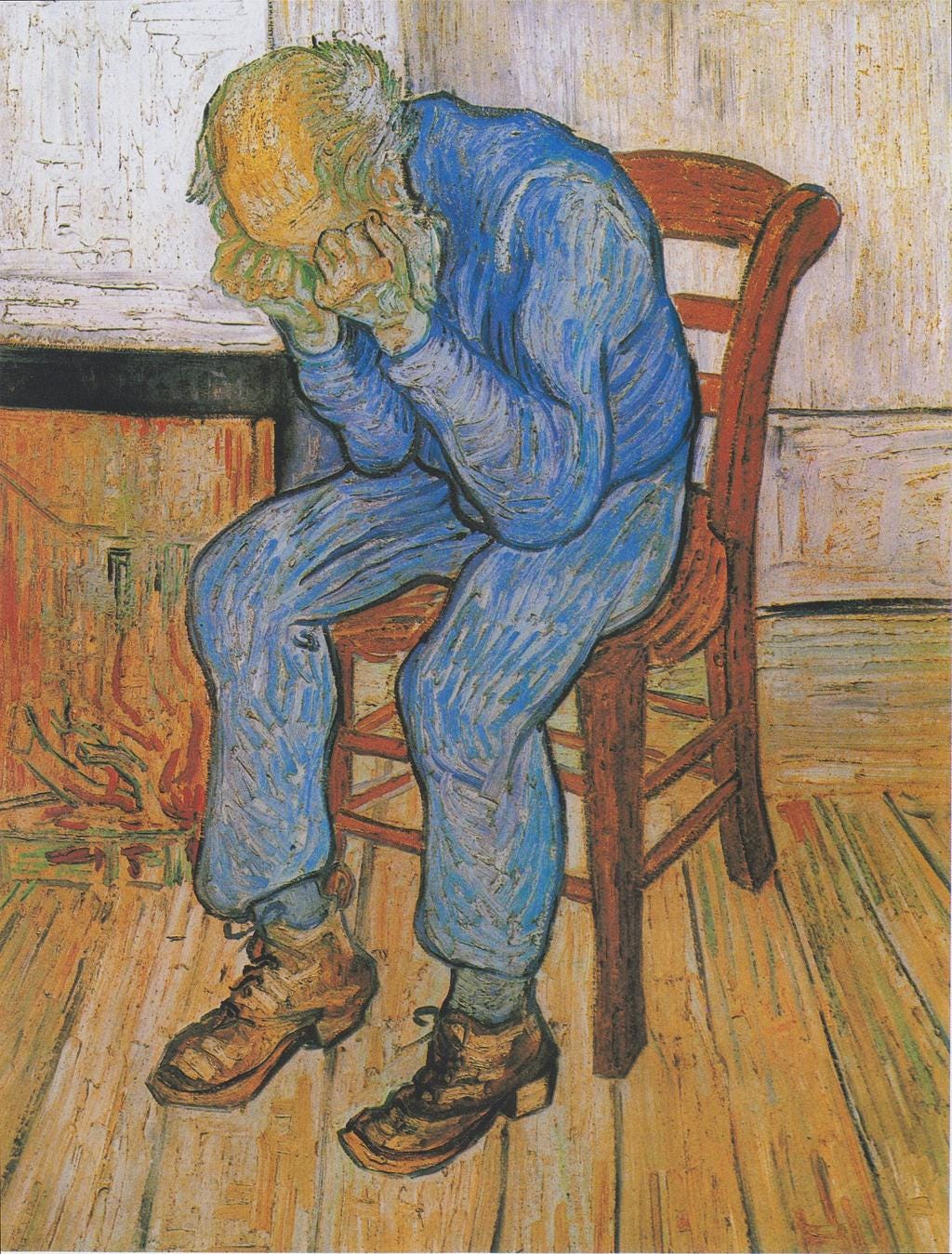 You will miss places you couldn’t wait to leave.
You will miss versions of yourself you couldn’t wait to become.
You will even miss problems that once seemed unbearable.
Not because they were good.
Because they were yours.
They belonged to a life you can no longer enter.
And perhaps this is why the present deserves more respect than we give it.
The present is the only part of your life that hasn’t become unreachable yet.
The past is closed.
The future is uncertain.
But this moment is still yours.
For a little while.
There is no guarantee that you will become everything you imagine.
There is no guarantee that your plans will work.
There is no guarantee that the person you love will stay.
There is no guarantee that you will become wealthy, famous, successful, or remembered.
There isn’t even a guarantee that you will understand your life before it ends.
But there is one thing you can be certain of:
You are spending your life right now.
Even while reading this.
A few minutes have already disappeared.
You will never get them back.
Neither will I.
And perhaps that is not a reason to panic.
Perhaps it is a reason to pay attention.
Because someday, you will have no more ordinary mornings.
No more pointless conversations.
No more boring afternoons.
No more annoying responsibilities.
No more opportunities to say:
“I’ll do it later.”
One day, there will simply be no later.
So before that day arrives, look around.
Not at the life you think you should have.
Not at the person you think you should become.
Look at the life that is actually here.
The people.
The unfinished work.
The strange little routines.
The failures.
The possibility.
The things you keep postponing.
The people you keep assuming will still be there.
And ask yourself something uncomfortable:
What if this is the part of my life I will one day miss the most?
Because it might be.
You just don’t know it yet.
And that may be the strangest thing about being alive.
You are living through memories you haven’t learned to miss yet.