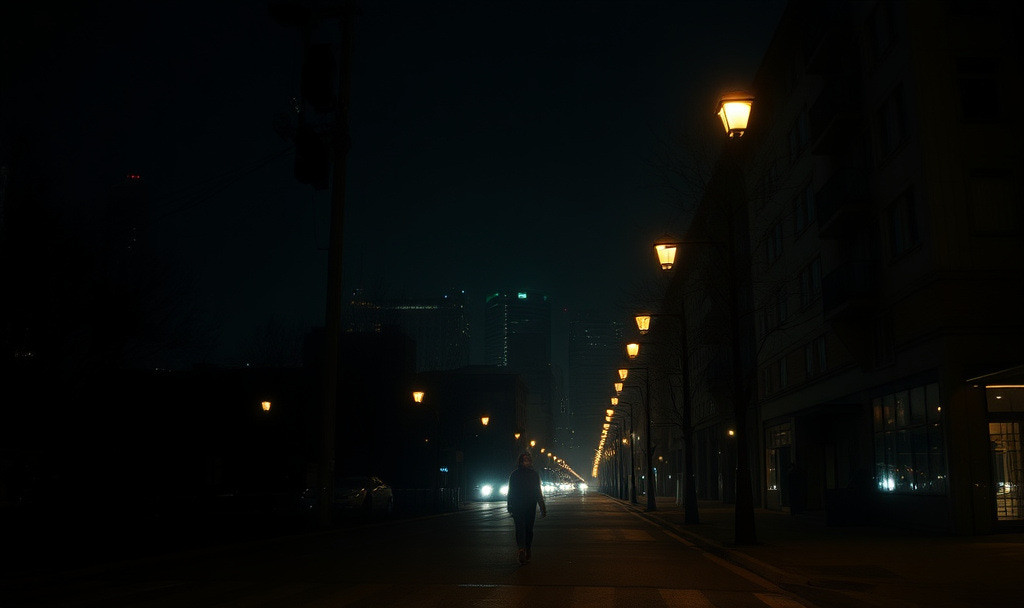

The night was thick, a velvet curtain draped over the city, muffling its heartbeat. The streetlights hummed like distant stars, flickering with the unease of truths too sharp for ordinary eyes. Mara walked alone, but not lonely. In the darkness, she felt the pulse of every question ever left unasked, every thought abandoned at the threshold of certainty.
She paused at the bridge overlooking the river, its waters black as ink. In their surface, she didn’t see herself; she saw others, fragments of lives that mirrored her own in ways she could neither reconcile nor escape. It was the same river she had crossed every day, yet today it whispered an unfamiliar certainty: everything she believed was a story, and stories were only convincing because they comforted the living.
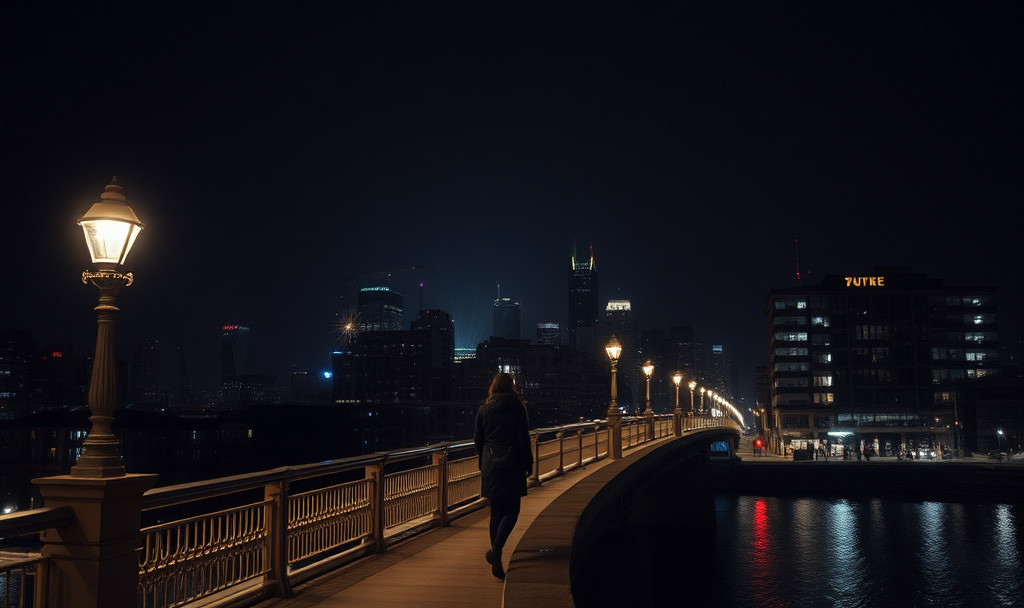
Mara remembered Heraclitus: “No man ever steps in the same river twice.” But the river laughed, or perhaps it was her mind, reminding her that even if the river changes, the same delusions persist. She felt the pull of Nietzsche, the abyss opening beneath her feet. “When you gaze long into the void, the void gazes also into you.” Mara looked down. For the first time, she realised the void wasn’t beneath her; it was inside her, stitched into every memory, every desire, every truth she had claimed as her own.
A stranger appeared, draped in a coat too heavy for the season. “Do you think we choose our lives?” the stranger asked, eyes reflecting the river’s black mirror. Mara wanted to say yes. She wanted the comfort of autonomy. Yet a small voice inside whispered Schopenhauer’s grim decree: we are puppets of our own wills, and the will itself is blind, endless, and insatiable.
The stranger smiled, as if reading her thoughts. “Or perhaps,” they said softly, “we are merely the shadows of ideas, wandering the corridors of the world in search of a light that does not exist.”
Mara shivered. She could almost hear Camus laughing from somewhere in the void. Absurdity, he had said, was the human condition, this stubborn insistence on meaning in a universe that offers none. Yet in that laughter, there was also freedom. To live fully, to embrace the unbearable weight of life without illusions. But the freedom was bitter; it demanded the courage to love the meaningless, to surrender the self that clung so desperately to narrative and identity.
She stepped closer to the river, the chill of its surface licking her skin. Every reflection was a paradox: she saw herself yet she did not; she was alive yet already dissolving into memory; she sought truth yet feared the cost of knowing it. Perhaps, she thought, this was the ultimate lesson of philosophy, that the truths that matter most are those that hurt, unsettle, and resist the comfort of comprehension.
From the darkness came a whisper: we are all walking contradictions, each step a betrayal of the step before, each choice a lie told to ourselves. Mara turned. The stranger had vanished, leaving only the river, the night, and the echo of ideas that refused resolution. And in that silence, Mara understood something terrifying and exhilarating: to think is to dwell in the in-between, to live where the answers die and the questions awaken eternally.
She walked on, not toward any destination, but deeper into the night, where stories tangled with paradoxes, and philosophy was not a lecture but a living, breathing confession of existence.