

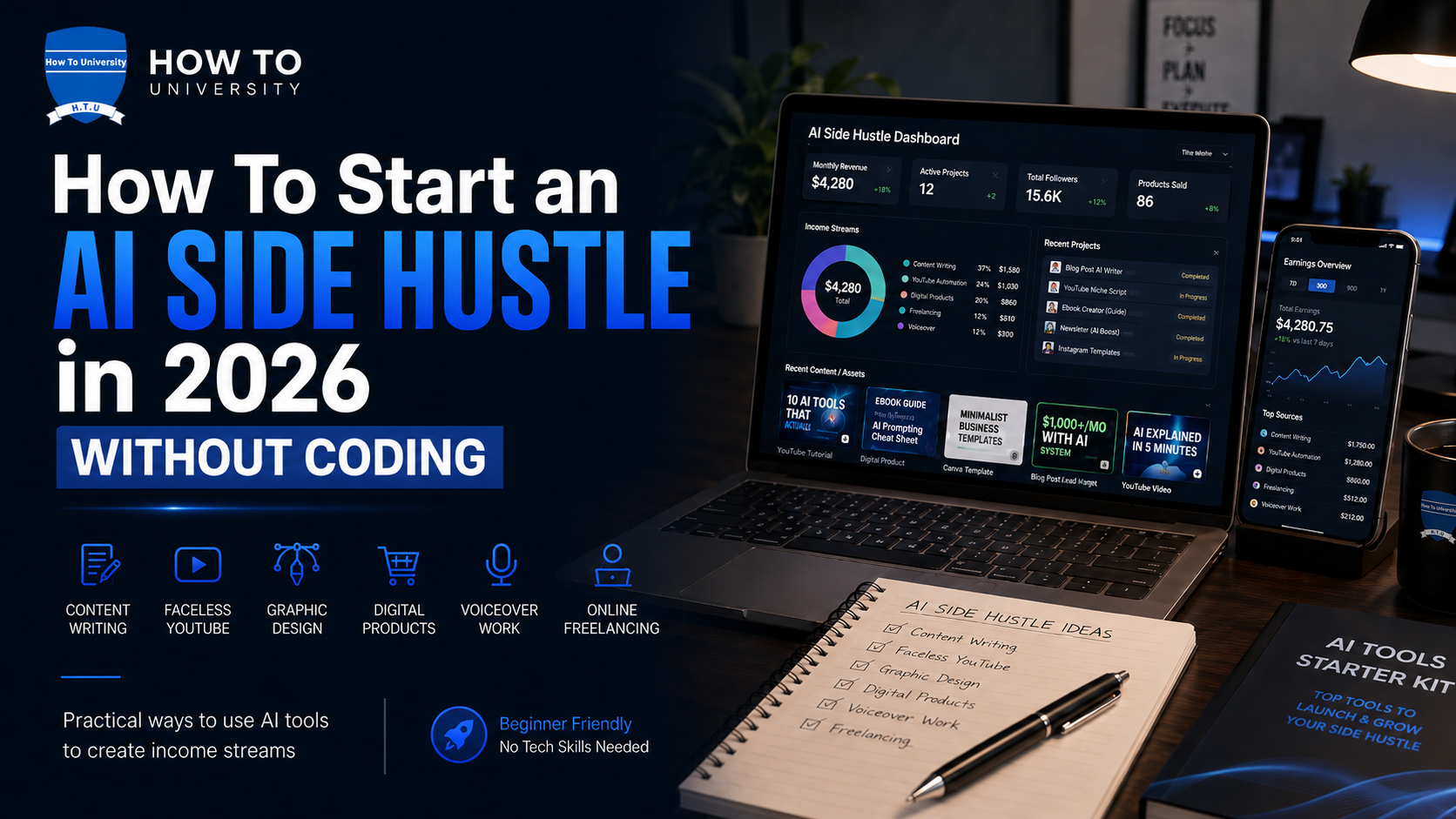
Realistic AI Side Hustles Beginners Can Start in 2026
1. AI Has Opened the Door for Regular People
Artificial intelligence has changed the way people create, sell, and offer services online. In the past, many online businesses required coding skills, expensive software, or years of technical experience. Today, a beginner can use AI tools to write content, create graphics, generate voiceovers, edit videos, build simple products, and help businesses save time. The key is not pretending AI does everything by itself. The real money comes when a person uses AI as a tool, then adds human judgment, structure, creativity, and common sense.
2. AI Content Writing Is One of the Easiest Places to Start
One of the most beginner-friendly AI side hustles is content writing. Businesses need blog posts, product descriptions, emails, video scripts, social media captions, and website copy. Many business owners do not have the time or patience to write all of that themselves. A beginner can use tools like ChatGPT, Grammarly, and Typefully to create first drafts, then clean them up so they sound natural and useful. The important part is not to copy and paste robotic AI text. You have to fix the tone, organize the ideas, add examples, and make the final piece feel like it was written for real people.
3. Faceless YouTube Channels Are Still a Real Opportunity
Faceless YouTube channels are another strong AI-powered side hustle. You do not have to appear on camera to create useful or entertaining videos. A person can choose a niche like finance, technology, storytelling, history, self-improvement, quizzes, gardening, or tutorials. AI can help write scripts, ElevenLabs can help create voiceovers, and tools like CapCut can help edit the final video. This type of side hustle requires patience because the first few videos may not perform well. But if you stay consistent, improve the quality, and keep learning what your audience responds to, a faceless channel can eventually earn through ads, affiliate links, products, or sponsorships.
4. AI Graphic Design and Video Creation Can Become Service Businesses
AI has made design and video creation faster, but it has not removed the need for taste, layout, and good judgment. People still need thumbnails, logos, flyers, social media posts, product images, short videos, ads, and promotional content. Tools like Canva, Figma, ChatGPT, and other AI design platforms can help generate ideas and speed up the process. The opportunity is in polishing the final product so it looks professional, not cheap or generic. A beginner can start small by offering YouTube thumbnails, Instagram graphics, simple promotional videos, or digital product covers for creators and small businesses.
5. AI Can Help With Dropshipping and Digital Product Sales
AI can also support e-commerce. With dropshipping, AI tools can help research product ideas, write product descriptions, create ad copy, and test marketing angles faster. The smart approach is to test several products quickly instead of betting everything on one idea. Another option is creating digital products, such as planners, worksheets, posters, templates, guides, and checklists. These products can be made with tools like Canva and ChatGPT, then sold on platforms like Etsy, Gumroad, Payhip, or a personal website. Digital products are powerful because you create them once and can sell them repeatedly.
6. Businesses Need AI Help More Than Ever
Many businesses know AI is important, but they do not know how to use it well. That creates opportunities for beginners who are willing to learn and offer simple services. You could help a local business set up an AI chatbot, automate social media posting, create basic content calendars, write email updates, translate website content, or organize customer-facing information. Tools like SocialBee, Sendible, and other automation platforms can help manage social media. AI translation and localization can help businesses reach people in different languages, but the human role is still important because translated content needs to sound natural, not stiff.
7. Professional Services Still Matter
AI can also help with practical professional services like résumés and cover letters. Many people need help presenting their skills clearly when applying for jobs. AI can create a draft, but a person still needs to shape it around the applicant’s real experience, career goals, and industry. The same idea applies to voiceover services, audiobook narration, training audio, ads, and chatbot voice training. ElevenLabs and similar tools can generate realistic voiceovers, but the person offering the service should adjust pacing, tone, pronunciation, and delivery so the final product sounds professional.
8. Pick One Hustle and Build Momentum
The biggest mistake beginners make is trying to do all 11 side hustles at once. That creates confusion and scattered effort. The better move is to pick one lane, learn the tools, create a simple offer, and get your first result. One monthly writing client, one small design customer, one digital product, or one YouTube channel can become the beginning of something bigger. AI gives you speed, but focus gives you progress. Start with one skill, practice it, improve it, and then expand once you have proof that it works.
Key Takeaways: How to Apply This in Everyday Life
Use AI as an assistant, not a replacement. Let AI help you draft, organize, brainstorm, and speed things up, but always add your own human polish.
Pick one side hustle first. Do not try writing, YouTube, dropshipping, voiceovers, and design all at the same time. Choose one and build momentum.
Start with tools you can learn quickly. ChatGPT, Canva, CapCut, Grammarly, and ElevenLabs are good beginner-friendly tools to explore.
Look for problems around you. Local businesses may need blog posts, social media help, product descriptions, simple videos, or better website content.
Create one small offer. For example: “I create YouTube thumbnails,” “I write product descriptions,” or “I turn your idea into a simple PDF guide.”
Practice with your own projects first. Build your own bio page, create your own digital product, make your own video, or write your own article before charging others.
Humanize everything AI creates. Fix the wording, remove robotic phrases, add examples, improve the structure, and make it sound natural.
Use weekends or free time wisely. Instead of just consuming content, spend one or two hours creating a digital planner, writing a sample article, or building a service portfolio.
Test before going all in. Try one service, one product, or one niche first. See what gets attention before investing too much time or money.
Think long-term. A small side hustle can become a skill, a service, a product, or eventually a full business if you keep improving.