

Global Indie Game Publishing: An Interview with Pixel Doors Co-Founder Jacek Pudlik
Notice: This interview series may contain in-game images and key details related to the game's story. If you are experiencing the game for the first time, please be mindful of potential spoilers.
Some interviews may include scenes from the game or details about the story's progression. Please keep this in mind if you wish to avoid spoilers.
The photos and interview content used in this article were provided by the creators through platforms such as Discord.
Creators are welcome to contact me for interviews regardless of their platform. Interviews can be conducted live or through a questionnaire, depending on the creator's preference!
Interview: Q (hashiruka48) / A (Jacek Pudlik Co-Founder, Pixel Doors)
Q. Introducing Jacek and Pixel Doors

First, could you introduce yourself, Jacek Pudlik, and Pixel Doors? We would also love to hear about what led you to establish Pixel Doors and what roles you and your co-founder currently have within the company.
A. I'm Jacek Pudlik, co-founder of Pixel Doors, an independent game publisher based in the Netherlands. Before deciding to go on this career adventure, I worked in production and publishing at MY.GAMES and Wargaming, including on games such as World of Warships, Armored Warfare and Conqueror's Blade.
Nic van 't Schip and I founded Pixel Doors because we wanted to put our experience to work for small studios with distinctive games. A developer can make something wonderful and still struggle to find an audience or manage the business around a release. We wanted to be the partner who helps with that while respecting the developer's independence.
My background is in production, product work and developer relationships, while Nic brings extensive experience in licensing, marketing and business development. Those strengths complement each other, and as a small team we work closely together across the company.
Q. Our publishing philosophy
Pixel Doors is primarily known as an indie game publisher rather than a game development studio. Which country is Pixel Doors based in, and what are the company's publishing vision and philosophy?
A. We are based in the Netherlands and work as a publisher, partnering with independent development teams to bring their games to players around the world.
Our philosophy is that a publishing partnership should help a studio become sustainable. That means respecting its creative vision, being clear about the business, and making decisions that support the developer's future as well as the current game. Our developers retain their IP and creative control.
We are a small indie publisher ourselves, so we understand what limited resources feel like. We focus our time on practical work that can make a difference: understanding the audience, improving how a game is presented, supporting production, and building relationships with platforms and players. We want studios to have a good reason to keep working with us on their next game.
Q. Reaching Korean players through STOVE
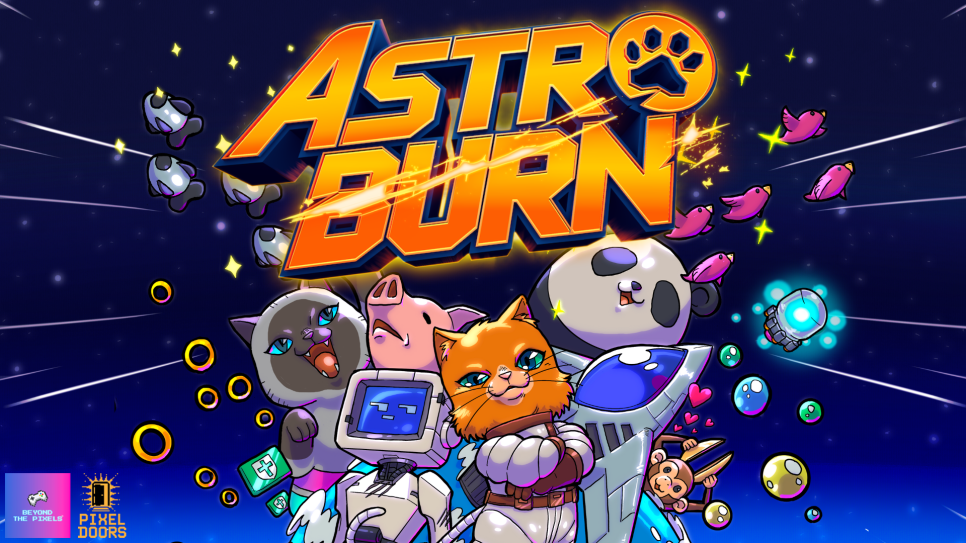
Games such as Astro Burn and Aisle Survive have been released on Korea's STOVE Store. What led Pixel Doors to choose STOVE as a new distribution platform, and what made you interested in entering the Korean market?
A. We are very excited to have our games available in Korea. STOVE gives us another way to reach players and learn which parts of our catalogue connect with its community. For a small publisher, working with a platform that can introduce our games to a local audience is valuable.
Astro Burn isespecially well suited to STOVE players. It combines colourful pixel art and a wonderfully strange space cat adventure with challengingarcade action. The cute presentation draws people in, but there areplenty of challenges for players who enjoy improving their performance. We are encouraged by the interest we are seeing.
Botlings has also just launched, and we would love Korean players to discover its take on factory automation. Botlings doesn’t support Korean yet, but we plan on adding it soon. We want to build a lasting relationship with this audience, listen to feedback, and make it easier for people to find a game they will enjoy.
Q. Our games and how we select them
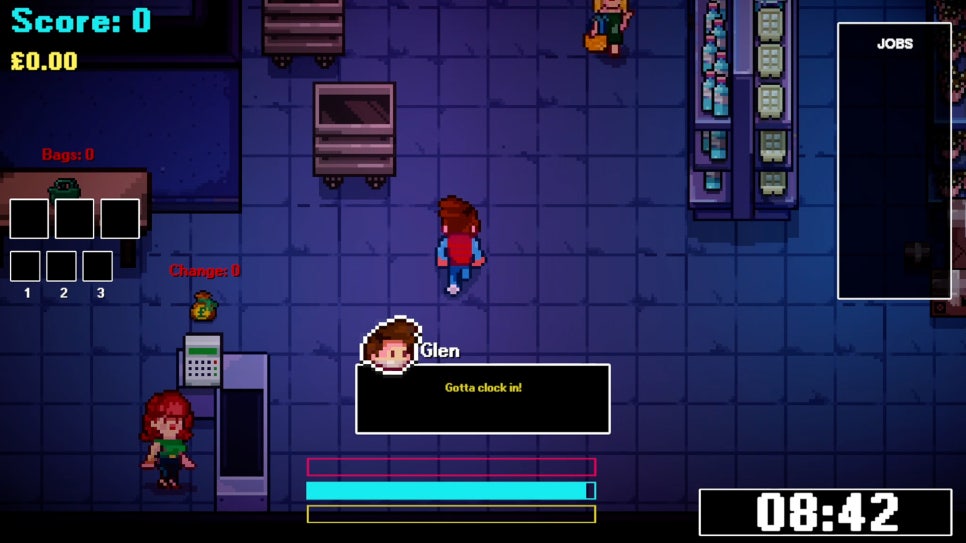
Could you introduce some of the different games currently published by Pixel Doors? How do you discover games across different genres and styles, and what are the most important factors you consider when selecting a game to publish?
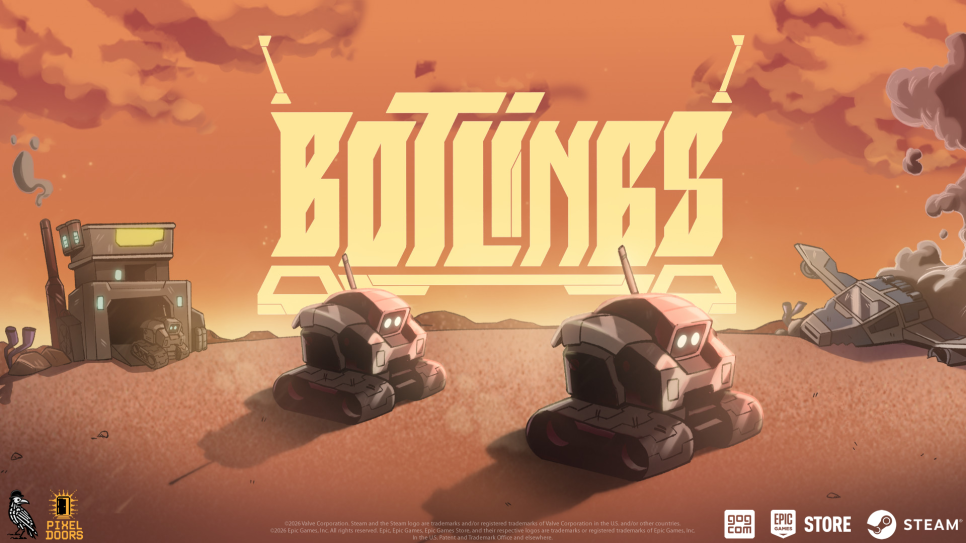
A. Botlings is our newest release and a major focus for us right now. Developed by Fancy Raven Games, it replaces conveyor belts with marching robots that carry resources and become the factory's buildings. As those robots develop minds of their own, keeping the system running becomes more complicated. It launched in Early Access on 9 October, and we are very happy with the strong initial sales on Steam and Epic Games Store.
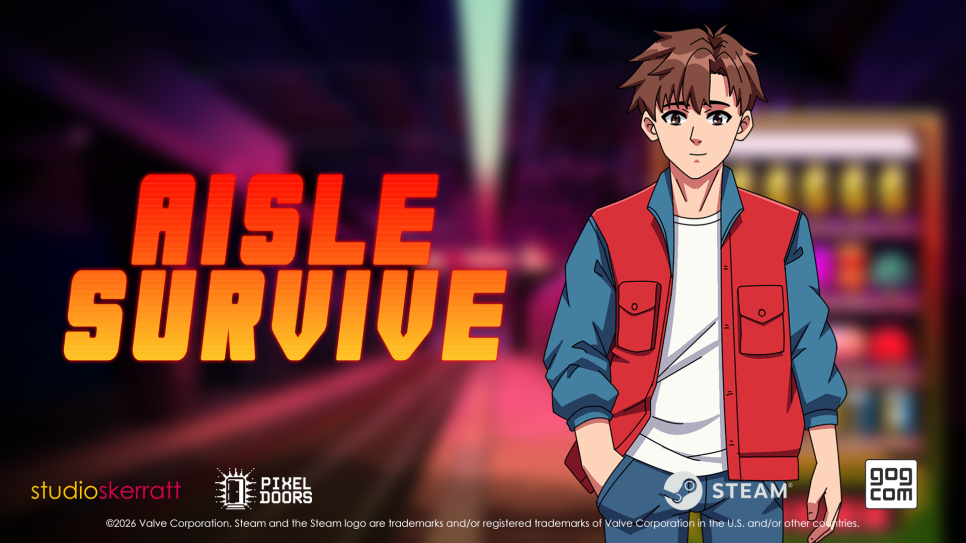
Astro Burn, from Beyond The Pixels, offers a very different experience: fast arcade shooting, a space cat, absurd enemies and stackable weapon powers. Aisle Survive turns working in a shop into a stressful survival experience. Among our upcoming games, Gently Packed explores the more relaxing side of shop management, while The Golden Caravan combines poker combat with a noir story.
We discover games through pitches and industry relationships. We look for a clear identity, an enjoyable playable foundation, and a team we can work well with. Developers who are seeking the same goal as we are - sustainability. We also ask a practical question: can we identify an audience for this game and help the studio reach it?
We are truly open to various styles and genres of games. Our future games that we’ve already signed include The Golden Caravan, Gently Packed, and recently announced Sharkarama and Crown & Applause. We hope to bring all those games to STOVE.
Q. Working with studios around the world
Which countries or regions are most of the indie development teams published by Pixel Doors based in? Are you primarily looking for developers from specific countries or regions, or are you open to discovering promising indie games from anywhere in the world?
A. We work with a growing international group of indie studios across Europe and North America. Our partners include Fancy Raven Games in Finland, the developer of Botlings; Beyond The Pixels in the UK, the studio behind Astro Burn; Two Ducks Studio in Poland, which is making Gently Packed; and Threeclipse in Canada, with Crown & Applause and Sharkarama.
Our wider portfolio also includes Bigfoot Gaming with The Golden Caravan, Null Moon Games with Evergreen Tavern, and Wayward Thoughts Interactive with Starways: Heart of the Cosmos. These teams bring very different backgrounds and creative approaches, which is reflected in the variety of games we publish.
We are open to developers from anywhere in the world, including Korea and other Asian countries. We look for a distinctive game, a team we can build a good working relationship with, and a shared commitment to making the studio sustainable. Our own experience spans collaboration across many countries, and we know how important clear communication and realistic planning are when working across borders.
Q. How we share the work with developers
Once Pixel Doors begins working with a developer, what responsibilities does the publisher typically take on? How are responsibilities divided between Pixel Doors and the development team in areas such as marketing, platform distribution, localization, community management, release planning, sales, and business operations?
A. The developer leads the creation of the game, including its design, code, art and creative direction. We help with the publishing work around it: audience research, positioning, marketing and PR, store pages, platform relationships, release planning, and the commercial administration of selling the game. We also support community work, playtesting and feedback, and coordinate localization and testing where those are part of the plan.
The exact division depends on the studio. Some teams already have a strong community or marketing skills; others want more help with production or presenting the game. We agree on responsibilities together so that work fits the team's needs.
Botlings is a useful example of why that coordination matters. Getting a game onto several stores requires preparation, while the developer also needs time to respond to players after launch. Our job is to help make that workload manageable.
Q. Choosing languages and expanding Korean support
Pixel Doors releases games on platforms such as Steam and STOVE with support for multiple languages. How do you decide which languages to support for each title? In particular, what factors do you consider when deciding whether to support Asian languages such as Korean, Japanese, and Chinese?
A. We consider where interest is coming from, which audiences fit the game, how much text it contains, and the studio's budget and development schedule. Wishlist data, demo feedback, community requests and conversations with platforms all help us decide. Korean, Japanese, and Simplified and Traditional Chinese each need their own assessment.
Expanding Korean localization across our catalogue is firmly on our wishlist. Astro Burn already fully supports Korean, and we would love to make more of our games accessible to Korean players. The Golden Caravan already has the Korean localization prepared for the launch.
Doing that well takes planning and coordination. We need suitable translators, consistent terminology, fonts and interfaces that display the text properly, and time to test it in the game. For us, Korean is a challenging localization project to coordinate, and the cost can be significant for a small studio. We want to do it properly, so each title needs a workable plan. Our enthusiasm for Korea is strong, even where we cannot yet announce a localization date.
Q. Setting fair prices
Pricing is an important part of publishing an indie game. When determining the price of a game, does Pixel Doors consider factors such as genre, development scale, playtime, target market, competing titles, and regional market conditions? Does your pricing strategy differ between platforms such as Steam and STOVE?
A. We consider the game's genre, depth, replayability and overall experience, alongside comparable games and regional purchasing power. Development costs matter to the studio's sustainability, but players also need to feel that the price makes sense for what they receive. Playtime is useful context, although a shorter, memorable game can offer excellent value too.
We discuss pricing with the developer and take the stage of development into account, especially for an Early Access release. Discounts and promotions also need to fit the game's longer-term plans.
Across Steam and STOVE, we aim for a consistent sense of value while allowing for regional currencies, local price expectations and different promotional opportunities. That can lead to different displayed prices or offers. The goal is an accessible price for players that also gives the studio a chance to keep creating games.
Q. The value of a transparent partnership
What do you think are the biggest advantages for developers when working with an indie game publisher such as Pixel Doors? What do you do to maintain a long-term and transparent relationship with the developers you work with?
A. A good publisher gives a small development team more time to focus on its game and brings experience it would otherwise have to build alone. That can include knowing how to prepare a release, finding the right audience, working with platforms, and turning player feedback into useful decisions.
For us, the developer's financial health is central to the partnership. Our approach puts developers first, and we want the commercial arrangement to support their ability to continue making games. We also believe developers should retain ownership of their work and control over its creative direction.
Transparency has to show up in everyday work. We aim to be clear about responsibilities, budgets and expectations, provide understandable sales and royalty reporting, and discuss problems early. We want developers to know what is happening with their game and why. The relationship should still be useful after launch, when the team is deciding what to improve and what to make next.
Q. What comes next for Korea and Asia

Finally, what kind of games would Pixel Doors like to introduce to Korean and other Asian markets in the future? Are there any particular genres or types of games you are currently looking for, and what would you like to say to indie developers who are interested in working with Pixel Doors?
A. Right now, we would love more Korean players to discover Botlings, Aisle Survive and Astro Burn. Botlings has had a strong start, and we are excited to see what players build with it. Astro Burn seems to be finding an audience on STOVE, which is encouraging as we learn more about the community.
Looking ahead, The Golden Caravan and Gently Packed show the range of experiences we want to introduce. One offers poker battles and a noir story, while the other lets players enjoy the satisfying routine of running a shop. We want to explore opportunities for these games in Korea and across Asia, with platform availability and localization planned individually for each title.
We are open to different genres. We are especially interested in games with a distinct personality, a strong playable idea and a team committed to making them work. If you are an indie developer who thinks we could be a useful partner, please get in touch through pixeldoors.com . And to Korean players: thank you for welcoming our games. We are excited to keep learning from you.
#PixelDoors #JacekPudlik #NicVantSchip #PixelDoorsInterview #hashiruka48 #IndieGamePublishing #IndieGamePublisher #GamePublishing #IndieDev #IndieGameDev #GameDevelopment #GameIndustry #DeveloperFirst #EthicalPublishing #SustainableGameDev #PublisherInterview #GameDevInterview #STOVE #STOVEStore #StoveIndie #Steam #EpicGamesStore #PCGaming #IndieOnSteam #KoreanGameMarket #Botlings #AstroBurn #AisleSurvive #GentlyPacked #TheGoldenCaravan #Sharkarama #CrownAndApplause #EvergreenTavern #Starways #StarwaysHeartOfTheCosmos #FactoryAutomation #AutomationGame #ArcadeShooter #SpaceCat #PixelArt #ShopManagement #SurvivalGame #PokerCombat #NoirGame #EarlyAccess #IndieGames #PCGames #GameMarketing #GameLocalization #KoreanLocalization #CommunityManagement #GamePricing #IndiePublisher #GameDistribution #GamePitch