

In the era of modern home design, open-plan living spaces have become increasingly popular, offering a seamless flow between rooms and a sense of spaciousness. However, when it comes to audio systems, these layouts present unique challenges in achieving optimal sound quality. One critical aspect that often gets overlooked is the placement of ceiling speakers. Proper in ceiling surround sound speaker placement is crucial for creating an immersive audio experience that complements the aesthetics and functionality of your open-plan living space. In this comprehensive guide, we'll explore the importance of ceiling speaker placement, share expert tips and best practices, and discuss how AV system integration software can streamline the process.
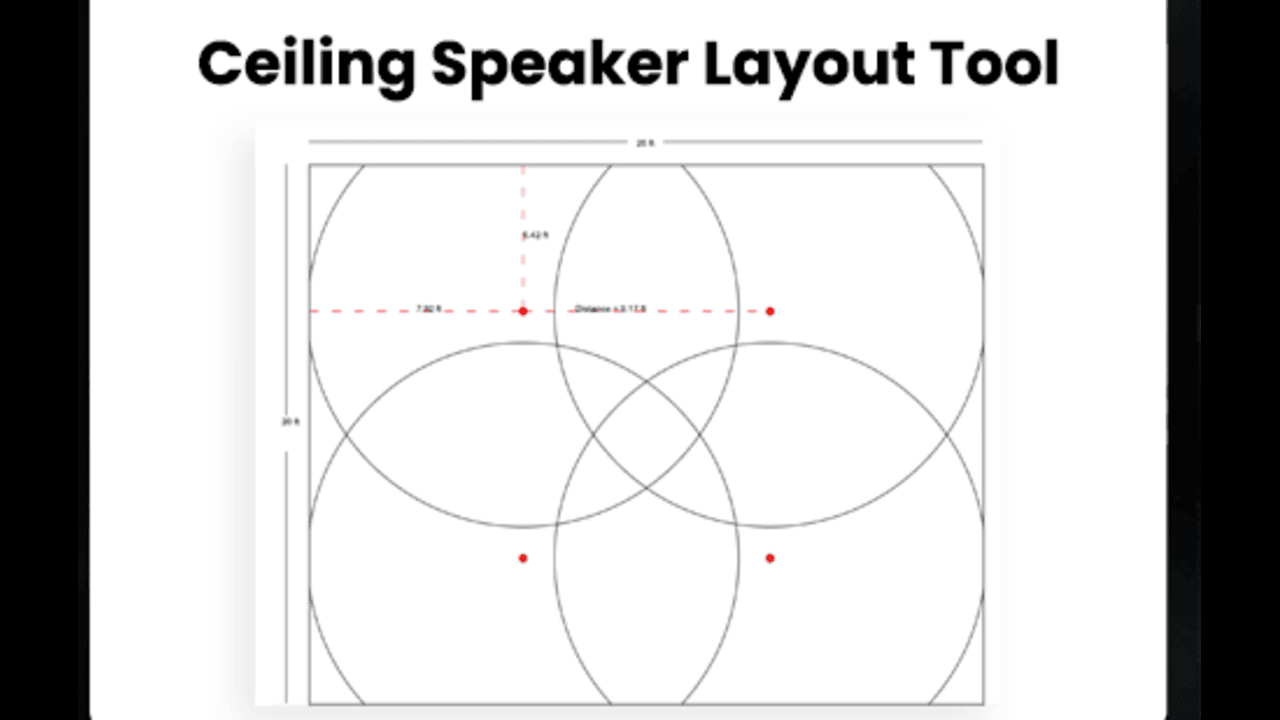
The Importance of Ceiling Speaker Placement in Open-Plan Living Spaces
Optimizing ceiling speaker placement in open-plan living spaces is crucial for several reasons:
Consistent Sound Coverage: Open-plan layouts often encompass multiple functional areas, such as the living room, dining area, and kitchen. Proper speaker placement ensures that sound is evenly distributed throughout the space, providing a consistent audio experience no matter where you are.
Minimizing Sound Reflections: Open-plan spaces often feature hard surfaces like hardwood floors, large windows, and high ceilings, which can cause sound reflections and echoes. Strategic speaker placement helps minimize these reflections, resulting in clearer and more accurate sound reproduction.
Aesthetic Integration: Carefully planned speaker placement allows for seamless integration with the interior design, ensuring that the speakers blend in with the décor without compromising sound quality.
Flexibility and Adaptability: With open-plan living spaces, furniture arrangements and room usage may change over time. Optimized speaker placement provides the flexibility to adapt to these changes while maintaining optimal sound performance.
Factors to Consider When Placing Ceiling Speakers in Open-Plan Spaces
Before diving into speaker placement, consider these key factors:
Room Size and Layout: Open-plan spaces come in various sizes and configurations. Assess the dimensions, ceiling height, and layout of your space to determine the appropriate number and positioning of speakers.
Listening Areas: Identify the primary listening areas within the open-plan space, such as the seating arrangement in the living room or the dining table. Speakers should be placed to provide optimal sound coverage for these areas.
Acoustics: Open-plan spaces often have unique acoustic properties due to the lack of walls and the presence of hard surfaces. Consider the room's acoustics when placing speakers to minimize reflections and ensure clear sound reproduction.
Furniture Placement: Take into account the placement of furniture, such as sofas, chairs, and tables, as they can affect sound absorption and reflection. Speakers should be positioned to work in harmony with the furniture layout.
Best Practices for Ceiling Speaker Placement in Open-Plan Spaces
Follow these guidelines to optimize ceiling speaker placement in your open-plan living space:
Even Distribution: Place speakers evenly across the ceiling to ensure consistent sound coverage throughout the space. Avoid clustering speakers in one area, as it can lead to uneven sound distribution.
Aim for Symmetry: Strive for a symmetrical speaker layout to create a balanced soundstage. This is particularly important for achieving accurate stereo imaging in the main listening area.
Consider Listening Height: Position speakers at a height that aligns with the average listener's ear level when seated. This ensures direct sound reaches the listeners, enhancing clarity and intelligibility.
Avoid Obstructions: Ensure speakers are not blocked by light fixtures, decorative elements, or HVAC vents, as obstructions can interfere with sound projection and cause uneven coverage.
Leverage Angled Speakers: Angled ceiling speakers direct sound towards the listening area, reducing reflections from walls and improving sound clarity. Consider using angled speakers, especially in larger open-plan spaces.
Optimize for Multiple Listening Areas: If your open-plan space has distinct listening areas, such as a living room and a dining area, aim to provide optimal sound coverage for each zone. This may involve using multiple pairs of speakers or adjusting speaker placement to accommodate different listening positions.
The Role of AV System Integration Software
AV system integration software plays a vital role in optimizing ceiling speaker placement in open-plan living spaces:
3D Modeling and Visualization: Integration software allows you to create detailed 3D models of your open-plan space, enabling precise speaker placement planning and visualization. This helps you identify potential issues and optimize placement before installation.
Acoustic Simulation: Advanced software tools can simulate the acoustic properties of your open-plan space, predicting how sound will behave and identifying optimal speaker positions for even coverage and minimal reflections.
Collaboration and Documentation: AV system integration software facilitates collaboration among homeowners, interior designers, and AV professionals, ensuring everyone is aligned on speaker placement and overall system design. It also provides detailed documentation for future reference and maintenance.
Remote Management and Calibration: With cloud-based software, you can remotely monitor, control, and fine-tune your speaker settings, ensuring optimal performance even after installation. This is particularly useful for making adjustments based on changes in room layout or furniture placement.
Case Studies
Loft Apartment: A homeowner with a modern loft apartment struggled with uneven sound coverage due to the open-plan layout and high ceilings. By strategically placing ceiling speakers and using angled models, the homeowner achieved consistent audio quality throughout the space, creating a seamless listening experience.
Open-Concept Kitchen and Living Room: A family with an open-concept kitchen and living room wanted to enjoy background music while cooking and entertaining guests. By carefully placing ceiling speakers and considering the room's acoustics, they achieved a balanced sound that enhanced the overall ambiance without overpowering conversations.
Multi-Purpose Media Room: A homeowner with a large open-plan media room needed a versatile audio system for movie watching, music listening, and gaming. By optimizing speaker placement using AV system integration software and leveraging multiple pairs of speakers, the homeowner created an immersive surround sound experience that adapted to different activities.
Frequently Asked Questions
Q1: How many ceiling speakers do I need for my open-plan living space?
A1: The number of speakers required depends on factors such as room size, ceiling height, and desired coverage. As a general guideline, aim for one speaker every 100-150 square feet, but consult with an AV professional for a more accurate assessment based on your specific space and listening preferences.
Q2: Can I use in-wall speakers instead of ceiling speakers in an open-plan space?
A2: While in-wall speakers can be used, ceiling speakers are often preferred for open-plan spaces. They provide more flexible placement options, better sound dispersion, and seamless integration with the ceiling design. However, if your space has suitable wall locations, in-wall speakers can be a viable alternative.
Q3: How do I achieve even sound distribution in a large open-plan space?
A3: To achieve even sound distribution in a large open-plan space, use multiple speakers strategically placed across the ceiling. Aim for consistent spacing between speakers and consider using angled models to direct sound towards the listening areas. AV system integration software can help simulate sound coverage and identify optimal placement.
Q4: What should I consider when placing ceiling speakers in a room with high ceilings?
A4: In rooms with high ceilings, consider using more powerful speakers or placing them at a lower height to ensure sound reaches the listening area effectively. Angled speakers can help direct sound downwards, and adjusting the speaker's position may be necessary to align with the listener's ear level.
Q5: How can I optimize ceiling speaker placement for an open-plan space with challenging acoustics?
A5: For open-plan spaces with challenging acoustics, such as those with many hard surfaces or irregular layouts, consider using acoustic treatments like sound-absorbing panels or rugs to control reflections. Angled speakers can help direct sound towards the listening areas, and AV system integration software can simulate the room's acoustics to identify problem areas and suggest optimal placement.
Q6: Can I place ceiling speakers near air vents or other ceiling fixtures?
A6: It's best to avoid placing speakers directly next to air vents, light fixtures, or other ceiling obstructions that can interfere with sound projection. If unavoidable, consider using speakers with narrow dispersion patterns or adjustable baffles to direct sound away from the obstruction.
Q7: How do I ensure proper stereo imaging in an open-plan space?
A7: To achieve accurate stereo imaging in an open-plan space, place left and right speakers symmetrically in relation to the main listening area. Ensure the speakers are angled towards the listeners and maintain equal distances from the primary seating position. AV system integration software can help visualize the stereo soundstage and optimize placement.
Q8: Can I adjust ceiling speaker placement after installation?
A8: While it's best to optimize speaker placement during the initial installation, some adjustments can be made post-installation. Many ceiling speakers offer pivoting tweeters or aimable brackets that allow for fine-tuning the sound direction. However, major repositioning may require additional wiring and construction work, so it's crucial to plan carefully before installation.
Conclusion
Mastering ceiling speaker placement in open-plan living spaces is essential for achieving optimal sound quality and creating an immersive audio experience. By considering factors like room size, acoustics, and listening areas, and following best practices for even distribution and strategic positioning, you can ensure consistent sound coverage and minimize unwanted reflections.
Leveraging AV system integration software streamlines the process, from 3D modeling and acoustic simulation to remote management and calibration. This technology empowers homeowners and AV professionals to make informed decisions, visualize speaker placement, and fine-tune settings for optimal performance.
Remember, investing in proper speaker placement not only enhances the audio quality but also complements the aesthetics and functionality of your open-plan living space. By prioritizing this aspect of your AV system design, you'll create a seamless and enjoyable listening experience that adapts to your lifestyle and evolves with your space.