
When it comes to recording hard rock and modern metal guitar in a home studio, simplicity often leads to the best results. With so many options available, it can be overwhelming to figure out which method works best for your space, budget, and desired tone. In this guide, we’ll explore three popular approaches, each with its own pros and cons, and I’ll share my personal favorite.
1. The Classic Method: Real Amp and Cabinet
Traditionally, professional studios relied on cranking a 100-watt amp and placing a Shure SM57 mic in front of a 4x12 cabinet. This approach is legendary for its raw, organic tone—perfect for hard rock and metal. However, replicating this setup in a home studio comes with a significant downside: you're just too darn loud! (as Huey Lewis famously said in Back to the Future).
Can You Still Use This Method at Home?
Yes, but with some adjustments:
Downsized Equipment: Opt for a lunchbox-style amp (15-20 watts) paired with a 1x12 cabinet. It’s still loud but far more manageable.
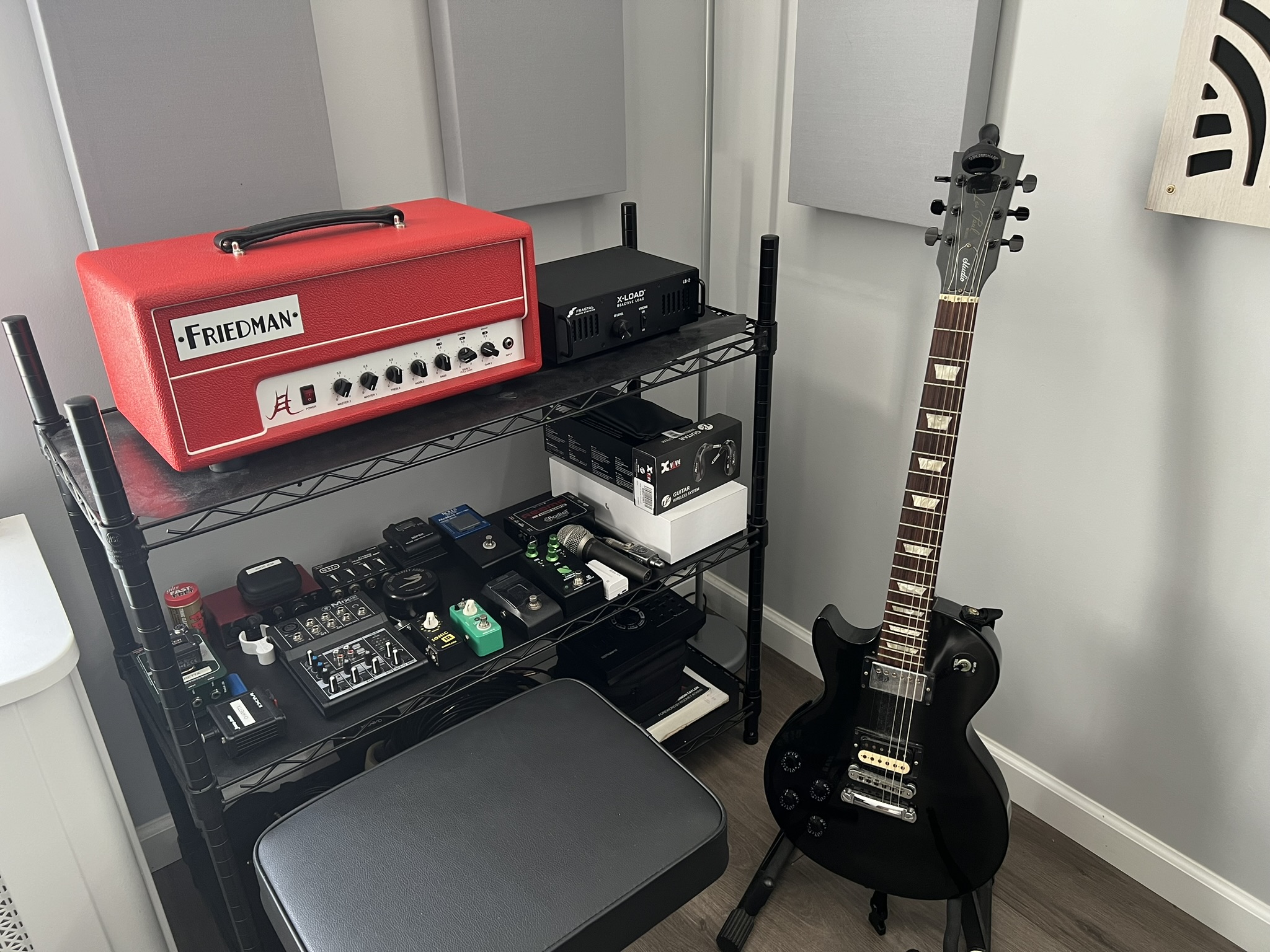
Placement Matters: You’ll need to find a spot in your home that minimizes noise issues. Personally, I use my unfinished basement to mic my 20-watt Friedman amp. If you’re in a shared space, this may not be feasible.
Volume Sweet Spot: Remember, recording is about capturing tone, not ear-splitting volume. Finding the amp’s sweet spot at lower master volume levels can still deliver amazing results.
Reactive Load Box with IRs
For those who love the sound of a real amp but can’t manage the volume, a reactive load box with impulse responses (IRs) is a great solution. While not my favorite method, it’s highly effective and eliminates the volume problem. You’ll capture authentic amp tone without waking the neighbors.
2. The Digital Route: Guitar Modelers
Guitar modelers, like the Fractal FM3, are game-changers. These devices replicate the sound of classic amps and cabinets with stunning accuracy. In a modern mix, it’s nearly impossible to distinguish a modeled tone from a real amp.
Pros:
Silent Recording: Perfect for late-night sessions.
Versatility: Modelers offer a vast array of amp and cab simulations.
Ease of Use: Plug in, select a preset, and start recording.
Cons:
Feel: Some players prefer the tactile response of a real amp.
For me, the Fractal FM3 is a go-to. It’s reliable, versatile, and delivers incredible tones with minimal setup. Whether you’re working solo or with a client, modelers are a fantastic option.
3. Amp Sim Plugins
Amp sim plugins allow you to plug your guitar directly into your audio interface and use software to emulate amps, cabinets, and effects. This approach is the most cost-effective and space-saving.
Pros:
Affordable: Many great plugins are available at reasonable prices.
Flexible: You can experiment with different tones during mixing.
Silent: Ideal for apartments or shared spaces.
Cons:
Lack of Commitment: Recording DI signals can lead to endless tweaking.
While amp sims are a popular choice, they’re not my preferred method. I like to commit to a tone during tracking and avoid rethinking it later. However, if you’re on a tight budget or need maximum flexibility, amp sims are worth exploring.
My Preferred Method
As a bit of an old-school engineer, I favor using a real amp and cabinet setup whenever possible. There’s something about capturing the raw tone straight from the source that just feels right. However, I adapt to the situation:
Real Amp and Cab: When volume isn’t an issue, I’ll mic my 1x12 cab with my Friedman amp.
Modeler (Fractal FM3): For convenience and versatility, especially in time-sensitive projects.
Final Thoughts
There’s no single “right” way to record hard rock and modern metal guitar in a home studio. The best method depends on your environment, equipment, and personal preferences. Whether you choose a real amp, a modeler, or amp sims, remember that the goal is to capture a great performance and tone.
What’s your preferred method for recording guitar? Share your thoughts in the comments, and until next time, happy recording!