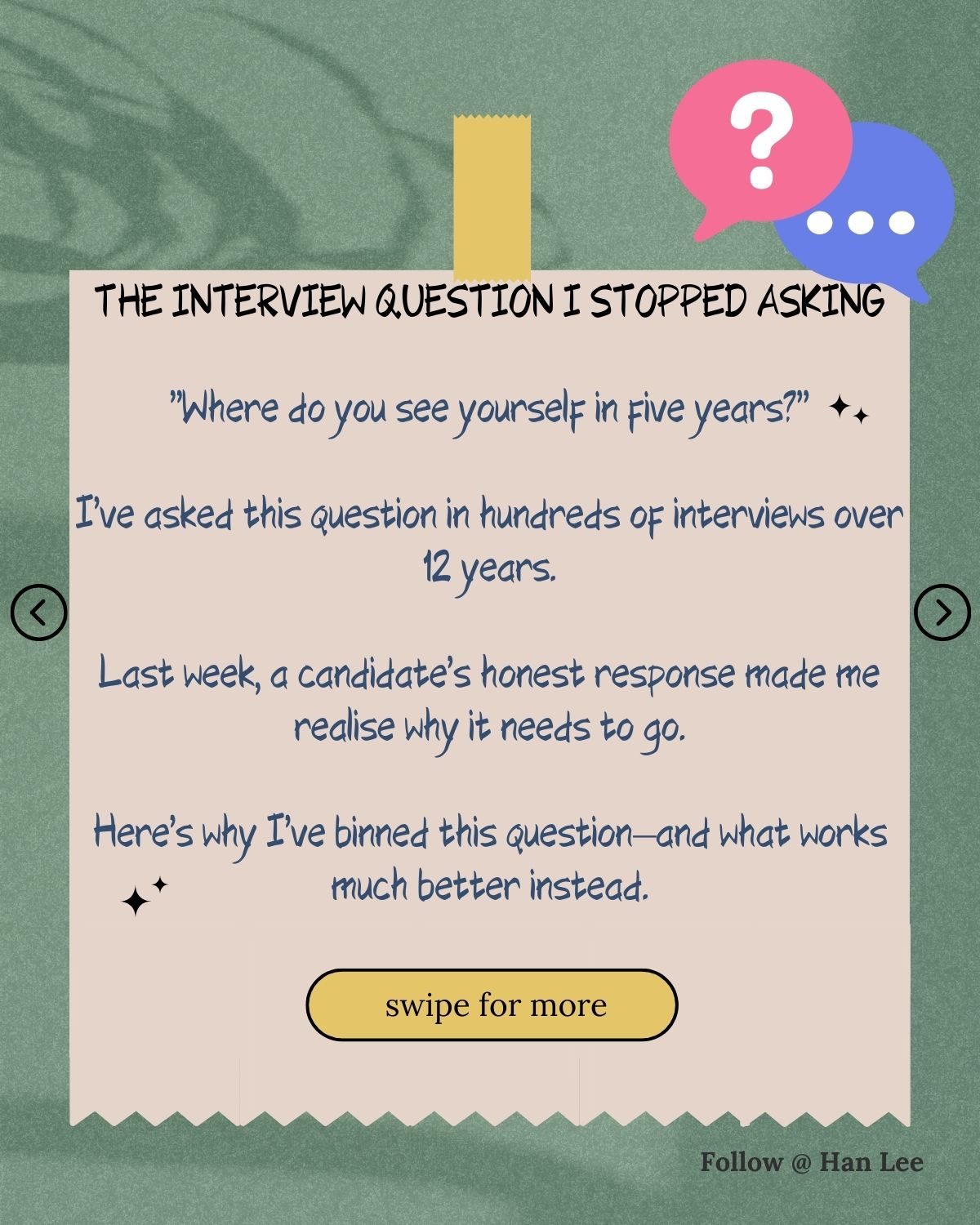
A candidate completely stumped me with her response to my typical "Where do you see yourself in five years?" question.
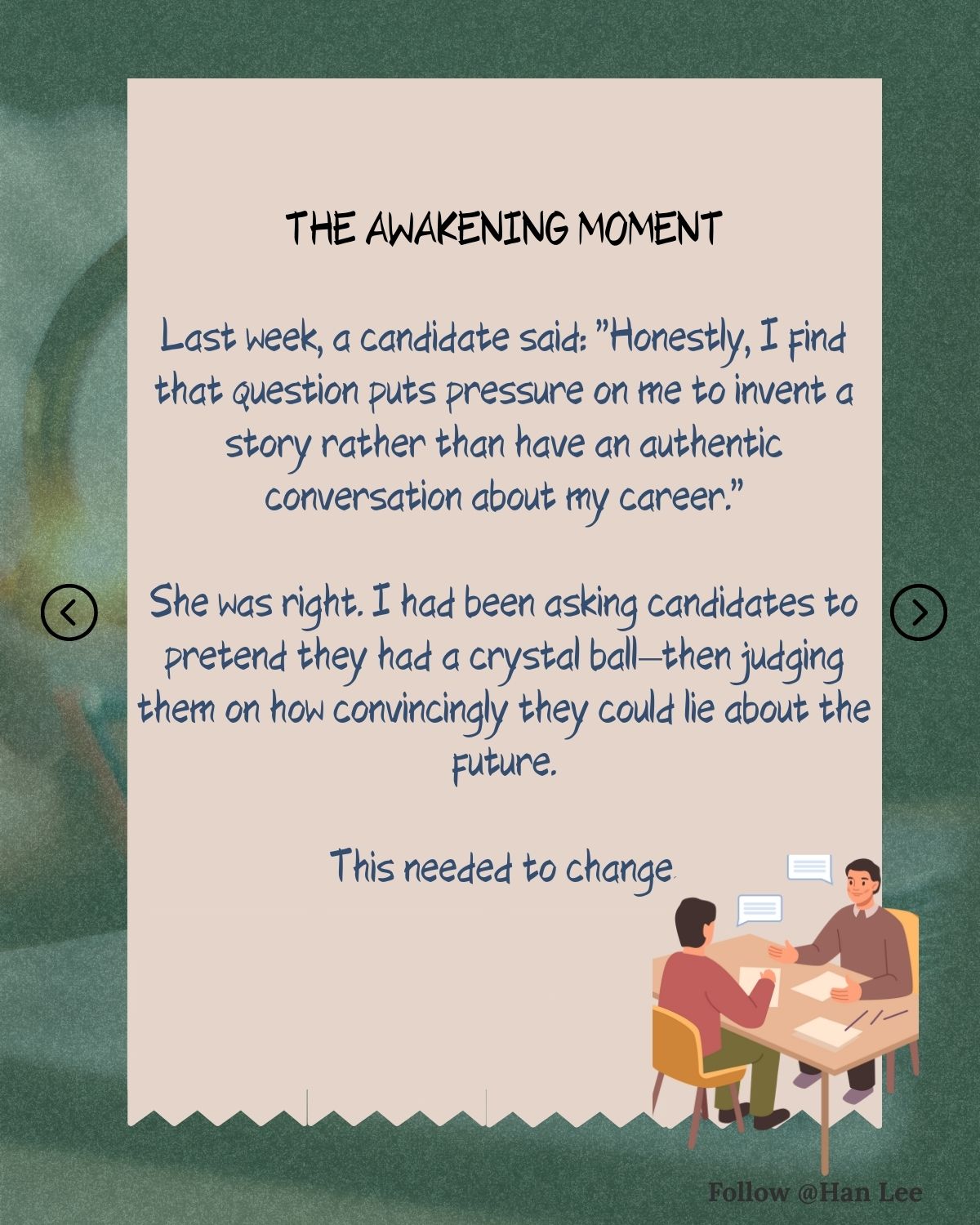
"Honestly," she said, "I find that question puts pressure on me to invent a story rather than have an authentic conversation about my career."
I sat there, pen hovering over my notepad, realising she was absolutely right.
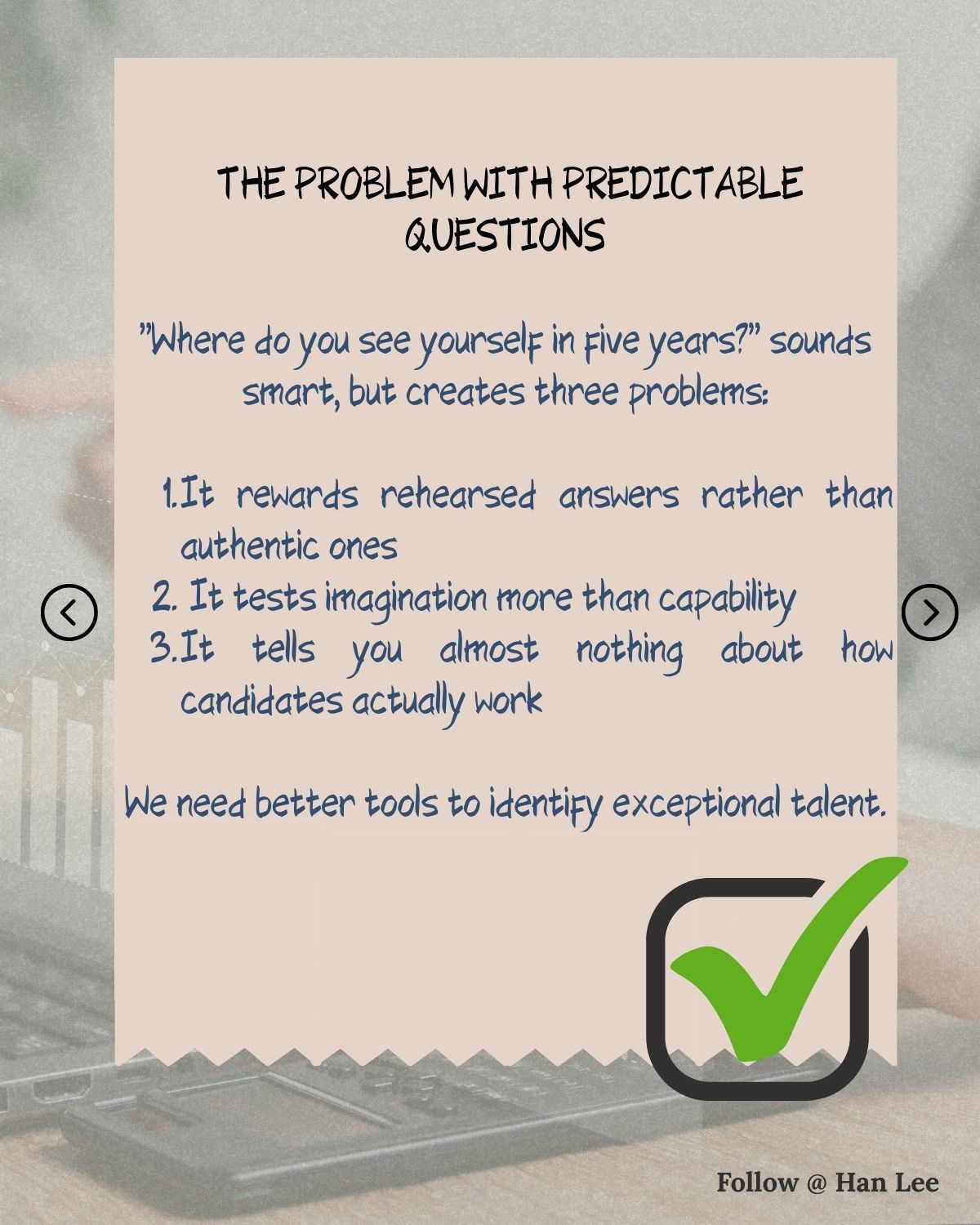
For years, I've asked this question in most of my interviews. And I've collected hundreds of carefully rehearsed, utterly predictable answers that told me almost nothing useful about the candidates.
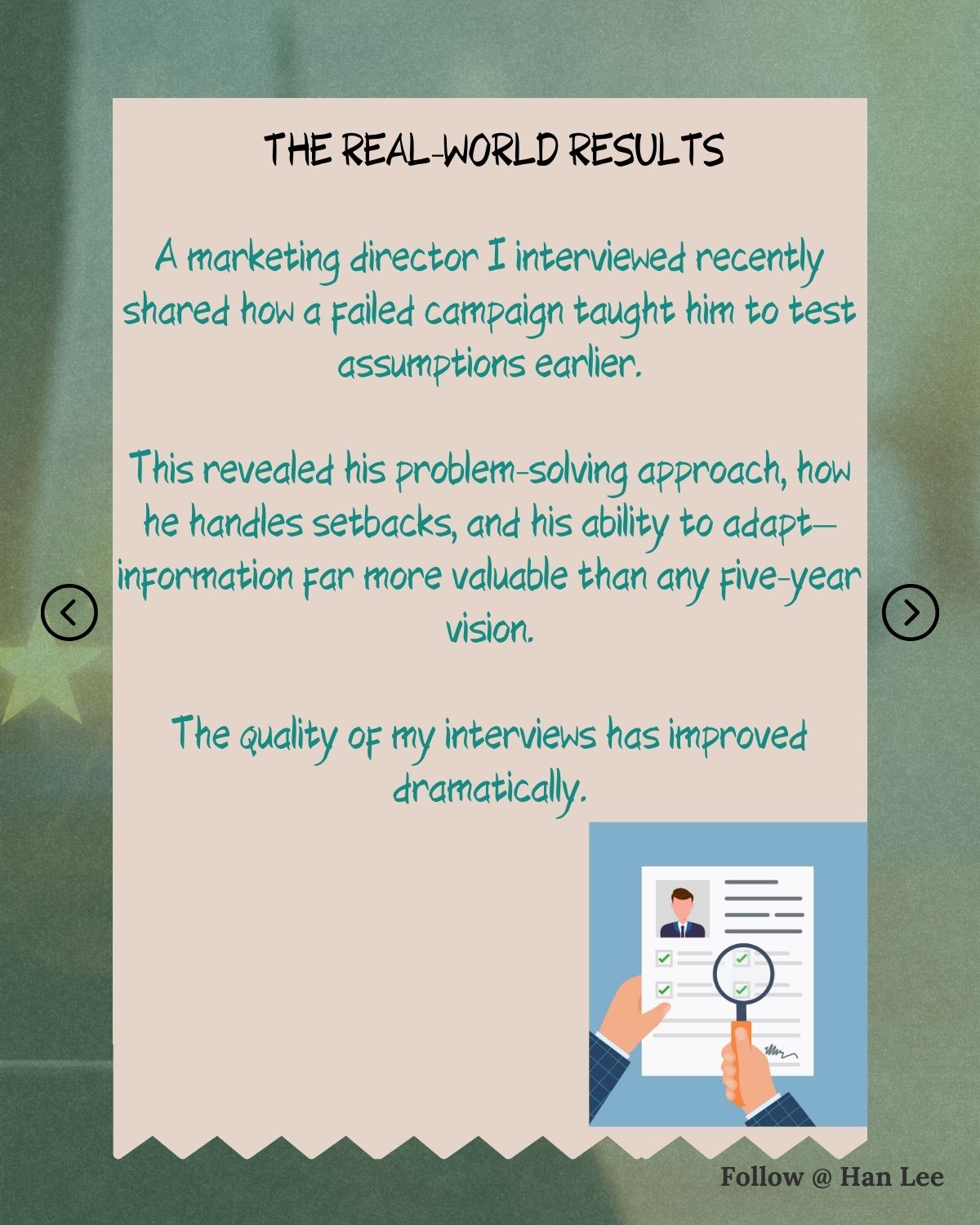
So I've binned it. Completely. And the quality of my interviews has improved dramatically.
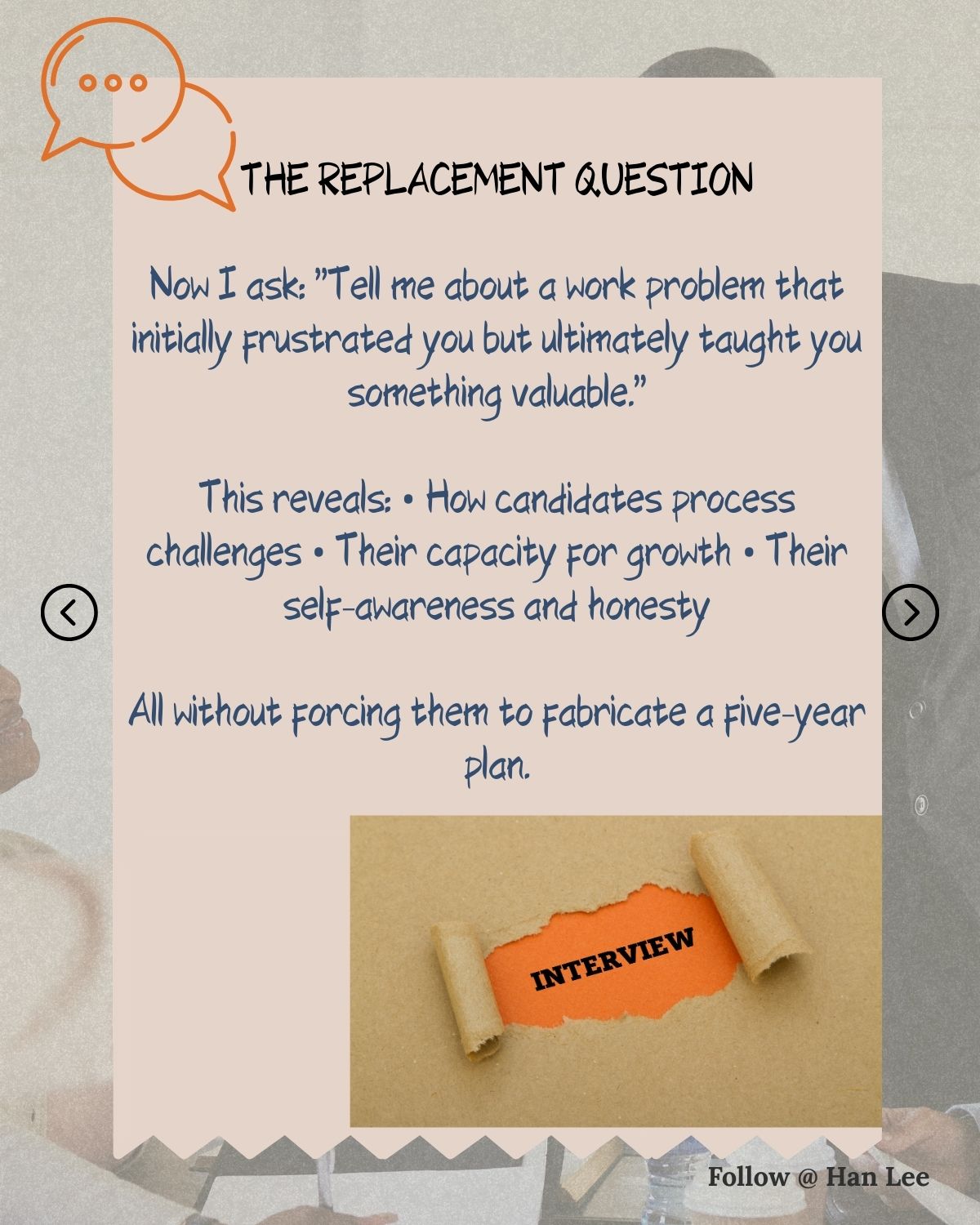
What I ask now instead: "Tell me about a work problem that initially frustrated you but ultimately taught you something valuable."
This question reveals how candidates process challenges, their resilience, and their capacity for growth—all without forcing them to pretend they have a crystal ball.
A sales director I interviewed shared how a failed GTM strategy taught him to test assumptions earlier. This told me more about his problem-solving abilities than any five-year plan ever could.
Your interview questions aren't just tools to assess candidates—they're a reflection of your company's thinking. When you ask questions that invite rehearsed answers, you get rehearsed people.
The best candidates are evaluating you just as carefully as you're evaluating them. And nothing says "we value authentic thinking" like questions that actually allow for it.
Next time you're preparing for interviews, consider: are your questions inviting memorised responses or meaningful conversation?
You don't need to overhaul your entire process. Just replace one "interview greatest hit" with something that makes space for genuine insight.
Because the candidate you want to hire is the one who thinks clearly today—not the one who pretends to see tomorrow.
#Recruitment #TalentAcquisition #CareerAdvice
Visit my LinkedIn to view my other post.