
Here is a brief history of the GT1 class, a category that brought some of the most exhilarating and iconic supercars to the racetrack. From its inception in the mid-1990s to its eventual sunset, the GT1 class defined an era of endurance racing that saw legendary marques like Porsche, McLaren, and Mercedes-Benz push the boundaries of performance and innovation. Join us as we journey through the BPR years, the era of homologation specials, the dominance of the GTS era, Maserati's triumphant return, and the final hurrah of the FIA GT1 Championship.
1994-1996: the BPR years
After the demise of Group C in 1992, international endurance racing faced a void in 1993. The 3.5L FIA Sportscars' excessive costs and poor visibility had driven manufacturers away. During this period, the late '80s and early '90s witnessed the emergence of remarkable supercars—the Porsche 959, Ferrari F40, and Jaguar XJ220—sparking growing interest in seeing them race. One-make series gained popularity, including the Porsche Cup, Ferrari Challenge, and the well-received Venturi Gentlemen Drivers Trophy. In the US, IMSA Supercar featured thrilling battles between the Porsche 911 Turbo, Lotus Esprit, and Chevrolet Corvette. GT racing also flourished in other nations through championships like the Italian GT and the All Japan Grand Touring Championship.
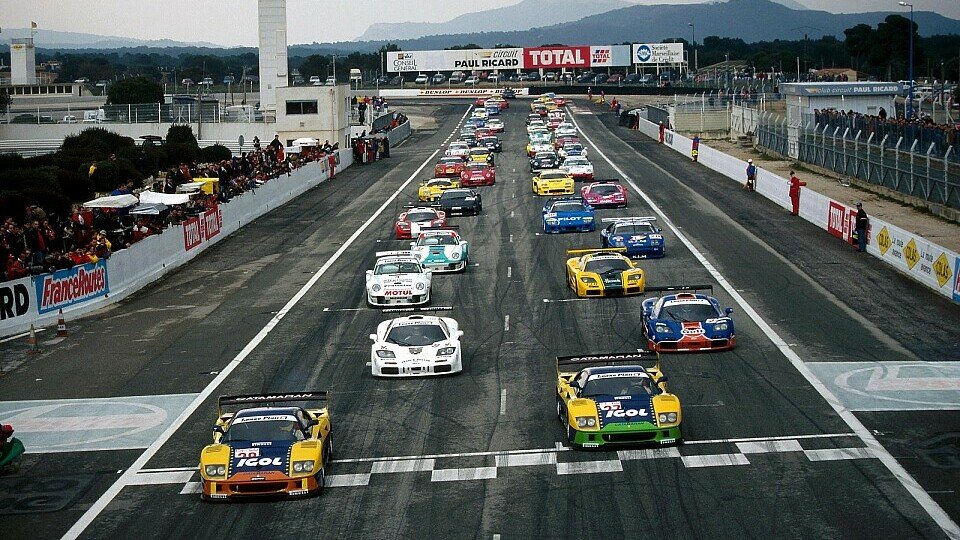
Despite numerous meetings to create an international GT championship, the parties had not yet reached an agreement. In 1994, the ACO (governing body of the 24 Hours of Le Mans) and the FIA published rules for GT classes, establishing the GT1 class (along with GT2 for Le Mans, and GT2, GT3, and GT4 in FIA). Meanwhile, three key figures came together to organize a new GT championship: Jürgen Barth, head of Porsche's client racing department; Patrick Peter, a veteran organizer of racing events like the Tour Auto; and Stéphane Ratel, a young Venturi commercial executive who had sold fifty-nine 400 Trophy cars and seven 500 LMs that competed in the 1993 24 Hours race. Together, they created the International GT Endurance Series. The formula proved popular from the start, with Ferraris, Venturis, and Porsches competing across France, Belgium, Spain, Japan, and even China. In 1995, Gordon Murray's McLaren F1 joined the grid. Though not originally intended for racing, this BMW-powered, carbon-monocoque, center-seat sports car was designed with racing principles in mind. It proved remarkably successful, winning both the BPR Global GT Endurance Series and the 24 Hours of Le Mans—surpassing even the open-top prototypes. In 1996, the series was renamed the BPR International Endurance GT Series. As team efforts grew increasingly sophisticated, manufacturer involvement became inevitable.
After finishing first and second in the GT1 class at Le Mans (and second and third overall), Porsche entered its 911 GT1 in three of the last four rounds of the BPR series. The car proved extremely competitive—so much so that it was accused of sandbagging to avoid embarrassing other competitors—and controversial. Though technically within the rules, the homologation street version served merely as a pretext to race a powerful purpose-built race car, rather than being a road car adapted for racing. Meanwhile, recognizing BPR's success, the FIA took over the series, with only Stéphane Ratel remaining from the original organization.
1997-1998: Homologation Specials
Porsche's formula became the standard for the new FIA GT Championship. Their Stuttgart neighbor Mercedes beat them at their own game by creating the V12-powered CLK GTR in just four months. The street version wasn't even ready when they submitted a race car for homologation. McLaren countered with a long-tail version of the F1, which proved eight seconds faster at Monza from its debut. Rather than continuing with the Esprit V8, Lotus used their new Elise as a base to create another Frankenstein race car: the Elise GT1. Since the regulations penalized turbocharged engines, Lotus engineers opted for a racing version of the Corvette ZR1 DOHC small block. Lister introduced a carbon monocoque version of the Storm, the GTL. Even newcomers joined the new formula, with Panoz introducing a mid-front-engined contender: the Esperante GTR-1.
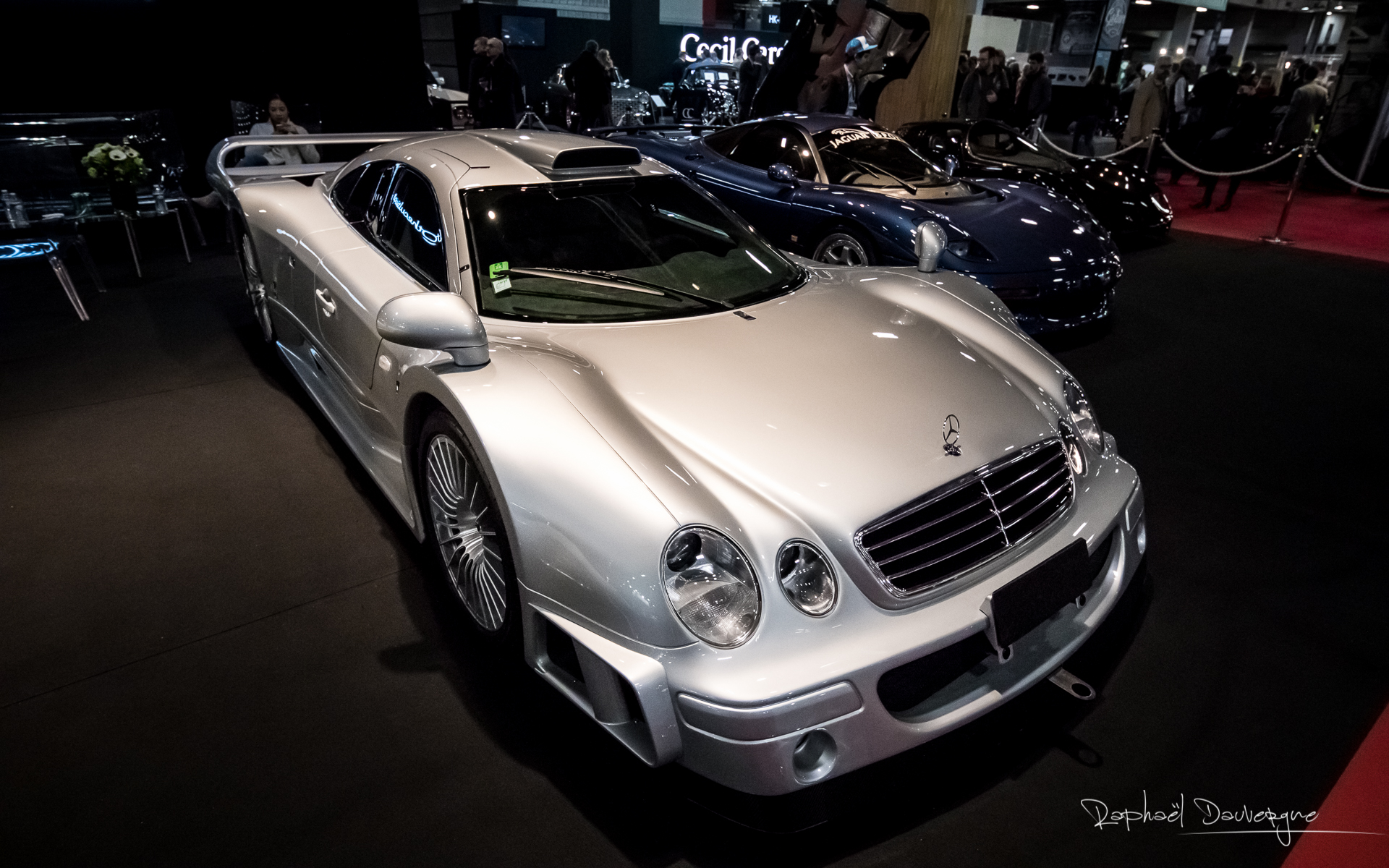
Le Mans wasn't spared, with Nissan commissioning TWR to build a bespoke GT1 after their mainstream Nismo GT-R LM failed. The R390 GT1 used the XJR-15's carbon monocoque, which itself derived from the successful XJR-9 Group C car.
Porsche introduced an evolution of the 911 GT1, still based on the 993 steel chassis. This left it outgunned in FIA GT, despite leading most of the race at Le Mans. For all manufacturers, the street versions were merely afterthoughts, resulting in the most extreme and expensive supercars ever created.
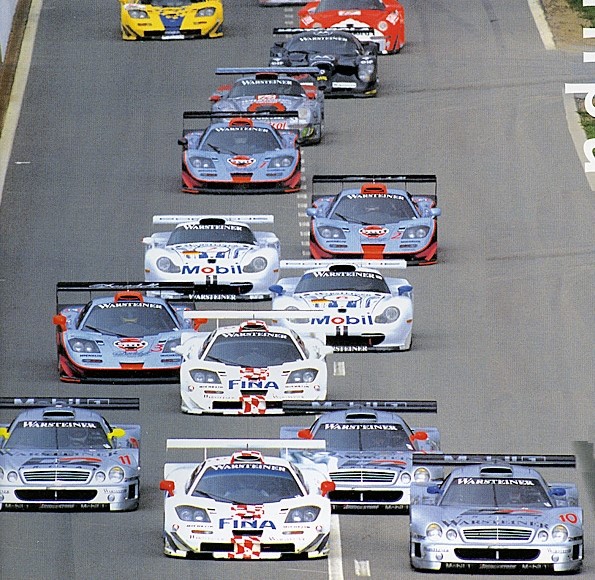
Mercedes faced only the BMW Motorsport McLaren F1 GTR, which later abandoned GT racing for open-top prototypes. Development continued as Porsche and Mercedes built new cars (the carbon monocoque 911 GT1-98 and V8-powered CLK LM), while Panoz and Nissan enhanced their GTR-1 and R390 GT1. McLaren, Lotus, and Lister left the GT1 scene. Toyota entered with a revolutionary car: the GT-One. It abandoned all manufacturer styling cues, resembling a closed-top prototype from the future (which it was!). At Le Mans, the top seven cars were costly GT1s, ahead of an aging Ferrari 333SP. After Mercedes won every championship round, no one wanted to compete against them, and the class was canceled.
1999-2004: the GTS era
With GT1s ruled out, GT2 became the top category. The requirement for 200 production models limited the creation of extreme machines. The ACO-sanctioned class was renamed GTS (for Le Mans and the newly created ALMS), while the FIA kept the GT designation and introduced a new class called N-GT, which would later evolve into GT3.
The Viper GTS-R, competing in GT2 since 1997, dominated the field and finally claimed victory at Le Mans in 1999. It went on to win the Drivers Championship in 1999, 2001, and 2002. General Motors began developing the Corvette C5 road car in 1997 and entered competition in 1999. Though it took two seasons to become competitive, the Corvette eventually surpassed the aging Viper, despite the latter's continued success in domestic championships with its Evo version.
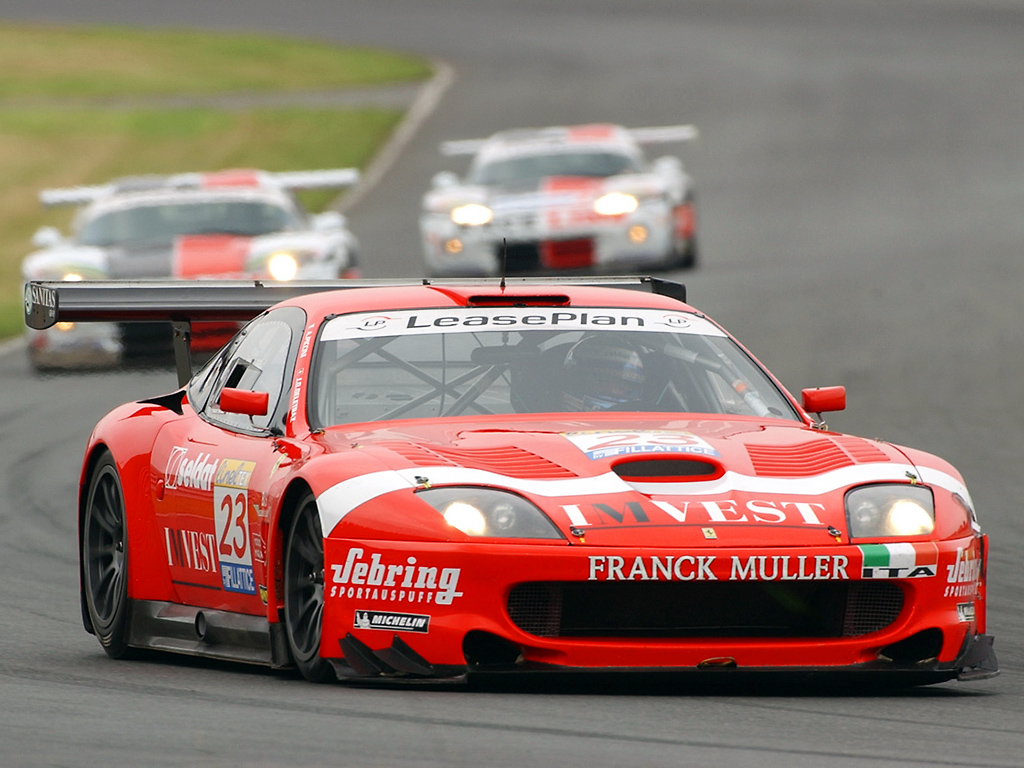
With the field lacking major manufacturers and supercars, Stéphane Ratel introduced a new homologation formula based on a technical passport. This allowed private teams to prepare cars for GT/GTS class with technical approval but without direct manufacturer involvement. Ratel co-funded a consortium to finance a Ferrari 550 Maranello race car, developed by Italtecnica. The resulting 550 Millenio, launched at the turn of the millennium, proved unsuccessful—both slow and unreliable. Consortium member Frédéric Dor, a French businessman and rally driver, approached Prodrive—then managing his WRC Subaru Impreza—about improving the 550 Maranello. Prodrive agreed but insisted on starting fresh, leading to the creation of the Prodrive 550 GTS. This car would secure two Drivers and Team titles with BMS Scuderia (Bobbi & Biagi in 2003, Gollin and Cappellari in 2004). After Corvette C5-R victories at Le Mans in 2001 and 2002, the 550 GTS claimed the 24-hour race in 2003, before the C5-R (Gavin, Beretta, Magnussen) reclaimed victory in 2004. The Corvette also dominated in America, winning the Drivers title from 2001 to 2004, following Olivier Beretta's two-year reign with the Oreca Viper GTS-R.
2005-2009: Maserati returns
It's no secret that history repeats, through cyclic crises. Maserati's returns to GT racing is one of them, with very similar facts than when Porsche introduced the 911 GT1.
All the GTS, except for the 2001 Saleen S7-R, are now mid front-engined. Reiter Engineering also introduced the Lamborghini Murcielago R-GT in 2004 but none had a carbon monocoque chassis. With FIAT and Ferrari finances being excellent in the early noughties, the board decided to resurrect Maserati. As much as Ferrari technology should be used, and for their racing program they turned to the Enzo. An internal team turned the supercar into a GT1 race car, with a beautiful body styled by Frank Stephenson. Like Porsche before in the '96 BPR season, Maserati entered two MC12s in the last rounds of the '04 FIA GT Championship but they were not allowed to score points. That was a good move because they were faster than the competition, and scored 2nd place in Dubai and 1-2 at Zhuhai. This of course caused a stir, but with Jean Todt firmly in place at the FIA (he would become president in 2009), the MC12 were allowed to race with less aero, the most visible part being a smaller wing.
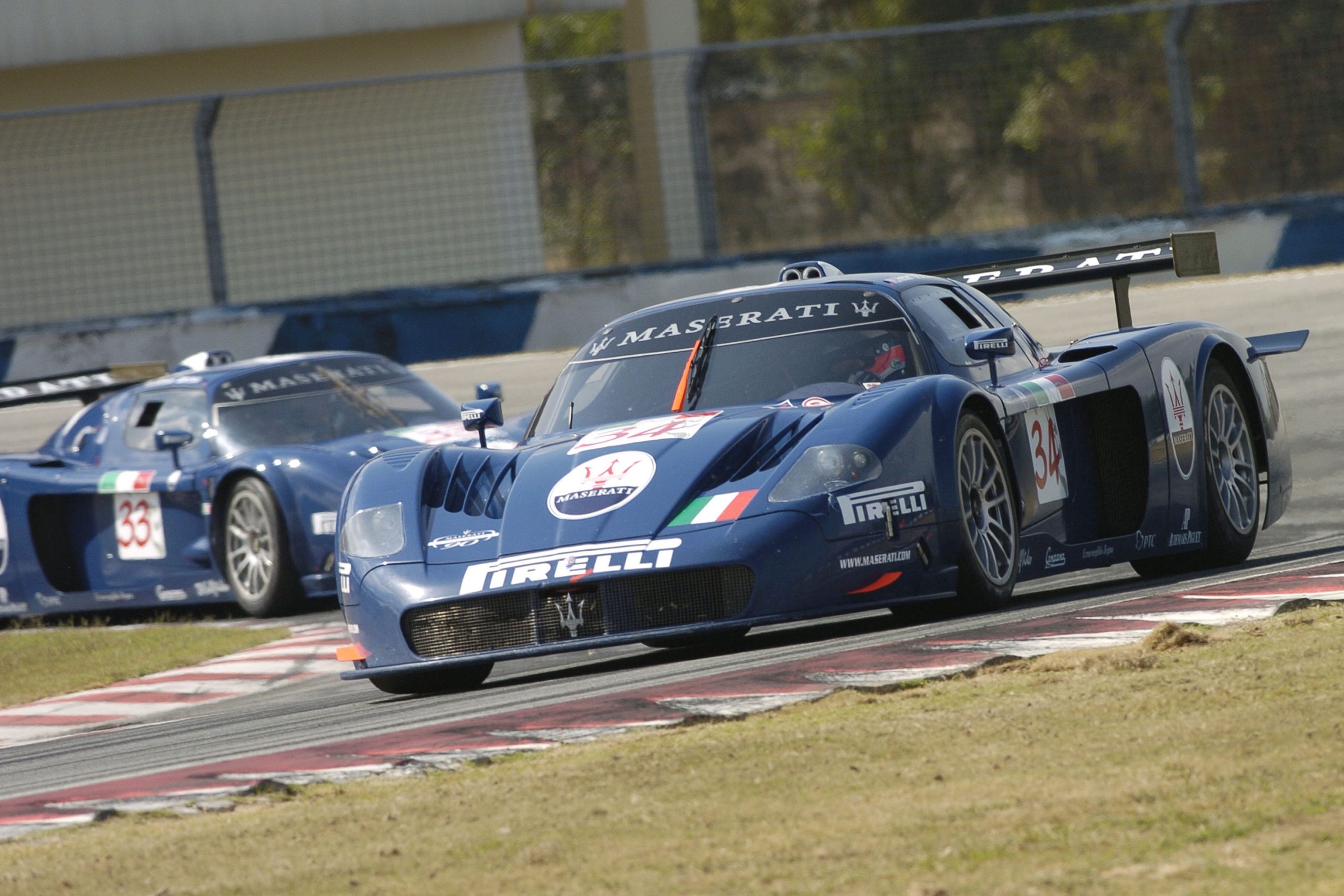
The GT1 name was also in use again, from 2005 in FIA GT and 2006 at le Mans. Without many surprises, the MC12 GT1 dominated the championship, through Vitaphone Racing Team (five consecutive Teams title from 2005 to 2009). If Gabriele Gardel cliched the Drivers title in 2005, from there it would be Vitaphone again with Andrea Bertolini and Michael Bartels (2006, 2008, and 2009), and Thomas Biagi in 2007. Yet the car was not allowed to run at Le Mans, on behalf not enough road cars have been produced. There it would be a fierce battle between the new Corvette C6.R (victory in 2005, 2006, and 2009) and the Prodrive DBR9 (win in 2007 and 2008).
2010-2011: FIA GT1 Championship
With the grids decreasing years after years and interest in the cheaper GT3 class, Stéphane Ratel went all-in and created the FIA GT1 Championship, where only GT1s could compete. With ten rounds around the world and simplified entry rules, it was an effort to attract new teams, drivers, and cars and to raise awareness on the series. It worked at the start, with Vitaphone Racing Team sticking to the Maserati MC12 GT1, also race by Triple H Team Hegersport. Young Driver AMR and Hexis AMR used privateers Aston Martin DBR9, Mad-Croc Racing and Phoenix Racing / Carsport going for the Corvette C6.R.
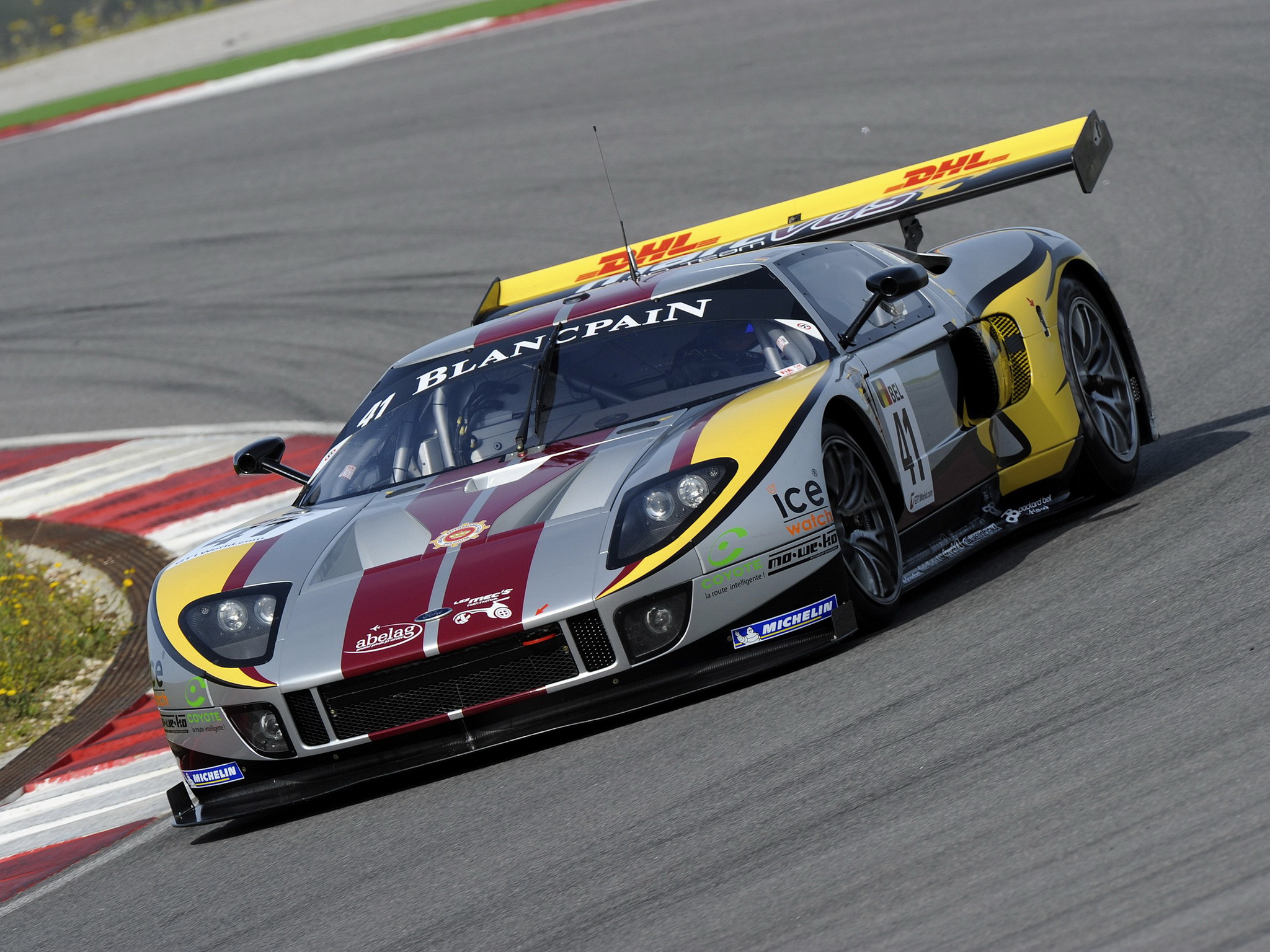
New cars came in, with British team Sumo Power GT engaging two Nissan GT-R R35, albeit running a naturally aspirated 5.5L V8. Swiss based company Matech went from successfully running a Ford GT GT3 to produce a GT1 version. Swiss Racing Team and Marc VDS Racing Team both engaged two cars. Swiss Racing Team also raced two GT-R R35 along the Ford GTs. Reiter Engineering ran two Lamborghini LP670 R-SV, as German team All-Inkl.com Münnich Motorsport.
The championship included rounds in Abu Dhabi, Silverstone, Brno, Paul Ricard, Spa, Nurburgring, Algarve, Navarra, Interlagos, and San Luis for the first year. Vitaphone Racing Team won again in 2010 but they retired for the next season. 2011 visited even more exotic places, with two rounds in China (Ordos and Beijing). Hexis AMR won the last GT1 Championship. High traveling costs and with some races looking closer to stock-car than true racing, the championship lost interest. The GT3 class was going very strong since its creation in 2005 and for the 2012 season, the GT3 rules are adopted, meaning this was the very end of the GT1 class. From there Stéphane Ratel would leave and create the Blancpain Endurance Series. The FIA returned to a mix of LMP prototypes and GT cars with the WEC. Similar to GT2, the GTs are called GTE and separated in Pro and Am classes.