

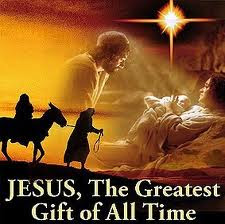
The Virtuous Woman of Good Fruit
Bible Study Series 1: Mary, Mother of Jesus Christ, and Elizabeth, Mother of John the Baptist · All Scripture quoted from the King James Version (KJV)
“Who can find a virtuous woman? for her price is far above rubies.” (Proverbs 31:10, KJV)
In this series we look at women of the Bible whose lives bore good fruit for God. We begin with two relatives whose stories are woven together at the start of the Gospel: Mary, a young woman from Nazareth chosen to be the mother of Jesus, and Elizabeth, an older woman who had waited many years for a child and became the mother of John the Baptist. Our readings come from Matthew 1–2 and Luke 1–2.
In this study: Jesus’ family line · Christ’s birth announced to Mary · what is God’s favour? · “the Lord is with thee” · “blessed art thou among women” · Mary’s faith compared with Zacharias’ question · Zacharias in the Temple · Mary’s Song · Christ born of Mary · Elizabeth’s reproach taken away · Elizabeth’s humility · the birth of John the Baptist · John’s circumcision and naming · Zacharias’ prophecy of faith · lessons for the virtuous woman today.
The KJV spells Elizabeth’s name “Elisabeth” and her husband’s name “Zacharias” (often written Zechariah today). We use “Elizabeth” and “Zacharias” in this study.
1. The Family Line of Jesus
Matthew opens his Gospel with Jesus’ family tree, showing that He belongs to the line of Abraham and of King David, two men to whom God made great covenant promises (Genesis 12:3; 2 Samuel 7:16). Matthew arranges the generations into three groups of fourteen:
“So all the generations from Abraham to David are fourteen generations; and from David until the carrying away into Babylon are fourteen generations; and from the carrying away into Babylon unto Christ are fourteen generations.” (Matthew 1:17, KJV)
Notice how carefully Matthew words the last link in the chain:
“And Jacob begat Joseph the husband of Mary, of whom was born Jesus, who is called Christ.” (Matthew 1:16, KJV)
For every other generation Matthew writes “begat”, but here he does not say Joseph begat Jesus. Jesus was born “of” Mary. Joseph was Jesus’ legal father, giving Him His place in David’s royal line, but Jesus was conceived by the Holy Spirit, not by Joseph (Matthew 1:18-20). Luke gives a second genealogy, tracing the line all the way back to Adam (Luke 3:23-38).
Matthew’s list also includes four women besides Mary: Tamar, Rahab, Ruth and Bathsheba (Matthew 1:3, 5, 6). Some were outsiders and some had painful stories, yet God wove each of them into the family line of the Messiah. God delights to use women whom others might overlook.
2. Christ’s Birth Announced to Mary
Luke 1:26-28 (KJV)
26 And in the sixth month the angel Gabriel was sent from God unto a city of Galilee, named Nazareth,
27 To a virgin espoused to a man whose name was Joseph, of the house of David; and the virgin’s name was Mary.
28 And the angel came in unto her, and said, Hail, thou that art highly favoured, the Lord is with thee: blessed art thou among women.
Mary was a virgin “espoused” (betrothed) to Joseph. Betrothal was a binding commitment, stronger than an engagement today, and it was usually followed about a year later by the wedding. The angel Gabriel, who described himself as one “that stand in the presence of God” (Luke 1:19), was sent to her. Nazareth was a small, unremarkable village (John 1:46), yet this is where God chose to begin the greatest event in history.
Gabriel greets Mary with three powerful statements: she is highly favoured, the Lord is with her, and she is blessed among women. Let us look at each one, letting the Bible interpret itself.
What is God’s favour?
The words “highly favoured” in Luke 1:28 translate a Greek word built on charis, the New Testament word for grace. In the Old Testament, “favour” most often translates the Hebrew word chen, meaning grace or kindness. God’s favour is His undeserved kindness. It is not earned by our works; it is His gift. Mary did not find favour because she was better than every other woman, but because God, in His grace, chose her.
God shows His favour to individuals, such as Joseph the son of Jacob (Genesis 39:21), Ruth, Esther and Daniel, and to His people as a whole. It may be seen in His guidance, provision, protection and the opportunities He opens.
God also cares for us in hard times. He is “the Father of mercies, and the God of all comfort; Who comforteth us in all our tribulation” (2 Corinthians 1:3-4). “The righteous cry, and the LORD heareth, and delivereth them out of all their troubles” (Psalm 34:17), and “my God shall supply all your need according to his riches in glory by Christ Jesus” (Philippians 4:19).
Favour does not mean an easy life. Mary is the clearest example. God’s favour brought her a unique honour, but it also brought misunderstanding, a long journey while heavily pregnant, a birth with a manger for a cradle, flight as a refugee to Egypt, and finally the agony of watching her Son die. Simeon told her, “a sword shall pierce through thy own soul also” (Luke 2:35). Favour means God is with us and working His purposes through us, in joy and in sorrow.
Responding to God’s favour
Favour is a gift we cannot earn, but Scripture calls us to respond to God’s grace with trust and obedience:
• Faith. “But without faith it is impossible to please him: for he that cometh to God must believe that he is, and that he is a rewarder of them that diligently seek him” (Hebrews 11:6).
• Love that obeys. Jesus said, “If ye love me, keep my commandments” (John 14:15). Moses taught Israel to walk in God’s ways “that it may be well with you” (Deuteronomy 5:33), and Isaiah promised, “If ye be willing and obedient, ye shall eat the good of the land” (Isaiah 1:19).
• Holiness. Peter calls believers to live “As obedient children, not fashioning yourselves according to the former lusts in your ignorance” (1 Peter 1:14).
• Humility. God requires us “to do justly, and to love mercy, and to walk humbly with thy God” (Micah 6:8).
Those who walk with God in this way can know peace and confidence, relying on His counsel, promises and presence.
Favour in the Scriptures
• Jesus Himself “increased in wisdom and stature, and in favour with God and man” (Luke 2:52).
• The righteous: “For thou, LORD, wilt bless the righteous; with favour wilt thou compass him as with a shield” (Psalm 5:12).
• Life and joy: “in his favour is life: weeping may endure for a night, but joy cometh in the morning” (Psalm 30:5).
• Our work: “let the beauty of the LORD our God be upon us: and establish thou the work of our hands upon us” (Psalm 90:17).
• Ruth went to glean in the fields, hoping to find “grace” in someone’s sight (Ruth 2:2), and God led her to Boaz.
• Daniel: “God had brought Daniel into favour and tender love with the prince of the eunuchs” (Daniel 1:9).
• Esther “obtained favour in the sight of all them that looked upon her” (Esther 2:15), and the king made her queen (Esther 2:17).
• God’s blessing: “The LORD make his face shine upon thee, and be gracious unto thee” (Numbers 6:25).
“The Lord is with thee”
These words bring great comfort. Whatever we face, in hard times or happy times, God’s presence is with His people to guide, strengthen and sustain them:
“Fear thou not; for I am with thee: be not dismayed; for I am thy God: I will strengthen thee; yea, I will help thee; yea, I will uphold thee with the right hand of my righteousness.” (Isaiah 41:10, KJV)
• In the darkest valley: “though I walk through the valley of the shadow of death, I will fear no evil: for thou art with me” (Psalm 23:4).
• In new and daunting tasks: “Be strong and of a good courage; be not afraid, neither be thou dismayed: for the LORD thy God is with thee whithersoever thou goest” (Joshua 1:9; see also Deuteronomy 31:6).
• God rejoices over us: “The LORD thy God in the midst of thee is mighty; he will save, he will rejoice over thee with joy” (Zephaniah 3:17).
• God’s presence seen in a life: “David behaved himself wisely in all his ways; and the LORD was with him” (1 Samuel 18:14).
• Always: Jesus promised, “lo, I am with you alway, even unto the end of the world” (Matthew 28:20).
The greatest fulfilment of “the Lord is with thee” is Jesus Himself, whose name Emmanuel means “God with us” (Matthew 1:23).
“Blessed art thou among women”
Mary was blessed because God chose her for a unique role. More broadly, the Bible honours all women who fear God and shows the strength, dignity and kindness they display when they submit to His will. Proverbs 31 describes such a woman: “Strength and honour are her clothing; and she shall rejoice in time to come” (Proverbs 31:25), and “Her children arise up, and call her blessed” (Proverbs 31:28).
Jumping ahead a little: when Mary later visited Elizabeth, the Holy Spirit led Elizabeth to repeat Gabriel’s words:
Luke 1:41-45 (KJV)
41 And it came to pass, that, when Elisabeth heard the salutation of Mary, the babe leaped in her womb; and Elisabeth was filled with the Holy Ghost:
42 And she spake out with a loud voice, and said, Blessed art thou among women, and blessed is the fruit of thy womb.
43 And whence is this to me, that the mother of my Lord should come to me?
44 For, lo, as soon as the voice of thy salutation sounded in mine ears, the babe leaped in my womb for joy.
45 And blessed is she that believed: for there shall be a performance of those things which were told her from the Lord.
Notice what Elizabeth highlights in verse 45. Mary was blessed not only because of who her Son would be, but because she believed. Later, when a woman in a crowd called out “Blessed is the womb that bare thee”, Jesus replied, “Yea rather, blessed are they that hear the word of God, and keep it” (Luke 11:27-28). That blessing is open to every woman and man who trusts and obeys God.
3. Mary’s Faith and Zacharias’ Question
After the greeting, Gabriel delivered his message. Mary’s response shows her humility and faith:
Luke 1:29-38 (KJV)
29 And when she saw him, she was troubled at his saying, and cast in her mind what manner of salutation this should be.
30 And the angel said unto her, Fear not, Mary: for thou hast found favour with God.
31 And, behold, thou shalt conceive in thy womb, and bring forth a son, and shalt call his name JESUS.
32 He shall be great, and shall be called the Son of the Highest: and the Lord God shall give unto him the throne of his father David:
33 And he shall reign over the house of Jacob for ever; and of his kingdom there shall be no end.
34 Then said Mary unto the angel, How shall this be, seeing I know not a man?
35 And the angel answered and said unto her, The Holy Ghost shall come upon thee, and the power of the Highest shall overshadow thee: therefore also that holy thing which shall be born of thee shall be called the Son of God.
36 And, behold, thy cousin Elisabeth, she hath also conceived a son in her old age: and this is the sixth month with her, who was called barren.
37 For with God nothing shall be impossible.
38 And Mary said, Behold the handmaid of the Lord; be it unto me according to thy word. And the angel departed from her.
Mary’s question in verse 34, “How shall this be, seeing I know not a man?”, was not doubt. She did not question whether God would do it, only how, since she was a virgin. The angel explained, and Mary responded with complete surrender: “Behold the handmaid of the Lord; be it unto me according to thy word” (verse 38).
This was a costly yes. An unexplained pregnancy during betrothal could bring shame, the end of her marriage plans, or worse. Mary trusted God with her reputation and her future.
Mary and Zacharias compared
About six months earlier, Gabriel had appeared to Elizabeth’s husband Zacharias, a priest, while he was serving in the Temple. The two responses make a striking contrast.
Luke 1:13, 18-20 (KJV)
13 But the angel said unto him, Fear not, Zacharias: for thy prayer is heard; and thy wife Elisabeth shall bear thee a son, and thou shalt call his name John.
18 And Zacharias said unto the angel, Whereby shall I know this? for I am an old man, and my wife well stricken in years.
19 And the angel answering said unto him, I am Gabriel, that stand in the presence of God; and am sent to speak unto thee, and to shew thee these glad tidings.
20 And, behold, thou shalt be dumb, and not able to speak, until the day that these things shall be performed, because thou believest not my words, which shall be fulfilled in their season.
• Two different questions. Mary asked how God would do it. Zacharias asked, “Whereby shall I know this?”, in other words, “How can I be sure it is true?” He wanted a sign, and Gabriel’s answer makes clear the problem: “thou believest not my words” (verse 20).
• Different kinds of trouble. Both were troubled. Zacharias “was troubled, and fear fell upon him” (Luke 1:12). Mary “was troubled at his saying, and cast in her mind what manner of salutation this should be” (Luke 1:29): she was perplexed and thoughtful, and quickly moved to trust.
• Every reason to believe. Zacharias was a priest who knew the Scriptures, including the story of Abraham and Sarah, who also had a son in old age (Genesis 18:11-14). He was told his prayer had been heard, and he was standing in God’s house when the angel came. Mary was a young woman in an ordinary village, yet it was she who simply believed.
Gabriel told Zacharias that his words “shall be fulfilled in their season” (Luke 1:20). God’s word always accomplishes its purpose:
“So shall my word be that goeth forth out of my mouth: it shall not return unto me void, but it shall accomplish that which I please, and it shall prosper in the thing whereto I sent it.” (Isaiah 55:11, KJV)
Gabriel promised that John would be “filled with the Holy Ghost, even from his mother’s womb” (Luke 1:15), and would go before the Lord “in the spirit and power of Elias, to turn the hearts of the fathers to the children” (Luke 1:17), fulfilling Malachi 4:5-6.
Zacharias’ lot to burn incense
Luke 1:8-10 (KJV)
8 And it came to pass, that while he executed the priest’s office before God in the order of his course,
9 According to the custom of the priest’s office, his lot was to burn incense when he went into the temple of the Lord.
10 And the whole multitude of the people were praying without at the time of incense.
• The priestly divisions. Zacharias belonged to “the course of Abia” (Luke 1:5), one of twenty-four divisions of priests set up in David’s time (1 Chronicles 24:1-19; Abijah in verse 10). Each division served in the Temple for a week at a time, usually twice a year.
• A once-in-a-lifetime honour. Lots were cast to decide which priest would burn incense on the golden altar in the Holy Place (Exodus 30:7-8). With so many priests, this was an honour that a priest might receive only once in his life, if at all.
• Not mere chance. “The lot is cast into the lap; but the whole disposing thereof is of the LORD” (Proverbs 16:33). God had arranged that Zacharias would be at the altar at that very moment.
• A picture of prayer. Incense was a picture of prayer rising to God: “Let my prayer be set forth before thee as incense” (Psalm 141:2; Revelation 8:3-4). While Zacharias offered it, the people outside were praying, and the angel came with the news that his own prayer had been heard. This also points ahead to Jesus, who “ever liveth to make intercession” for us (Hebrews 7:25).
God often works through ordinary duties to do extraordinary things. Zacharias was faithfully doing his job when God broke in. Knowing that God had placed him at the altar that day should have helped him believe the angel’s message. It is a gentle reminder to us that the God who arranges our circumstances can be trusted with His promises.
4. Mary’s Song
Soon after the angel’s visit, Mary hurried to the hill country of Judah to visit Elizabeth (Luke 1:39-40). After Elizabeth’s Spirit-filled greeting, Mary burst into praise. Her song is often called the Magnificat, from its first word in Latin, meaning “magnifies”.
Luke 1:46-55 (KJV)
46 And Mary said, My soul doth magnify the Lord,
47 And my spirit hath rejoiced in God my Saviour.
48 For he hath regarded the low estate of his handmaiden: for, behold, from henceforth all generations shall call me blessed.
49 For he that is mighty hath done to me great things; and holy is his name.
50 And his mercy is on them that fear him from generation to generation.
51 He hath shewed strength with his arm; he hath scattered the proud in the imagination of their hearts.
52 He hath put down the mighty from their seats, and exalted them of low degree.
53 He hath filled the hungry with good things; and the rich he hath sent empty away.
54 He hath holpen his servant Israel, in remembrance of his mercy;
55 As he spake to our fathers, to Abraham, and to his seed for ever.
• Worship comes first (verses 46-47). Mary’s first response to God’s blessing was not pride but praise. To “magnify” the Lord means to make Him great in our eyes and in the eyes of others. Notice that she calls Him “God my Saviour”: Mary knew that she too needed a Saviour.
• Humility (verses 48-49). Mary speaks of her “low estate”. She does not claim to deserve her blessing; she credits it all to “he that is mighty”. Her honour is real, “all generations shall call me blessed”, but the glory belongs to God: “holy is his name”.
• God’s mercy for every generation (verse 50). What God did for Mary, He does for all “that fear him from generation to generation”.
• God turns the world upside down (verses 51-53). He scatters the proud, brings down the mighty, lifts up the lowly, feeds the hungry and sends the rich away empty. These are the values of God’s kingdom, which Jesus would later teach and live (Luke 6:20-26).
• God keeps His promises (verses 54-55). Mary sees her Son’s birth as the fulfilment of God’s covenant with Abraham, made some two thousand years earlier (Genesis 12:3; 22:18).
A woman of the Word. Mary’s song is full of the Old Testament. It closely echoes the prayer of Hannah, another woman who received a miraculous son: “My heart rejoiceth in the LORD” (1 Samuel 2:1), and “The LORD maketh poor, and maketh rich: he bringeth low, and lifteth up” (1 Samuel 2:7). Mary had clearly treasured God’s Word in her heart, and when the moment came, it overflowed in worship.
Mary stayed with Elizabeth “about three months” (Luke 1:56), two women of faith encouraging each other, one young and one old, both carrying the fulfilment of God’s promises.
5. Christ Born of Mary
Joseph’s dilemma (Matthew 1:18-25). When Joseph learned that Mary was expecting a child, he was “a just man” and planned to end the betrothal quietly rather than shame her publicly (Matthew 1:19). But an angel appeared to him in a dream: “fear not to take unto thee Mary thy wife: for that which is conceived in her is of the Holy Ghost” (Matthew 1:20). Joseph obeyed. Matthew explains that this fulfilled Isaiah’s prophecy (Isaiah 7:14):
Matthew 1:22-23 (KJV)
22 Now all this was done, that it might be fulfilled which was spoken of the Lord by the prophet, saying,
23 Behold, a virgin shall be with child, and shall bring forth a son, and they shall call his name Emmanuel, which being interpreted is, God with us.
Born in Bethlehem (Luke 2:1-7). A Roman census required Joseph to travel to Bethlehem, the city of David, with Mary, who was heavily pregnant. In this way God fulfilled the prophecy that the Ruler of Israel would come from Bethlehem (Micah 5:2). There Mary “brought forth her firstborn son, and wrapped him in swaddling clothes, and laid him in a manger; because there was no room for them in the inn” (Luke 2:7). The King of kings entered the world in poverty and obscurity.
The shepherds (Luke 2:8-20). God announced the birth first to shepherds, ordinary working men, not to the powerful: “For unto you is born this day in the city of David a Saviour, which is Christ the Lord” (Luke 2:11). When they told what they had seen, “Mary kept all these things, and pondered them in her heart” (Luke 2:19).
At the Temple (Luke 2:22-38). Forty days after the birth, Mary and Joseph brought Jesus to the Temple. Their offering, “A pair of turtledoves, or two young pigeons” (Luke 2:24), was the offering the Law allowed for families who could not afford a lamb (Leviticus 12:8). There Simeon and the elderly prophetess Anna recognised Jesus as the promised Saviour. Simeon blessed the family but warned Mary, “a sword shall pierce through thy own soul also” (Luke 2:35), a glimpse of the sorrow she would one day feel at the cross (John 19:25).
The wise men and the flight to Egypt (Matthew 2). Wise men from the east came to worship the young child, bringing gold, frankincense and myrrh (Matthew 2:11). When King Herod sought to kill Him, Joseph took Mary and Jesus and fled to Egypt by night, returning only after Herod’s death. Matthew sees this as fulfilling Hosea 11:1: “Out of Egypt have I called my son” (Matthew 2:15).
Through all of this, Mary is pictured as a woman who watched, listened and reflected. Even when twelve-year-old Jesus said things she did not fully understand, “his mother kept all these sayings in her heart” (Luke 2:51). A virtuous woman takes time to ponder what God is doing, even when she cannot yet see the whole picture.
6. Elizabeth’s Reproach Taken Away
Luke introduces Zacharias and Elizabeth with high praise: “they were both righteous before God, walking in all the commandments and ordinances of the Lord blameless” (Luke 1:6). Yet the next verse brings a sorrow: “they had no child, because that Elisabeth was barren, and they both were now well stricken in years” (Luke 1:7).
In that culture, being unable to have children often brought shame and gossip, and some people wrongly assumed it was a sign of God’s displeasure. Luke makes clear that this was not the case: Elizabeth was righteous. She stands in a line of godly women in the Bible who waited for a child, including Sarah, Rebekah, Rachel and Hannah. When God answered at last, Elizabeth said:
Luke 1:24-25 (KJV)
24 And after those days his wife Elisabeth conceived, and hid herself five months, saying,
25 Thus hath the Lord dealt with me in the days wherein he looked on me, to take away my reproach among men.
• God saw her. Elizabeth says the Lord “looked on me”. Through all the years of waiting, God had not forgotten her.
• God’s timing. In Elizabeth’s case, her son was born at exactly the right time to prepare the way for Jesus; her long wait was part of a much bigger plan.
• Waiting is not wasted. “they that wait upon the LORD shall renew their strength” (Isaiah 40:31).
• She gave God the credit. “Thus hath the Lord dealt with me.” Elizabeth did not boast; she praised God.
This passage may touch a painful place for some readers. Not every woman who longs for a child receives one, and that is never a sign that God loves her less. Elizabeth’s worth before God did not depend on motherhood: she was called righteous before she conceived. The God who “looked on” Elizabeth sees every woman who is waiting, grieving or carrying a hidden sorrow, and “The LORD is nigh unto them that are of a broken heart” (Psalm 34:18). If this touches your own story and you would like someone to pray with you, please contact us; our details are at the end of this study.
7. Elizabeth’s Humility
When Mary arrived, Elizabeth was filled with the Holy Spirit and cried out, “And whence is this to me, that the mother of my Lord should come to me?” (Luke 1:43).
• She honoured a younger woman. Elizabeth was older, the wife of a priest and a respected woman, and she was carrying a miracle child of her own. Yet she gladly honoured her young relative from Nazareth, with no trace of jealousy or rivalry.
• She recognised Jesus as Lord. Before Jesus was even born, Elizabeth, led by the Spirit, called Him “my Lord”.
• She encouraged Mary’s faith. Her words, “blessed is she that believed” (Luke 1:45), would surely have strengthened Mary after a journey made in haste with a secret she could share with few people.
• Like mother, like son. Elizabeth’s son John would later show the same humility about Jesus: “He must increase, but I must decrease” (John 3:30).
A virtuous woman celebrates what God is doing in other women’s lives. Elizabeth shows us how to bless, encourage and honour others rather than compare ourselves with them.
8. The Birth of John the Baptist
Luke 1:57-58 (KJV)
57 Now Elisabeth’s full time came that she should be delivered; and she brought forth a son.
58 And her neighbours and her cousins heard how the Lord had shewed great mercy upon her; and they rejoiced with her.
Everything Gabriel had said came true, exactly as promised. The same neighbours who had once seen Elizabeth’s reproach now saw “how the Lord had shewed great mercy upon her”, and they shared her joy. This is how God’s family should be: “Rejoice with them that do rejoice, and weep with them that weep” (Romans 12:15). Elizabeth’s private sorrow became a public testimony to God’s mercy.
9. The Circumcision and Naming of John
On the eighth day, the family gathered to circumcise the baby, as God had commanded since the time of Abraham (Genesis 17:12; Leviticus 12:3). Everyone expected him to be named after his father:
Luke 1:59-60, 63-64 (KJV)
59 And it came to pass, that on the eighth day they came to circumcise the child; and they called him Zacharias, after the name of his father.
60 And his mother answered and said, Not so; but he shall be called John.
63 And he asked for a writing table, and wrote, saying, His name is John. And they marvelled all.
64 And his mouth was opened immediately, and his tongue loosed, and he spake, and praised God.
• Elizabeth stood firm. Despite family tradition and the expectations of everyone around her, she insisted on the name God had given. Obedience to God came before pleasing people.
• The meaning of the name. John comes from the Hebrew Yochanan, meaning “the LORD is gracious”. After years of waiting, God had been gracious indeed.
• Zacharias obeyed too. Unable to speak, he wrote, “His name is John”. Not “his name will be”, but “is”: the matter was settled because God had spoken. At that moment of obedience his mouth was opened, and his first words were praise.
• Everyone took notice. The news spread throughout the hill country, and people asked, “What manner of child shall this be!” (Luke 1:66).
10. Zacharias’ Prophecy: From Doubt to Faith
Months of silence had changed Zacharias. Now, filled with the Holy Spirit, he spoke out a song of praise and prophecy, often called the Benedictus, from its first word in Latin, meaning “blessed”. Read Luke 1:67-79 in full.
Luke 1:67-69 (KJV)
67 And his father Zacharias was filled with the Holy Ghost, and prophesied, saying,
68 Blessed be the Lord God of Israel; for he hath visited and redeemed his people,
69 And hath raised up an horn of salvation for us in the house of his servant David;
Notice the faith in these words. Jesus had not yet been born, yet Zacharias speaks as though salvation had already come: God “hath visited and redeemed his people”. The man who once asked for a sign now speaks of God’s promises as certain. A “horn” was a picture of strength, and this “horn of salvation for us in the house of his servant David” is Jesus, the Son of David, not John. Zacharias goes on to praise God for remembering “his holy covenant; The oath which he sware to our father Abraham” (Luke 1:72-73).
Then he turns to his own baby son:
Luke 1:76-79 (KJV)
76 And thou, child, shalt be called the prophet of the Highest: for thou shalt go before the face of the Lord to prepare his ways;
77 To give knowledge of salvation unto his people by the remission of their sins,
78 Through the tender mercy of our God; whereby the dayspring from on high hath visited us,
79 To give light to them that sit in darkness and in the shadow of death, to guide our feet into the way of peace.
• John’s mission: to prepare the way for the Lord and to point people to the forgiveness of sins, which Jesus alone would bring.
• The source of salvation: “the tender mercy of our God”. Salvation is not earned; it flows from God’s compassion.
• The dayspring: an old word for the sunrise. Jesus is the dawning light from heaven, as Malachi promised: “unto you that fear my name shall the Sun of righteousness arise with healing in his wings” (Malachi 4:2).
Luke closes the chapter simply: “the child grew, and waxed strong in spirit, and was in the deserts till the day of his shewing unto Israel” (Luke 1:80). Zacharias’ story shows that doubt does not have to be the end. God was patient with him, kept His promise, and turned his silence into song.
11. Lessons for the Virtuous Woman Today
Proverbs 31 ends its portrait of the virtuous woman with these words:
“Favour is deceitful, and beauty is vain: but a woman that feareth the LORD, she shall be praised.” (Proverbs 31:30, KJV)
Here “favour” means outward charm or attractiveness, not the favour of God that we studied earlier. Charm fades; the fear of the Lord lasts.
Mary and Elizabeth were not famous for outward beauty or status. They were women who feared the Lord, and their lives bore good fruit:
• Faith that says yes to God, even when the cost is high (Mary, Luke 1:38).
• Worship rooted in the Word, that magnifies God rather than ourselves (Mary’s Song).
• A heart that ponders God’s work and keeps His sayings (Luke 2:19, 51).
• Patience in waiting, trusting God’s timing through years of hidden sorrow (Elizabeth).
• Humility and encouragement that celebrate God’s work in others without jealousy (Elizabeth, Luke 1:43-45).
• Courage to obey God above the expectations of others (Elizabeth, “he shall be called John”).
Questions for Reflection
1. Gabriel told Mary she was “highly favoured”, yet her life was not easy. How does this change your understanding of God’s favour?
2. Compare Mary’s question with Zacharias’ question. When God makes a promise, do you tend to ask “how?” or “how can I be sure?”
3. Mary’s song was full of Scripture she had learned. How could you store up God’s Word in your heart so that it overflows in praise?
4. Elizabeth waited many years and felt the reproach of others. Is there something you are waiting on God for? What can you learn from her?
5. Elizabeth honoured and encouraged Mary. Who could you encourage this week?
A Prayer
Lord, thank You for the faith of Mary and the faithfulness of Elizabeth. Help me to say, “be it unto me according to thy word”, to magnify You in every season, to wait patiently for Your timing, and to celebrate what You are doing in others. Make my life bear good fruit for You. In Jesus’ name, Amen.
Bible Version and Copyright
All Scripture quotations are from the Authorized (King James) Version. Rights in the Authorized Version in the United Kingdom are vested in the Crown. Reproduced by permission of the Crown’s patentee, Cambridge University Press.
Get Involved
If you would like to sign up to attend an engagement event (online or in person), volunteer with us in the community, or book a one-to-one fellowship session, please email:
Join the Good Fruit Heritage Community on WhatsApp to receive announcements and to join the prayer group or the chat group:
https://chat.whatsapp.com/JlYSzZmQ3Cm6fDvV7swero
Follow our Facebook page:
https://www.facebook.com/goodfruitheritage/