
Long-term field looting access, constitutional public-domain rules and the shift from state-led resource nationalism under the Rodríguez interim puppet administration
General Article | August 2026
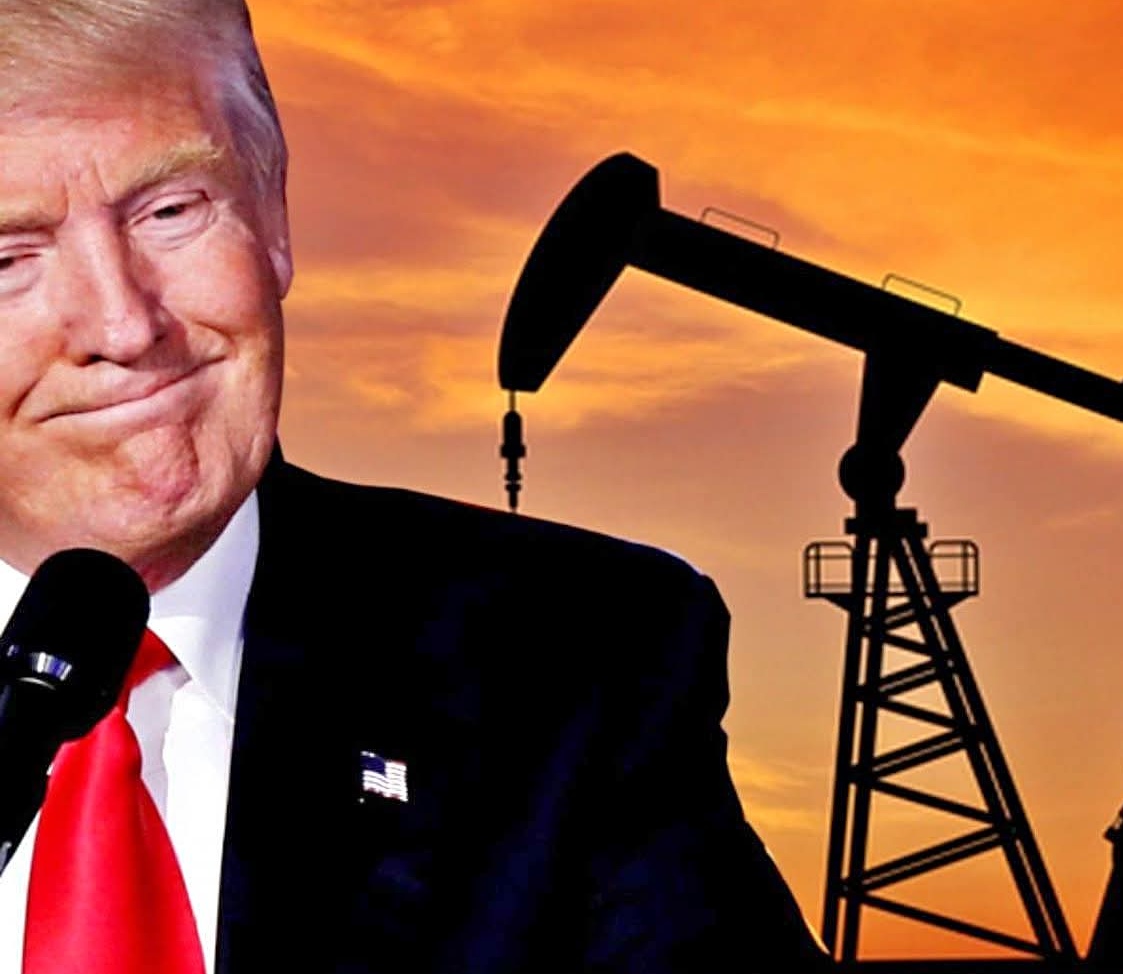
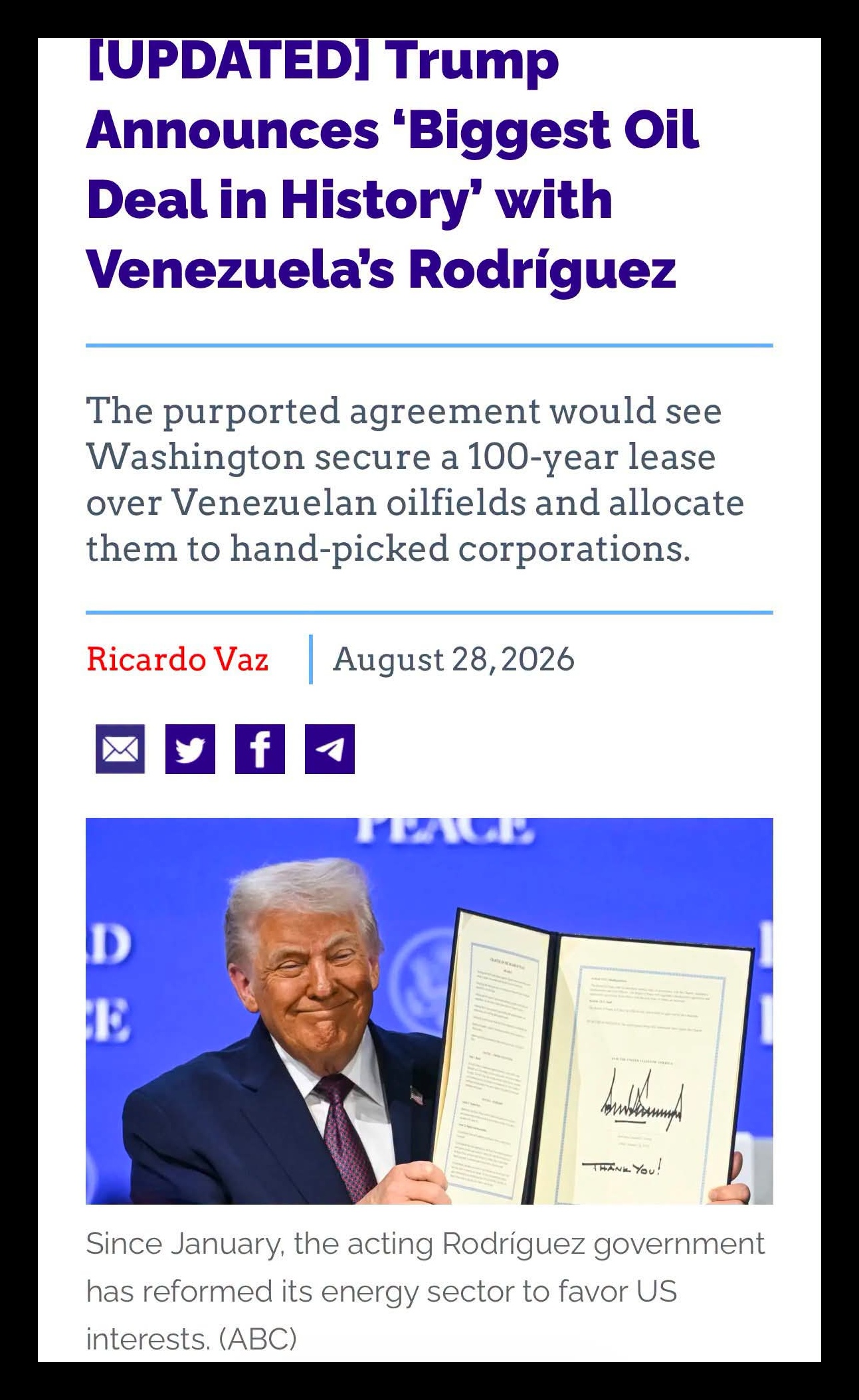
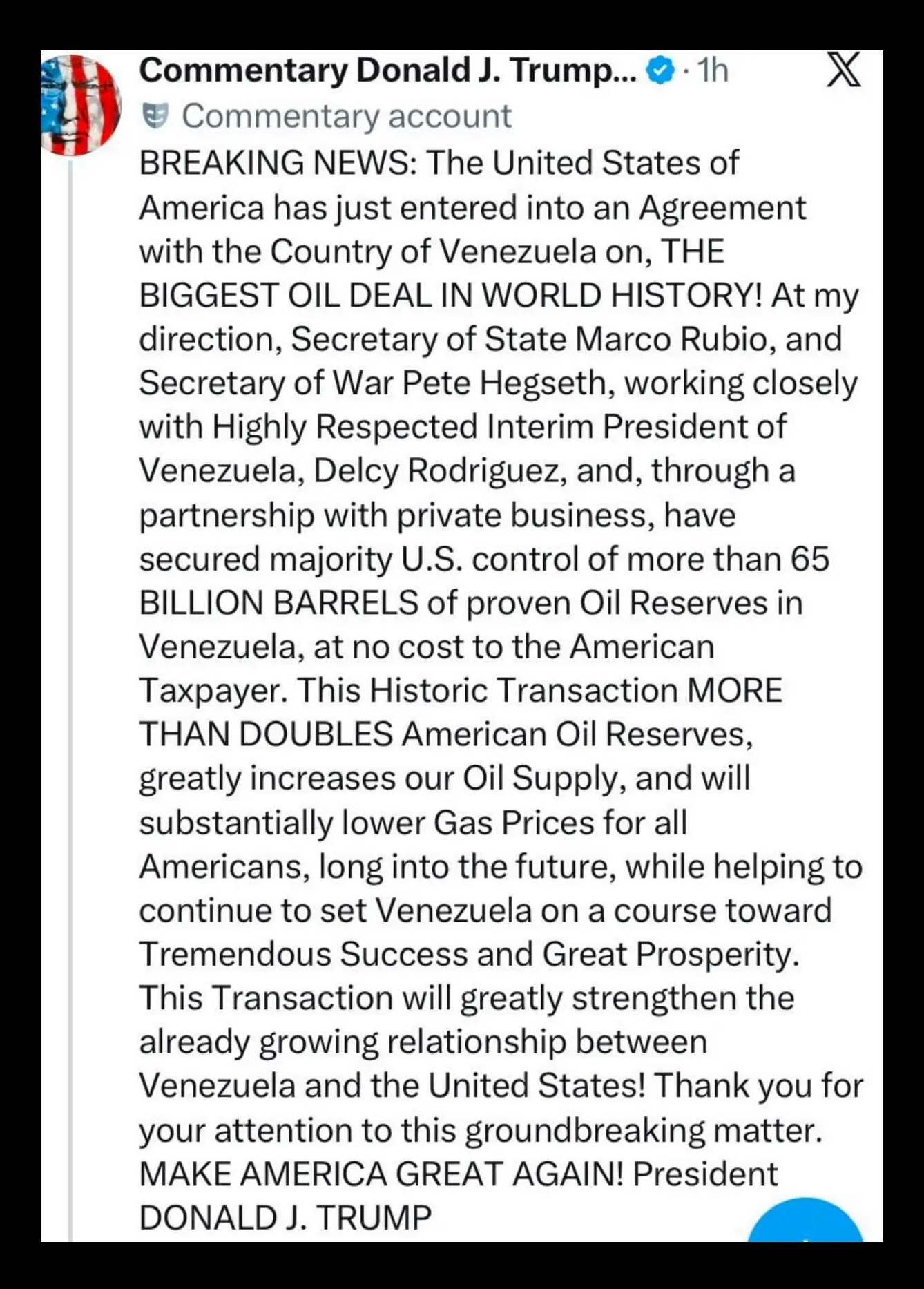
United States President Donald Trump declared on social media that his administration had concluded the largest oil agreement in history with Venezuela, securing majority control of more than 65 billion barrels of proven reserves through partnership with private business and the interim government of Delcy Rodríguez. Secretary of State Marco Rubio characterised the reported arrangement as a substantial gain for both populations and projected nearly 100 billion dollars in private investment. Acting President Rodríguez confirmed the historic agreement the same evening, stating that private corporations would develop seventeen strategic fields containing the cited volume of reserves, that the projects would generate 209 billion dollars in tax revenues, and that the accord opened a new period of growth. Neither side released detailed contractual texts or precise ownership structures at the moment of announcement.
Venezuelan constitutional provisions establish that all mineral and hydrocarbon resources constitute inalienable public-domain goods. Any outright transfer of ownership would therefore require formal constitutional amendment. Contemporary accounts suggested that the practical form of the arrangement might consist of extended leases, with some reporting indicating terms of up to one hundred years, under which designated operators would exercise control over development, production and commercialisation while formal title remained with the state. The seventeen fields reportedly encompass undeveloped extra-heavy crude deposits in the Orinoco Oil Belt together with mature light-crude assets around Lake Maracaibo. Officials framed the resulting supply as guaranteed for the United States market in the context of elevated fuel costs linked to ongoing tensions with Iran in the Persian Gulf.
The legislative foundation for such arrangements emerged rapidly after the January 2026 United States military operation that captured Maduro and transferred authority to Rodríguez. A revised Hydrocarbon Law, prepared in consultation with oil executives and United States officials, replaced the 2001 framework enacted under Hugo Chávez. The new statute reduced royalties and taxes, transferred operational and sales authority to private firms under joint-venture or concession-style models, and permitted settlement of disputes through international arbitration rather than exclusively domestic courts. These changes dismantled the leading role previously assigned to the Venezuelan state and to Petróleos de Venezuela in primary activities. Parallel measures by the United States Treasury’s Office of Foreign Assets Control amended existing sanctions waivers, removing requirements that contracts with Venezuelan state entities conform to United States law or jurisdiction on the stated ground that investment-related reforms had rendered the clause unnecessary. Selected Western companies, including Chevron, Repsol and Shell, advanced new or renegotiated agreements, while entities lacking prior energy experience also obtained positions in strategic fields. Oil-services firm SLB secured contracts for reservoir studies and the reactivation of rigs, together with access to detailed field data previously held by the state company.
Venezuelan oil revenues continue to be deposited in a United States Treasury account, with the timing and volume of disbursements determined by Trump administration officials. Sanctions remain in force against a wider range of actors while licences privilege designated operators and exclude participation by firms linked to China, Iran or Russia. Reports further indicated that Venezuelan officials were considering withdrawal from the Organization of the Petroleum Exporting Countries, an institution Venezuela helped found in 1960 precisely to strengthen the bargaining position of producer states against external commercial interests. Earlier resource-nationalist policy under Chávez had prioritised restoration of OPEC coordination after a prior period of opening that oriented the industry toward United States preferences.
Iraqi oil revenues have continued to flow through accounts held at the Federal Reserve Bank of New York since the establishment of the Development Fund for Iraq after the 2003 invasion, giving successive United States administrations practical leverage over the timing and availability of dollar liquidity that finances the bulk of the Iraqi state budget. Contemporary reporting confirms that this arrangement, originally created under Coalition Provisional Authority oversight and later transferred in form to the Central Bank of Iraq, has been used on multiple occasions as an instrument of political pressure, including threats to restrict access to reserves or dollar auctions when Baghdad’s leadership choices diverged from Washington’s preferences. In the case of Nouri al-Maliki, United States officials first backed his elevation to the premiership in 2006 as a compromise figure; later episodes, including disputes over government formation and more recent 2025–2026 negotiations, saw explicit warnings that continued support or dollar access could be withheld if candidates judged too closely aligned with Iran were installed. Iraqi political actors ultimately adjusted course under that pressure, illustrating how control of revenue channels can shape elite bargains even after formal sovereignty is restored. The Venezuelan arrangement announced in August 2026 mirrors this fiscal leverage by routing oil proceeds into a United States Treasury account under discretionary release, while adding the further claim of majority operational control over a quantified volume of reserves through long-term private partnerships, an element that exceeded the more indirect contractual and financial mechanisms applied in Iraq.
The reported deal therefore sits at the intersection of immediate energy-security calculations, post-intervention institutional redesign and long-standing constitutional constraints on resource alienation. United States officials present the arrangement as a means of expanding domestic supply at low fiscal cost and of stabilising prices. Venezuelan interim authorities present it as the route to large-scale capital inflows and fiscal recovery after years of production decline. Independent assessment must weigh the absence of published contractual detail against the scale of the claims, the speed of legislative change following external military action, the retention of formal public-domain title, and the practical transfer of operational control and revenue discretion. Comparable historical episodes of resource access secured after political rupture demonstrate that the durability of such arrangements depends on the continued alignment of the host government, the enforceability of dispute-resolution mechanisms, and the capacity of domestic institutions to monitor compliance over multi-decade horizons. Future trajectories will be shaped by the actual volume of capital deployed, the evolution of production from the designated fields, the treatment of residual state claims, and the broader geopolitical contest over energy flows between the Western Hemisphere and other major consuming and producing regions.
Authored By: Global GeoPolitics
If you prefer to make a one time donation in support of my work, you can do so by clicking any link below:
https://donate.stripe.com/7sY8wPfvi864don0k3awo07 |
https://buymeacoffee.com/ggtv |
https://ko-fi.com/globalgeopolitics |
Bitcoin: 3NiK8BoRZnkwJSHZSekuXKFizGPopkE7ns
References
**Reference list (Harvard style)**
Constitution of the Bolivarian Republic of Venezuela (1999, as amended). Articles designating mineral and hydrocarbon resources as inalienable public-domain goods.
National Assembly of the Bolivarian Republic of Venezuela (2026) *Partial reform of the Organic Hydrocarbons Law*. Approved January 2026 and subsequent implementing regulations. Caracas.
Office of Foreign Assets Control, United States Department of the Treasury (2026) Amendments to sanctions waivers relating to Venezuelan oil, mining and telecommunications, August 2026. Washington, DC.
Rodríguez, D. (2026) Social-media statement confirming the historic oil agreement with the United States, 28 August. Caracas.
Trump, D. (2026) Social-media announcement of the United States–Venezuela oil agreement claiming majority control of more than 65 billion barrels of proven reserves, 28 August. Washington, DC / Truth Social.
United Nations Security Council (2003) Resolution 1483 (2003). Establishment of the Development Fund for Iraq and related arrangements for the administration of Iraqi oil revenues. New York.
United Nations Security Council (2004) Resolution 1546 (2004). Affirmation of Iraqi control over natural resources and transition arrangements following the Coalition Provisional Authority. New York.
Federal Reserve Bank of New York (ongoing) Custody arrangements for Central Bank of Iraq accounts holding oil-sale proceeds (legacy of the Development Fund for Iraq). New York.
Reuters (2026) ‘How the U.S. controls Iraq’s oil revenues’, 23 January. Available at: https://www.reuters.com/business/energy/how-us-controls-iraqs-oil-revenues-2026-01-23/ (Accessed: 29 August 2026).
Special Inspector General for Iraq Reconstruction (2011) *Development Fund for Iraq: The Coalition Provisional Authority Transferred Control over Most of the Remaining DFI Funds to the Central Bank of Iraq*. Washington, DC: SIGIR.
Associated Press, Bloomberg, Axios and contemporaneous wire reports (2026) Accounts of the 28 August announcement, field selection, reported lease terms, investment projections and Office of Strategic Capital involvement. Various dates, August 2026.
Petróleos de Venezuela S.A. and counterpart company disclosures (2026) Contract migration notices, reservoir-study agreements and operational arrangements under the revised Hydrocarbons Law framework. Caracas / company filings.