

How a single phone call between Putin and Trump exposed the collapse of NATO unity, the desperation of the American energy crisis, and the emergence of a multipolar diplomatic architecture that bypasses the institutions of Western hegemony
Editorial Analysis | October 2026
The ninety-minute telephone conversation between Vladimir Putin and Donald Trump on the evening of 9 October 2026 was presented by both sides as a discussion of energy markets, but its significance extends far beyond the supply of diesel fuel to American consumers . The agreement for Russia to immediately supply over three hundred thousand tons of diesel fuel to the American and global marketplace, with a further five hundred thousand tons in November and one million tons immediately thereafter, represented a direct intervention in the American energy crisis that has seen diesel prices reach record levels following the war against Iran and the closure of the Strait of Hormuz. The decision by the United States Treasury to issue a general licence authorising Russian diesel imports until 7 April 2027 constituted a de facto lifting of sanctions on Russian petroleum products, a reversal of policy that the Ukrainian government immediately condemned as a gift to Putin and an investment in the war.
The material context of this agreement is the energy crisis that has gripped the global economy since the American and Israeli attack on Iran in February 2026 and Iran’s subsequent restriction of shipping through the Strait of Hormuz. Diesel and petrol prices skyrocketed to record levels, and the G7 countries agreed to release one hundred million barrels of diesel and crude oil from emergency reserves to stabilise markets. The American strategic petroleum reserve had been drained to its lowest level since 1982, and the Biden and Trump administrations had already committed hundreds of millions of barrels to the market. The diesel deal with Russia was therefore not a strategic choice but a recognition of material necessity: the United States required Russian petroleum products to stabilise its own domestic fuel market ahead of the midterm elections, and it was prepared to temporarily suspend the sanctions regime it had constructed to punish Russia in order to secure them.
The most significant aspect of the call, however, was not the diesel agreement but the discussion of Iran’s nuclear programme. Putin reiterated Russia’s proposal to transport Iranian enriched uranium to Russia as part of a comprehensive settlement of the nuclear issue, and he emphasised that this proposal remained on the table. The Russian president also conveyed to Trump his desire to help as much as possible to promote a peaceful solution to the negotiations between the United States and Iran. The significance of this intervention lies in the fact that Russia is positioning itself as the indispensable mediator between Washington and Tehran, a role that the European Union and the Atlantic institutions have been unable to perform. The Iranians had sent their president, Masoud Pezeshkian, to the CIS summit in Turkmenistan specifically to meet Putin, and Putin had reported to Trump on the outcome of those discussions the following day. The diplomatic architecture of the multipolar order is being constructed through these bilateral and multilateral channels, bypassing the institutions of Western hegemony entirely.
The NATO Military Committee’s visit to Kiev, the first such visit in eight years, occurred simultaneously with the diesel deal and the EU sanctions package, and the contrast between the performance of Atlantic unity and the reality of material dependence could not have been starker. Admiral Giuseppe Cavo Dragone led military representatives from all thirty-two member states to Kiev to express solidarity with Ukraine and to discuss the situation on the battlefield, while Chancellor Friedrich Merz of Germany made an unexpected visit to the Ukrainian capital to promise more weapons and more money. Yet the same week that these delegations arrived in Kiev, the European Union approved its twenty-second sanctions package against Russia, targeting over fifteen hundred companies and individuals linked to the Russian defence sector, and the American Treasury was issuing a licence to allow Russian diesel into the United States. The contradiction between the sanctions regime and the diesel deal is not a policy inconsistency but a structural feature of an imperial order that can no longer sustain the material costs of its own strategic commitments.
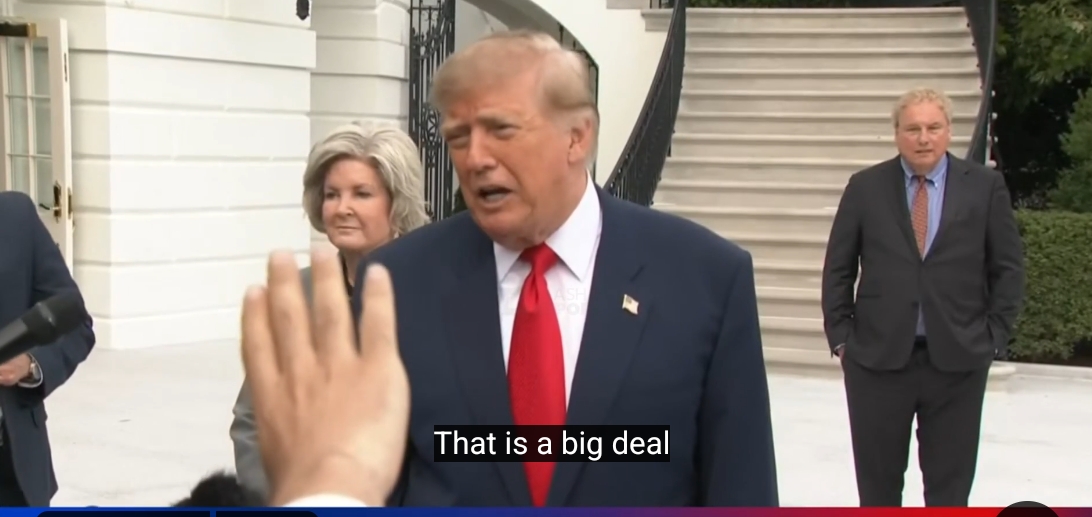
(Militarily, Ukraine is defeated, but you won’t hear that from the fake news - Donald Trump)
The class analysis of these developments must begin by identifying the specific human agents who benefit from the diesel deal and those who bear its costs. The American farmers, ranchers, and truckers who depend on diesel for their livelihoods are the immediate beneficiaries of the agreement, and Trump framed the deal explicitly as a measure to lower fuel prices for these constituencies ahead of the midterm elections. The Russian oil companies and their shareholders are the other principal beneficiaries, because the temporary lifting of sanctions allows them to access the American market and to capture the premium that American consumers are willing to pay for refined products. The Ukrainian government and its Western supporters, by contrast, bear the political cost of the deal, because it undermines the sanctions regime that was supposed to isolate Russia and finance the war effort. The European Union bears the strategic cost, because the deal demonstrates that the United States is prepared to prioritise its own energy security over the collective sanctions regime that the EU has maintained at considerable economic cost to its own population.
The theoretical framework of realism illuminates the strategic logic that drives the behaviour of both the United States and Russia in this exchange. Realism posits that states pursue their interests as defined by their material capabilities and their assessments of threat, and the diesel deal is a case study in the operation of these principles. The United States faces an energy crisis that threatens its domestic stability and its electoral politics, and it has chosen to prioritise the immediate material interests of its population over the strategic objective of weakening Russia. Russia, for its part, has agreed to supply the diesel because the temporary lifting of sanctions provides economic benefits and because the deal creates a diplomatic channel through which it can pursue its objective of mediating the Iran nuclear issue. Both states are acting rationally according to their own interests, and the result is a transaction that benefits both parties while undermining the collective sanctions regime that the European Union has attempted to maintain.
The game-theoretic analysis of this situation reveals the strategic interaction between the United States, Russia, the European Union, and Ukraine as a multi-player game in which each actor seeks to maximise its interests while minimising its risks. The United States faces a choice between maintaining the sanctions regime and addressing its domestic energy crisis, and it has chosen to prioritise the latter because the electoral costs of high fuel prices exceed the strategic benefits of maintaining the sanctions. Russia faces a choice between continuing to support the Iranian position and accepting the American offer to mediate the nuclear issue, and it has chosen to accept the mediator role because it enhances its influence and provides a channel for dialogue with Washington. The European Union faces a choice between maintaining solidarity with the United States and protecting its own economic interests, and it has not yet decided which course to pursue. Ukraine faces a choice between accepting the diesel deal and continuing to attack Russian oil infrastructure, and its threats to continue the attacks suggest that it has not yet accepted the reality of the new strategic configuration.
The historical parallel with the British Empire’s reliance on colonial resources during the World Wars is instructive, because it demonstrates the pattern of imperial powers extracting resources from their subordinates while reserving the benefits of the arrangement for the metropole. The British Empire relied on its colonies for soldiers, raw materials, and financial support during the two World Wars, and the colonies bore the costs of the conflicts while the benefits accrued to the imperial centre. The United States has similarly relied on its European allies to bear the costs of the sanctions regime against Russia, while reserving for itself the right to suspend those sanctions when its own material interests require it. The European Union has accepted the economic costs of the sanctions regime, including higher energy prices and the disruption of trade with Russia, only to discover that the United States will abandon the collective framework when its own interests diverge from those of its allies. The lesson is clear: in an imperial order, the interests of the hegemon take precedence over the interests of the subordinates, and the subordinates bear the costs of the hegemon’s strategic failures.
The concluding assessment must remain analytical rather than definitive, because the trajectory of the Ukraine conflict and the future of the Atlantic alliance remain uncertain and the evidence available is incomplete. The diesel deal may be a temporary expedient that does not alter the fundamental strategic competition between the United States and Russia, or it may be the first step in a broader realignment that reshapes the international order. The European Union may respond by strengthening its own strategic autonomy and reducing its dependence on the United States, or it may continue to accept its subordinate position and bear the costs of American policy. The working class of Europe and the United States bears the costs of the energy crisis and the sanctions regime through higher prices, inflation, and the erosion of public services, and its interests lie not in the perpetuation of the imperial order but in the construction of a multipolar world that prioritises human needs over geopolitical competition. The indicators that would confirm or undermine each scenario are observable, including the trajectory of diesel prices, the willingness of the European Union to maintain the sanctions regime, the development of the Iran nuclear negotiations, and the level of popular resistance to the costs of the war economy. What is clear from the evidence assembled here is that the diesel deal has exposed the contradiction between the rhetoric of Atlantic unity and the reality of material dependence, and that the institutions of the unipolar order are being bypassed by the diplomatic architecture of the emerging multipolar world.
(Kyiv is facing widespread power outages and water supply disruptions after Russia struck Kharkiv’s CHP-5 thermal power plant, reportedly violating the US-brokered energy ceasefire just hours after Trump announced it.)
Authored By: Global GeoPolitics
Thank you for visiting. This is a reader-supported publication. If you believe journalism should serve the public, not the powerful, and you’re in a position to help, becoming a PAID SUBSCRIBER truly makes a difference. Alternatively you can support by way of a cup of coffee:
https://buymeacoffee.com/ggtv |
https://ko-fi.com/globalgeopolitics |
Bitcoin: 3NiK8BoRZnkwJSHZSekuXKFizGPopkE7ns
References
International Affairs (2026) ‘Vladimir Putin has a telephone conversation with Donald Trump’, International Affairs, 10 October. Available at: https://en.interaffairs.ru/article/vladimir-putin-has-a-telephone-conversation-with-donald-trump/ (Accessed: 11 October 2026).
TVP World (2026) ‘Trump hails “highly successful” Putin call as he embraces Russian diesel deal’, TVP World, 10 October. Available at: https://tvpworld.com/95849938/russia-to-open-diesel-stockpiles-to-markets-after-talks-with-trump (Accessed: 11 October 2026).
TASS (2026) ‘Russian presidential aide says Putin-Trump conversation was substantive, friendly’, TASS, 10 October. Available at: https://tass.com/politics/2200209 (Accessed: 11 October 2026).
Ukrinform (2026) ‘NATO Military Committee delegation in Kyiv: Russia will not succeed in undermining support for Ukraine’, Ukrinform, 7 October. Available at: https://www.ukrinform.net/amp/rubric-polytics/4171894-nato-military-committee-delegation-in-kyiv-russia-will-not-succeed-in-undermining-support-for-ukraine.html (Accessed: 11 October 2026).
Kremlin (2026) ‘Meeting of the CIS Council of Heads of State’, President of Russia, 9 October. Available at: http://en.kremlin.ru/events/president/news/80952 (Accessed: 11 October 2026).
TASS (2026) ‘EU ambassadors endorse 22nd sanction package — source’, TASS, 7 October. Available at: https://tass.com/economy/2198613 (Accessed: 11 October 2026).
RTVE (2026) ‘Putin asegura a Trump que EE.UU. e Irán “pueden y deben” llegar a un acuerdo de paz’, RTVE, 10 October. Available at:
(Accessed: 11 October 2026).
CNN (2026) ‘Moscow targeted by Ukraine’s largest ever drone attack on final day of Russia’s election’, CNN, 20 September. Available at: https://www.cnn.com/2026/09/20/europe/moscow-ukraine-attack-russia-election (Accessed: 11 October 2026).
RSI (2026) ‘Trump toglie sanzioni su diesel russo: subito 300’000 tonnellate agli USA’, RSI, 9 October. Available at:
(Accessed: 11 October 2026).