

Israel’s Political Fragmentation, Netanyahu’s Waning Authority, the Regional Confrontation with Iran, and the Unresolved Crisis of Palestinian Self-Determination
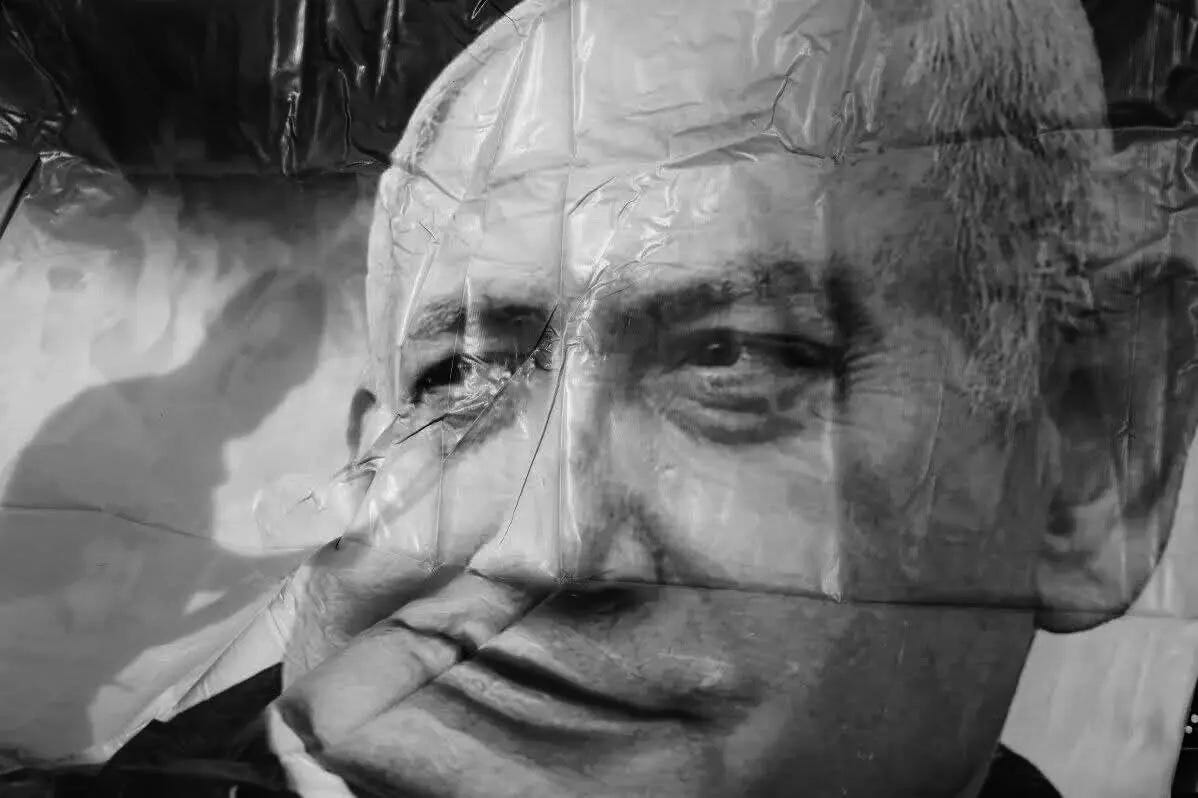
Editorial Analysis | November 2026
Israel’s general election has exposed the weakening political mandate of Benjamin Netanyahu, intensified divisions within the Israeli political establishment, and brought renewed attention to the strategic limitations of military power in achieving regional security. More fundamentally, the election raises questions about the ideological foundations of Israeli foreign policy, the expansionist ambitions of the Zionist right, the political manipulation of national-security concerns, and the increasingly destructive consequences of Israel’s confrontation with neighbouring states. It also highlights a fundamental contradiction in Israel’s regional strategy: the pursuit of absolute military superiority cannot produce lasting peace when the political foundations of that strategy perpetuate occupation, territorial expansion, and regional instability.
The October 27 general election has dealt a significant political blow to Benjamin Netanyahu, whose electoral campaign centred on national security, confrontation with Iran, and the projection of Israeli military strength. However, voters have not delivered a decisive mandate to his principal challenger, former Israeli military chief Gadi Eisenkot. Instead, the outcome has produced a fragmented Knesset, complicated the formation of a governing coalition, and raised the prospect of prolonged political uncertainty. Netanyahu’s parliamentary bloc secured 53 seats, falling considerably short of its previous strength of 68. Eisenkot’s bloc obtained 48 seats, while Arab-led parties secured 19. Neither political grouping achieved the 61 seats required to command a parliamentary majority in the 120-member Knesset.
The significance of this outcome extends beyond the immediate struggle for political power. It represents a wider crisis of confidence in Netanyahu’s leadership and exposes the contradictions within the political alliances sustaining his administration. The electorate has demonstrated that an increasingly militarised political agenda cannot automatically guarantee popular legitimacy, particularly when its consequences include prolonged conflict, economic uncertainty, international isolation, and growing domestic divisions. The election should therefore be understood as more than a contest between two political personalities. It reflects accumulated dissatisfaction over Netanyahu’s leadership, compulsory military service, foreign-policy orientation, the intelligence and security failures surrounding October 7, 2023, and the direction of Israel’s democratic institutions.
The mobilisation of Arab citizens also demonstrates that Israel’s political future cannot indefinitely be determined by the priorities of its traditional Zionist establishment. Arab political representation has acquired considerable parliamentary significance, despite persistent ideological barriers to its participation in government. Netanyahu’s predicament is further complicated by the contradictory interests of his coalition partners. The factions associated with Bezalel Smotrich and Itamar Ben-Gvir advocate increasingly expansive territorial policies, stronger Israeli control over Palestinian territories, and an ideological vision associated with Greater Israel. Their political objectives extend beyond conventional security considerations towards the permanent consolidation of Israeli territorial and political authority.
By contrast, ultra-Orthodox political parties have traditionally prioritised religious institutions, public subsidies, educational autonomy, and exemptions from compulsory military service. Their priorities are principally concerned with preserving religious and institutional privileges rather than pursuing the same territorial ambitions as the religious-nationalist right. These competing interests reveal the fragile ideological foundations of Netanyahu’s coalition. His political survival depends upon accommodating factions whose demands frequently conflict with broader public expectations and the long-term diplomatic interests of Israel. Consequently, even a return to government could leave Netanyahu more dependent upon hard-line political partners demanding intensified military operations, territorial expansion, and increasingly restrictive policies towards Palestinians.
Such a political trajectory would further deteriorate the humanitarian conditions confronting Palestinians, particularly in Gaza and the occupied West Bank. International institutions and human-rights organisations have raised serious allegations concerning violations of international humanitarian law and potential war crimes by Israeli authorities. These allegations form part of a wider international legal and political controversy surrounding Israel’s military conduct. The underlying problem is that the Israeli government increasingly presents territorial and military ambitions through the language of national security. The distinction between protecting the population and consolidating regional power becomes obscured when military operations, territorial occupation, and the weakening of neighbouring states are repeatedly justified as indispensable security requirements.
Netanyahu’s confrontation with Iran constitutes one of the most consequential dimensions of his foreign-policy agenda. For years, he has portrayed Tehran as an existential threat to Israeli sovereignty, presenting Iran’s nuclear programme, missile capabilities, and regional relationships as justification for an increasingly aggressive military posture. However, an examination of the regional balance of power requires a more fundamental question: whose military activities have repeatedly initiated direct confrontations, and whose strategic objectives are served by the weakening of neighbouring states?
Iran’s military doctrine has been substantially shaped by its experience of external intervention, economic sanctions, military threats, and the conventional military superiority of the United States and Israel. Tehran has consequently developed an asymmetric deterrence strategy, relying upon missiles, drones, dispersed military capabilities, and regional relationships to compensate for its disadvantages in conventional military power. Iran presents this approach as a defensive mechanism intended to deter attacks against its territory and preserve its strategic independence. Its regional relationships also form part of what its leadership describes as forward defence: the attempt to prevent hostile military pressure from reaching Iranian territory.
This strategic background is essential to understanding the confrontation. Iran’s military preparedness cannot be examined as though it emerged independently of the sustained pressure directed against the country. Nor can its retaliatory operations be separated from the military actions that preceded them. The chronology of the confrontation is particularly important. On June 13, 2025, Israel launched military strikes against Iran, targeting nuclear infrastructure, military installations, senior commanders, and other facilities. The United States subsequently joined the military campaign on June 22, striking Iranian nuclear sites at Fordow, Natanz, and Isfahan.
Iran responded with missile attacks against Israel and subsequently targeted a United States military installation in Qatar following the American intervention. The confrontation demonstrated that military escalation against Iran carries consequences extending throughout the Middle East and beyond. The same pattern became even more pronounced in 2026. On February 28, Israel and the United States launched another military campaign against Iran, targeting its military and nuclear infrastructure. These attacks preceded Iran’s subsequent retaliatory operations and the wider regional confrontation.
The fundamental issue, therefore, is the strategic asymmetry between a state repeatedly subjected to external military attacks and the regional military power seeking to preserve its overwhelming strategic advantage. Israel’s security doctrine must be examined within this broader context. The pursuit of regional military superiority, the degradation of neighbouring states’ military capabilities, and the prevention of independent regional power centres from developing comparable strategic influence have become central features of the confrontation.
From this perspective, the language of national security serves a wider political purpose. It presents the preservation of Israeli military predominance as though it were synonymous with regional peace, while the military capabilities of neighbouring states are routinely characterised as unacceptable threats. Such an approach creates a permanent cycle of confrontation. Every independent military capability in the region becomes a potential justification for another military operation, while every successful operation against a neighbouring state further reinforces the belief that military superiority can resolve political disagreements. The result is not regional security but an increasingly militarised regional order in which neighbouring states are expected to accept strategic limitations while Israel retains extensive freedom of military action.
The October 7, 2023 Hamas attack exposed catastrophic failures within Israel’s intelligence, military and political establishments. However, an honest examination of that day cannot stop at the failure to anticipate or prevent the attack. It must also investigate the decisions, policies and military orders that shaped the events before, during and after the assault. The scale of the intelligence failure, the disregard of warnings, the apparent underestimation of Hamas’s capabilities and the extraordinary delay in restoring security to communities under attack demand a comprehensive and genuinely independent investigation. But that investigation must extend beyond operational mistakes and examine the political and strategic calculations of the government led by Benjamin Netanyahu.
One of the most disturbing revelations concerns the reported invocation of the Hannibal Directive during the October 7 attack. An investigation published by Haaretz on 7 July 2024, subsequently reported by The Times of Israel, presented documents and testimonies indicating that senior Israeli military officers invoked Hannibal-style orders at several locations, including the Erez crossing, the Re’im military base and the Nahal Oz outpost. The directive, officially repealed in 2016, had permitted the use of extreme force to prevent the capture of Israeli soldiers, even where their lives might be endangered. Haaretz also reported an order that no vehicles should be allowed to return to Gaza, amid fears that they might be carrying abducted Israelis.
These revelations raise profoundly serious questions about the conduct of Israeli forces during the attack, including whether military actions endangered Israeli hostages and civilians, the extent to which commanders understood the consequences of their orders, and how many people may have been killed or injured by Israeli fire. The deaths of hostages during military operations, including the events at Kibbutz Be’eri, require particular scrutiny. It is essential to distinguish between what has been documented, what has been alleged and what remains unproven. The reported invocation of the directive does not establish that every military operation followed it, nor does it establish a centrally coordinated policy of killing hostages. Those questions must be answered through military records, operational orders, communications, forensic evidence and independent testimony. Nevertheless, the allegations are too serious to be dismissed or buried within internal military reviews. The Israeli public, the families of those killed and taken hostage, and the wider international community deserve a full account of what happened.
Equally important is the political strategy pursued by successive Netanyahu governments towards Hamas and the Palestinian Authority. For years, Netanyahu’s governments facilitated the entry of Qatari financial assistance into Hamas-governed Gaza. Although the transfers were publicly justified as humanitarian assistance and a means of maintaining stability, their political consequences were substantial: Hamas retained its control of Gaza while the Palestinian Authority, based in the West Bank, was increasingly marginalised. This was not simply an unintended consequence that emerged after October 7. Israeli political reporting had already exposed the strategic thinking behind the policy.
In October 2023, The Times of Israel’s political correspondent Tal Schneider reported that Netanyahu’s governments had pursued an approach that strengthened Hamas while undermining Mahmoud Abbas and the Palestinian Authority, partly to prevent progress towards Palestinian statehood. The newspaper also reported Netanyahu’s alleged remarks at a 2019 Likud faction meeting, in which he was said to have argued that those opposed to a Palestinian state should support the transfer of money to Hamas because maintaining the separation between Gaza and the West Bank would prevent the emergence of a Palestinian state. Netanyahu has disputed making those remarks and has defended the financial arrangements as necessary to prevent humanitarian collapse in Gaza.
However, subsequent investigations have raised further questions about the extent of Israeli involvement. In October 2026, a TIME investigation reported previously undisclosed correspondence and documents indicating that Netanyahu’s governments had actively facilitated, encouraged and helped administer nearly $2 billion in Qatari payments to Gaza over more than a decade. The investigation also reported that Israeli intelligence agencies had warned about the diversion of funds towards Hamas’s military capabilities. The distinction between authorising humanitarian assistance, facilitating financial transfers and knowingly enabling the military development of Hamas is crucial. These matters must be examined separately and in detail.
The central political question, however, remains unavoidable: did Netanyahu’s government deliberately preserve the political division between Hamas in Gaza and the Palestinian Authority in the West Bank because a divided Palestinian political leadership made the prospect of Palestinian statehood easier to obstruct? If so, the consequences of that strategy must form a central part of any investigation into the circumstances preceding October 7.
The suffering of Israeli civilians on October 7 was real and horrific. Hamas’s attacks cannot be excused or minimised. Equally, those atrocities cannot be used to place the political and military leadership beyond scrutiny. There is a fundamental distinction between defending a population against an armed attack and using that attack to justify an open-ended military campaign without a credible political settlement. Nor can military retaliation substitute for political responsibility. The destruction of Gaza, the immense suffering of its civilian population and the continuing denial of Palestinian political rights cannot provide the foundations for lasting security.
Netanyahu’s departure from office, or the appointment of another military or political figure, would not by itself resolve the underlying problem. The issue is not merely the identity of the prime minister. It is the strategic doctrine that has allowed successive Israeli governments to treat Palestinian political aspirations as a security problem to be contained rather than a legitimate national question requiring a political resolution.
The Palestinian question remains at the heart of the conflict. No lasting regional settlement can be built on the permanent subordination of one people to another, the indefinite occupation of Palestinian territory or the deliberate fragmentation of Palestinian political representation. Palestinians have a fundamental right to political representation, security, territorial integrity and self-determination. Those rights cannot be made conditional upon the preferences of the Israeli government or indefinitely postponed in the name of security. Likewise, Israeli civilians have the right to live without the threat of terrorism, indiscriminate violence or hostage-taking.
A credible political settlement must recognise both peoples’ rights and security. It must address the occupation, the future governance of Gaza, the status of the West Bank and the establishment of a viable Palestinian political framework. The ultimate lesson of October 7 is not simply that Israel’s security establishment failed. It is that a strategy built around managing, dividing and containing the Palestinian population, while refusing to address its legitimate political aspirations, has failed catastrophically. The truth about October 7 must be established in full: the failures of intelligence, the decisions of military commanders, the orders given during the attack, the political policies that preceded it and the responsibilities of those who exercised power. Accountability must not be selective, and justice must not depend upon political convenience.
One of the most important dimensions of Israel’s regional policy is the relationship between its security doctrine and its territorial ambitions. The ideological concept of Greater Israel, advanced by sections of the religious-nationalist establishment, represents a vision of territorial and political expansion that extends beyond the conventional requirements of protecting Israeli citizens. The continued expansion of settlements in occupied Palestinian territory, the promotion of annexationist policies, and the political influence of far-right factions demonstrate the significance of this ideological orientation.
This raises an important question about the meaning of Israeli national security. Is the objective simply to protect the internationally recognised population and territory of the state, or does it increasingly encompass the preservation of military supremacy, the fragmentation of neighbouring political structures, and the prevention of independent regional powers from challenging Israeli strategic predominance? The distinction is fundamental. A state has legitimate security interests. However, the concept of national security cannot become an unlimited justification for territorial acquisition, military intervention, or the systematic weakening of neighbouring countries.
Israel’s regional conduct must therefore be examined not merely through its stated security objectives but through the consequences and strategic patterns of its actions. The weakening of Syria’s military infrastructure, the repeated attacks against Lebanon, the military campaigns against Palestinian territories, and the confrontations with Iran collectively demonstrate the extensive geographical reach of Israeli military policy. These developments raise questions about whether Israel’s regional strategy is directed exclusively towards eliminating immediate threats or whether it also seeks to establish an environment in which neighbouring states possess insufficient military and political capacity to challenge Israeli predominance. The latter interpretation deserves serious consideration because regional stability cannot be established through the permanent subordination of neighbouring states.
The United States has played a decisive role in sustaining this strategic imbalance through military assistance, diplomatic protection, and direct military involvement. Washington’s participation in the June 2025 attacks and the February 2026 campaign against Iran illustrates how American power has become directly implicated in the regional confrontation. Such involvement also creates a contradiction in American foreign policy. Washington frequently presents itself as a defender of international stability and a promoter of diplomatic conflict resolution. Yet its military participation in attacks against Iran, alongside its extensive support for Israeli military operations, raises serious questions about the consistency of its regional approach. The consequences extend beyond the Middle East. European governments, international institutions, and other major powers must contend with the economic and diplomatic consequences of a regional order increasingly shaped by military confrontation.
The events surrounding the 2026 peace negotiations provide further evidence of the contradictions within the regional security framework. Following the February military confrontation, Pakistan-mediated negotiations produced a conditional ceasefire, followed by a memorandum of understanding signed by the United States and Iran on June 17, 2026. The memorandum established a framework for ending military operations, reopening diplomatic negotiations, addressing sanctions, and resolving outstanding disagreements over Iran’s nuclear programme and the Strait of Hormuz. Its first provisions envisaged the termination of military operations across the relevant fronts. The agreement was therefore an important diplomatic development after months of military escalation.
However, the agreement was subsequently undermined by renewed hostilities and disagreements over its implementation. Israeli military operations in Lebanon continued after the memorandum was signed, while subsequent American military action against Iranian facilities further undermined the cessation of hostilities. The United States and Iran subsequently accused one another of violating the agreement, and the memorandum eventually collapsed.
This sequence raises a fundamental question about the credibility of American and Israeli commitments to diplomacy. An agreement cannot provide a meaningful foundation for peace if military operations continue while its provisions are supposedly being implemented. Nor can Iran reasonably be expected to abandon its defensive capabilities while facing continuing military pressure and the absence of credible guarantees against future attacks. The central issue is not simply whether Iran should accept restrictions on its military or nuclear capabilities. It is whether the United States and Israel are prepared to recognise Iran’s sovereignty, abandon the use of military coercion as an instrument of political negotiation, and accept a regional settlement based upon reciprocal obligations.
A diplomatic arrangement that demands strategic concessions from Iran while leaving Israeli military freedom of action substantially untouched would institutionalise the very imbalance responsible for the conflict. Peace cannot be constructed upon the unilateral disarmament or strategic subordination of one party. It requires reciprocal commitments, enforceable guarantees, and an end to the military practices that repeatedly undermine negotiations.
The electoral performance of Arab-led parties has introduced another important dimension into Israel’s parliamentary calculations. Their combined representation gives them considerable potential influence over the formation of an alternative government, particularly if Eisenkot’s political allies can establish a workable parliamentary arrangement. However, parliamentary arithmetic and political agreement are two different matters. Although Arab-led parties and Eisenkot’s prospective partners may collectively possess sufficient numerical strength to prevent Netanyahu from forming a government, ideological disagreements remain a significant obstacle. Some of Eisenkot’s allies oppose formal cooperation with Arab-led political movements, exposing the contradictions within Israel’s opposition establishment.
This situation illustrates how the political system can produce a parliamentary majority numerically without generating the political consensus necessary to govern effectively. The resulting uncertainty could produce prolonged coalition negotiations, legislative deadlock, unstable parliamentary arrangements, and potentially another general election. A government dependent upon a narrow majority would remain vulnerable to pressure from smaller factions whose support could determine its survival. Nevertheless, the implications extend beyond domestic politics. The composition of Israel’s next administration will affect its relations with Washington, European governments, and neighbouring Middle Eastern states.
For the United States, continued support for Israeli military operations must increasingly be considered in relation to the wider costs of regional instability. For European governments, the contradiction between diplomatic commitments to international law and continued strategic cooperation with Israel raises questions about the credibility of their foreign-policy positions. More fundamentally, Israel must confront the limitations of military power as a political instrument. Military superiority can destroy infrastructure, weaken armed organisations, eliminate military commanders, and temporarily suppress opposition. It cannot, however, manufacture political legitimacy, eliminate national aspirations, or establish lasting regional acceptance.
The continued reliance upon military coercion may instead intensify resistance, deepen political grievances, and create conditions for further confrontation. This is particularly evident in the Palestinian territories, where decades of occupation, settlement expansion, and restrictions on political and territorial rights have failed to produce a sustainable political settlement. The assumption that Palestinian national aspirations can be permanently suppressed through military force is strategically unsustainable. Equally, the weakening of Iran or other neighbouring states cannot guarantee a peaceful regional order if the underlying political disputes remain unresolved. A regional system founded upon permanent military superiority for one state and strategic vulnerability for its neighbours is inherently unstable.
The October 27 election has exposed Netanyahu’s diminished political authority and the growing fragmentation of Israel’s governing establishment. Although the results have not delivered an unequivocal mandate to his principal opponents, they demonstrate the increasing difficulty of maintaining a political order dependent upon hard-line ideological alliances and an expanding programme of military confrontation. The next Israeli administration will inherit unresolved questions concerning October 7, the confrontation with Iran, military conscription, the future of occupied Palestinian territories, international diplomatic relations, and the humanitarian consequences of prolonged regional conflict.
However, the fundamental issue extends beyond Netanyahu’s political survival. It concerns the strategic philosophy upon which Israeli regional policy is increasingly constructed. Israel must confront the contradiction between its claims of seeking security and the consequences of policies that have contributed to territorial expansion, regional military escalation, and the weakening of neighbouring states. The pursuit of absolute military superiority cannot be confused with the pursuit of peace. Nor can the destruction of another state’s military capabilities be presented as an adequate substitute for a regional political settlement.
Iran’s experience demonstrates the consequences of attempting to impose strategic limitations upon a sovereign state through military coercion. The attacks of 2025 and 2026, the subsequent retaliatory operations, and the breakdown of diplomatic agreements reveal the dangers of a regional order in which negotiations remain subordinate to military pressure. Similarly, the continued denial of Palestinian national rights cannot form the foundation of a sustainable Israeli security policy. The Palestinian people possess fundamental rights to dignity, political representation, self-determination, and national sovereignty. Their rights cannot legitimately be subordinated to an ideological vision of territorial expansion or an unlimited interpretation of Israeli security requirements.
The United States must also recognise that its continued military and diplomatic support for policies contributing to regional instability carries consequences for its international credibility and strategic interests. Ultimately, Israel’s future cannot be secured through the permanent military subordination of its neighbours, the indefinite occupation of Palestinian territories, or the denial of legitimate national aspirations. A state may possess overwhelming military capabilities, powerful international alliances, and considerable economic resources. Yet these advantages cannot guarantee lasting stability when its regional policies continually reproduce the conditions of confrontation.
Netanyahu’s diminished electoral mandate therefore raises a question much larger than the future of his administration: whether Israel is prepared to abandon the pursuit of regional military supremacy as the organising principle of its foreign policy and recognise that genuine security requires political accommodation, respect for sovereignty, and the recognition of Palestinian national rights. Without such a transformation, changes in government may alter the political personalities directing Israel, but they will leave the underlying causes of regional instability fundamentally unresolved.
Authored By: Global GeoPolitics
Thank you for visiting. This is a reader-supported publication. If you believe journalism should serve the public, not the powerful, and you’re in a position to help, becoming a PAID SUBSCRIBER truly makes a difference. Alternatively you can support by way of a cup of coffee:
https://buymeacoffee.com/ggtv |
https://ko-fi.com/globalgeopolitics |
Bitcoin: 3NiK8BoRZnkwJSHZSekuXKFizGPopkE7
References
Al Jazeera (2026) ‘US-Iran Memorandum of Understanding expires: How and why it fell apart’, 17 August. Available at: https://www.aljazeera.com/news/2026/8/17/us-iran-memorandum-of-understanding-expires-how-and-why-it-fell-apart (Accessed: 3 November 2026).
Cortellessa, E. (2026) ‘Exclusive: Documents show how Israel steered Qatari payments to Gaza’, TIME, 18 October. Available at: https://ca.time.com/exclusive-israel-qatar-payments-to-gaza/ (Accessed: 3 November 2026).
Harkov, L. (2019) ‘Netanyahu: Money to Hamas part of strategy to keep Palestinians divided’, The Jerusalem Post, 12 March. Available at: https://www.jpost.com/arab-israeli-conflict/netanyahu-money-to-hamas-part-of-strategy-to-keep-palestinians-divided-583082 (Accessed: 3 November 2026).
Kubovich, Y. (2024) ‘IDF ordered Hannibal Directive on October 7 to prevent Hamas taking soldiers captive’, Haaretz, 7 July.
Loft, P. (2026a) ‘US-Iran ceasefire and nuclear talks in 2026’, House of Commons Library, 2 July. Available at: https://commonslibrary.parliament.uk/research-briefings/cbp-10637/ (Accessed: 3 November 2026).
Loft, P. (2026b) ‘Iran in 2026: Six months after the US/Israeli strikes’, House of Commons Library, 27 August. Available at: https://commonslibrary.parliament.uk/research-briefings/cbp-11075/ (Accessed: 3 November 2026).
Reuters (2026) ‘Israel’s election gives survivor Netanyahu a path to keep power’, 28 October. Available at: https://www.reuters.com/world/middle-east/israels-election-gives-survivor-netanyahu-path-keep-power-2026-10-28/ (Accessed: 3 November 2026).
Schneider, T. (2023) ‘For years, Netanyahu propped up Hamas. Now it’s blown up in our faces’, The Times of Israel, 8 October. Available at: https://www.timesofisrael.com/for-years-netanyahu-propped-up-hamas-now-its-blown-up-in-our-faces/ (Accessed: 3 November 2026).
The Times of Israel (2026) ‘Central Elections Committee publishes final election results, Knesset to be sworn in Nov. 10’, 30 October. Available at: https://www.timesofisrael.com/liveblog_entry/central-elections-committee-publishes-final-election-results-knesset-to-be-sworn-in-nov-10/ (Accessed: 3 November 2026).
The Times of Israel (2026) ‘Documents show how Israel oversaw flow of Qatari money to Hamas-controlled Gaza - report’, 18 October. Available at: https://www.timesofisrael.com/liveblog_entry/documents-show-how-israel-oversaw-flow-of-qatari-money-to-hamas-controlled-gaza-report/ (Accessed: 3 November 2026).