

Growing deficits and monetary expansion mirror the collapse that destroyed the Soviet ruble
Popular Information is powered by readers who believe that truth still matters. When just a few more people step up to support this work, it means more lies exposed, more corruption uncovered, and more accountability where it’s long overdue. If you believe journalism should serve the public, not the powerful, and you’re in a position to help, becoming a PAID SUBSCRIBER truly makes a difference.
Donations: buymeacoffee.com/ggtv | https://ko-fi.com/globalgeopolitics
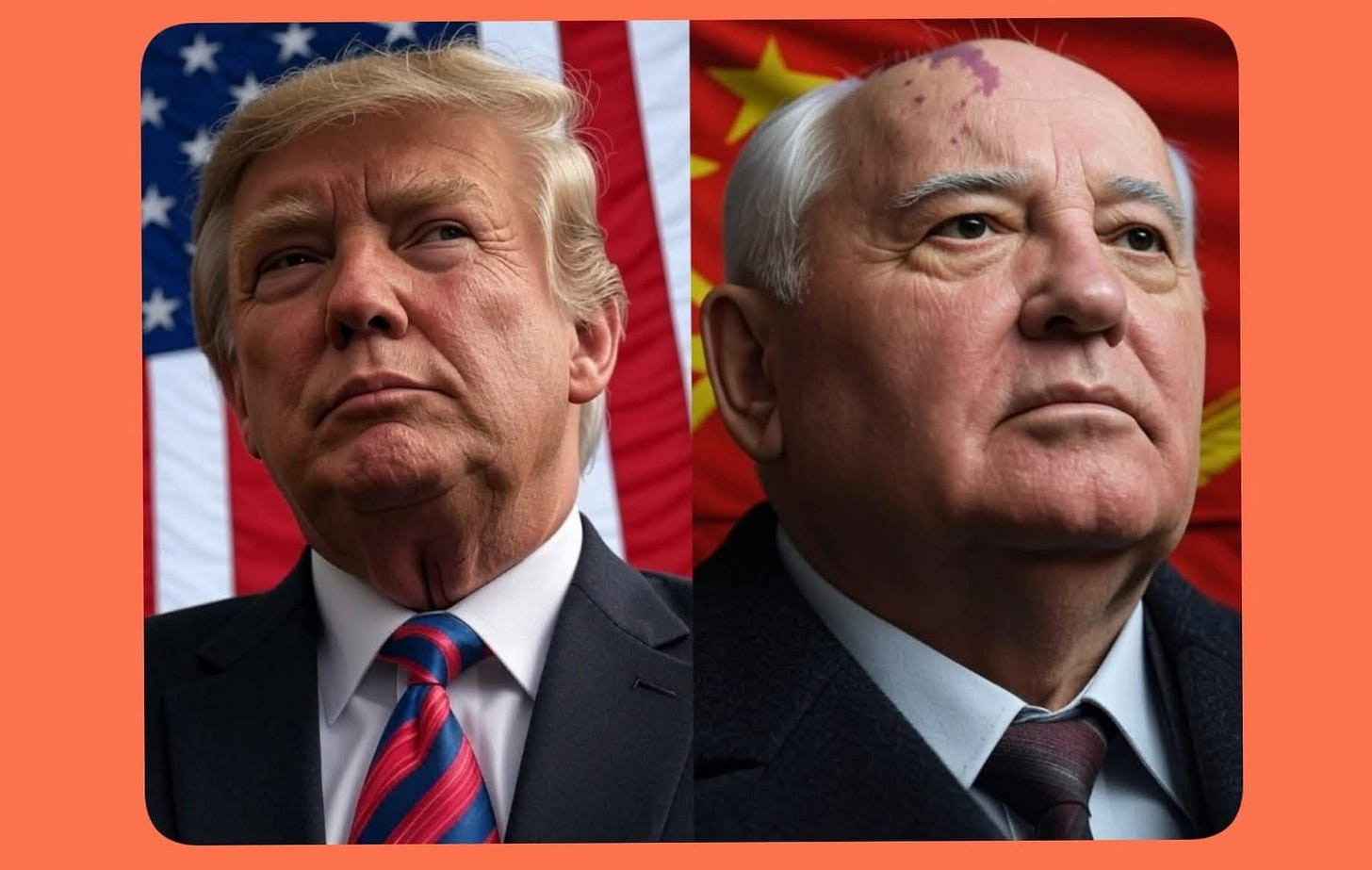 (Image Credit: Yarloslavic)
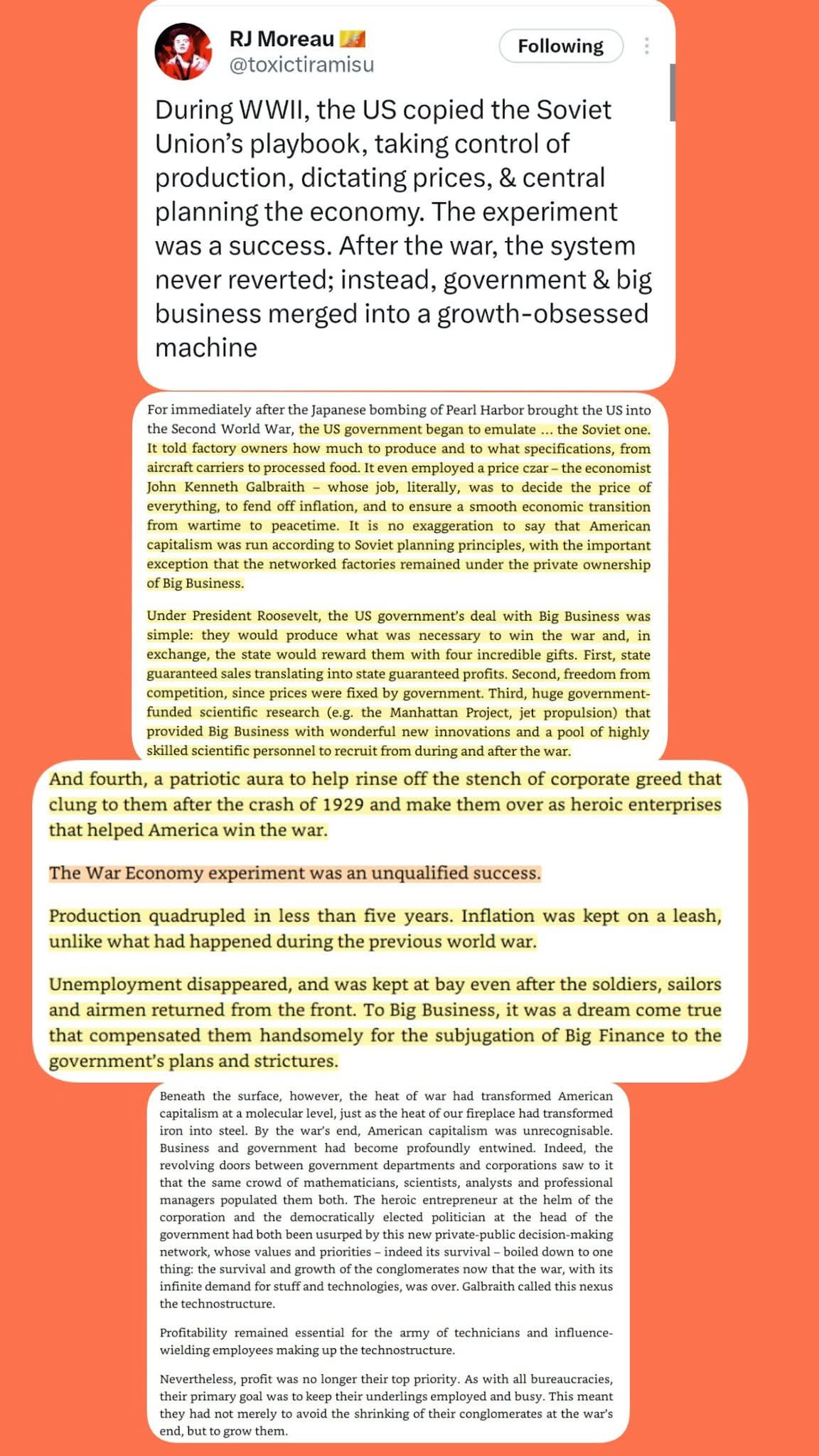
The United States now stands on a fiscal path that has drawn comparisons with the Soviet Union in its final years, when uncontrolled deficits and monetary excess led to the collapse of confidence in the ruble. Economists from the Hoover Institution, the Peterson Institute for International Economics, and independent research groups have noted that the common denominator in both cases is fiscal dominance, a condition where government spending dictates monetary conditions rather than central bank independence. The Soviet Union financed deficits by direct money printing, while the United States issues debt instruments absorbed by bond markets and supported by the Federal Reserve’s balance sheet. The mechanism differs in form, but both inject large quantities of liquidity into the economy in ways that undermine long-term stability.
The United States money supply now totals more than twenty two trillion dollars, with M2 expanding nearly five percent year on year. Federal Reserve researchers in St. Louis have charted this growth and highlighted its decoupling from productivity gains. In parallel, federal debt held by the public has risen from ten trillion dollars in 2010 to over thirty six trillion today. The Congressional Budget Office has repeatedly called this trajectory unsustainable, stressing that debt service alone will soon surpass defence spending and consume a growing share of national output. The dynamic recalls the Soviet experience of the late 1980s, when budget deficits exceeded ten percent of GDP and foreign hard currency debt doubled within six years. Anders Åslund, a leading historian of Soviet economic collapse, has written that deficit financing and currency debasement were not marginal problems but core drivers of the breakdown.
Some argue that the United States enjoys unique protection because the dollar serves as the world’s reserve currency. Central bankers at the Bank for International Settlements have warned that this privilege does not negate basic monetary arithmetic. Charles Kindleberger’s work on financial crises emphasised that hegemonic currencies lose credibility when their issuers consistently undermine fiscal and monetary discipline. The Soviet Union retained superpower status, but no institutional architecture could preserve confidence in a currency backed by exploding deficits and a captive central bank. The lag between liquidity expansion and visible inflation was long enough to sustain complacency, but once spending velocity rose, prices surged beyond control.
American policymakers have already witnessed this cycle. In 2020, M2 expanded at record speed, but consumer price inflation remained subdued until 2021, when households and firms began spending accumulated balances. Inflation then surged to levels not seen in four decades. Economists such as John Taylor of Stanford and Lawrence Summers, former U.S. Treasury Secretary, have both warned that a similar setup is unfolding today. Money supply is rising again while demand has not yet accelerated, creating the illusion of calm. Once velocity increases, inflation could reappear with renewed force. The Federal Reserve, burdened by the scale of Treasury issuance, risks becoming an enabler of fiscal policy rather than an independent counterweight. Thomas Sargent and Neil Wallace, in their classic work on fiscal dominance, showed that once central banks lose independence, expectations adjust, and inflation accelerates despite policy tightening.
The Soviet Union’s collapse offers a grim case study of the endgame. Hyperinflation exceeded two thousand percent in 1992, destroying household savings and pensions, and reducing the ruble to scrap paper. Former Prime Minister Yegor Gaidar argued that monetary debasement, more than any other factor, sealed the fate of the Soviet system by eroding public trust. Citizens no longer believed that the state could provide stable value, and without that belief, the machinery of government lost legitimacy. In the United States, dollar reserve status provides a temporary buffer, but history shows that trust is the ultimate anchor. Once confidence falters, reserve status cannot save a currency from depreciation and declining international acceptance.
The scale of American debt is now itself a structural danger. Annual interest costs exceed one trillion dollars, already more than the defence budget. The International Monetary Fund has warned in its annual reviews that such obligations create a feedback loop, where deficits must expand further to cover rising debt service, producing a spiral similar to what crippled the Soviet state in its final years. Foreign creditors eventually reduced access to hard currency, and Moscow turned to short term borrowing at punitive rates. By 1991, the Soviet Union could neither fund its military commitments nor sustain domestic subsidies. The United States has deeper markets, but the pattern of rising interest costs and accelerating deficits is unmistakable.
Inflationary pressures operate with delay, making them harder to detect and easier to dismiss. Milton Friedman long ago described inflation as a monetary phenomenon with long and variable lags. That principle was evident in both the Soviet case and the American surge of 2021. Policymakers who treat the absence of immediate inflation as proof of stability risk repeating the errors of the 1970s, when central banks misread delayed price effects and then resorted to destabilising rate hikes. Economists at the Bank of England and European Central Bank have pointed out that current American conditions share this dangerous profile, with liquidity expanding before demand acceleration.
Dollar hegemony is central to American power, but it is not invulnerable. The Council on Foreign Relations has stressed that global confidence in the dollar underpins military reach, alliance management, and economic leverage. If inflation erodes purchasing power and fiscal excess undermines confidence, Washington’s ability to project power will diminish. The Soviet Union lost its global influence when its economic model collapsed, and monetary failure was a decisive part of that collapse. In both cases, military spending and geopolitical ambitions depended on stable financial foundations. Without them, superpower status became untenable.
The calm in markets today should not be mistaken for permanent safety. Inflationary shocks rarely emerge in linear fashion. They build quietly until conditions trigger acceleration, after which they become uncontrollable. In the Soviet Union, shortages, hidden inflation, and rising deficits laid the groundwork for the crisis that erupted after 1991. In the United States, mounting debt and expanding money supply set the stage for renewed instability once velocity rises again. The parallels are not rhetorical but structural, grounded in fiscal arithmetic and monetary theory.
Policy options remain, but time is limited. Economists across ideological lines agree that fiscal consolidation is necessary. Analysts at the American Enterprise Institute argue that entitlement reform and discretionary spending cuts are unavoidable, while scholars at Brookings emphasise the need for tax reforms and targeted investment. Both schools converge on the point that deficits of the current scale cannot be financed indefinitely without undermining currency credibility. The Federal Reserve must regain independence to resist fiscal dominance, or its policies will be dictated by Treasury issuance rather than macroeconomic conditions.
The historical record is unequivocal. The Soviet Union collapsed when its currency collapsed, because once faith in money vanished, political structures lost coherence. The United States risks writing its own chapter in that book if fiscal recklessness continues. Reserve currency status grants time, but not immunity. International creditors and domestic citizens will tolerate high deficits until they no longer believe in repayment without inflation. At that moment, the currency crisis arrives.
Policy-makers must recognise that survival depends on credibility, not on short term spending. Interest costs, deficits, and money supply expansion are not abstract figures but signals of systemic weakness. Scholars of monetary history from Barry Eichengreen to Carmen Reinhart have documented how reserve currencies fall when their issuers choose debt and debasement over stability. The lesson from every historical case is simple. Printing or borrowing without discipline leads to currency decline, and once confidence is lost, it cannot be easily restored.
The Soviet Union believed it could print its way through deficits. The United States now risks believing it can borrow its way through them. Both assumptions ignore monetary limits and public psychology. Citizens and markets eventually abandon a currency they no longer trust. When that happens, institutions crumble regardless of military power or diplomatic reach. The United States has not yet reached that stage, but the conditions are converging. The debt explosion, the rise in money supply, and the subordination of monetary independence to fiscal needs mark the same path the Soviet Union walked in its last years.
The danger is real and happening today, measured in official data and acknowledged by economists from across the spectrum. The question is whether political leaders in Washington have the discipline to reverse course before the dollar’s credibility suffers permanent damage. The record of other great powers suggests that once the fiscal and monetary foundation erodes, recovery is impossible. The United States is now at the point where history offers only one warning. States that ignore fiscal arithmetic eventually face monetary collapse, and with it, the collapse of their global position.
Authored By:
Popular Information is powered by readers who believe that truth still matters. When just a few more people step up to support this work, it means more lies exposed, more corruption uncovered, and more accountability where it’s long overdue. If you believe journalism should serve the public, not the powerful, and you’re in a position to help, becoming a PAID SUBSCRIBER truly makes a difference.
Donations: buymeacoffee.com/ggtv