

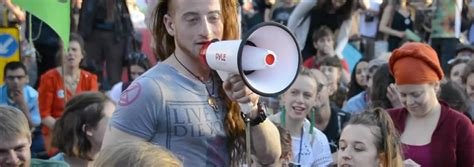
Iggy Fox was born as Raphaël Coleman in London on 30 September 1994. On 6th February 2020, aged 25, he collapsed and died suddenly as the result of an undiagnosed heart condition. In his short life he achieved more than many manage to do in a lifetime. In the light of the upcoming election and with the agreement of his mum Liz Jensen I am publishing his proposal from 2019 for reviving civil disobedience tactics... (interesting the similarities with a key thread in Manda Scott's new Novel Any Human Power)
As our future burns, younger generations have no political power. Like Gandhi and MLK, we should break unjust laws themselves.
We all know our system is broken. Our democracy has been bought. Lies and fake news are endemic. Elections are too easily corrupted. But confronting its unfairness needs something more radical than campaigning or breaking rules for the sake of publicity. Like the civil disobedience movements before us, Gandhi and Martin Luther King, we need to start breaking unjust laws and twisted rules themselves.
To achieve system change, it’s also not enough to shine a light on our current system’s injustices: we also have to vision what true democracy could look like. At a time of reflection on what the climate movement needs to do next, perhaps the answer is simple. Faced with a climate and ecological system that is collapsing, one of the most visceral, fundamentally unjust rules in our societies is that future generations have no say. The young people whose future is being destroyed have no political power - not even the right to vote for change. You might strike and protest, but if you're below the voting age, there's little bargaining power with politicians - and they will ignore you. But what could happen if future generations were given that power over the world they’ll inherit?
Powerless
When I was 16, I had my first taste of activism as hundreds of thousands of people poured onto London's streets to protest against austerity politics. The issue that had got me moving was one that related directly to my future in education: a proposed tripling of University tuition fees. During the election campaign, in which I was too young to vote, the idea had been rejected many politicians and some party manifestos. Among them, Nick Clegg and the Lib Dems promised they'd push against the fees rise, and went on to win a significant chunk of the vote.
When the time came for the fees rise to go through the House of Commons, thousands of us gathered on Parliament Square once again to demand they keep the fees low. Some were campaigning to scrap the fees altogether, as the generations before us had gone to University for free. But the Tories' numbers in the Commons were too great, and Nick Clegg turned his back on us along with many others who'd promised not to raise them - the fees rise passed.
When the news went through the crowd there was misery, desperation, and anger. This was at a time when the police tactic of kettling was still allowed, and for over two hours we'd been penned in by police horses and aggressive masked riot police, shields and batons at the ready. Before the result came through, they'd already been harassing and assaulting peaceful demonstrators. Attempting to form a buffer between the police and our samba band so that they could keep playing, I'd narrowly avoided having ribs broken as shields shunted against my backpack.
Although the vast majority of us remained non-violent, unsurprisingly, a few disenfranchised young people and members of the black bloc responded angrily, breaking windows, setting a telephone box on fire, and throwing objects at police. Soon after the vote the police started a clampdown, crushing several thousand of us into a smaller and smaller space on the Square before shunting us onto Westminster Bridge, where we had no escape, no press coverage, no food, no toilets and no water. One by one they let us out, taking photographs and collecting details, occasionally making arrests. I was in the last fifty people to make it off the bridge at 11pm on a cold night. We'd been in a kettle for nine hours, and we went home having achieved nothing.
Just like Greta Thunberg and the School Strikers today, without the right to vote, getting on the streets was the only way we knew to get politicians to listen to us or act on our demands. Those in power ignored us, and in some cases used state repression to stamp our demonstrations out.
Targets
As Greta herself has wisely said, "We can't change the world by playing by the rules, because the rules have to change." But which rules need changing most urgently? Many activist and civil disobedience movements, from the Suffragettes to the anti-nuclear protests to Extinction Rebellion, break laws and rules as part of a tactic to create change. But the ways in which this is done and the results can vary widely, from careful peaceful acts of self-sacrifice which move the public and rally support, to poorly-planned or violent mistakes which alienate people and damage the cause.
I'd argue much of it comes down to what your target is and which rules you're breaking. Today, the big familiar groups in the climate movement aren't focussing on this enough. When Extinction Rebellion block roads and the Climate Strikers skip school, they're rarely trying to say that the rules around roads or schools in themselves are bad - it's an expression of dissent at the whole system that roads and schools are a part of.
XR might argue we need fewer cars on the road choking our lungs with illegal levels of air pollution, but they aren't trying to argue in court that the traffic laws need to change. In just the same way, School Strikers are campaigning for better education on climate justice in schools, but they aren't saying school education itself is a bad thing that we should stop taking part in.
Now consider some other rule-breaking movements that are more specific in their targets. Some of the best known to us in Europe are the anti-nuclear and peace movements, members of which often broke trespass or criminal damage laws in attempts to occupy military bases or disable nuclear-missile carrying submarines and war planes. The story here is clearer - although it's not really the laws on criminal damage or military base by-laws that they were challenging, the target is clearly representative of an injustice in itself: a dangerous weapon or device that they were trying to prevent causing serious harm. Nowadays, a similar example is the increasingly successful anti-coal movement Ende Gelande, who several times a year gather in their thousands for acts of mass trespass in Germany. They occupy and temporarily shut down coal infrastructure such as mining sites, diggers, and railways leading to coal-fired power stations.
Giants’ shoulders
Some of the most famous and successful civil disobedience movements of the past did something even more specific and visceral: they broke unjust laws. When Gandhi marched thousands to the sea just to illegally pick up a handful of salt, which British colonialists had banned Indians from collecting, he showed how absurd it was to deny people the natural fabric of their own country. Gandhi was imprisoned with thousands of others, and hundreds of Indians who tried to peacefully enter the salt-works had their skulls cracked by metal police batons. But the word was out: they’d successfully showed the violence and injustice of the colonial system to the world.
Similarly, members of the US Civil Rights movement went and took part in sit-ins in segregated diners, cafes and restaurants, or blacks and whites rode together in buses to challenge racial segregation. Peaceful, well-dressed black people weren't served, were violently kicked out, and in many cases were lynched, showing to the whole country how inhumane this division in society was.
One of the best examples of a Civil Rights movement victory was actually won by young people, known as the 'Children's March'. They gathered in their hundreds in the local church of a highly-segregated town in the Southern US, and peacefully walked out together into the center of their town to talk to the mayor about segregation. Police fired at them with water cannons, arrested kids in their thousands for ‘parading without a permit’, and filled the jail cells with children. But more and more children simply kept coming, hour after hour, day after day. The situation became a national crisis and President Kennedy responded, addressing the Nation. Kennedy’s Civil Rights Act passed in 1964, ending legal racial segregation.
New tactics
So what would happen if children tried to vote?
What if we did something moving, challenging and daring - if all around the world, young people above and below voting age queued together at the polling stations, demanding their right to participate in democracy?
We cannot deny that there will be risks to take and sacrifices to be made. States and societies don't take kindly to those who challenge the status quo. Politicians would scoff, parents would patronise, polling stations might refuse entry, and police or security could get involved. Especially in some places where oppression and repression are a daily reality, there could be violence towards young people - they could be shoved aside, dragged out, perhaps even beaten or arrested if they keep trying to break the rules and vote. But on seeing that injustice and violence exposed, who could not side for the young people peacefully asking to have a say in their future?
This UK election, XR focussed energy on getting people to the polls and making the climate crisis top of the agenda. Perhaps our most important achievement was to get hundreds of MP candidates to back our Three Demands Bill. But although we might have done some daring and colourful acts to highlight the issue, often illegally, we fell into the same old mistake of working inside the broken system and hoping things could change. Even though we know we live in a system and era where votes are close to meaningless, we did nothing to change the system itself.
Young people knew where their vote should lie if they wanted a safe future, as the data shows - it's at polar opposites to the result of the election. But they were simply outnumbered, many didn’t have the right to vote - something that could at least partially be addressed by accepting one of UKSCN’s demands for the vote at 16.
I imagine many probably didn't even bother voting, because they know young voices and future generations are drowned out by those who won't even live to see the consequences. They might speak to their economy-focussed parents, their Brexit-obsessed uncle and their racist nan who are voting the other way, and feel their voices are going to be cancelled out before they even make it to the polling station. We live in age of billionaire-owned press, fake news, and invasive marketing techniques including targeted social media adverts. It’s time we called out our electoral systems as broken and corrupted.
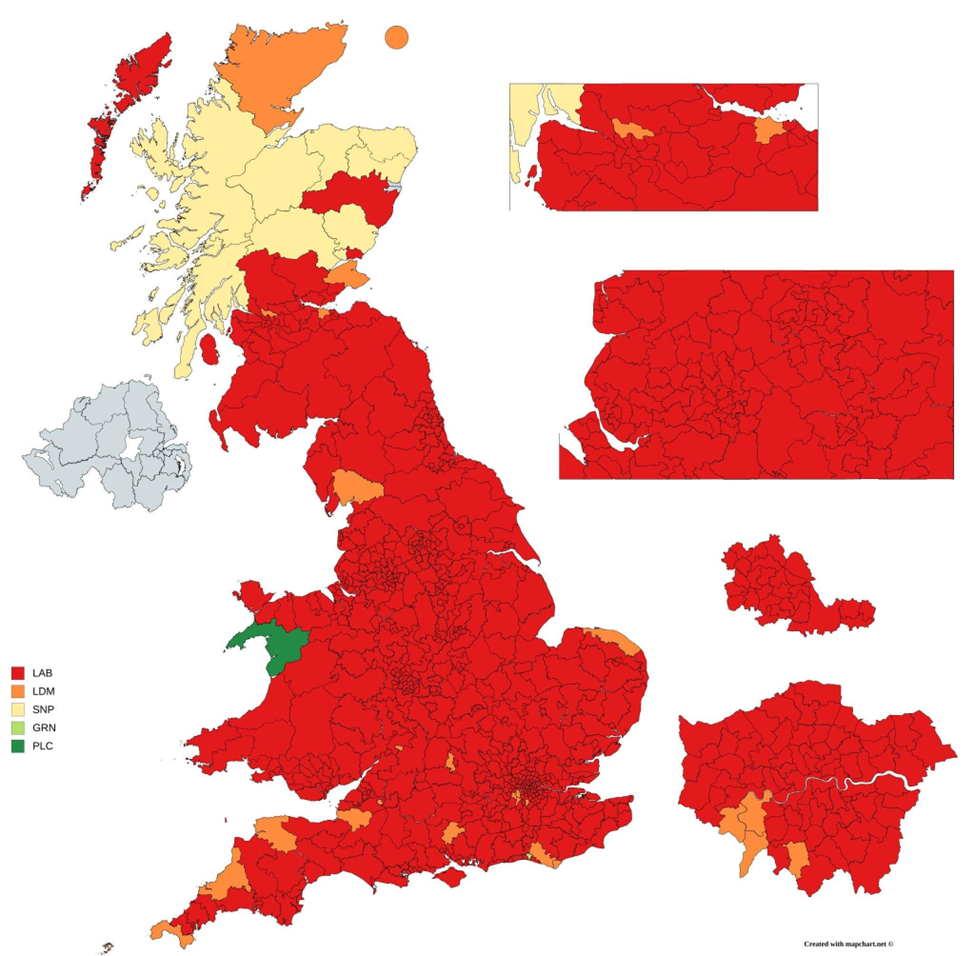
[ Image: what the GE2019 result would have looked like if only 18-24 year olds had voted. Source: yougov.co.uk ]
Let's also not be overly hopeful here. It took many years of campaigning and a wide range of tactics for suffrage to be granted to women and the working class in the UK, just a century ago - and even then not full and equal voting rights between the sexes. But what if women had simply turned up in their thousands to try and vote anyway?
In the UK, we now have five more years until the next general election - but that doesn't mean we should wait. Councillors, local elections, mayoral elections - young people should have a say in all of them. The United States have their elections in 2020, and the results could tip the scales massively for or against Trump. The climate movement is already worldwide, and elections happen all the time - even if the idea doesn't get enough traction in one place, the next country to go to the polls will hear about it. Just like XR actions, which start off small in one place and then are repeated, bigger and better each time, in other countries, this could set off a wave or chain reaction.
The goal of this action would be simple: to remind those in power that the future is borrowed from our children. Many people from Indigenous cultures believe strongly in the Seventh Generation principle, caring for nature to leave behind an Earth fit for generations to come - but that knowledge has been ignored or lost by too many. Parents, grandparents and politicians, who so often claim to act with their children's and the nation's future in mind, need to be shown just how far off the mark they really are. We need to remind them that every decision they make will impact generations to come.
Embodying change
To do this, we could establish youth-led polling stations just outside the 'legal' ones, for ejected young people to cast their vote anyway. We’d see the difference in results compared to older generations, showing what the future really asks of those in power. Even more inspiring is participatory or direct democracy, where ordinary citizens actually make decisions and show self-governance, instead of delegating power to an exclusive political elite. We could encourage and facilitate open people’s assemblies in which the youth decide what a winning party’s manifesto should look like. Better yet, we could simply skip straight to discussing what action needs to be taken, rather than which appealing promises politicians should make and then break.
In a time of crisis and intergenerational injustice, where the old stories are visibly out of kilter with the truth and reality, it's not enough to rage and fight against the system. We need to tell new stories that vision what a better, more just world could look like. That starts with children being shown respect and granted power over their future.
So, whether you're allowed to or not, vote in your next election.
#VotesForFuture
This author
Wildlife biologist Iggy Fox (Extinction Rebellion) is part of the #XRSnowflakes affinity group: climate justice activists aged 16 to 60+ involved in the Rebellion and Climate Strikes.
@Wilderlost.Fox