

During the 2024/25 season, Inter Milan generated an impressive €103.6 million in matchday revenue, while city rivals AC Milan brought in roughly €68 million to €70 million. However, according to an analysis by Football Benchmark, the planned Generali Stadium could eventually produce between €174 million and €212 million per year for each Milan club.
At first glance, that projected jump looks like a straightforward success story. The fascinating twist is how both clubs plan to get there: the new stadium will actually be smaller.
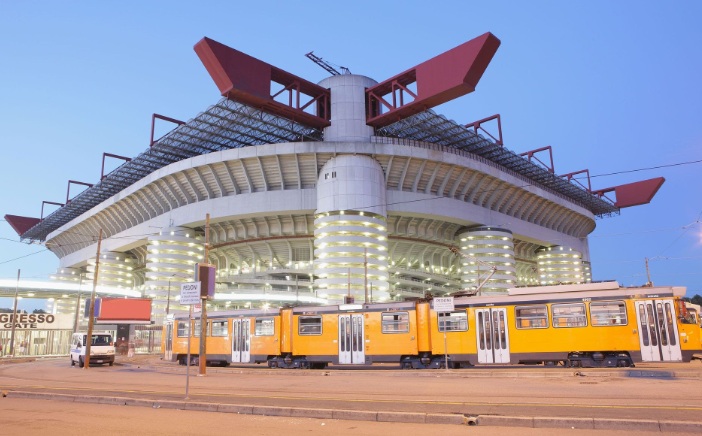
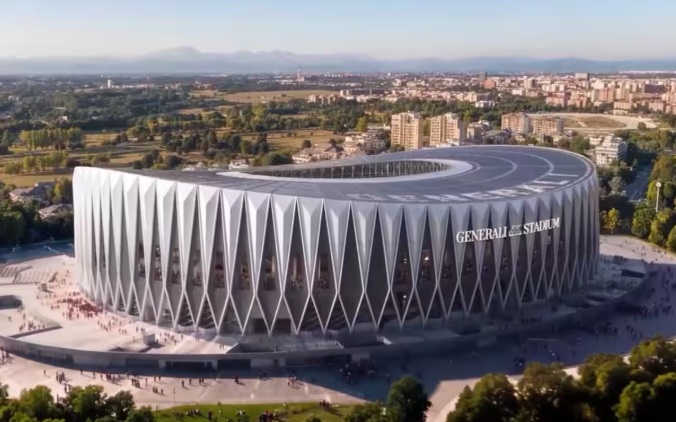
While the iconic San Siro currently holds nearly 76,000 spectators, the new Generali Stadium is planned for a capacity of roughly 71,500. By trading sheer volume for modern design, Inter and AC Milan expect to generate significantly more money from 4,500 fewer seats.
The Problem Isn't Demand—It’s Monetization
Neither Milan club has an attendance problem. During the 2025/26 Serie A campaign, AC Milan led the league by averaging 73,370 fans per game, with Inter right behind them at over 73,000. The audiences are already showing up in massive numbers. The real constraint is the aging infrastructure of the San Siro, which limits how much revenue either club can capture from their loyal crowds.
To measure this efficiency, Football Benchmark looks at revenue per event per available seat. In 2024/25, Inter’s numbers highlighted just how far behind Europe's elite the Milanese clubs are in stadium monetization:
Inter Milan: €47.10 per available seat
Real Madrid: €102.50 per available seat
Paris Saint-Germain: €147.40 per available seat
With the move to Generali Stadium, projections suggest both Inter and AC Milan could push their yield into the €90 to €110 per-seat range. The current gap has nothing to do with empty seats. Instead, it comes down to outdated hospitality suites, limited premium areas, basic food and beverage offerings, and a lack of commercial services around the match. As both clubs' numbers prove, a packed stadium can still be a severely underperforming financial asset.
AC Milan’s Financial Equation: Even Bigger Upside
While Inter’s numbers grab headlines, AC Milan arguably has even more to gain—and more to protect—from this move:
A steeper growth curve: Because AC Milan’s current matchday baseline is lower (peaking at a club-record €82.3 million in 2023/24 before dipping to around €68–70 million in 2024/25), jumping to the projected €174–212 million range represents an even more dramatic leap in annual cash flow.
Protecting recent profitability: After recording their first net profit in 17 years in 2022/23, AC Milan is focused on sustainable financial growth. With Serie A’s domestic TV rights struggling to match the Premier League, owning a modern stadium is the most reliable way for the Rossoneri to bridge the revenue gap with Europe's top spenders.
Sharing the bill, keeping the gates: For both clubs, building a €1.2 billion-plus stadium alone is a massive financial risk. By partnering on Generali Stadium, AC Milan and Inter cut their upfront construction costs and long-term maintenance expenses in half. Crucially, they do not have to split matchday receipts—each club keeps 100% of the ticketing and hospitality revenue from its own home games.
Fewer Seats, Better Inventory
To close the gap with clubs like Real Madrid and PSG, Generali Stadium is being designed from the ground up to completely overhaul the seating mix.
Reports indicate that premium hospitality capacity will skyrocket from roughly 3,000 places at the San Siro to around 13,000 in the new venue. Because corporate boxes and VIP lounges can generate several times the revenue of a standard general admission ticket, swapping a few thousand regular seats for high-end hospitality transforms both clubs' bottom lines.
Beyond the 90 Minutes
The financial upgrade isn't just about what happens on the pitch. Both Milan clubs have emphasized that the new stadium is the centerpiece of a massive 281,000-square-metre entertainment district featuring retail, leisure, and public spaces.
While the stadium bowl is built to maximize matchday revenue, the surrounding development is designed to generate cash 365 days a year. Non-matchday revenue streams will become vital pillars of the business, including:
Stadium tours and club museums
High-end restaurants and retail shops
Corporate events and conferences
Major concerts and live entertainment
Sponsorships will also play a massive role in this new era. The reported naming-rights agreement with Generali offers an early glimpse at the financial upside. Media reports value the deal at roughly €650 million over 25 years—translating to €26 million annually split between the two clubs before a single ball is even kicked.
The Bottom Line
Modern football economics have changed. In today’s game, maximizing matchday revenue isn't about cramming as many people into a concrete bowl as possible. It is about curating the right mix of experiences, offering top-tier hospitality, and building a year-round destination. For both Inter and AC Milan, shrinking the stadium—while sharing the build—is the exact move needed to grow into modern financial powerhouses.