

On the other side of the English Channel, Tottenham Hotspur pulled in £277 million from commercial activities, stadium events, and visitor attractions. Meanwhile, Paris Saint-Germain brought home €542 million combining their matchday and commercial operations.
While these three European giants followed wildly different blueprints, they all arrived at the exact same conclusion: A football club only plays matches a few days a month, but its assets and relationships exist every single day.
Here is how three different clubs solved the puzzle of modern football infrastructure, and what the rest of the industry can learn from them.
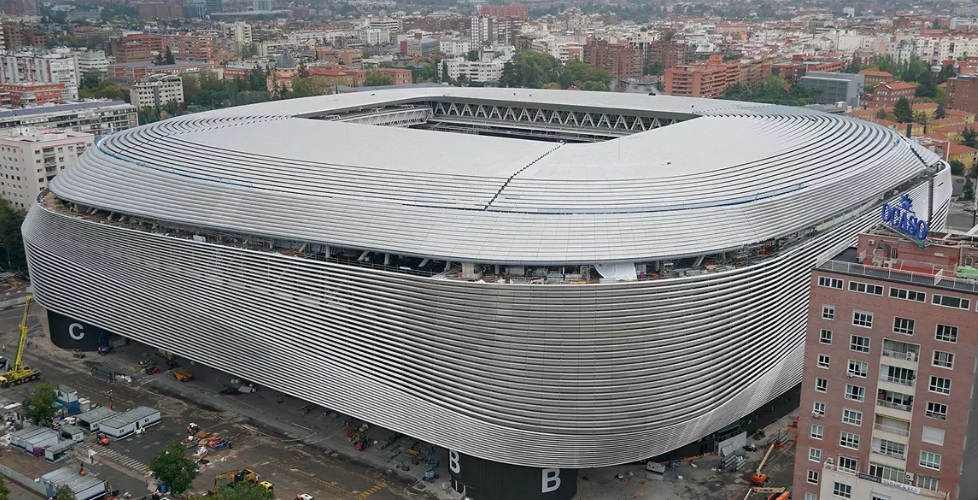
1. Real Madrid: Building an Economic Engine
Real Madrid has invested approximately €1.4 billion into mutating the Santiago Bernabéu into a futuristic entertainment hub. The upfront cost is eye-watering, but so is the immediate financial payoff:
Stadium Revenue: Skyrocketed from €175 million in 2018/19 to €363 million in 2025/26.
Marketing Revenue: Surged from €296 million to €539 million over the same period.
Together, stadium and marketing activities produced 93% of the club’s €464 million revenue growth, leaving television rights and international competition prize money to account for just the remaining 7%.
This distinction is crucial. Real Madrid’s board cannot dictate whether a bad refereeing decision or a stray hamstring tear knocks them out of the Champions League. They can, however, control hospitality, sponsorship, retail, concerts, and how often the Bernabéu is utilized. By heavily investing in infrastructure, management expanded the exact part of the business they have the power to actively develop.
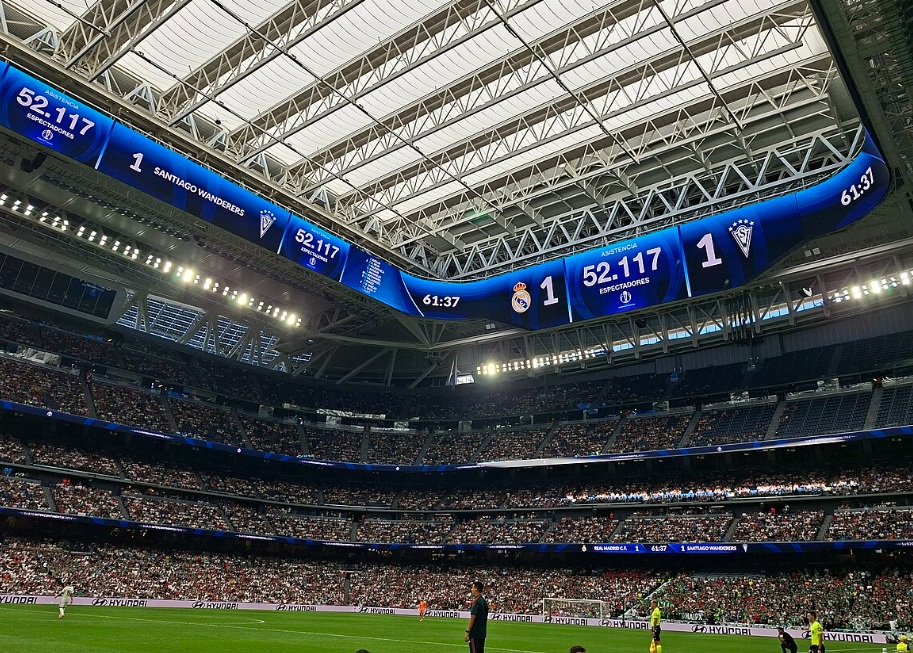
2. Tottenham Hotspur: Giving the Building Another Job
Tottenham approached the stadium dilemma through the lens of pure asset utilization. Knowing that a 62,000-seat stadium creates massive overhead costs 365 days a year—even when empty—they engineered a venue to eradicate idle capacity.
Built with a revolutionary retractable grass pitch, the Tottenham Hotspur Stadium seamlessly transitions to host NFL games, boxing matches, rugby, and massive concert tours without ruining the football surface. The masterstroke is the wider complex, which turns the ground into a week-round tourist and business destination via:
F1 Drive karting experiences
The Dare Skywalk roof adventure
Massive conference and exhibition spaces
In 2024/25, Tottenham generated £126.5 million in pure match receipts, but backed it up with £277.1 million in commercial revenue. The club still proudly depends on football; its stadium, however, no longer depends on matchdays. Tottenham successfully turned empty space into monetizable inventory.
3. PSG: Expanding Beyond the Stadium Walls
Paris Saint-Germain faced an entirely different set of constraints. The historic Parc des Princes is structurally limited in size compared to its European peers, and French domestic broadcasting revenue lacks the financial muscle of the English Premier League.
Instead of fixing a building, PSG fixed its global footprint. They used the star power of their first team to capture global eyeballs, and then aggressively built ecosystems where that attention could turn into a transactions:
Global Footprint: 14 official retail stores and 180 supporters' clubs across 92 countries.
The Academy Network: 177 youth academies across 21 countries, training over 50,000 young players.
The strategy worked. In 2024/25, commercial revenue hit €367 million alongside €175 million in matchday revenue. To put that in perspective, the entire club generated just €99 million across all sectors in 2011. PSG successfully uncoupled their revenue potential from the physical constraints of their stadium.
The Blueprint for the Rest of the World
ClubStrategic CoreThe Business AchievementReal MadridInfrastructure UpgradeImproved the absolute economics of a physical place.TottenhamMulti-Purpose UtilizationMaximized daily asset inventory and minimized idle time.PSGGlobal Brand ScalingExpanded the consumer relationship far beyond the home market.
Most football clubs don't have €1.4 billion to drop on a stadium redesign. They can't book NFL games or open flagship megastores in Tokyo or New York. But they can still apply the exact same underlying principle.
Every single football club sits on underutilized assets: training grounds, local community credibility, regional corporate partners, fan data, historical narratives, digital content, and player access.
When analyzing a club's future viability, look past the league table and ask two fundamental questions:
How often are our non-football assets actually creating value?
Can the club improve that value directly, or are we relying on someone else?
Broadcasting payouts, tournament prize pots, and transfer markets fluctuate wildly on factors entirely out of a director's control. On the flip side, local partnerships, memberships, event hosting, club retail, and deeper fan relationships can be built with steady, predictable continuity.
The strongest football models require a balance of both. But as the gap widens between the elite and the rest, the ultimate defining question for any sports organization remains:
What does your club sell when there is no match?