
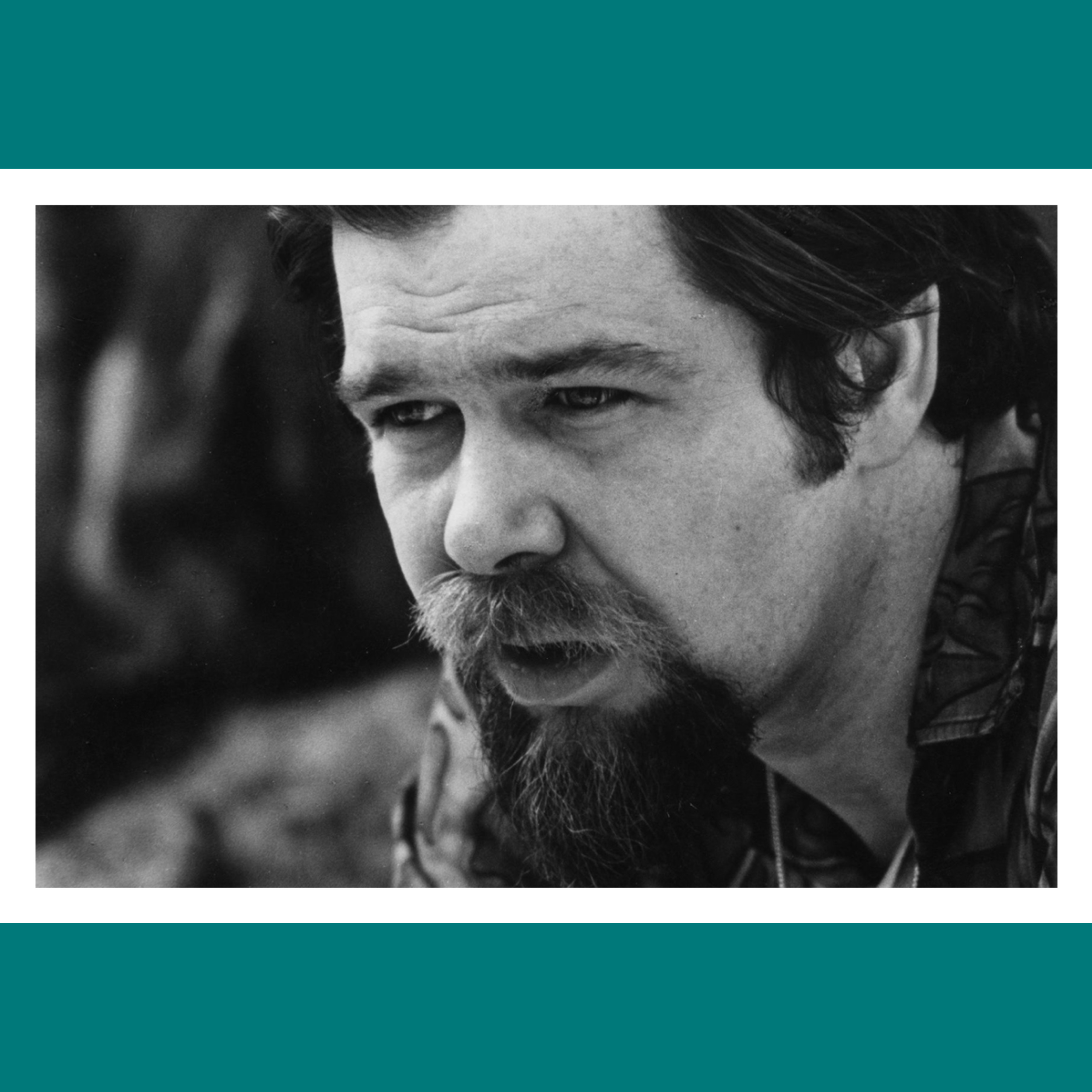
David Kenneth Ritz Van Ronk (June 30, 1936 – February 10, 2002) was an American folk singer, guitarist, and songwriter whose influence on the 1960s folk music revival and Greenwich Village music scene earned him the nickname “The Mayor of MacDougal Street.” A towering figure in American folk music, Van Ronk’s eclectic style, gravelly voice, and masterful guitar techniques left an indelible mark on the genre. His mentorship of emerging artists, dedication to musical authenticity, and commitment to social causes made him a beloved and respected figure in the folk community. This article provides a comprehensive overview of his life, career, and legacy, drawing from verified sources to ensure accuracy.
Early life and background
Dave Van Ronk was born on June 30, 1936, in Brooklyn, New York, to a working-class family of mostly Irish descent, despite the Dutch-sounding “Van” in his name. His father left shortly after his birth, and Van Ronk was raised by his mother and extended family. Growing up during the Great Depression, he spent his early years on the streets of Brooklyn, where he developed a rebellious streak and absorbed the jazz music of the era, including influences from Bessie Smith, Billie Holiday, and Louis Armstrong. Around 1945, he and his mother moved to Richmond Hill, Queens, where he attended Holy Child Jesus Catholic School, primarily serving Irish students.
Van Ronk’s musical journey began early. At age 12, he acquired a ukulele, followed by a guitar a year later, and then taught himself the banjo. He took piano lessons briefly but was largely self-taught, driven by a passion for jazz. His initial love was traditional jazz, and he performed in a barbershop quartet starting in 1949. However, he dropped out of high school before graduating, opting instead for a life of exploration. He spent time in Manhattan’s Lower East Side and briefly joined the Merchant Marine, an experience that shaped his rugged, independent persona.
Musical beginnings and transition to folk
Van Ronk’s early professional gigs in the 1950s involved playing tenor banjola (a hybrid of mandola and banjo) with traditional jazz bands in New York City. He later reflected humorously on these efforts, saying, “We wanted to play traditional jazz in the worst way … and we did!” The jazz revival failed to gain traction, prompting Van Ronk to pivot to blues and folk music, inspired by artists like Furry Lewis, Mississippi John Hurt, and the Reverend Gary Davis. His exposure to Harry Smith’s Anthology of American Folk Music (1952) was a turning point, introducing him to raw, authentic American folk and blues traditions.
Encouraged by folk singer Odetta, Van Ronk began performing in Greenwich Village coffeehouses by 1957. His first recording, Skiffle in Stereo (1958), was with the Orange Blossom Jug Five, a project he later called “truly appalling.” His solo career took off with the release of Ballads, Blues and a Spiritual (1959) on Folkways Records, produced by Kenneth S. Goldstein. This album showcased his raw fingerpicking style and eclectic repertoire, blending folk, blues, and jazz. A follow-up, Dave Van Ronk Sings (1961), further established his reputation as a versatile interpreter of traditional songs.
The greenwich village scene and mentorship
In the early 1960s, Greenwich Village became the epicenter of the American folk music revival, and Van Ronk was at its heart. His apartment on MacDougal Street was a gathering place for musicians, including Tom Paxton, Phil Ochs, Ramblin’ Jack Elliott, and a young Bob Dylan, whom Van Ronk befriended and mentored. He taught Dylan guitar techniques and allowed him to stay at his apartment, fostering Dylan’s early career. Van Ronk also supported Joni Mitchell, Patrick Sky, Suzanne Vega, and Christine Lavin, earning a reputation as the “guru on the mountain” for his generosity and guidance.
Van Ronk’s influence extended beyond mentorship. His arrangement of the traditional song “House of the Rising Sun” was recorded by Dylan on his debut album (1962), despite Van Ronk’s objections. The Animals later covered this arrangement in 1964, turning it into a chart-topping hit that helped spark the folk-rock movement. While Van Ronk was frustrated by the lack of credit, he remained a steadfast supporter of Dylan, even defending his controversial shift to electric music in 1965.
Musical style and career highlights
Van Ronk’s music was a unique blend of old English ballads, blues, gospel, rock, New Orleans jazz, swing, and ragtime. His gravelly voice and innovative fingerpicking guitar style—often using a three-fingered technique with the thumb playing the bass line—set him apart. He was particularly noted for his transcriptions of ragtime pieces like Scott Joplin’s “Maple Leaf Rag” and “St. Louis Tickle.” His performances were marked by a raw, emotive quality, often described as ribald and evocative.
Throughout his career, Van Ronk released over two dozen albums, including:
Dave Van Ronk, Folksinger (1963, Prestige)
In the tradition (1964, Prestige)
Dave Van Ronk and the Hudson Dusters (1967, Verve), which experimented with electric backing
Going back to Brooklyn (1985, Reckless), his only album of original compositions
Hummin’ to myself (1990, Gazell)
The Mayor of MacDougal street (2005, posthumous release of rarities)
He occasionally performed with jug bands and recorded projects like Peter and the Wolf (1990) and Foc’sle Songs and Shanties (1960) with Paul Clayton and the Foc’sle Singers. His 1971 album Van Ronk featured elaborate arrangements and covers of Bertolt Brecht and Jacques Brel, showcasing his willingness to push boundaries.
Van Ronk performed at major venues, including the Newport Jazz Festival (1964), Carnegie Hall’s New York Folk Festival (1965), and the 1968 Philadelphia Folk Festival. He toured Europe in the 1980s, a rare departure from his aversion to travel, as he famously refused to fly for many years and never learned to drive, relying on trains, buses, or friends for transportation.
Political activism and social causes
Van Ronk was deeply committed to leftist causes, identifying as a Trotskyist and maintaining membership in the Industrial Workers of the World (IWW) until his death. In the 1960s, he supported the Libertarian League and participated in protests, including a 1974 concert with Bob Dylan to aid Chilean refugees after the overthrow of Salvador Allende’s government. He also performed at a memorial concert for Phil Ochs in 1976, singing a bluesy rendition of “He Was a Friend of Mine.”
Notably, Van Ronk was among the 13 people arrested during the Stonewall Riots on June 28, 1969, a pivotal event in the gay rights movement. He was reportedly at the Stonewall Inn by chance and was detained after throwing a heavy object at a patrolman. His involvement, though incidental, has been celebrated as an act of solidarity.
Personal life and character
Van Ronk was married twice, first to Terri Thal, his manager, and later to Andrea Marie Vuocolo. He was known for his imposing stature, sharp wit, and intellectual curiosity, with interests in cooking, science fiction, world history, and politics. A raconteur, he was well-read and quick with quips, often sipping Tullamore Dew whiskey from a stoneware jug. His refusal to leave Greenwich Village for extended periods—except for a brief stint in California in the 1960s—reflected his deep connection to the neighborhood.
Van Ronk’s personality was both gruff and avuncular. Tom Paxton’s tribute song, “The Mayor of MacDougal Street,” captured his intolerance for fools and cynical worldview, yet he was warmly regarded as a mentor and friend. Joni Mitchell praised his rendition of her song “Both Sides, Now” (which he called “Clouds”) as her favorite version, highlighting his interpretive genius.
Later years and legacy
In 2000, Van Ronk performed at Blind Willie’s in Atlanta, reflecting on his return to Greenwich Village. His final concert took place months before his death on February 10, 2002, from colorectal cancer in Manhattan. He was 65. At the time, he was working on his memoir, The Mayor of MacDougal Street, which was completed by collaborator Elijah Wald and published in 2005. The memoir inspired the Coen Brothers’ 2013 film Inside Llewyn Davis, a fictionalized portrayal of a folk singer based on Van Ronk, incorporating anecdotes from his life.
Van Ronk received numerous accolades, including a Lifetime Achievement Award from ASCAP (1997) and a posthumous Lifetime Achievement Award from the World Folk Music Association (2004). In 2004, a section of Sheridan Square in Greenwich Village was renamed Dave Van Ronk Street in his honor. His influence is also acknowledged in songs like David Bowie’s “(You Will) Set the World on Fire” (2013) and The Who’s “Mirror Door” (2006).
Impact and cultural significance
Dave Van Ronk never achieved pop stardom, but his impact on folk music was profound. His innovative blend of jazz, blues, and folk influenced a generation of musicians, from Dylan to Mitchell. His commitment to authenticity and skilled musicianship challenged the “artiste” stereotype, as he viewed himself as a craftsman rather than a celebrity. His mentorship fostered the careers of countless artists, and his presence in Greenwich Village helped define its cultural identity during the folk revival.
Van Ronk’s legacy endures through his recordings, memoir, and the continued reverence of folk musicians. The Smithsonian Folkways collection Down in Washington Square (2013) compiles his work, showcasing his versatility. His story remains a testament to the power of music to inspire, connect, and advocate for change, cementing his place as a folk music icon.
Dave Van Ronk's Autobiography

Dave Van Ronk's autobiography, The Mayor of MacDougal Street: A Memoir, was published posthumously in 2005 by Da Capo Press. Co-authored with Elijah Wald, the memoir draws from Van Ronk’s unfinished manuscript and oral recollections, completed after his death in 2002. It offers a vivid account of his life, from his Brooklyn childhood to his central role in the 1960s Greenwich Village folk revival. The book details his musical evolution, mentorship of artists like Bob Dylan, and commitment to leftist causes, infused with his sharp wit and storytelling flair. It inspired the Coen Brothers’ 2013 film Inside Llewyn Davis, a fictionalized take on Van Ronk’s early career.
For those interested, you can purchase this captivating memoir to explore Van Ronk’s legacy firsthand.
Affiliated link: The Mayor of MacDougal Street - https://amzn.to/3F8Z2z9
Publication date: April 26, 2005