

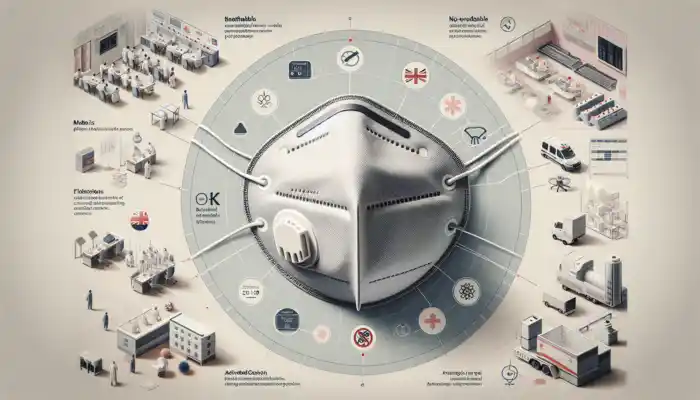
 Manufacturers in the United Kingdom produce PPE masks from materials such as nonwoven polypropylene to ensure superior filtration and breathability.
Designers often incorporate activated carbon layers into these masks to effectively block unpleasant odours and harmful airborne particles.
These products must adhere to strict British standards,s such as EN 149 for filtering half masks and EN 166 for eye protection.
By following these rigorous testing protocols, producers guarantee that their equipment withstands impact and resists liquid penetration.
High-performance visors also feature anti-fog and scratch-resistant coatings to maintain optical clarity in demanding healthcare or industrial environments.
Employers must prioritise user comfort and equipment compatibility to ensure the effectiveness of protective gear.
A secure fit around the forehead and chin prevents dangerous air leaks that could compromise safety. Safety officers conduct seal checks and user trials to confirm that the mask fits the user's face perfectly during normal movements.
Furthermore, masks and visors must integrate seamlessly with other essential items such as helmets and goggles.
This careful selection process ensures that straps do not interfere with helmet fit and that there are no gaps between the eyewear and the visor.
The Personal Protective Equipment at Work Regulations 1992 are the primary legislation governing safety equipment across the UK.
This law places the responsibility on employers to conduct risk assessments and select equipment suitable for specific workplace hazards.
Companies that fail to comply with these regulations face severe penalties, including heavy fines and potential criminal charges.
To avoid legal liabilities and increased insurance premiums, organisations must perform regular audits of their safety protocols. This proactive approach cultivates a culture of safety and significantly reduces the risk of workplace injuries.
Organisations effectively prolong the lifespan of their safety equipment by implementing robust maintenance and disposal protocols.
Staff members use alcohol-based solutions to disinfect reusable masks and store them in cool, dry places to prevent material degradation.
For disposal, companies separate recyclable plastic components from hazardous waste to align with eco-friendly practices and local waste regulations.
The industry is also adopting smart technologies such as masks equipped with sensors to monitor air quality and filter efficiency.
These innovations provide data-driven insights that enable UK businesses to enhance protection standards continuously.