

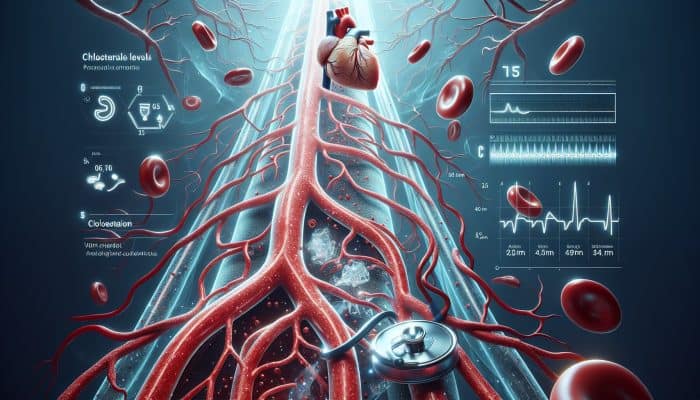
 Residents of Barnstaple and Devon utilize regular cholesterol testing as a crucial element in maintaining heart health, performing this proactive practice for over three years through services like Blood Test UK.
Elevated cholesterol levels significantly raise the risk of developing heart disease and experiencing a stroke because fatty deposits accumulate within the arteries.
Consistent testing becomes especially vital in the UK, where cardiovascular diseases remain highly prevalent.
By monitoring cholesterol levels routinely, individuals can detect potential health issues early and implement preventive measures, thereby minimizing personal health risks.
Individuals find testing services readily available at various local facilities, including general practitioners’ offices, community health centers, and private clinics such as Barnstaple Health Centre, Brunel Medical Practice, and South Molton Health Centre.
 An experienced healthcare professional collects a blood sample, typically drawing the sample from a vein in your arm, during a cholesterol test.
This quick and uncomplicated procedure typically takes just a few minutes to complete. Professionals analyze the sample, specifically focusing on measuring three key components:
High-Density Lipoprotein (HDL), Low-Density Lipoprotein (LDL), and triglycerides. HDL represents the “good” cholesterol that helps remove other forms of cholesterol from the bloodstream, while LDL represents the “bad” cholesterol associated with plaque buildup.
To guarantee accurate results, proper preparation remains essential. Healthcare providers typically recommend fasting for a minimum of nine to twelve hours before the test, meaning you avoid all food and drink, except water, during the fasting period.
Following specific instructions from your healthcare provider, such as avoiding certain medications or vigorous exercise, optimizes preparation and ensures reliable results.
Cholesterol test results provide critical insights into overall heart health, presenting measurements in millimoles per litre (mmol/L).
Experts generally consider a total cholesterol level below 5.0 mmol/L to be healthy, but they recommend consulting a healthcare professional if levels exceed this threshold.
Ideally, HDL levels should surpass 1.0 mmol/L for men and 1.2 mmol/L for women, while LDL levels should remain below 3.0 mmol/L.
Elevated LDL or reduced HDL signals an increased risk for heart disease. After receiving the results, individuals begin a comprehensive discussion with their healthcare provider, who interprets the numbers in relation to the patient's specific risk profile and overall health history.
This interpretation empowers individuals to implement necessary interventions, which may include lifestyle changes, dietary adjustments, or medical therapies, to manage cholesterol effectively.
Implementing dietary adjustments and engaging in regular physical activity has been proven to be a highly effective way to manage cholesterol levels and enhance overall heart health.
A heart-healthy diet emphasizes the consumption of abundant fruits, vegetables, whole grains, and lean proteins, while also encouraging individuals to limit their intake of saturated and trans fats.
Experts also recommend incorporating at least 150 minutes of moderate-intensity aerobic exercise per week, along with twice-weekly strength training, as this helps elevate HDL levels and reduce LDL and triglyceride levels.
Healthcare professionals provide personalized guidance on these modifications. Experts unanimously endorse regular testing as an integral part of preventive healthcare, underscoring the importance of early detection and management.
Furthermore, ongoing research continues to highlight the intricate relationship between cholesterol and cardiovascular health, driving new pharmacological advancements, such as PCSK9 inhibitors, which offer innovative hope for individuals managing high LDL levels who find traditional methods insufficient.