

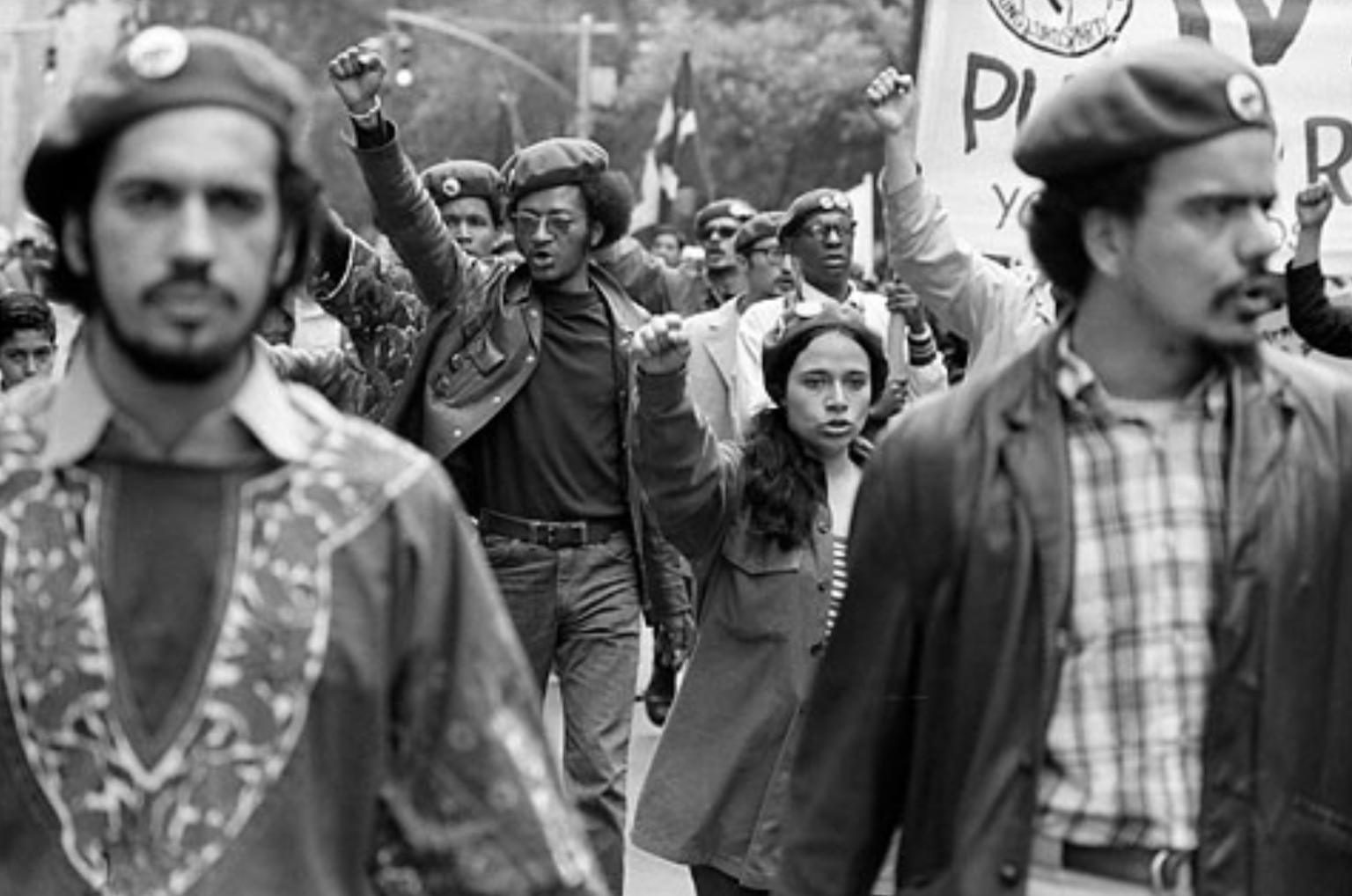
 In 2023, I wrote an essay about my journey of unpacking my racial identity and how it related to the larger shortcomings of the concept of ‘Latinidad’. It's been three years, and some things have changed. Unfortunately, a lot has not.
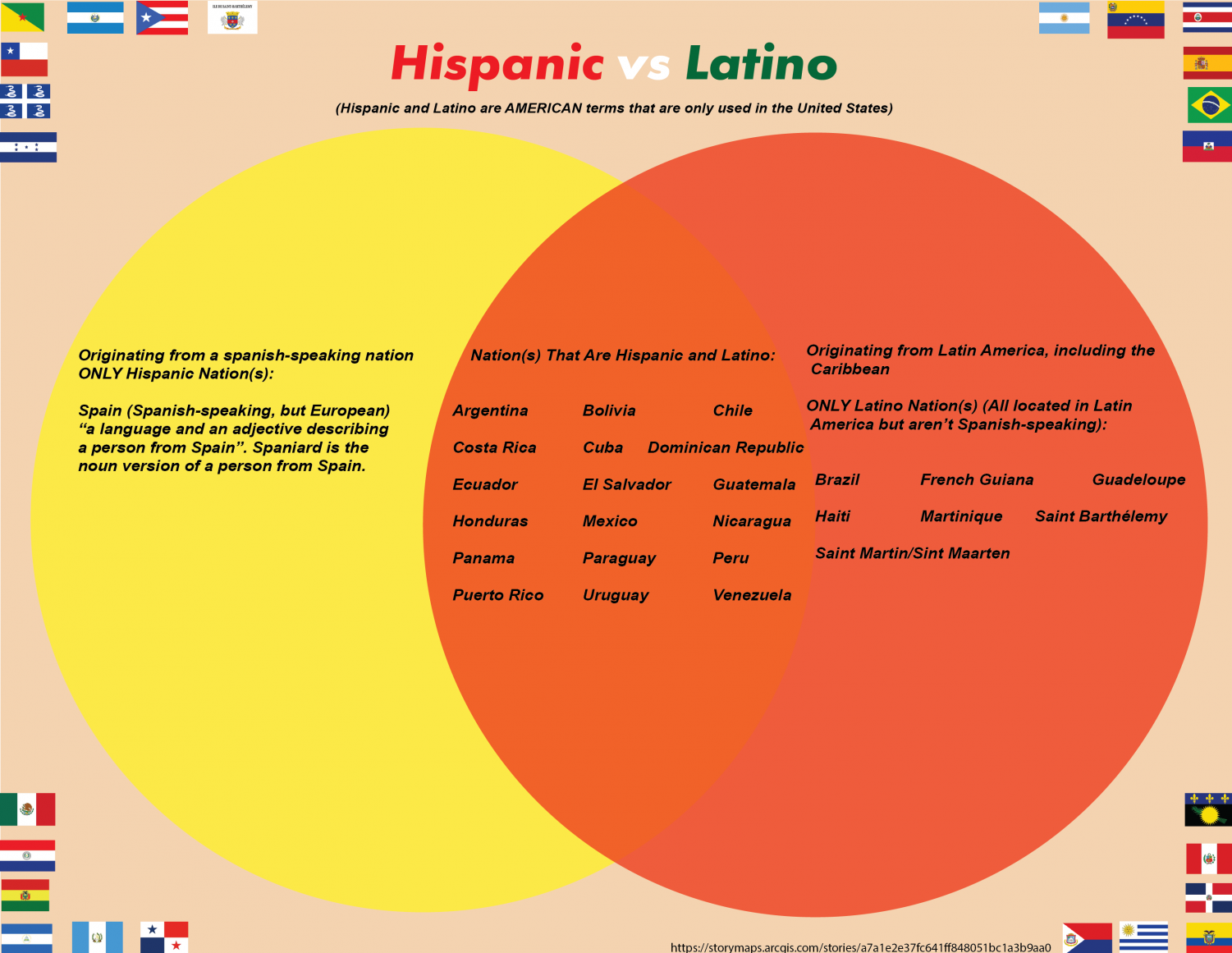
We are about halfway through Hispanic Heritage Month, which runs from September 15 to October 15. It began as a week in 1968 to celebrate the contributions of Americans tracing their roots to Spain, Mexico, Central America, South America, and the Spanish-speaking Caribbean. Two decades later, it grew into a full month, starting in mid-September on purpose to line up with the independence anniversaries of several Latin American countries. Many people now call it Latine Heritage Month, to include Latin American places that don't speak Spanish.
Since moving back to St. Louis after more than 12 years in Washington, D.C., it's been beautiful to see how celebrations of Latin American culture have grown here: the festivals, the new food businesses, the flags on display, and the weekly educational events. I love all of it.
But the past few years especially have also brought growing hostility toward people of Latin American descent in the United States. This moment calls for unpacking, examination, and an exploration of what it means to leverage the power and influence we have, not just during Hispanic/Latine Heritage Month, but all year round, for unwavering solidarity in our shared struggle for dignity and collective thriving.
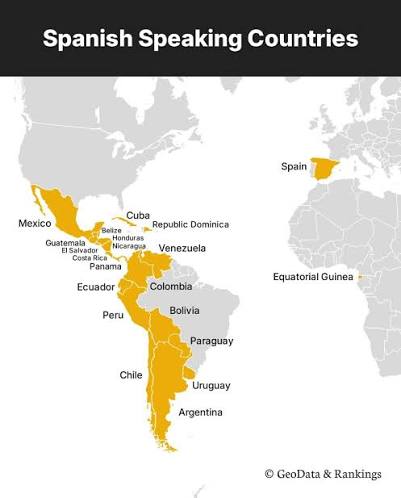
Hispanic vs. Latine and the Privilege of Citizenship
For the record, I don't personally resonate with the term Hispanic. Yes, part of my ancestry connects to Europe, mainly through the Iberian and Sephardic Jewish settler roots I've recently been able to trace back hundreds of years. But when I think of the term "Hispanic," I think of people with more current and explicit ties to Europe: in how they look, in customs passed down, or in family and land connections to Spain. I feel like I don't have any of those things.
"Latine" best fits how I have moved through the world. When my family moved from New York and New Jersey to St. Louis in 2000, we were the ethnic minority. Embracing a broader Latine identity opened the door to friendly relationships that grew into our chosen family: people from the Mexican states of Michoacán and Jalisco, from Colombia, Venezuela, Cuba, Peru, El Salvador, and the Dominican Republic. It is still a privilege and an honor to feel a sense of belonging in these spaces. To share food, celebrations, and sacred beliefs. To feel like I belong to a larger cultural fabric.
 In many ways, my biological family had a lot in common with our St. Louis chosen family. We shared many of the same struggles: language barriers, forced assimilation, exclusion from influential spaces, and a lack of representation in positions of power. But there were key differences too. The biggest one, by far, was that we were born U.S. citizens.
The story of how many Puerto Ricans ended up on the mainland mirrors the immigrant experience in fundamental ways. Waves of us have been displaced from the island and forced to settle in New York, Orlando, Chicago, and beyond over the past 80 years. My own parents arrived in New York in the mid-1980s, shortly before I was born. As young parents barely in their twenties, they had a lot to overcome. But they never had to fear criminalization or deportation for not having papers.
Now, more than than any time before, this matters. Because when we moved to St. Louis decades ago with no cultural connections or community, we were welcomed with open arms. Now many of those same people who welcomed us are being profiled, dehumanized, and their sense of stability and ability to keep their families safe and intact is under threat. So for the first time, I have to ask myself: How can I use the unearned privilege as a U.S.-born citizen to help protect our chosen family? Remember, presence in this country without papers is not, in itself, a crime. Our chosen family, many of them migrants, are the backbone of this community, and they deserve better.
The Path to Peace with My (Somewhat Complicated) Racial Identity
Growing up between New York, New Jersey, and Puerto Rico, I didn't have to think much about where I belonged. I was always surrounded by ethnic, religious, and racial diversity, which made me feel right at home.
St. Louis County was a different world. My high school was predominantly white, and it bused in students from the city, almost all of them Black American, to diversify the school. That arrangement unsettled me, and to think it was only the tip of the iceberg. It was my first real-life lesson on how redlining and segregation shaped this region. In addition, starting a new school in a new part of the country in my own identity development was, to put it lightly, jarring. To survive socially and emotionally, I made choices to surround myself with mostly white friends, damaged my naturally curly hair by straightening it into submission, listened to music and watched TV shows I couldn’t culturally relate to, and stopped speaking Spanish at home.
Looking back, I am not proud of denying my culture and identity. I live with regrets. I often wonder if I had opportunities to develop closer relationships with other people of color, especially if I had opted to have more Black and brown friends I could share those experiences with, would I have chosen differently? I’d like to think so.
In my mid-twenties, after moving away from St. Louis, I decided to confront my own discomfort and confusion with my racial identity. I made the decision to work through it, albeit clumsily and imperfectly at times, for a number of years before I was able to make some peace with who I am, who I am not, and the responsibility that comes with that.
First, I identify as a Diasporican: someone of the Puerto Rican diaspora who was not born on the island but spent enough formative time there that it shaped my cultural traditions, how I navigate speaking two languages, my palate, and how I understand colonialism and self-determination, among other things.
I have also come to identify as a non-Black person of color with multiracial ancestry. I still carry some hesitancy around this label, but I try to sit with the nuance. Yes, race has no biological basis. But it is a very consequential social construct used to rank people by their features and skin color. I am rarely racialized as Black. But my lived experience has been influenced by both internalized and systemic anti-Blackness, especially on my father's side of the family, who is predominantly Afro-Indigenous. And their lived experiences have been shaped by the subjugation of Afro-descended people and the enslaved West Africans brought to the Caribbean through the transatlantic slave trade.
"I am rarely racialized as Black. But my lived experience has been influenced by both internalized and systemic anti-Blackness, especially on my father's side of the family, who is predominantly Afro-Indigenous."
Anti-Blackness is woven into Latin America as deeply as it is into the United States. That means everyone who identifies as Latine has their own internal work to do around race. It isn't my place to tell anyone who they are.
But what I DO want you to think about is that identifying as “Hispanic” or “Latine” does not mean you are also compressed into one racial identity.
But you wouldn’t know that just by looking at many promotion and marketing materials for Hispanic/Latine Heritage Month events. What is most associated as an image of what a Hispanic or Latine person "looks like" is usually someone non-Black and light-skinned.
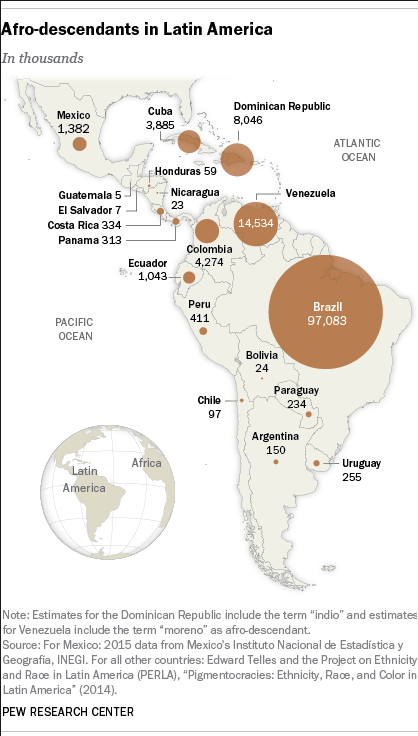
Meanwhile, around 134 million (more than one in five) people in Latin America identify as Afro-descendant. In the U.S., only about 1.2 million people identified as both Hispanic and Black on the 2020 census. But when Pew Research Center asked Latinos directly, about 6 million adults said they were Afro-Latino. The gap between those numbers tells us something about how Black identity often gets excluded and erased.
I think while this is becoming harder to ignore, one of the many hard truths Latin Americans have been able to ignore is that what we celebrate about Latinidad can’t be isolated from our history of colonialism and colonization. We often connect Latinidad with shared values, food, music, and dance. But as scholar Walter Mignolo explains in The Idea of Latin America, the idea took off in the second half of the 19th century, when white Creole and mestizo elites built a shared identity to consolidate their own power. That identity was reinforced by blanqueamiento, or “whitening”, the push to mejorar la raza, or "improve the race," by moving people toward whiteness. Blanqueamiento strengthened Latinidad, and a unified Latinidad justified blanqueamiento.
"...one of the many hard truths Latin Americans have been able to ignore is that what we celebrate about Latinidad can’t be isolated from our history of colonialism and colonization."
Puerto Rico and the Myth of Racial Harmony
If you're Puerto Rican, part of the diaspora, or just on social media lately, you've probably seen confusion about our racial identity and what we get to claim. Many people I know treat being Puerto Rican, a national identity, as if it were a race. Much of that comes from our colonial history.
After the U.S. annexed Puerto Rico in 1898 after the Spanish-American War, there were concerted efforts during the first half of the 20th century to make race seem irrelevant, while still working to culturally ‘whiten’ its people. Sociologists Mara Loveman and Jeronimo Muniz found that reclassification between the 1910 and 1920 censuses alone produced a "surplus" of nearly 100,000 white people. By 1950, census-takers classified nearly 80 percent of Puerto Ricans as white, up from about 62 percent in 1899. What changed? The goalposts of who counted as ‘white’.
In 1960, under Governor Luis Muñoz Marín, the island removed the racial category question entirely from its version of the census. The reasoning was la gran familia puertorriqueña, or the “great Puerto Rican family”, the belief that ALL Puerto Ricans are a blend of Taíno, Spanish, and African roots, so racial categories were no longer needed. Selecting a racial identity wouldn’t be an option again until the 2000 census.
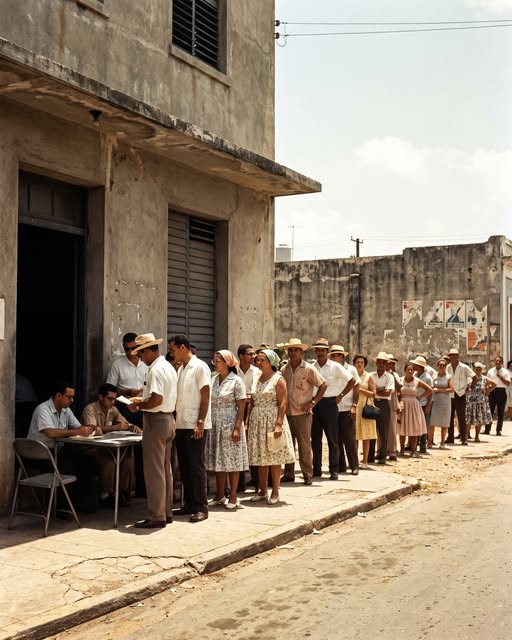 While Luis Muñoz Marín sought to promote a comforting story of racial harmony and unity, it is a false one. In practice, the idea of 'la gran familia puertorriqueña ' keeps Black and darker-skinned Puerto Ricans at the margins in who gets hired, who holds high office and political appointments, and who reaps the most benefits from social services.
"In practice, the idea of 'la gran familia puertorriqueña ' keeps Black and darker-skinned Puerto Ricans at the margins in who gets hired, who holds high office and political appointments, and who reaps the most benefits from social services."
Afro-Latine people have long been more likely to face discrimination in police encounters and when speaking Spanish in public. Lighter-skinned Latine people with more European features have often been shielded from the worst of state violence. But in recent years, Latine people across skin tones and citizenship status have become targets of state-sanctioned violence and law enforcement. No amount of assimilation fully protects us. If this moment teaches us anything, it's that none of us are free until all of us are.
Solidarity in Practice
Getting clear on my racial identity helped me see what holds this false umbrella of Latinidad up. It was also essential to understanding how to use my positioning within systems of power to practice solidarity that wasn’t just performative.
To get to this point, I had to reckon with a lot. Half of my ancestry is Afro-Indigenous. The other half is traced back to the Iberian Peninsula (Portugal and Spain). There's room to understand the violent history behind that and to atone for the harms connected to that lineage, but also to hold respect and appreciation for it as well. That work took time, humility, and a commitment to repair after rupture.
It also meant unlearning how I showed up in the justice-centered and multiracial spaces. I had to learn that I didn't need to be the loudest person in the room or use all the right language to be understood and heard. I needed to be mindful of how I was taking up space, which was often at the expense of Black women and femme-presenting people. And I needed to do the work of earning their trust and confidence over time. In some cases, that took years.
It also meant showing up for Puerto Ricans still living on the archipelago. The Global South, where most of Latin America sits, contributes the least to climate change, yet it bears the brunt of it: stronger storms, rising seas, and disasters that hit places already weakened by colonial extraction. Spending time in Puerto Rico right after Hurricane Maria in 2017 and the earthquakes of 2020, I learned how years of debt, austerity, and neglect had left the power grid, roads, schools, and health systems crumbled, setting the stage for the aftermath. The people who suffered most after the hurricane, earthquakes, and the current power and water crisis have the lowest incomes and the fewest resources to leave or rebuild, and they were often the most visibly Indigenous and Afro-descended. As someone who doesn’t live there but wants to help, the least I can do is donate and support grassroots organizations there, led by people who understand exactly what their communities need.
Celebrating our culture is incredibly important for so many reasons. But what does it mean to show solidarity with all Latine people during Latine Heritage Month, beyond the weekend festivals, themed dinners, and educational events? These celebrations are not inherently performative, and our joy is worth protecting. But our culture can't survive if the people who carry it are struggling to survive. So this Latine Heritage Month, I'm inviting you to start where you are. Here are just a few ideas:
Protect our migrant neighbors. That means actively protecting migrants with diverse legal status from inhumane treatment and detention by ICE and the other law enforcement agencies working on its behalf. In practice, it looks like joining rapid response efforts, attending ICE watch, cop watch, know-your-rights trainings, donating to local legal defense funds, and showing up to advocate with your local government officials.
Notice and address anti-Blackness in Latine spaces. Look at who is represented in our events, media, and leadership. If people being recognized only look a certain way, spend some time examining why. Explicitly uplift the contributions and history of Black Latine people and center them when discussing what makes our culture vibrant: our music, our art, and our food.
Connect the dots between colonialism and climate change. Climate change is quickly changing the conditions in Puerto Rico and is not being proactively addressed because of colonialism. The same is happening in many countries across Latin America. We need to talk about it, and we need to support the people fighting to protect their land and natural resources.
Keep the festivals and educational events, but if we don't stand with Latine people across class, race, and legal status, there won't be a home left for our celebrations, our cuisines, and our gatherings.
We must show up today so that our culture stays alive tomorrow.
About the author: Patrilie (puh-trill-eee) is a liberatory learning designer, facilitator, strategist, and educator with 16 years of experience across public health, food systems, and community-driven initiatives. They are committed to helping others better understand how our pursuit of collective well-being cannot be separated from the built environment, policies, systems, and structures. They are also the founder of Embody Lib, LLC, and work with nonprofit organizations, public institutions, and care providers to improve culture, systems, and practices through a healing-centered, culturally responsive, body- and brain-responsive lens.