

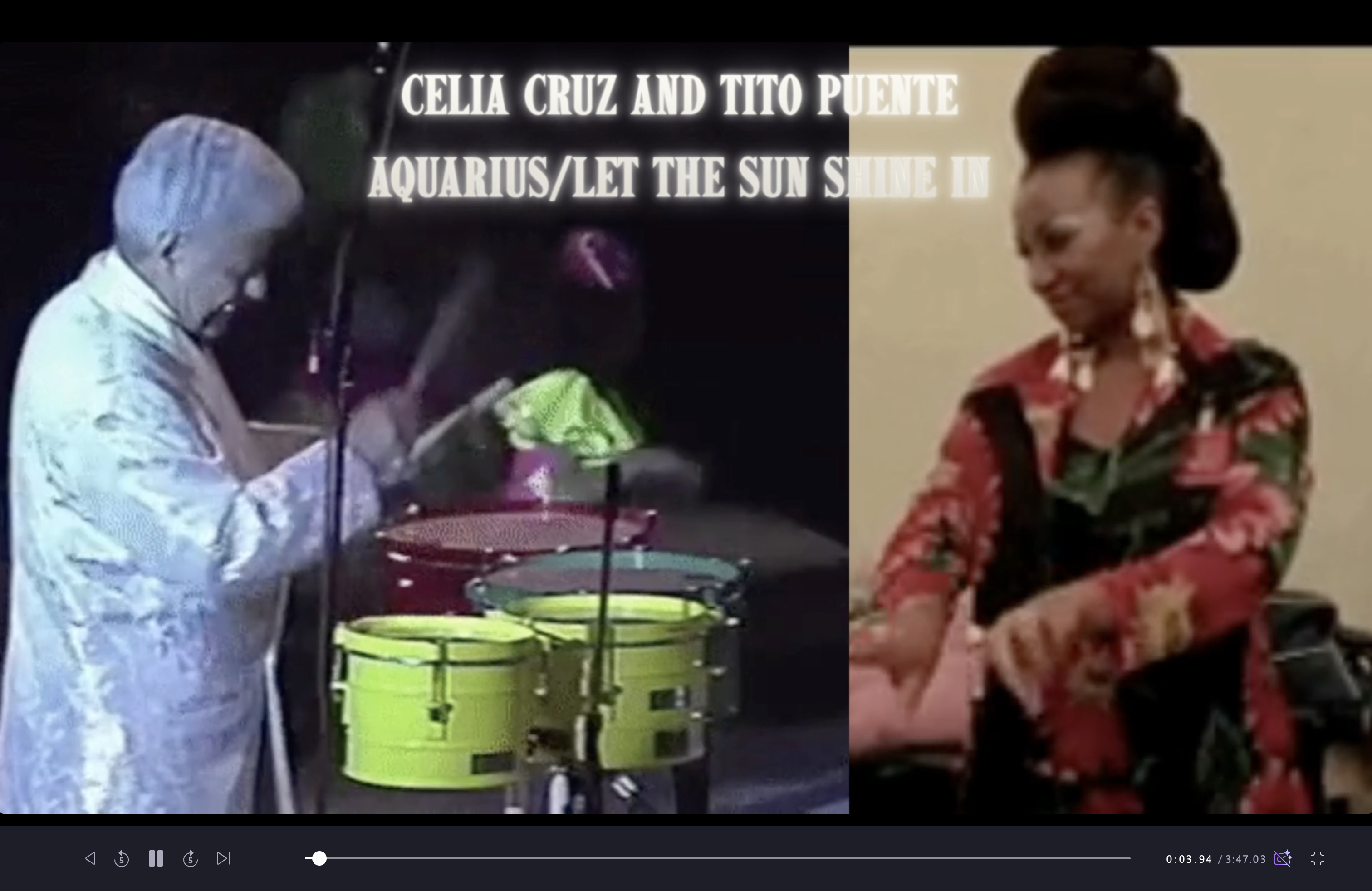
Add movement, music history, and plenty of energy to your elementary general music classroom with this new body percussion steady beat play-along featuring Celia Cruz and Tito Puente’s recording of “Aquarius / Let the Sunshine In.”
Cruz and Puente recorded this version in 1969. It combines two songs from the Broadway musical Hair and gives them an exciting Latin-music makeover.
Move to the Steady Beat and Phrases
Throughout the play-along, students follow visual cues and perform movements such as:
Clapping
Tapping their knees
Swaying with their arms down low and then above their heads
Performing a tap-tap-clap-clap pattern
Tapping their shoulders and then crossing to tap the opposite shoulders
Stomping
Dancing like Celia
Free dancing or playing air drums
The movements are repetitive and easy to follow, helping students focus on maintaining the steady beat. The changes also encourage students to watch carefully and listen for musical transitions.
TIP: If the beat is too fast at first, use the YouTube settings to slow down the tempo.
Learn About Celia Cruz and Tito Puente
Before beginning the play-along, introduce students to the two legendary performers.
Celia Cruz was born in Havana, Cuba, on October 21, 1925, and became known around the world as the “Queen of Salsa.” She was famous for her powerful voice, energetic performances, and colorful costumes. The Smithsonian even has some of her performance clothing in its collection.
Tito Puente, born on April 20, 1923, began studying piano when he was eight years old, but the timbales eventually became his main instrument. He helped combine big-band sounds and jazz harmonies with Afro-Cuban rhythms and became one of the world’s most influential timbales players.
The accompanying manipulatives include student-friendly slides with fun facts about Cruz, Puente, and their recording of “Aquarius / Let the Sunshine In.”
Using the Manipulatives
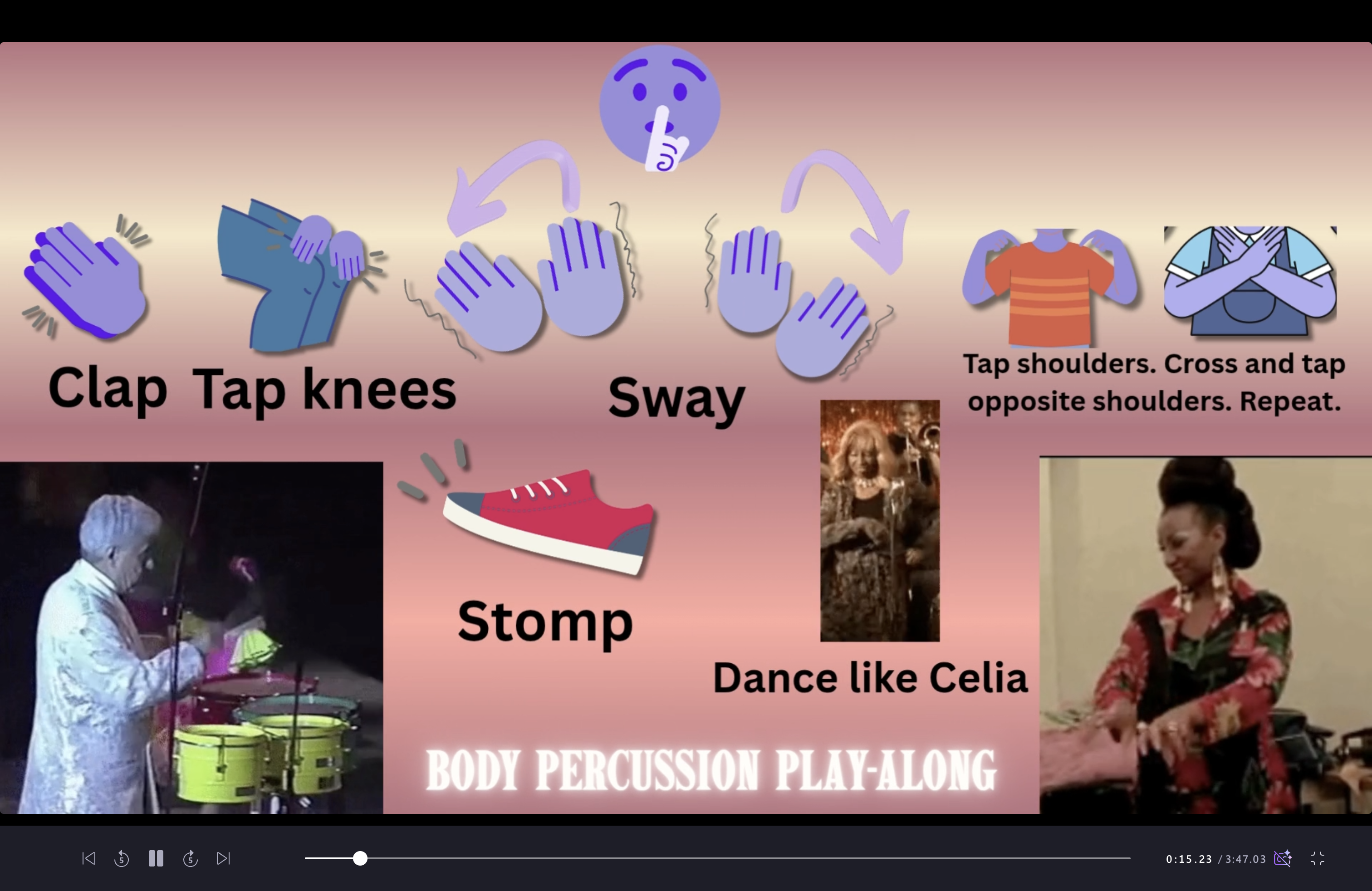
The PDF includes all of the movements in the same order that they appear in the video. Teachers can use the pages to:
Introduce and practice each movement before playing the video
Preview the complete movement sequence
Display the upcoming movement for students who benefit from additional visual support
Review the order after completing the play-along
Ask students to identify repeated movements and patterns
Invite students to arrange selected movement pages into a new sequence
Present the movement slides and choose students to lead the class in the movement sequence
Use Wheel of Names (wheelofnames.com) to select students to perform the movements on the slides
You can project the PDF, print individual pages, or place selected movement pages where students can easily see them.
👉Download the manipulatives at https://buymeacoffee.com/elmusedtech/extras
A Simple Lesson Sequence
Meet the performers. Share a few of the included facts about Celia Cruz and Tito Puente.
Introduce the music. Explain that students will hear a Spanish-language version of two songs from the musical Hair.
Practice the movements. Quickly rehearse clapping, tapping knees, swaying, crossing to tap opposite shoulders, and the tap-tap-clap-clap pattern.
Complete the play-along. Encourage students to keep the beat even when the movement changes. Slow the tempo down in the YouTube settings if the tempo is to fast at first.
Reflect and listen again. Ask students which movement they enjoyed most and whether they heard the voices, brass instruments, steady beat, or timbales.
Ideas for Different Grade Levels
For younger students, focus on copying the movements and maintaining the steady beat. Students may perform the entire activity seated by tapping their legs instead of stomping and adapting the arm movements as needed.
Older students can identify the body-percussion timbres, describe repeated movement patterns, listen for call-and-response singing, or create an original eight-beat body percussion pattern to accompany part of the song.
Whether you use it as a movement activity, listening lesson, brain break, or introduction to two important Latin music performers, this play-along is a joyful way to bring music history and steady beat practice together!
Coming Soon!
Later this month, I will create a steady beat and whole note rhythm play-along to this arrangement. Stay tuned!