

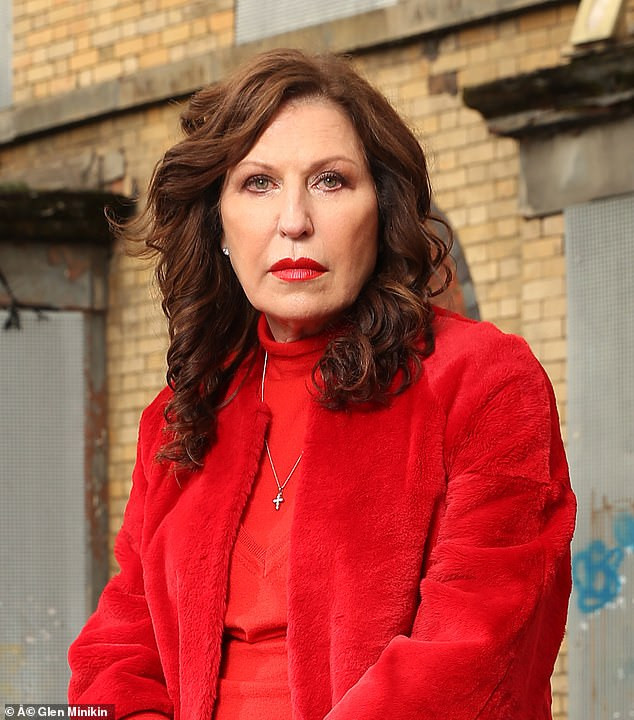
Even Amanda Platell had to tell the truth.
And if you know anything about British media, you know how extraordinary that is.
This is a woman who has spent years attacking Harry and Meghan for breathing too loudly. A columnist who defends the royal family reflexively, instinctively, almost professionally. If there has ever been a “royal sycophant,” she’s been one of the loudest.
And yet here she is, writing that the monarchy is in crisis. That Andrew has disgraced it. That Charles, William and Kate “don’t get it.” That unless something changes fast, the monarchy could be finished.
When even she can’t spin it anymore, you know something has shifted.
Platell doesn’t suddenly care about victims. Let’s be clear about that. Her concern isn’t justice, or accountability, or the women harmed. Her concern is what she openly admits: the survival of the monarchy. The brand. The institution. The optics.
And that alone tells you how deep the rot is.
Because what she’s really saying without quite wanting to say it is that the palace’s long-standing strategy of silence, deflection, and distraction has collapsed.
For years, the royal family relied on a simple formula. Protect Andrew quietly. Pay settlements quietly. Downgrade titles quietly. Move people around quietly. Let time pass. Let the public get bored.
And above all, keep the focus elsewhere.
Harry and Meghan became incredibly useful in that context. Every headline about them was one less headline about Andrew. Every culture-war meltdown over candles, lip gloss, or jam was another day the Epstein story didn’t lead.
Platell herself played that role enthusiastically.
But the Epstein files changed the maths.
Because now there are documents. Emails. Timelines. Intermediaries. Names. Patterns. And crucially, confirmation that Andrew and Fergie did not tell the truth about cutting ties with Epstein.
The photograph is real.
The relationship continued.
The lies are documented.
You can’t “hug a tree” your way out of that.
And that’s where Platell’s panic creeps in. She lashes out at Charles’s documentary, at William’s absence, at Kate sewing jeans, at Camilla reading to children not because those things are bad, but because they look absurd against the scale of the scandal.
Her argument boils down to this: read the room.
The public is angry, struggling, cynical, and distrustful. And watching a family that still houses Andrew on royal land, still shields him from questioning, still refuses a full reckoning while performing wholesome photo-ops feels insulting.
What Platell accidentally exposes is the central contradiction of the monarchy right now.
They want dignity without accountability.
Respect without transparency.
Sympathy without truth.
And that no longer works.
She even admits the unthinkable for a monarchist: that the Queen’s intervention to help fund Andrew’s settlement may have been the moment the damage became permanent. Not because it proved guilt in a legal sense, but because it ensured the truth would never be tested in court.
Justice deferred didn’t heal the institution. It poisoned it.
And here’s the part that should really sting.
While Harry was cut off, briefed against, stripped of security, and portrayed as a traitor for speaking, Andrew was protected for doing. While Harry was framed as an existential threat to the monarchy, Andrew was quietly treated as an embarrassment to be managed.
Platell doesn’t say that directly but it’s hanging over every paragraph.
She’s finally realised what many people have been saying for years: the monarchy’s biggest danger isn’t criticism from the outside. It’s its refusal to confront itself from within.
Not climate projects.
Not documentaries.
Not sewing demos.
Not soft focus empathy.
Accountability.
And the reason her column matters isn’t because she’s right it’s because she can no longer pretend otherwise.
When even the most loyal voices start warning of collapse, it’s not rebellion.
It’s a distress signal.
And the monarchy would be foolish to ignore it.