

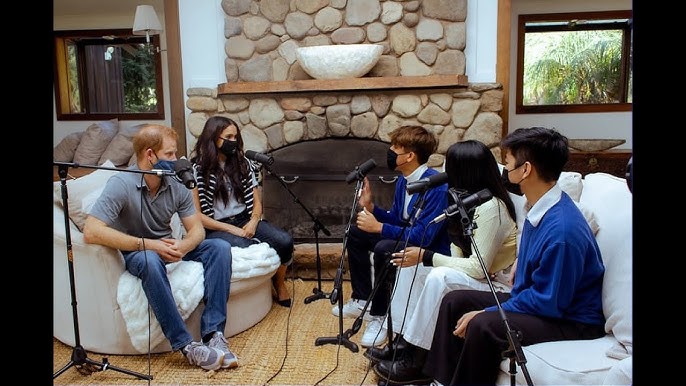
Prince William sat down for a special episode of Radio 1's Life Hacks to discuss mental health.
He talked about taking time to "understand my emotions." He reflected on processing feelings. He encouraged people to "learn to love yourself and understand yourself." He said we need more male role models talking about mental health publicly so that it becomes second nature to us all.
And as I listened, I kept thinking about one thing.
In his memoir Spare, Prince Harry revealed that his brother William believed Harry was being "brainwashed" by his therapist.
Brainwashed. By therapy.
Reports indicated that William and other members of the Royal Family feared Harry had been "kidnapped by a cult of psychotherapy and Meghan." That is not my phrasing. That is what was reported. A cult of psychotherapy.
So let me understand this correctly.
William thought his brother was being brainwashed by mental health treatment. William believed therapy was cult-like. William was so uncomfortable with Harry seeking professional help that he framed it as indoctrination.
And this same man now sits on a podcast telling the nation that we need to understand our emotions. That we should check in with ourselves. That mental health crises are temporary and we should learn to love ourselves.
The hypocrisy is so complete it takes my breath away.
Which is it, William? Is therapy a valuable tool for understanding your emotions, or is it a cult that brainwashes people? Is mental health support something we should normalise, or is it something that kidnaps people away from their families?
You cannot have it both ways. You cannot mock your brother's therapy privately while advocating for mental health publicly. You cannot call professional psychological support a cult and then build your public image around emotional wellbeing.
And yet that is exactly what William is doing.
Let me give you the fuller picture.
Harry has been talking about mental health publicly for years. He spoke about going to therapy after the death of his mother. He discussed his struggles with PTSD. He was open about the work he was doing to process his grief and trauma.
And what was the response from his family?
They thought he was brainwashed. They called his therapist's influence cult-like. They were uncomfortable with him opening up. They saw his healing as a threat rather than a triumph.
Meanwhile, the British press mocked Harry relentlessly. He was called weak. He was told he was oversharing. He was accused of being too American, too therapy-influenced, too emotional.
When Harry talked about processing emotions, he was ridiculed. When Harry encouraged men to seek help, he was dismissed as a California stereotype.
Now William does the same thing. Uses the same language. Takes the same positions. And suddenly it's leadership. It's important. It's praised.
The same publications that attacked Harry are applauding William. The same commentators who mocked vulnerability are celebrating it. The same establishment that treated Harry's mental health advocacy as embarrassing is presenting William's as visionary.
Harry was the original. William is the copy. And the copy is being rewarded while the original was punished.
But it gets worse.
We know from Omid Scobie's reporting that Harry reached out to William through an intermediary. He proposed having a conversation with someone present to help mediate. He suggested the kind of supported discussion that any mental health professional would recommend for family conflict.
William refused. The request was not received in any way whatsoever. Stone wall.
Harry tried the same thing with Charles and Camilla in 2022. He raised the idea of bringing in a family counselor to help them work through their issues.
Camilla reportedly scoffed. Loudly. Charles took her lead and refused.
So Harry proposed therapy. He suggested mediation. He offered to do the hard work of healing with professional support.
And the family that now claims to champion mental health said no.
William tells the public to process emotions. William refuses to process his own with his brother.
William tells young men to seek help. William rejects help when it is offered.
William says we need to talk more openly. William will not talk to his own family members with a therapist present.
Do as I say, not as I do. The royal family motto at this point.
Now let me address the timing. Because we cannot discuss this podcast without acknowledging what else is happening.
The Epstein files continue to drop. Three million pages of documents. The UN has declared that the evidence may constitute crimes against humanity. A national police taskforce has been formed in the UK. Multiple forces are coordinating investigations into Andrew. Lord Mandelson's properties have been searched.
And William records a mental health podcast.
Shelagh Fogarty, the LBC broadcaster, asked the question that everyone should be asking: Is this really the moment to centre Prince William's mental health?
She wrote that at the heart of the Epstein scandal are women who say they were abused and exploited. Some have died. Others continue to struggle with the long-term consequences of trauma.
What damages the mental health of victims most profoundly, she noted, is not only the original crime. It is the sense that powerful institutions close ranks. It is obfuscation, delay, or a refusal to confront uncomfortable truths.
That is exactly what is happening. The palace releases soft content about William's emotional journey while refusing to answer questions about what senior royals knew about Andrew's activities.
Whose mental health is being centred at this moment?
Not the victims. Not the women who were trafficked. Not the survivors who have spent years fighting to be believed.
William's mental health. The institution's reputation. The deflection strategy.
Every time the palace faces genuine crisis, out comes the soft content. Kate's cancer updates when Epstein coverage peaks. Valentine's Day photos when Andrew faces questions. Mental health podcasts while police taskforces form.
The playbook is exhausted. The strategy is transparent. And journalists are finally starting to say so.
Fogarty wrote that everything senior royals say risks sounding like noise until the central question is addressed: what did they know about Andrew's associations and alleged activities, and when did they know it?
Until that is answered, conversations about royal wellbeing will struggle to land as intended.
She is right. You cannot centre your own emotional journey while victims wait for accountability. You cannot discuss understanding your feelings while refusing to provide the transparency that would help survivors heal.
There is something else that needs to be said.
William is not just copying Harry's mental health advocacy. He is copying Harry's entire presentation.
Watch Harry's interviews over the past few years. The casual settings. The open body language. The willingness to show emotion. The conversational tone.
Now watch William's recent appearances. The unbuttoned shirts. The relaxed settings. The attempt at casual relatability. He has clearly studied his brother.
Harry did podcasts and long form conversations. He was accused of oversharing.
William does podcasts and panel discussions. He is celebrated for connecting with audiences.
Harry talked about therapy. He was called brainwashed.
William talks about understanding emotions. He is praised for leadership.
The double standard is not subtle. It is the entire structure of royal coverage.
Let me be clear about what genuine mental health advocacy would look like from William.
It would look like acknowledging that his family dismissed Harry's therapy as cult-like. It would look like apologising for that characterisation. It would look like accepting the mediation his brother offered.
It would look like transparency about the Epstein scandal, because institutional stonewalling damages the mental health of victims.
It would look like honesty about his own struggles, including the anger issues that Harry has documented. The physical altercation at Nottingham Cottage. The screaming at the Sandringham summit. The patterns of rage that have been referenced by multiple sources.
If William has done the work on himself, if he has addressed these issues, if he has genuinely engaged with therapy and personal growth, that would be a powerful story. That would be authentic. That would actually help people.
But he hasn't told that story. He has denied there's a story to tell. He has hidden behind sources and spokespeople while positioning himself as the expert on everyone else's mental health.
The man who thought his brother was brainwashed by therapy now tells the nation to understand their emotions.
The man who refused mediation now advocates for open conversations.
The man whose family called professional psychological support a cult now says we need more male role models discussing mental health.
The inauthenticity is glaring. The hypocrisy is documented. The timing is calculated.
This is not advocacy. This is reputation management.
This is not leadership. This is deflection.
This is not vulnerability. This is performance.
And the people who actually need mental health support deserve better than to be used as props in a palace PR campaign during the worst scandal in modern royal history.
William called his brother's therapy brainwashing.
William refused to participate in mediated family conversations.
William is now the face of royal mental health advocacy.
If you cannot see the contradiction, you are not paying attention.
And if you can see it, you understand exactly what this podcast was really about.
It was never about mental health. It was about managing a crisis.
And the victims of that crisis, both the Epstein survivors and the brother William drove away, are still waiting for something real.