

Let’s talk about the language first.
Because the language is doing a LOT of work right now.
“Deeply concerned.”
“Profoundly concerned.”
Two phrases.
Two palaces.
Same problem.
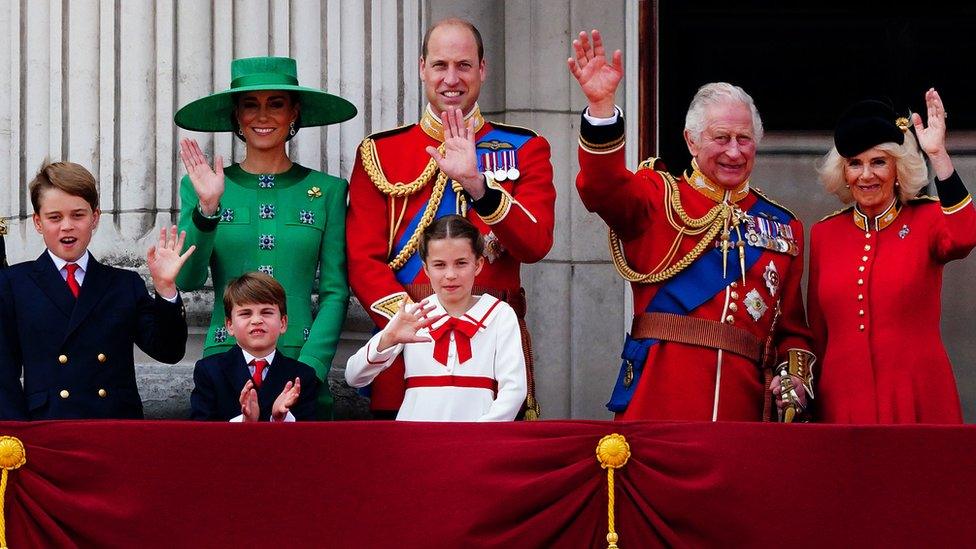
This week, we watched the House of Windsor break into factions not over values, not over justice but over tone.
The King is profoundly concerned.
William and Catherine are deeply concerned.
And that, right there, tells you everything.
Because this isn’t about concern.
It’s about image control.
It’s about distance.
It’s about survival.
Let’s be honest. If concern alone solved anything, this scandal would’ve ended a decade ago.
So what’s really going on?
King Charles finally speaks as police consider allegations connected to Andrew and Epstein including whether Andrew shared confidential government information while acting as a UK trade envoy.
This isn’t ancient history.
This isn’t gossip.
This is about public office, official secrets, and state responsibility.
And Charles’s response is carefully, painfully crafted.
He expresses “profound concern.”
He says the Palace will support police if approached.
He stresses that the allegations are for Mr Mountbatten-Windsor to address.
Translation?
Containment.
Now compare that with William and Catherine’s statement:
“Deeply concerned.”
Shorter.
Cleaner.
More distant.
That’s not accidental.
This is the War of the Windsors, and it’s being fought with adjectives.
Charles is the head of the institution.
If this collapses, it collapses on him.
William is the future.
His priority is not truth it’s insulation.
So what do you do when the institution is on fire, but you don’t want to smell like smoke?
You release a two-line statement.
You say you’re “deeply concerned.”
And you step back.
No mention of victims deserving justice.
No call for full transparency.
No insistence that no one is above the law.
Just… vibes.
And people are noticing.
Because here’s the hypocrisy that’s impossible to ignore:
When Harry and Meghan existed not committed crimes, not breached official secrets, not been accused of abuse the response was swift, brutal, and relentless.
Briefings.
Cold shoulders.
Institutional punishment.
But when it comes to Andrew?
Decades of protection.
Quiet rehousing.
Taxpayer-funded security.
Silence framed as dignity.
And now?
“Profound concern.”
“Deep concern.”
It’s not leadership.
It’s brand management.
Let’s be clear about why this moment is different.
This time, police are actively assessing whether there are grounds for investigation.
This time, documents are involved.
This time, it’s not just moral failure it’s potential misconduct in public office.
Which means this isn’t just Andrew’s mess anymore.
It’s Charles’s credibility.
It’s William’s future.
It’s the monarchy’s claim that it operates above corruption and below the law.
And that’s why the statements feel so hollow.
Because concern without consequence is meaningless.
If they were truly concerned, we’d hear:
– Full cooperation, proactively
– Public support for investigation
– Explicit recognition that victims deserve justice
– A clear statement that royal status offers no protection
But instead, we get semantics.
Deeply.
Profoundly.
As if the crisis can be solved by choosing the right adverb.
And here’s the uncomfortable truth the Palace won’t say:
The crowd is changing.
The boos are louder.
The questions are sharper.
The deference is gone.
People aren’t asking for perfection.
They’re asking for honesty.
And when an institution responds to allegations of abuse, secrecy, and power misuse with carefully tiered concern it signals fear, not strength.
This is why the War of the Windsors matters.
Charles is fighting to preserve the present.
William is fighting to protect the future.
And Andrew remains the liability no one wants to fully confront.
Different strategies.
Same instinct.
Protect the crown first.
Deal with the damage later.
But the clock is ticking.
Because deep concern won’t restore trust.
Profound concern won’t stop investigations.
And neither will matter if the public decides the institution holds itself to a lower standard than everyone else.
This isn’t about tone anymore.
It’s about accountability.
And right now, the silence between those carefully chosen words is louder than anything they’ve said.