

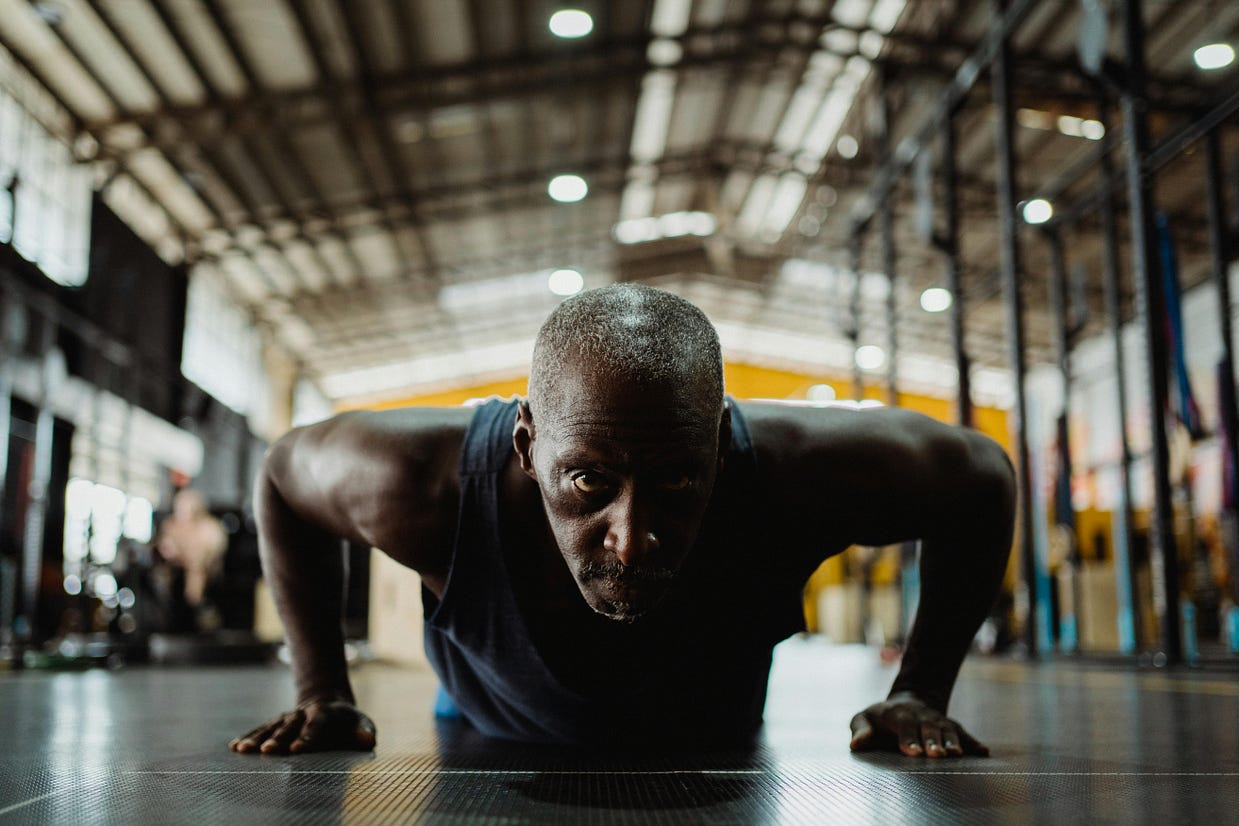
 It’s likely you’ve heard the phrase ‘functional fitness’ and wondered what it meant. It’s that catchy term you never knew about. And now that you’re reading this, you will see and hear about functional fitness at every turn. It will be everywhere, and your phone will start spamming you with ads related to functional fitness. You’re welcome.
In a nutshell, functional fitness exercises focus on movements we perform in our daily lives. As we age, we often stop moving as freely as we did when we were younger. Additionally, modern conveniences, such as comfortable chairs and technology, have made us less active. There's a saying: “Use it or lose it.” When we limit our movements, our range of motion decreases. This is where functional fitness comes into play.
Close your eyes…
Think about the last time you dropped something on the floor. How easily were you able to bend down and pick it up? Right. That part. I was right there with you, groaning to bend over because squatting AND getting back up was painful. Years of running (my first love) and weightlifting (my second love) with little thought about mobility have me tight with a restricted range of motion in my hips, ankles, and knees. That’s where functional fitness comes into play.
Consider functional fitness as a combination of strength + mobility. Strength training builds muscle, while mobility exercises improve range of motion and balance. We begin losing muscle mass and strength sometime in our 40s. Sarcopenia, muscle loss, further increases between the ages of 65 — 80. We can lose as much as 8% of our muscle mass each decade. Strength training helps to reverse this trend. Mobility keeps us bending, balanced, and agile.
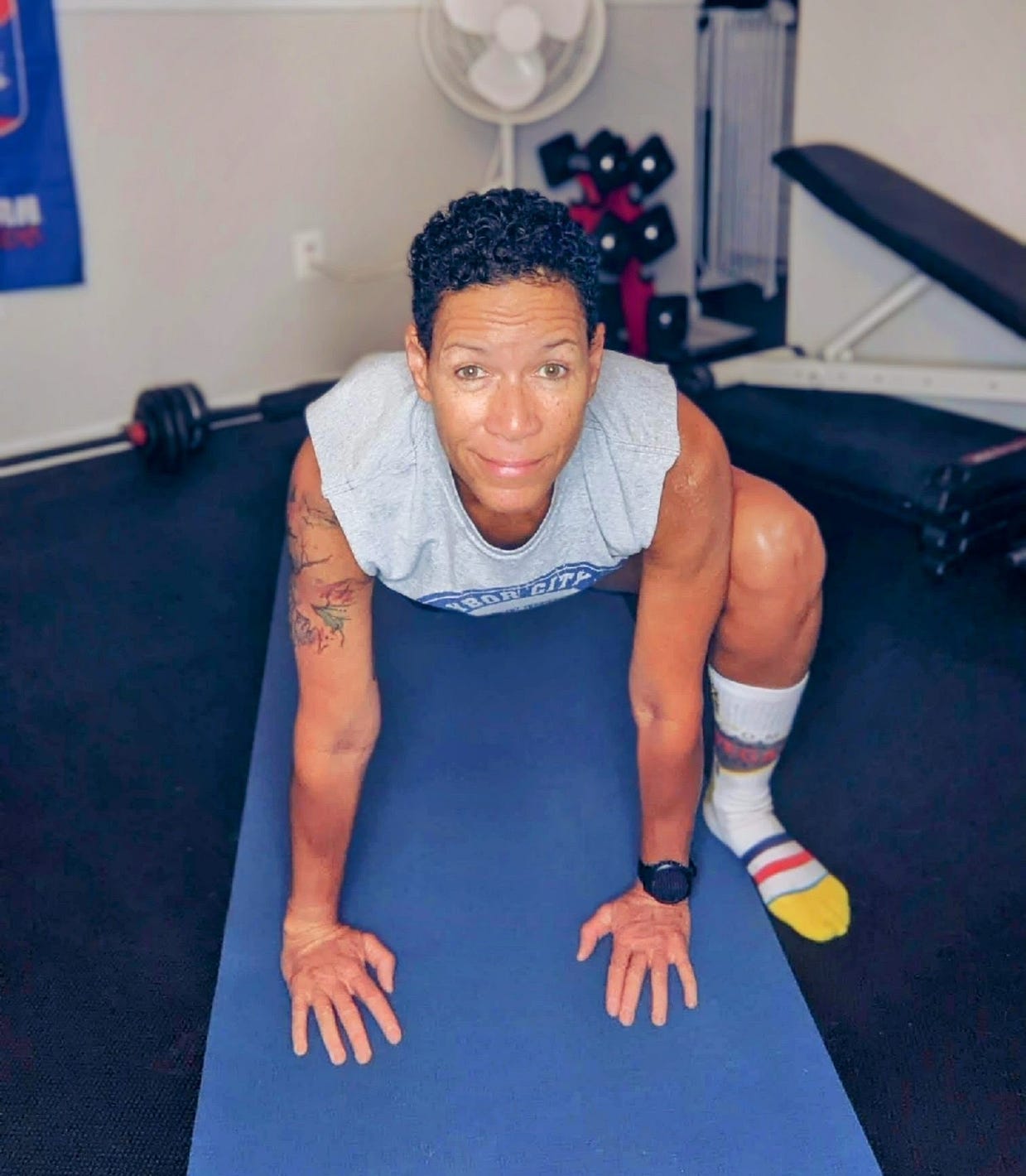 Had I known then what I know now, I would have spent more time on mobility. Perhaps my right hip wouldn’t be as tight as it is now. Pigeon Pose is my goal, but I’ve got work to do. I’ve just recently begun my intentional mobility, stretching, and functional fitness journey. I already see improvements and even feel the difference. I move better; sometimes it feels like I’m floating. Real talk. Still, that right hip is going to take some time.
When we train with functional fitness in mind, we replicate movements necessary in the real world, such as squatting, pulling, pushing, bending, climbing, walking, and running. These types of exercises help us maintain our independence, reduce injury, and prepare for things such as carrying groceries, picking up small kids, sitting in a chair, and getting up off the floor.
Fundamental Functional Fitness
I’m going to focus on two fundamental exercises that, in my opinion, yield the biggest benefits regarding functional applications in real life. A few years ago, my Mom revealed to me she had ‘fallen and couldn’t get up’. Well, she didn’t fall; she got on the floor to upright the robovac (another modern convenience taking away our mobility) and discovered she didn’t have the strength to get up off the floor. We hear stories like this all the time. Had she been consistently performing these two exercises, I believe she could have gotten herself up off the floor.
The Deep Squat
Remember how long it took you to pick up your keys when you dropped them on the floor? That’s why squatting is so important. Squats are one of the most fundamental functional exercises you can do. They help you gain mobility and strength in the hips, knees, ankles, and spine.
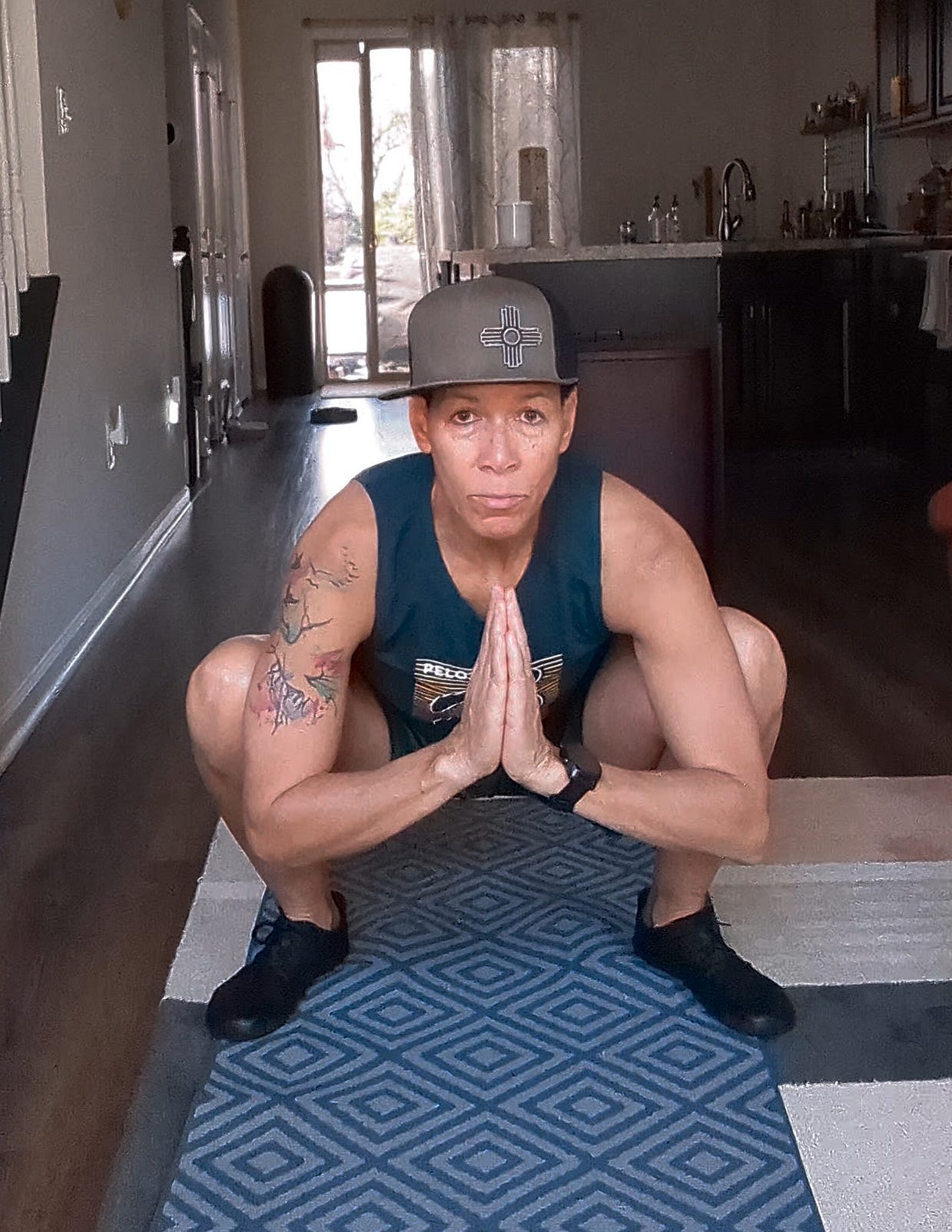 Squats are more of a category of movement than an exercise. In many cultures, the squat is used as a resting position or as a chair to eat and socialize. Resting in a squat has a huge positive effect on the mobility of our joints. It also decompresses the spine and relieves tension in the lower back. So, the next time you’re watching tv, try spending some time in a squat.
Getting off the ground and moving in and out of chairs will all be easier after a regular squatting practice. Bodyweight squats are a great way to get started, but if your balance is poor, start with assisted bodyweight squats by holding onto a pillar or post.
How to do a squat:
1. Stand straight with your feet shoulder-width apart and your arms down at your sides.
2. Bend your knees and start to squat down, pushing back into your hips, almost as if you’re about to sit in a chair. Raise your arms up in front of you as you go.
3. When your thighs are parallel to the ground, pause and push through your heels, extending your legs and returning to the starting position.
4. For a deep squat, spend some time at the bottom position. It’s okay for your knees to extend beyond your toes. Start with 30–40 second bursts and increase that time as your mobility allows. Compile each session for a goal of 10 minutes a day.
5. If you feel like you’re falling backwards, you likely have stiff ankles. If that’s the case you can raise your heels to give yourself more support. A squat wedge will allow you to squat further by reducing the strain on your ankles and knees.
The major benefit of doing deep squats is the improvement in your ability to easily move through daily activities. This is because the movement we use to do a deep squat is embedded into everyday tasks, like crouching down to lift a package or getting eye to eye with your dog. If you can tolerate a deep squat, that’s a good sign that you’ll be able to get up from the floor, get out of a low car, climb the stairs, or kneel to play with kids.
When I purchased my Honda Civic I realized it was lower than my other car. I was concerned that getting in and out of the car would be a problem, but my body adapted. That’s what your body will do once you squat consistently.
 Push-Ups or Chest Press
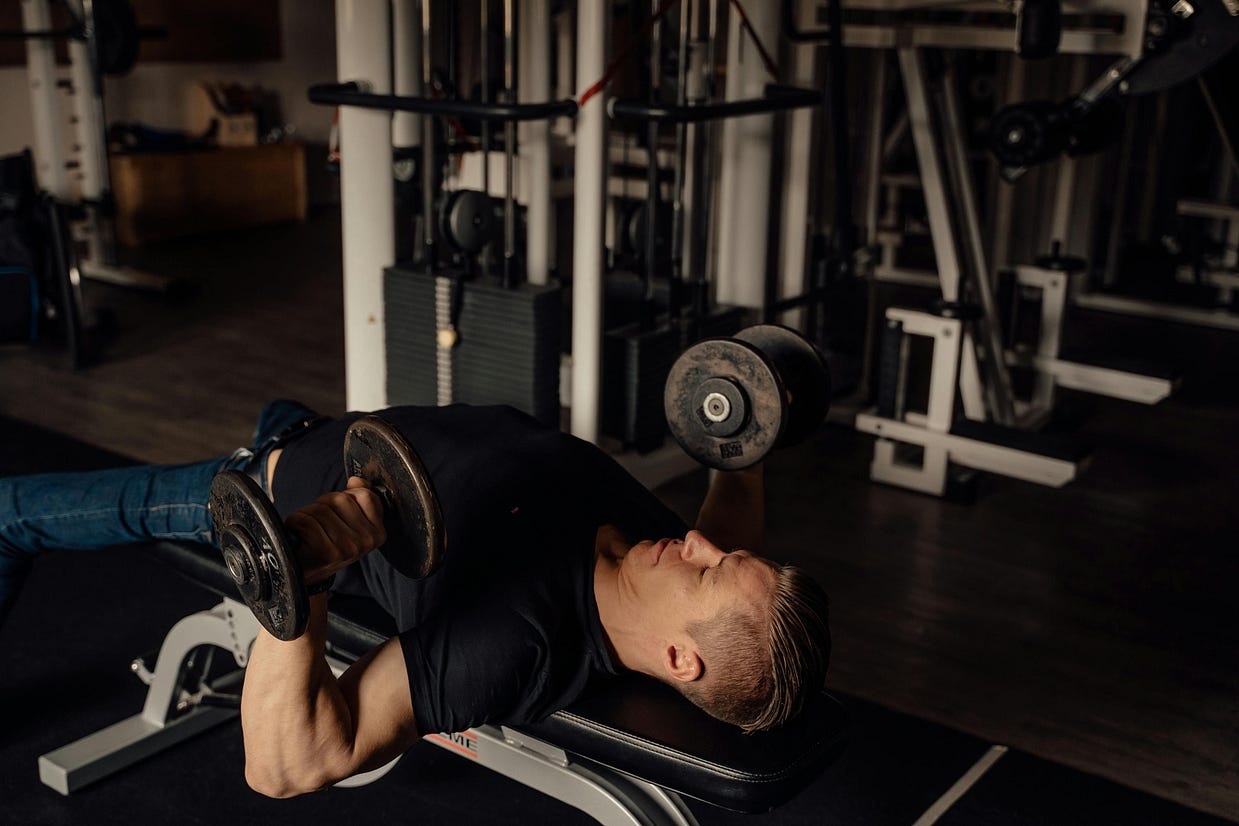
Being able to push yourself up off the ground is invaluable in terms of functional fitness. Pushups are a simple functional exercise that can be done on a wall, on your knees, or straight-legged. However, I do understand that they can also be very challenging. The chest press works the same muscles and may be easier.
How to do a Chest Press:
Lie flat on a bench. Hold one dumbbell in each hand and lean back onto the bench. Extend your arms straight up with the dumbbells above your chest.
Bend your arms, slowly dropping the weights toward your chest. When your upper arms are just past parallel to the ground, push the dumbbells back up to the starting position. Try to squeeze the pectoral muscles as you extend your arms.
How to do a Push-Up:
For a wall push-up, stand parallel to a wall about arm's length away. Place your hands on the wall at chest height. Slowly lower your body towards the wall, then push away from the wall. Control the movement.
For a knee push-up up you’ll be on the ground on all fours. Place your hands slightly wider than shoulder width apart. Use your knees as a pivot point while you slowly lower your body towards the ground. Touch the ground, raise your hands up slightly, then push away from the ground in a controlled motion.
For a straight-legged push-up, refer to #4, but extend the legs out.
Push-ups, up there with the squat for most effective functional movement, are a fitness staple. They work the shoulder, upper back muscles, tricep muscles, chest muscles, and core. When we think of functional fitness, the strength in the muscles required to perform a push-up helps you to get up from a chair, and in the unfortunate case of needing to get up off the floor after a fall.
Warm Up
Before performing an exercise routine, please consult your doctor to make sure everything is everything. Prior to beginning an exercise, start with a warm-up such as jumping jacks, a few body weight squats, or a brisk walk to get your joints nice and warm.
If you’re new to exercise, start with 10 repetitions of each exercise. The goal is to set your baseline. If that feels good, perform 4 sets of 10 repetitions. You can always increase or decrease repetitions or decrease in descending order, such as: 12, 10, 8, 6 repetitions. There are many exercises best for functional fitness. Once you’ve mastered the squat and push-up, you can add others to your routine.
Be well,
Edrika
Think of exercise as a privilege; something you can do. Mobility equals freedom, vitality, and longevity. For more health & fitness motivation, visit healtheffectsyou.com. Enjoy!
Disclaimer: This post may contain affiliate links, meaning if you decide to purchase via my links, I may earn a commission at no additional cost to you.