

Shopify E-Commerce platform vs Printify vs Stripe vs GoDaddy vs eBay review
A Shopify vs Printify, Stripe, GoDaddy, and eBay comparison can seem confusing because these services do different jobs. Shopify is an ecommerce platform. Printify handles print-on-demand production, Stripe processes payments, GoDaddy provides website and ecommerce tools, and eBay is a marketplace.
The real choice is whether to build an owned ecommerce business or depend on a marketplace, payment provider, website tool, or fulfillment partner. Shopify is often better for sellers who want control over branding, customer relationships, marketing, product range, and long-term growth. It is not always the cheapest or fastest option, but it offers a strong base for an independent store.
Shopify wins by giving sellers a complete ecommerce foundation
Shopify should be compared directly with GoDaddy and eBay as a selling platform. Printify and Stripe are better viewed as services that can work with Shopify.
Shopify is an online store platform
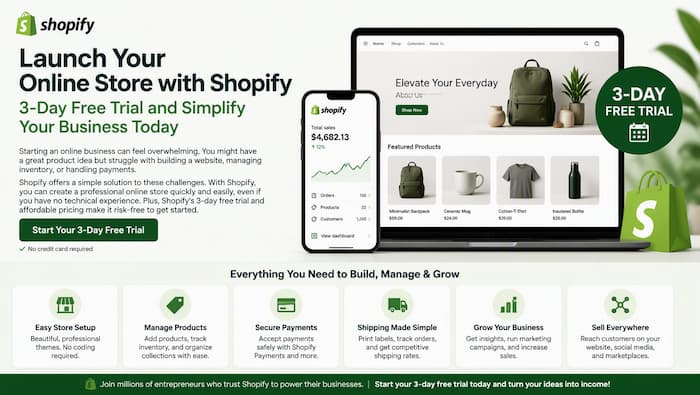
Shopify provides storefront design, product catalogs, collections, checkout, order management, inventory tools, shipping settings, analytics, themes, and app connections. A seller can manage many daily store tasks through one dashboard.
This reduces the need to assemble separate systems for products, orders, payments, and customer communication. The exact tools depend on the Shopify plan and connected apps.

Other services solve different problems
Printify connects sellers with print providers that make and ship products. Stripe handles payment infrastructure for websites, apps, and custom checkout systems. GoDaddy combines domains, website building, and basic ecommerce features, while eBay connects sellers with an existing buyer audience.
Compare each option by ownership, selling tools, payment support, fulfillment, marketing, customization, cost, and growth capacity. Ask whether you can control the customer experience, expand your catalog, add sales channels, and reduce dependence on one outside service.
Shopify vs Printify, Stripe, GoDaddy, and eBay: compare the right tools
The key difference is ownership. Shopify gives you a branded storefront and a central place to manage ecommerce operations. The other services may support that store, replace parts of it, or provide access to buyers through a separate channel.
Shopify gives sellers more control than eBay
Shopify lets you use your domain, choose the store design, organize navigation, create product pages, collect email permissions, and control promotions. You can also connect email marketing, loyalty, subscription, remarketing, and customer account tools.
eBay provides buyer trust, listing tools, fixed-price sales, auctions, and built-in traffic. However, your listings compete beside similar products, and marketplace rules, seller standards, search ranking, and fees affect the business. Buyers may remember eBay more than your store name.
Use Shopify, eBay, or both
Choose Shopify when you want an independent brand and repeat purchases. Choose eBay when you need marketplace demand, want to test products, or sell liquidation stock.
Many sellers can use both. Shopify can act as the main branded store, while eBay adds reach. This approach requires consistent inventory, pricing, shipping rules, and customer service across both channels.
Shopify provides more ecommerce depth than GoDaddy
GoDaddy can work well for a basic online presence, while Shopify focuses on ongoing ecommerce operations. The right choice depends on catalog size, order volume, sales channels, and the level of control you need.
Shopify is built around selling products
Shopify supports product variants, collections, inventory tracking, shipping rules, discount codes, checkout settings, reports, and connected sales channels. Its app marketplace can add subscriptions, wholesale tools, automation, customer groups, and international selling features.
This ecommerce-first design gives a growing store room to add new processes without replacing its main platform. Some tools require a higher plan, a paid app, or an outside service.
GoDaddy fits simpler businesses
GoDaddy may suit a service business, appointment-based company, or store with a small product range. Its domain registration and website tools can make setup quick for owners who need a basic site and straightforward checkout.
Shopify works with Printify instead of replacing it
Shopify and Printify often work together. Shopify manages the customer-facing store, while Printify helps produce and ship selected products.
Printify reduces inventory risk
Printify supports print-on-demand products such as shirts, mugs, bags, wall art, and accessories. Sellers can choose products, create designs, generate mockups, and send orders to a print provider after a customer buys.
This removes the need to purchase large quantities before testing demand. Printify still introduces supplier, quality, shipping, and production dependencies.
Build a careful print-on-demand workflow
Research a niche, select a small product range, order samples, and check print quality, sizing, packaging, and delivery time. Then connect Printify to Shopify, write original product descriptions, calculate product, shipping, tax, payment, app, and advertising costs, and set a clear return policy.
Track refunds and customer feedback before expanding. Print-on-demand margins vary by product, supplier, market, and selling price, so a high sales volume does not guarantee strong profit.
Shopify gives sellers more than Stripe’s payment-processing capabilities
Stripe is payment infrastructure. Shopify is an operating platform for an online store. Stripe can be valuable, but accepting payments alone does not create a product catalog, order system, shipping workflow, or marketing program.
Stripe supports custom payment systems
Stripe provides payment acceptance, payment methods, fraud tools, payouts, and developer controls. It can fit a custom website, software product, marketplace, or business with unusual payment flows.
A custom Stripe setup may require separate systems for hosting, security, checkout, product data, orders, taxes, shipping, and customer records. The work depends on the chosen technology and integrations.
Shopify lowers technical workload
Shopify combines checkout with products, inventory, orders, discounts, shipping, analytics, themes, and sales channels. Its hosted structure can help non-developers launch without building every commerce function.
Choose Shopify for a managed store with limited development work. Review Stripe directly when you need custom payment flows, a proprietary app, marketplace infrastructure, or a development-led commerce system. Compare current fees, regions, payout timing, and payment methods before deciding.
Shopify’s advantages become clearer when total cost and risk are measured
A low monthly price does not always mean a low operating cost. Compare the full cost of the business, including the platform plan, domain, payment processing, transaction fees, apps, themes, fulfillment, shipping, taxes, marketing, support, refunds, and technical work.
Shopify can scale with the business
Shopify can support a single-product store, direct-to-consumer brand, print-on-demand catalog, subscription business, wholesale operation, physical shop, or multichannel plan. Advanced functions may require a higher plan, paid apps, or third-party integrations.
Every option has a trade-off. Shopify requires ongoing marketing and subscription payments. eBay offers buyer traffic but less brand control. GoDaddy can suit basic sites but may provide less ecommerce depth. Printify lowers inventory risk but adds supplier dependence, while Stripe offers payment flexibility but usually needs more commerce software around it.
Match the tool to the seller
Seller need Best fit Independent brand and scalable store Shopify Marketplace reach or product testing eBay Basic website or small store GoDaddy Print-on-demand production Printify with Shopify Custom payment infrastructure Stripe
Review official Shopify, Printify, Stripe, GoDaddy, and eBay pages before launch. Pricing, policies, payment availability, fees, and plan features can change.
Conclusion
Shopify is better when “better” means more control, broader ecommerce functions, stronger branding, and room to grow. It gives sellers one central platform for storefront design, products, checkout, orders, customer experience, and marketing connections.
eBay is stronger for marketplace exposure. GoDaddy fits simpler websites, Printify handles print-on-demand fulfillment, and Stripe supports custom payment systems. Before choosing, define the business model, required channels, full costs, branding needs, fulfillment duties, payment options, and next growth stage. Choose Shopify when the goal is to build an independent brand rather than depend on someone else’s marketplace or payment system.