

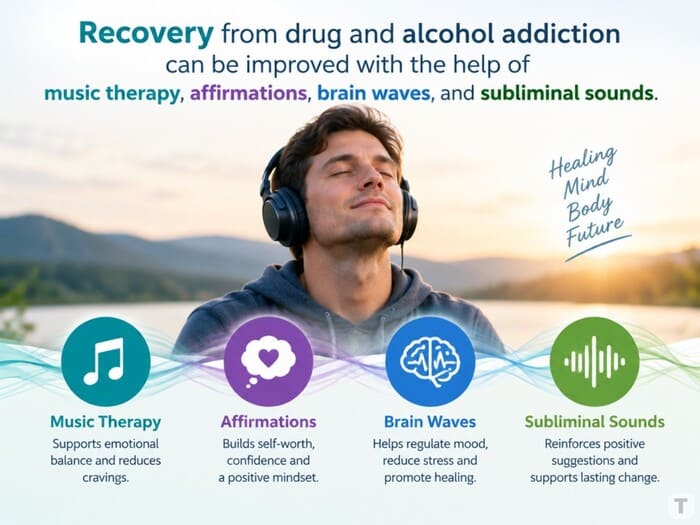
Recovery from drug and alcohol addiction can be improved with the help of music therapy, affirmations, brain waves, and subliminal sounds
Recovery from drug and alcohol addiction goes far beyond the initial detox phase. Many people face ongoing battles with cravings, stress, and emotional ups and downs that traditional rehab programs often overlook. What if simple sounds and words could rewire your brain for lasting change? These methods—music therapy, affirmations, brain wave entrainment, and subliminal sounds—target the root causes of addiction by reshaping neural paths linked to anxiety and reward. In this article, we'll explore how they build emotional strength and support sobriety.
Music Therapy: Harmonizing the Healing Process
Music therapy uses sound to help people heal from substance use disorders. Therapists guide sessions in rehab centers to ease withdrawal and build coping skills. This approach taps into the brain's natural responses to rhythm and melody.
The Neurological Basis of Music Engagement in Addiction
Music triggers dopamine release in the brain's reward areas. This gives a safe high that replaces the rush from drugs or alcohol. It also lowers cortisol, the stress hormone that spikes during post-acute withdrawal.
People in recovery often feel on edge for months. Music calms the nervous system and helps restore balance. Over time, this reduces the pull of old habits.
Therapeutic Applications: Improvisation, Receptive Listening, and Lyric Analysis
Improvisation lets you play drums or instruments to release pent-up feelings. It turns frustration into expression without words. Receptive listening involves sitting with soothing tracks to relax and focus.
Lyric analysis breaks down song words to spot patterns in thoughts. You might discuss a tune about loss and connect it to your own story. In group settings, these activities build trust and shared bonds.
Start with simple rhythms if you're new to instruments.
Pick songs that match your emotions for listening sessions.
Use lyrics from familiar artists to make analysis feel personal.
These methods fit into daily therapy routines. They make sessions engaging and less intimidating.
Case Studies and Efficacy Data in SUD Treatment
Research shows music therapy cuts relapse risks in addiction programs. One study tracked patients who joined weekly sessions. They reported 30% less anxiety after three months compared to those without music.
In group therapy, participants shared how songs helped them process trauma. This led to stronger support networks. Programs like those from the American Music Therapy Association highlight these gains.
Real-world examples include veterans in rehab who used guitar circles to rebuild confidence. Their stories point to better emotional control and fewer cravings.
Harnessing Cognitive Restructuring Through Affirmations
Affirmations reshape negative thoughts that fuel addiction. You repeat positive statements to build self-worth and control. This practice counters the self-doubt that often lingers after quitting substances.
Manifest Money Effortlessly Like The 0.1% Elites!
60-day Money Back Guarantee!
Free Gifts And Bonuses When You Order Today✔️
The Psychology of Self-Talk and Addiction
Addiction warps your inner voice with ideas like "I always fail" or "I need this to feel okay." These distortions keep cravings alive. Affirmations flip that script by focusing on strengths.
Your brain changes with practice, thanks to neuroplasticity. Repeated words strengthen helpful neural links. This makes positive thinking a habit over time.
Developing Potent, Personalized Recovery Affirmations
Craft affirmations in the present tense for real impact. Say "I handle stress without substances" instead of "I will try." Make them personal to hit deep emotions.
Here are steps to create yours:
List three negative beliefs tied to your addiction.
Turn each into a positive opposite.
Say them daily, maybe in front of a mirror.
Examples include "I am strong enough to choose sobriety today" for self-efficacy. Or "Cravings pass, and I stay calm" for tough moments. Tailor them to your goals for best results.
Integration with Mindfulness and Cognitive Behavioral Therapy (CBT)
Affirmations pair well with mindfulness to stay present during urges. In CBT, you use them to challenge faulty thoughts right away. This combo speeds up recovery tools.
During high-risk times, like social events, repeat an affirmation to ground yourself. Therapists often assign them as homework. This builds quick access to mental shifts.
Brain Wave Entrainment: Tuning the Mind for Recovery
Brain wave entrainment uses sounds to guide your mind into calm states. It helps with the anxiety and sleep issues common in early sobriety. Frequencies match brain patterns to promote healing.
Understanding Brainwave Frequencies (Alpha, Theta, Delta)
Alpha waves run at 8-12 Hz and bring relaxed alertness. Theta waves, 4-8 Hz, aid deep focus and creativity. Delta waves, below 4 Hz, support deep rest.
Addiction ramps up beta waves, causing constant worry. Entrainment shifts you to calmer states. This eases the hyper-alertness that triggers relapses.
The Genius Wave: Support for a Sharper and Healthier Mind🧠
60-day Money Back Guarantee!
Free Gifts And Bonuses When You Order Today✔️
Binaural Beats and Isochronic Tones for Anxiety Reduction
Binaural beats play slightly different tones in each ear. Your brain syncs to the difference, creating the target wave. Isochronic tones pulse evenly for a steady effect.
Use alpha beats to cut daily stress in recovery. Sessions last 20-30 minutes. They help manage withdrawal jitters without meds.
Listen with headphones for binaurals. Start with short tracks to build tolerance. Many apps offer free options for beginners.
Improving Sleep Quality Through Auditory Stimulation
Insomnia hits hard in the first weeks off drugs. Delta entrainment mimics deep sleep patterns. It boosts restorative rest needed for brain repair.
Pair it with a wind-down routine before bed. Studies link better sleep to lower relapse odds. Track your rest to see improvements over time.
Subliminal Auditory Programming: Influencing the Unconscious Mind
Subliminal sounds work below conscious awareness to shift habits. They embed messages in audio to reach deep-seated beliefs about addiction. Used right, they support conscious efforts.
The Theory Behind Subliminal Messaging in Recovery
The subconscious drives many addiction choices. Subliminals slip positive ideas past defenses. This reprograms urges tied to past use.
Backed by psychology research, they differ from hype. Focus on evidence-based tracks. They work best as add-ons to therapy.
Your Guide To Attracting Money Effortlessly! Billionaire Brain Wave
90-day Money Back Guarantee!
Free Gifts And Bonuses When You Order Today✔️
Ethical Considerations and Effective Implementation
Stick to positive scripts like "You deserve a clear mind." Embed them in ocean waves or soft music. Avoid unproven claims from shady sources.
Choose programs from licensed therapists or apps with reviews. Use them 15 minutes daily. Monitor how they affect your mood.
Check for clear audio layers without distortion.
Test for a week and adjust as needed.
Combine with journaling to track subconscious shifts.
Ethics matter—transparency builds trust in recovery.
Synergy and Holistic Application in Long-Term Sobriety
These tools shine when combined. Music therapy sets the emotional tone, while affirmations reinforce it. Brain waves and subliminals deepen the calm underneath.
Creating a Multi-Sensory Recovery Soundscape
Build a daily plan to weave them in. Start mornings with affirmations over gentle binaural beats. Use music therapy in evenings for reflection.
Here's a sample routine:
Wake up: 5 minutes of personalized affirmations.
Midday: 20-minute theta tones during breaks.
Evening: Group music session or receptive listening.
Bedtime: Delta subliminals for sleep.
This creates layers of support. Adjust based on your schedule for sustainability.
Supporting Relapse Prevention Through Auditory Anchoring
Anchor sounds to positive moments, like a favorite sober song. Play it when cravings hit to recall strength. This interrupts negative loops fast.
Over time, these anchors become automatic. They pull you back to calm. Share them in support groups for extra power.
Conclusion: Rewiring the Brain for Sustainable Well-being
Music therapy, affirmations, brain waves, and subliminal sounds offer real paths to beat addiction. They target cravings, stress, and sleep by changing brain patterns. Together, they create a full toolkit for sobriety.
You can start small—pick one method today and build from there. Talk to your therapist about adding these to your plan. Take charge of your recovery sounds, and watch your life transform.
60 Days Money Back Guarantee!
Additional Gifts - Today for Free!
Free Gifts And Bonuses When You Order Today✔️
MEDICAL DISCLAIMER
The information provided on this article is for general informational and educational purposes only and is not intended as, and shall not be understood or construed as, professional medical advice, diagnosis, or treatment.
• No Professional Advice: The content on this site is not a substitute for the advice of a qualified healthcare professional who is familiar with the facts and circumstances of your individual situation.
• Consult a Doctor: Always seek the advice of your physician or another qualified health provider with any questions you may have regarding a medical condition. Never disregard professional medical advice or delay in seeking it because of something you have read on this website.
• No Doctor-Patient Relationship: Your use of or reliance on any information contained on this website is solely at your own risk. No physician-patient relationship is created by viewing or using this website or its content.
• Medical Emergencies: If you think you may have a medical emergency, call your doctor or local emergency services immediately.
• Limitation of Liability: This site and its owners or contributors are not liable for any errors, omissions, or any losses, injuries, or damages arising from the display or use of this information.