

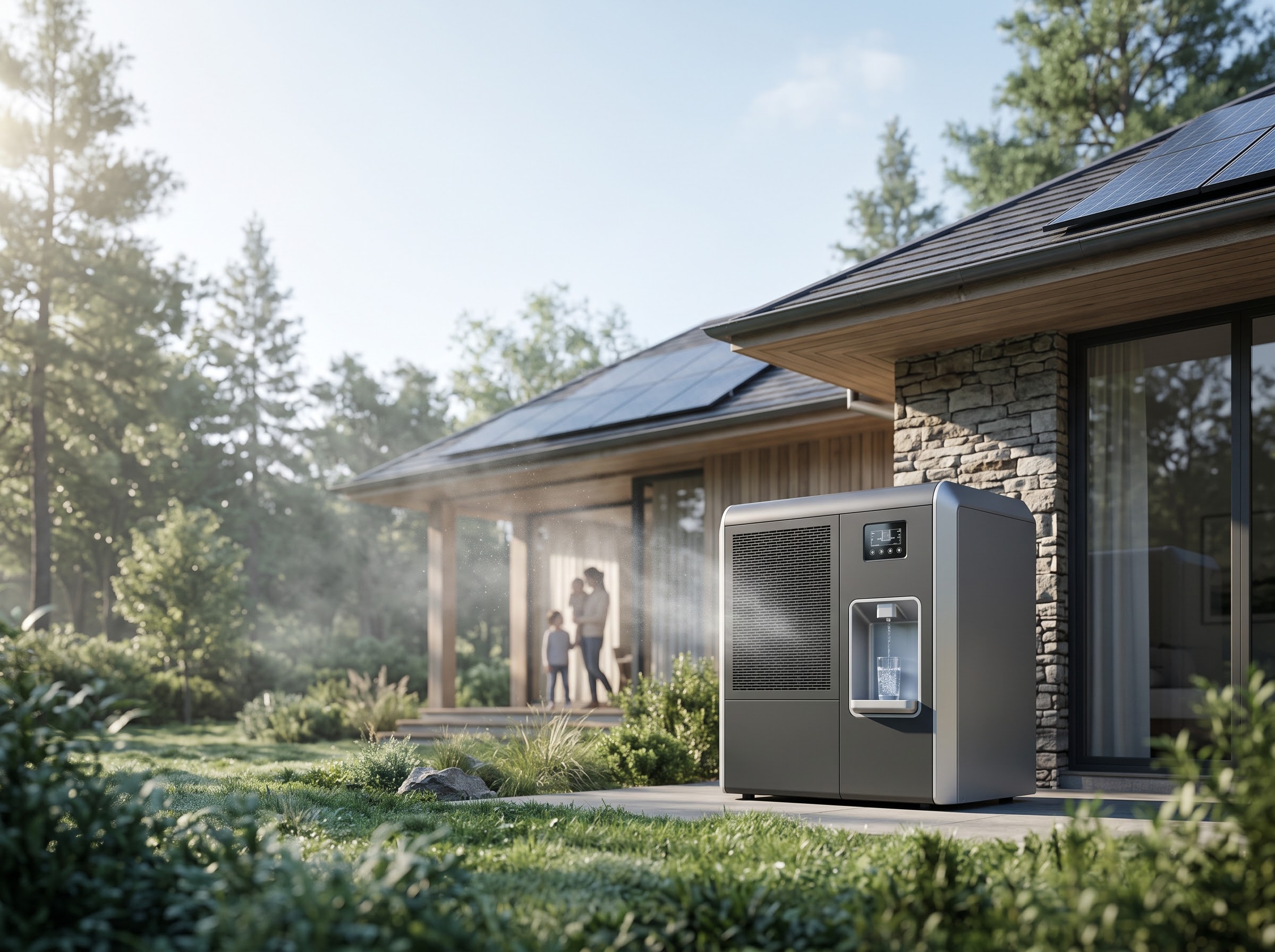
 For most families, clean drinking water is something they rarely think about.
You turn on the faucet, fill a glass, and move on with your day.
But what happens when that dependable routine is interrupted?
Water infrastructure can face unexpected disruptions. Extreme weather, emergencies, local shortages, infrastructure problems, or other events can make access to water more complicated than usual.
This raises an important question:
Should households think about having alternative ways to access drinking water?
One technology gaining attention offers a fascinating answer: atmospheric water generation.
Instead of relying entirely on traditional water sources, this technology uses moisture already present in the air.
Why Household Water Security Matters
Water is one of the most important resources in any home.
Families depend on it for drinking, cooking, cleaning, and countless everyday activities. Yet many households have only one primary source of water.
When that source is disrupted, people often turn to bottled water.
Bottled water can certainly be useful during emergencies, but relying on it as a long-term backup has obvious challenges.
You need somewhere to store it.
You need to transport it.
You need to replace it.
And during a widespread emergency, availability may become an issue.
This is why the idea of creating an additional water source at home is becoming increasingly interesting.
The Search for Alternative Water Sources
When people think about alternative water sources, they may immediately think about wells, rainwater collection, large storage tanks, or water delivery services.
Each approach has advantages and limitations.
A well isn't practical for every property.
Rainwater collection depends heavily on weather conditions and local regulations.
Large water storage systems require space and maintenance.
And delivered water still depends on an external supply chain.
This has led researchers and technology companies to explore another resource that is available almost everywhere:
The moisture in the air.
There Is Water in the Air Around You
Air may appear completely dry, but it actually contains water vapor.
The amount varies depending on factors such as temperature and humidity.
Atmospheric water generation technology is designed to take advantage of this naturally occurring moisture.
The basic concept is surprisingly straightforward.
Air is drawn into a specialized system. The moisture contained within the air is condensed into water, which can then go through appropriate filtration and treatment processes.
In simple terms:
Air → Moisture → Condensation → Water → Treatment
The technology essentially explores whether the atmosphere surrounding your home can become another potential source of water.
How Does Atmospheric Water Generation Work?
The exact process depends on the system, but the general principle involves several stages.
1. Air Is Drawn Into the System
The system brings surrounding air into the unit.
The amount of water that can potentially be collected depends partly on environmental conditions, especially humidity and temperature.
2. Moisture Is Extracted
The system cools the air or otherwise uses a moisture-extraction process to cause water vapor to condense.
Think about what happens when a cold glass of water develops droplets on its outside.
The atmosphere contains moisture, and when conditions cause that moisture to condense, it becomes liquid water.
Atmospheric water technology applies this basic physical principle in a controlled environment.
3. Water Is Collected
The condensed water is collected inside the system.
At this point, the water can undergo additional processing depending on the particular technology and system design.
4. Filtration and Treatment
Water intended for drinking needs appropriate treatment.
Atmospheric water systems can incorporate filtration and purification stages designed to improve the quality of the collected water.
The exact filtration technology, certifications, maintenance requirements, and performance can vary considerably between systems.
That's why anyone considering this type of technology should carefully research the specifications of the particular system they're considering.
Could This Reduce Dependence on Bottled Water?
That's one of the questions that makes atmospheric water generation particularly interesting.
Imagine having another potential source of water available inside your home rather than depending exclusively on cases of bottled water.
It doesn't necessarily mean replacing every existing water source.
Instead, it can be viewed as an additional option.
For households interested in preparedness, sustainability, or reducing dependence on traditional supply systems, having another potential source may be worth investigating.
A Different Approach to Water Preparedness
Emergency preparedness often focuses on food, batteries, generators, flashlights, and first-aid supplies.
Water deserves the same attention.
A common recommendation for emergency preparedness is to maintain an adequate supply of drinking water.
That's a sensible first step.
But preparedness can also involve understanding alternative technologies before an emergency occurs.
Learning how atmospheric water generation works allows homeowners to evaluate whether this type of system could potentially complement their existing water strategy.
Is Water From Air Really Possible?
Yes—the underlying physical principle is real.
The atmosphere contains water vapor, and water vapor can be condensed into liquid water under appropriate conditions.
However, this doesn't mean every atmospheric water generator will produce the same amount of water under every circumstance.
Performance can depend on factors such as:
Temperature
Relative humidity
Air quality
System capacity
Energy consumption
Maintenance
Filtration technology
This is an important point.
Atmospheric water generation isn't a magic solution that creates unlimited water regardless of the environment.
It's a technology that uses atmospheric moisture as an input, and its performance depends on the conditions and equipment involved.
Who Might Be Interested in This Technology?
Atmospheric water generation may be particularly interesting to people who are thinking about:
Home preparedness
Families interested in having additional options during potential water disruptions may want to investigate the technology.
Water independence
Homeowners looking to reduce their dependence on a single water source may find the concept worth exploring.
Sustainability
People interested in alternative resource technologies may appreciate the idea of using naturally occurring atmospheric moisture.
Emergency planning
Those who already maintain emergency supplies may consider whether an alternative water-generation technology belongs in their preparedness strategy.
The Bigger Idea: Water Resilience
The real story isn't necessarily about a machine.
It's about water resilience.
A resilient household doesn't necessarily depend on one solution.
Instead, it considers multiple possibilities.
You might conserve water.
You might maintain emergency supplies.
You might understand your local water infrastructure.
And you might investigate technologies that provide alternative approaches to water generation.
Atmospheric water generation fits into that broader conversation.
What Should You Look For Before Choosing a System?
If you're considering an atmospheric water generator, don't make a decision based solely on marketing claims.
Look at the details.
Consider:
Water production
How much water can the system realistically produce under different temperature and humidity conditions?
Energy requirements
How much electricity does the system consume?
Filtration
What type of filtration and purification technology does it use?
Maintenance
How frequently do filters and other components need to be serviced or replaced?
Certifications
Does the system have relevant certifications for its intended use?
Operating environment
Is the system designed for the climate where you live?
These questions can help you distinguish between an interesting concept and a practical household solution.
Could Atmospheric Water Become Part of the Future of Water?
It's difficult to predict exactly how water technology will evolve.
But the underlying idea is compelling.
For generations, people have thought about water primarily in terms of rivers, reservoirs, wells, pipes, and bottles.
Atmospheric water generation introduces another possibility:
What if water doesn't always have to come from the traditional sources we are accustomed to?
As technology continues to improve, alternative methods of accessing essential resources could become increasingly relevant.
Curious About How It Works?
If the idea of producing drinking water from atmospheric moisture sounds interesting, the best next step isn't necessarily to buy anything immediately.
First, understand the technology.
See how atmospheric water generation works, what the process involves, and how modern systems are designed to turn humidity into water.
Final Thought
Water security doesn't require assuming that a crisis is coming.
It's simply about being prepared for different possibilities.
The more options you understand, the better equipped you are to make informed decisions about your household's future.
And sometimes, the most interesting solutions begin with a surprisingly simple question:
What if there is water in the air around us that we can actually use?
Disclaimer: This article is for educational and informational purposes only. Atmospheric water generation performance varies by system and environmental conditions. Always review the manufacturer's specifications, certifications, maintenance requirements, and applicable local regulations before making a purchasing decision.