

In my first blog post, I showed that apoB is an overrated marker of risk for three reasons.
First, LDL particles, which are the most abundant apoB particles, do not drive atherosclerosis. Instead, the true "consensus" implicates modified LDLs.
Second, the relationship between apoB and atherosclerosis or clinical outcomes is inconsistent. Although some studies have found a clear association, other studies have found little to no association.
And third, if we directly compare apoB to other risk markers, we find that apoB is either worse or no better. This includes comparisons by quantiles, per standard deviation difference, and prediction.
Overlooked Biases
Besides residual confounding, the above points hold despite the likely presence of publication bias, which would exaggerate associations between apoB and clinical outcomes.
Publication bias means that researchers are more likely to publish studies with "positive" results than "null" results.
Case in point: Studies that show statistically significant associations between apoB and harm are more likely to be published than studies showing no association or statistically non-significant associations:
In some surprising examples, biomarkers under consideration for inclusion in practice guidelines showed strong evidence for publication bias. For example, apolipoprotein B. . . . Many biomarkers are likely associated with cardiovascular risk, but the magnitude of the association is probably much smaller than suggested by the definitive meta-analysis . . . the problem of publication bias appears to overemphasize the value of individual biomarkers and magnify estimates of the strength of the association [Nissen, 2013].
Similarly, we may have conformity publication bias, where researchers and reviewers are less likely to publish results that contradict the general literature, current beliefs, or consensus (e.g., a result showing a beneficial association for higher apoB).
Also, we may see selective outcome reporting, where researchers publish outcomes with the most positive results (e.g., CHD events) but ignore outcomes with less positive or non-supportive results, as might happen with the more reliable outcomes like mortality.
A perfect example of this is a recent study by Zhang and colleagues (2024), who conducted a meta-analysis to "explore the relationship between apolipoproteins levels and adverse outcomes."
When they compared the highest categories of apoB to the lowest, the results showed "no obvious association" between apoB and all-cause mortality:
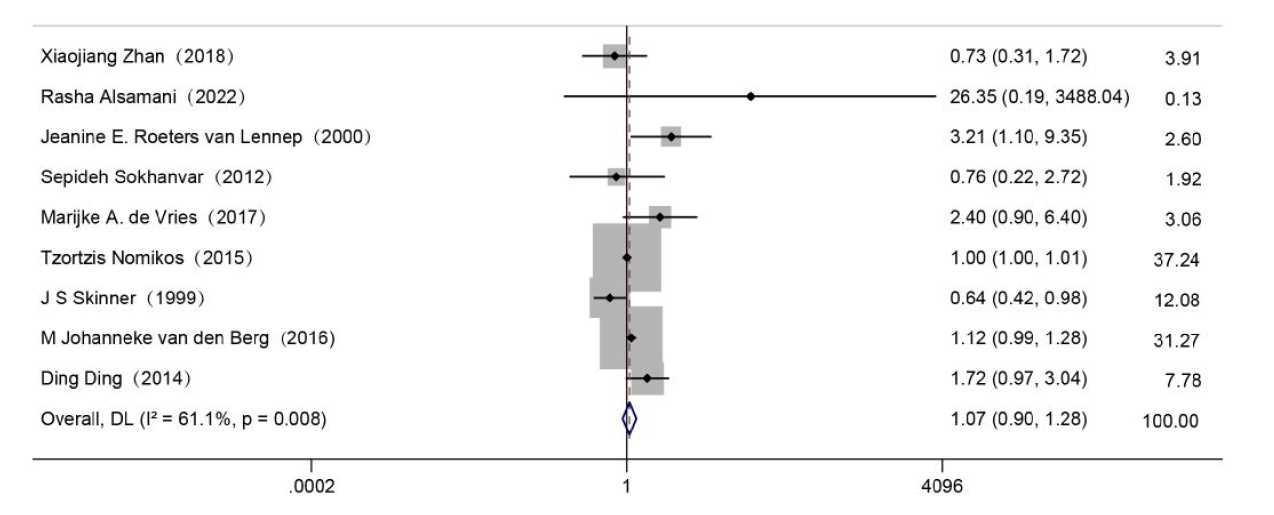 (Image: On average, there is little to no association between apoB and mortality — consistent with recent cohorts from the US and Austria)
Like observational studies, most lipid-lowering trials also show no evidence of a mortality benefit in the lower apoB groups despite systematic biases.
For example, niacin lowers apoB levels, but there is no association between these lower levels and a mortality benefit:
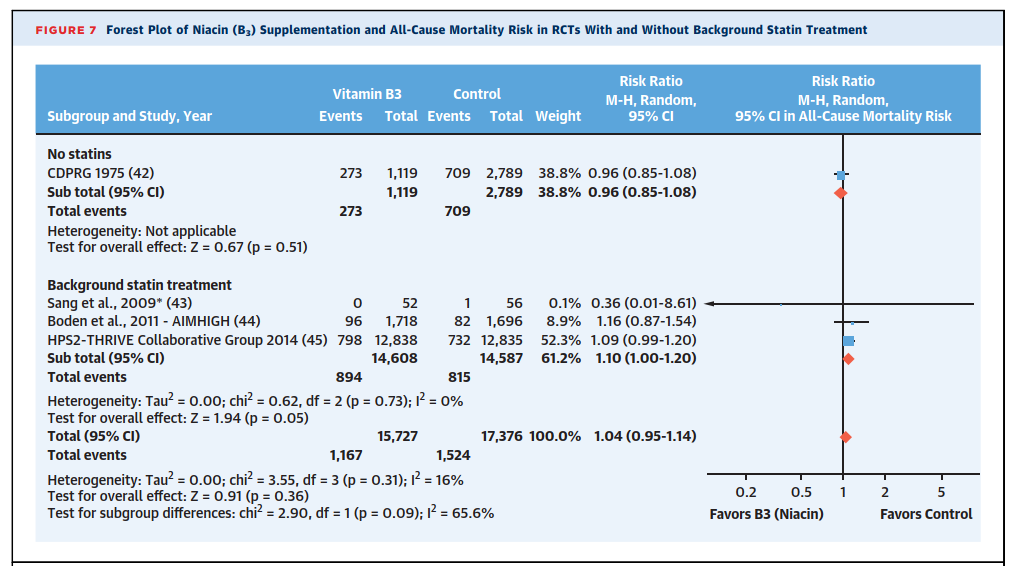 (Image: Taken from Jenkins and colleagues, 2021. In trials with background statin treatment, lower apoB levels may be associated with a higher risk of death)
However, randomized trials are ultimately designed to test drugs or treatments (the independent variables), not apoB levels themselves. As such, no randomized trial has ever isolated the effect of apoB.
Irrelevant Comparisons
Beyond ignoring a mass of data, apoB supporters often compare apoB to LDL cholesterol.
But this comparison is irrelevant.
We have known for decades, since the original Framingham study, that LDL cholesterol is a poor marker of heart disease:
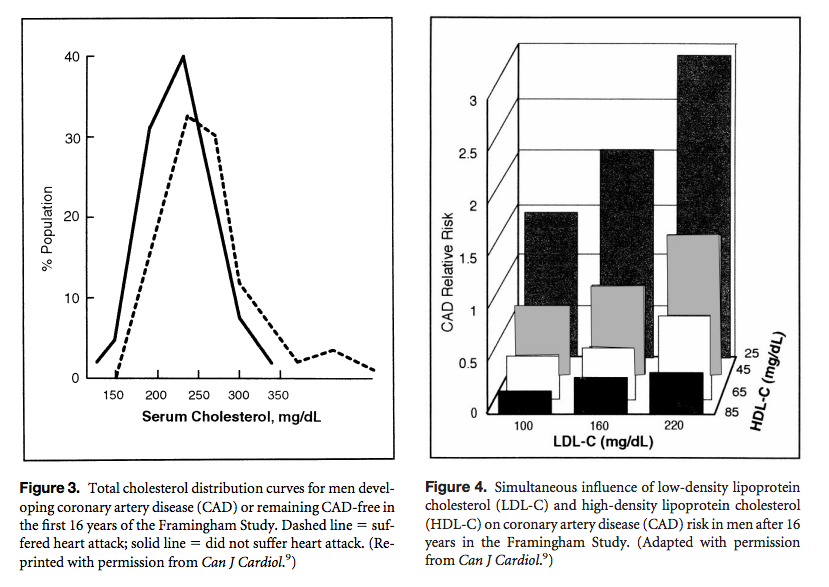 (Image: Taken from Criqui and Golomb, 1998. The left graph includes total cholesterol, but it also applies to LDL cholesterol)
Indeed, as a Framingham investigator admitted, LDL cholesterol "cannot be interpreted without HDL cholesterol levels."
Therefore, to say that apoB is better than LDL cholesterol — a useless marker of risk — is meaningless. When we compare apoB to other risk markers or the "gold standard" lipid markers (e.g., the TC/HDL ratio), the alleged superiority of apoB disappears.
Yet, apoB supporters continue to contaminate the literature with irrelevant papers claiming that apoB is better than LDL cholesterol, such as a recent UK Biobank paper by Sniderman and colleagues.
In that same paper, however, Sniderman and colleagues found that HDL was inversely associated with risk — a finding that apoB supporters ignored:
It is also noteworthy that HDL-C remains significantly predictive of risk in all scenarios examined . . . consistent with almost all previous analyses in demonstrating a strong inverse association between HDL-C and cardiovascular risk.
Lipidologists and Lipid Ratios
I am well aware, of course, that apoB supporters do not like lipid ratios. They believe that HDL has no causal relationship with heart disease, often citing genetic studies (so-called "Mendelian randomization") to support their case.
Here is a quote from one popular lipidologist:
HDL fails in Mendelian [randomization] trials: Several very low HDL conditions [are] not [associated] with ASHD. ApoB determines risk [see here].
But apoB supporters love Mendelian randomization only when it aligns with their beliefs.
In 2022, Helgadottir and colleagues published a Mendelian randomization study showing that non-HDL-C better explains risk than apoB, stating:
Some epidemiological studies indicate that among people with the same non-HDL-C levels, the ones with higher apoB particle count would be at greater CAD risk. However, our study indicates that higher observed risk would not be due to apoB particle concentration, but because of confounding with other risk factors.
This finding, as you may guess, was not popular among apoB supporters. One apoB supporter even called the study "discredited" (see here), which prompted a response from an investigator of the study (see here).
So, when a Mendelian randomization study appears to support apoB, apoB supporters uncritically accept the results. But when a Mendelian randomization study contradicts their beliefs, apoB supporters become critical thinkers and no longer view Mendelian randomization as an all-powerful tool.
The most amusing part of this story, however, is that Mendelian randomization studies are now claiming that HDL is, in fact, associated with reduced risk.
For instance:
There has been considerable debate on higher HDL-C potentially reducing CHD risk. The imprecise (univariable MR) OR estimate of 0.93 per SD (95% CI 0·68;1·26) by Voight et al. is often cited as definitively proving that HDL-C does not affect CHD risk. We note that our estimate OR 0.75 per SD (95%CI 0.70; 0.80) falls completely within the 95%CI provided by Voight et al. Hence our results, suggesting a protective CHD effect of higher HDL-C concentration, are consistent with previous findings.
Empirically, the concentration of HDL-C is only weakly positively correlated to that of Apo-B and strongly correlated to Apo-A1. As such it seems unlikely that HDL-C exerts its effect on CHD primarily by decreasing Apo-B. [Schmidt et a. 2023].
And:
Our analysis suggested that HDL-C is likely a protective factor against CAD, aligning with recent pharmaceutical trial outcomes. The previously observed negative results are likely due to that they did not utilize the lipids GWAS summary data with the largest available sample sizes. When using the largest GWAS summary statistics of CAD as in this study, all methods including IVW, MRcML-DP, and MRBEE resulted in significant protective causal effect of HDL-C on CAD [Lorincz-Comi, Yang, and Zhu, 2024].
To be sure, I am not claiming that these findings on HDL are causal. I have noted before that Mendelian randomization relies on strong assumptions and, at best, may only provide suggestive evidence to encourage further research.
Any method, in fact, that relies on untestable and unverifiable assumptions cannot prove causation, especially when those assumptions are unrealistic and likely false (as in the case of Mendelian randomization).
Atherosclerosis
My first blog post focused on clinical events, but the data on atherosclerosis raise the same questions.
What is the use of apoB if traditional lipids are better?
Neither apoA1 nor apoB measures were as strongly or consistently correlated with extent of lesions as the corresponding lipid measure (HDL-C and non-HDL-C, respectively) . . . The results suggest that the traditional lipid measures are more useful than apolipoprotein measures for detecting young persons at high risk of precocious atherosclerosis [Rainwater et al. 1999].
What is the use of apoB if it has no association with angiographic progression of atherosclerosis?
High-density lipoprotein cholesterol was inversely related to the mean percentage increase in coronary artery stenosis in both men and women. Neither plasma triglycerides nor low-density lipoprotein cholesterol, triglycerides, or apolipoprotein B was related to change in stenosis [Phillips, Waters, & Havel, 1993].
What is the use of apoB if its changes have little to no association with changes in coronary calcium?
No significant correlations were found between HIST-mediated changes in lipoprotein [apoB] or CRP levels and changes in CaI [coronary calcium]. Similarly, no significant associations were found between changes in lipoprotein and CRP levels and changes in CaI in those patients receiving no-statin therapy [Puri et al., 2015].
And what is the use of apoB if its changes have little to no association with coronary atheroma progression?
In the present analysis, we also found that coronary atheroma progression rates were significantly linked with changes in RC [remnant cholesterol], but not with changes in LDL-cholesterol or apoB [Elshazly et al., 2020].
Sniderman and colleagues also claim that the "apoB particle is the basic unit of injury to the arterial wall." But they failed to provide any credible explanation as to how an apoB particle damages the arterial wall.
Contrary to what they claim, human autopsy studies suggest that arterial tissue damage occurs before apoB particles are deposited in the artery. And the likely causes of this damage are hemodynamic stresses (caused by blood pressure or flow) and oxidative stress.
Under physiological conditions, animal studies conducted decades ago also suggested the same:
The basic lesion observed in these animals -- namely, elastic degeneration and regeneration, mucoid deposition, fibroblastic and smooth muscle proliferation, and development of intimal fibrils of several sorts -- seemed to be a primary process that initially was not associated with or caused by lipid infiltration of the intima. These early or earliest changes would therefore seem independent of lipid deposition. [bold emphasis added]
These findings (among others) are inconsistent with the views of Allan Sniderman, a prominent supporter of the apoB hypothesis, who claimed that LDL (or apoB) particles play a "critical role" in causing atherosclerotic plaque.
As a cardiovascular pathologist wrote in reply to Sniderman:
Most of Sniderman’s assertions are conjectural and dependent on controlled experiments in vitro rather than proven in vivo phenomena . . . LDL or any other form of LDL does not explain the topography of atherosclerosis, its preceding intimal proliferation, plasma membrane fragility, the granulovesicular degeneration, atypical smooth muscle cells, the dystrophic changes in basement membranes and collagen fibrils, the loss of elastica, mural atrophy, ectasia, tortuosity, vascular fragility and aneurysm formation. His contentions do not explain the presence and role of matrix vesicles in lipid accumulations and calcification [Stehbens, 1993].
In a recent paper, Sniderman, Pencina, and Thanassoulis further claimed that "all the cholesterol within atheroma originates from apoB particles, which enter and are trapped within the arterial wall."
Which is false.
Some cholesterol may indeed originate from lipoprotein accumulation, but not all. A considerable amount of cholesterol may originate from red blood cell accumulation, as discussed in many papers published in the last decade (e.g., see here and here).
Red blood cell (RBC) membranes are rich in cholesterol and the extent of RBC leakage through the vasa vasorum endothelium is hypothesized to significantly contribute to early lipid deposition and later expansion of the necrotic plaque core [Haverich & Boyle].
Furthermore, apoB is a vague measure and does not tell us which lipoproteins are most responsible for lipid accumulation. A 2012 study, for instance, concluded that Lp(a) — a modified lipoprotein — appeared ubiquitous in atherosclerotic plaques, a finding that Dr. Matthias Rath and colleagues noted decades before:
Together with my colleagues at Hamburg University, I conducted the most comprehensive studies on lipoprotein (a) in the artery wall. These studies showed that the atherosclerotic lesions in human arteries are largely composed of lipoprotein(a) rather than LDL molecules. Moreover, the size of the atherosclerotic lesions paralleled the amount of lipoprotein (a) particles deposited in the arteries. In the meantime, these findings have been confirmed in a series of additional clinical studies [Matthias Rath].
Selective Citation and Propaganda
Sadly, selective citation remains a major problem in the lipid field. Large amounts of data are simply ignored, and, even when acknowledged, dismissed as biased. Never mind that apoB supporters would have cited these same studies had the results agreed with their dogma.
Selective citation from the apoB crowd has become so bad that they can claim, with a straight face, that all apoB particles are "equally atherogenic" despite extensive evidence suggesting otherwise.
What we are dealing with here is a propaganda campaign:
When confronted with nonsupportive evidence, the anticholesterol mainstream typically engages a two-pronged strategy. First, it simply ignores contradictory evidence. Second, it simultaneously seeks out supportive evidence, no matter how flimsy, and then embarks on an aggressive propaganda campaign to “educate” as many people as possible about it. The end result is that the public receives a distorted picture of the existing evidence [Colpo, 2005].
This "educating" also occurs on social media. Just this year, one lipidologist with over 40,000 followers wrote that "It's the cholesterol stupid" (a quote from William Roberts), accompanied by a reposted image informing us that "Cholesterol accounts for 80% of plaque weight" (see here).
The correct statement, however, is that cholesterol accounts for 80% of lipid weight, as the original source noted. And even William Roberts, whose ideas on cholesterol are untenable, recognized that the dominant component of plaque is fibrous tissue, not cholesterol:
I have also been involved in studies examining plaque composition and found that the dominant component of atherosclerotic plaques in coronary arteries is fibrous tissue [William Roberts].
Conclusion
The burden of proof lies on those who claim that apoB is causal and that its measurement is useful. So far, this burden has not been met:
ApoB often has weak to nonexistent associations with hard outcomes such as cardiovascular mortality and all-cause mortality.
ApoB is often outperformed by other risk markers and cannot reliably predict who will and will not get a clinical event.
ApoB usually has weak to non-existent associations with atherosclerosis (especially on an individual level).
ApoB is a poor explanation for the pathology of atherosclerosis (the "response-to-retention" hypothesis does not hold up to scrutiny).
Changes in apoB have never been isolated (i.e., apoB remains confounded by other lipid and non-lipid changes).