

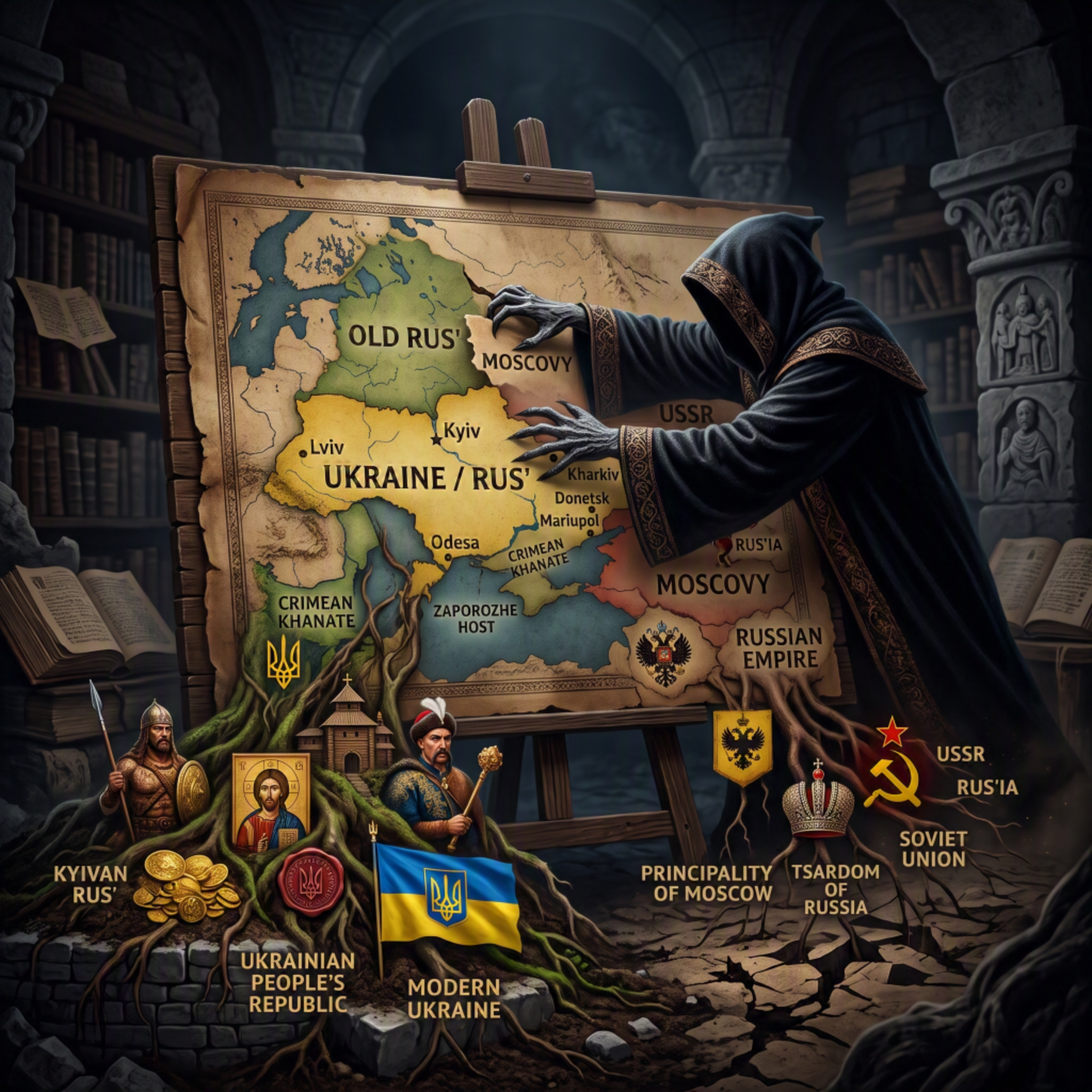
Russian propagandists, hoping for the West's ignorance of history, increasingly use former Ukrainian names under the guise of Russia. So remember:
Historical Names of States on the Territory of Ukraine
🏛️ Ancient Era (Antiquity)
🔷 Cimmeria (Cimmerians) - 9th–7th centuries BC (the first state on our lands mentioned in sources)
🔷 Scythia / Great Scythia (Scythians) — 7th–3rd centuries BC (a powerful nomadic kingdom)
🔷 Sarmatia (Sarmatians) — 3rd century BC — 3rd century AD (a military-political alliance of tribes)
🔷 Bosporan Kingdom (Bosporans) — 480 BC — 6th century AD (the largest ancient state in the Black Sea region)
🔷 State of Ermanaric / Gothia (Goths) — mid-4th century (a Germanic kingdom on the territory of Ukraine)
🔷 Hunnic Union (Huns) — 370–469 AD (a nomadic empire that flourished during the time of Attila)
🏰 Middle Ages
🔷 Old Great Bulgaria (Bulgars) — 632–668 AD (a unification of nomads in the Black Sea steppes)
🔷 Khazar Khaganate (Khazars) — 650–969 AD (a medieval empire that controlled eastern lands)
🔷 Rus (Rusians, Rusychi, Rusyns) — 882–1240 AD (a Slavic state centered in Kyiv)
🔷 Kingdom of Ruthenia / Galicia-Volhynia State (Rusyns) — 1199–1349 AD (the successor state to Kyivan Rus)
🔷 Crimean Ulus of the Golden Horde (Horde members, Tatars) — 1240–1441 AD (the domain of Mongol khans in the south)
🔷 Grand Duchy of Lithuania (Litvins, Rusyns) — 1362–1569 AD (a voluntary unification of Ukraine with Lithuania: a state in which most Ukrainian lands held broad autonomy under the principle of "we do not destroy the old, we do not introduce the new").
⚔️ Early Modern and Modern Times
🔷 Crimean Khanate (Crimean Tatars, Crimeans) — 1441–1783 AD (a state in Crimea and the Azov steppes)
🔷 Zaporozhian Host / Hetmanate (Cossacks, Cherkasy) — 1649–1764 AD (the Ukrainian Cossack state)
🔷 Kingdom of Galicia and Lodomeria within the Austrian (from 1867 — Austro-Hungarian) Empire (Ukrainians, Galicians, Rusyns) — 1772–1918 AD (the territory received crown status, and Ukrainians had cultural and linguistic autonomy, allowing Galicia to become the "Piedmont" of the Ukrainian revival).
📅 Contemporary History
🔷 Ukrainian People's Republic / UPR (Ukrainians) — 1917–1921 AD (proclaimed full independence with the Fourth Universal in 1918)
🔷 Ukrainian State / Hetmanate of Pavlo Skoropadskyi (Ukrainians) — April 29 — December 14, 1918 (a form of monarchical rule supported by German troops)
🔷 West Ukrainian People's Republic / WUPR (Ukrainians) — 1918–1919 AD (a state on ethnic Ukrainian lands of Galicia, Bukovyna, and Transcarpathia that united with the UPR through the Unification Act)
🔷 Kholodny Yar Republic (Ukrainians, Kholodny Yar members) — 1919–1922 AD (a territory of the rebel movement in the Cherkasy region, which, under the banner of "Freedom of Ukraine or Death," put up fierce armed resistance to the Bolshevik occupation and recognized only the authority of the UPR).
🔷 Ukrainian Lands within the Second Polish Republic (Poland) (Ukrainians) — 1919–1939 AD (an occupation regime; despite promises to the international community, Poland did not grant autonomy to Galicia and Volhynia, but pursued a policy of harsh assimilation — "pacification" and colonization by "osadniks").
🔷 Carpathian Ukraine (Ukrainians, Transcarpathians) — 1938–1939 AD (initially an autonomous republic within Czechoslovakia, which proclaimed full independence on March 15, 1939, and fell under Hungarian occupation)
☭ Period of Soviet Occupation
🔷 Ukrainian Soviet Socialist Republic / UkrSSR (Ukrainians) — 1919–1991 AD (a puppet Soviet republic that formally possessed attributes of statehood and even became a co-founder of the UN, but was factually a sovereignty-deprived autonomous part of Ukraine under the occupation of the USSR under the strict control of Moscow)
🇺🇦 Modernity
🔷 Ukraine (Ukrainians) — from August 24, 1991, until today (a sovereign, independent, democratic state that is the legal successor of the UPR and today defends its borders from Russian aggression).
Now the Same About Russia
🏹 Period of Rus and Parallel States (Pre-Mongol Era)
🔻 Novgorod Land / Novgorod Republic (Novgorodian Slovenians) — 862–1478 AD (A unique northwestern region that was part of Rus with a veche system of governance. It later gained its own independence but was occupied by Tsarist Russia and completely wiped out by horrific genocides. Only this region of modern Russia was part of Rus with its capital in Kyiv.)
🔻 Volga Bulgaria (Bulgars) — 10th century — 1236 AD (A developed Muslim state on the Volga, created by Turkic tribes. It had no connection to the Expansion of Slavs or the future Russia and was later destroyed by the Mongols).
🐎 Horde Period and the Rise of Muscovy
🔻 Principality of Moscow (Muscovites) — 1263–1478 AD (A state that arose in the Zalesye lands, populated predominantly by Finno-Ugric tribes (Merya, Muroma, Veps) who underwent military-administrative Russification. Moscow princes received the yarlik [patent] for the grand princedom from the Golden Horde khans for collecting tribute for the Horde and brutally suppressing the anti-Horde uprisings of their neighbors).
👑 Formation and Expansion of the Muscovite State
🔻 Tsardom of Russia / Muscovite Tsardom (Muscovites) — 1478–1721 AD (A centralized state formed after Moscow swallowed Novgorod, Pskov, and other lands. In 1547, Ivan IV the Terrible was the first to be crowned with the status of "Tsar." On European maps, diplomatic documents, and registers, this country figured exclusively as Muscovy. At the end of this period, the large-scale colonization of Siberia began).
💂♂️ Imperial and Soviet Periods
🔻 Russian Empire (Russians, subjects of the Russian Empire) — 1721–1917 AD (Created by Peter I, who renamed Muscovy to "Russia," using the Greek transcription of the word "Rus." This was done artificially in order to appropriate the centuries-old cultural and political heritage of Kyivan Rus, legitimize the seizure of Ukrainian lands, and "cut a window through to Europe").
🔻 Russian Soviet Federative Socialist Republic (RSFSR) within the USSR (Soviet citizens, Russians) — 1917–1991 AD (The core, dominant republic inside the Soviet totalitarian empire, which carried out factual Russification and military control over other occupied republics, including the UkrSSR).
🇷🇺 Modernity
🔻 Russian Federation (Russians, citizens of the RF) — from December 25, 1991, until today (The modern state that legally became the successor of the USSR. It preserves the imperial ambitions of Muscovy and the Russian Empire, wages wars of aggression against neighboring sovereign countries, particularly against Ukraine. According to its Constitution, it is a Federation uniting several states (in reality, occupied ones); notably, there is no state called "Russia" within the federation, so the term "Russian" [Rossiyanin] is used by Russia in relation to all nationalities on the territory of Russia).
🔍 Pay Attention to the Name "Rus"
Now take note of all the names containing "Rus" (which, for some reason, are even frequently mistranslated as Russia around the world), and the nationality of the inhabitants of this state as Rusychi or Rusyns, who were factually Ukrainians and remained associated with Ukraine even when Russia had already stolen the name "Rus"—and how Russia appeals to these names, lying that it is about Russians, even though they at that time were a separate state or did not even exist. Be careful with Russian propaganda.