

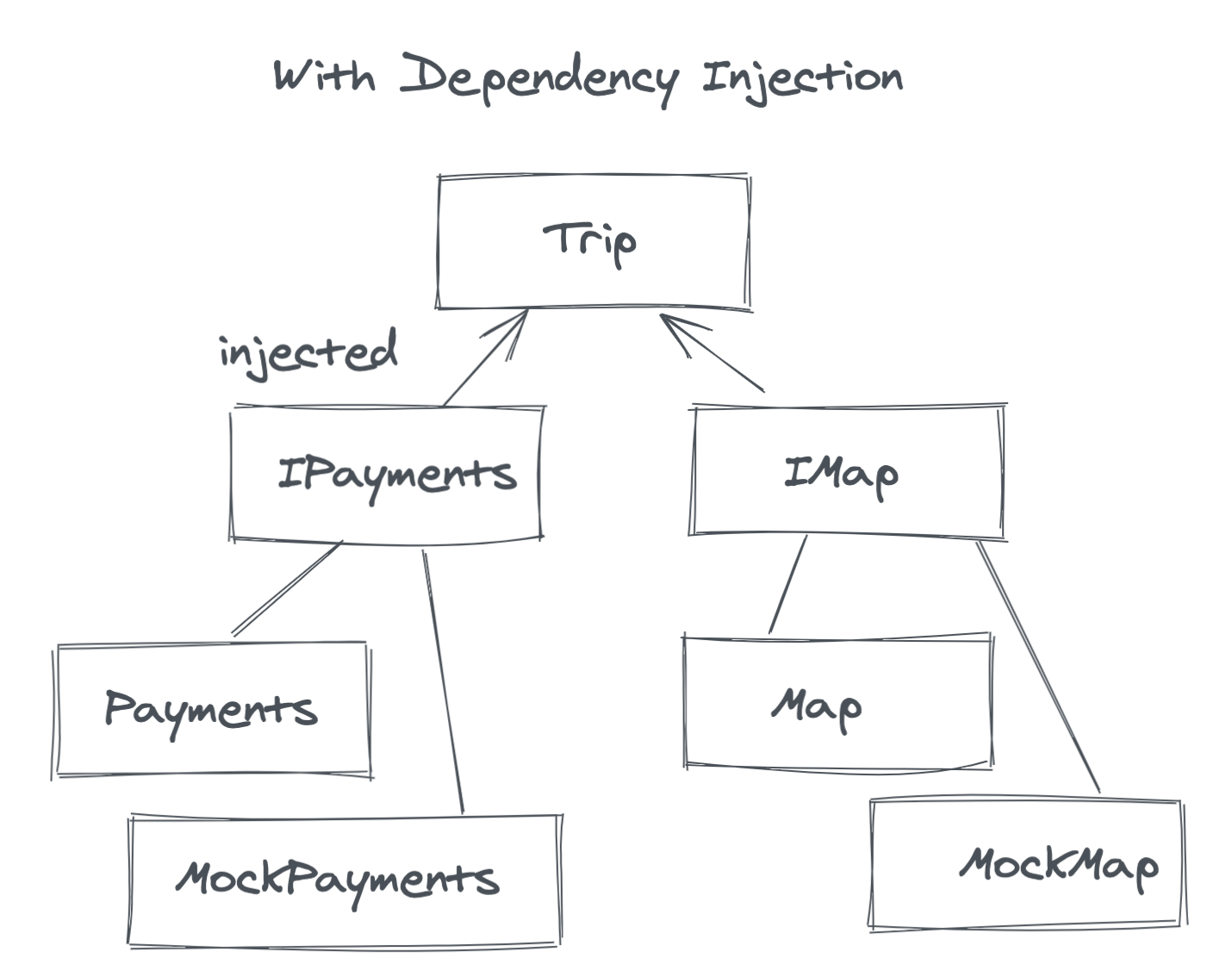
Dependency Injection (DI) is a software design pattern that allows objects to be loosely coupled by removing the dependency between the client code and the service that it requires. DI is used in many modern programming languages and frameworks, including Delphi. In this blog post, we will explore the concept of DI in Delphi, its advantages and disadvantages, and provide examples to demonstrate how it works.
What is Dependency Injection?
Dependency Injection is a design pattern that enables the separation of concerns between a client and its dependencies. It is a way to achieve loose coupling between different parts of a system by allowing one part to be injected into another part without the client code needing to know how the dependencies are implemented.
In a typical Delphi application, a client object depends on another object to provide a service or functionality. The client object is responsible for creating or instantiating the dependency object, which tightly couples the two objects. This tight coupling makes the client object less reusable and harder to test, as any changes to the dependency object will require changes to the client object as well.
With DI, the client object does not create or instantiate the dependency object. Instead, the dependency object is injected or passed to the client object by a third party, typically a DI container. This makes the client object more reusable and easier to test, as any changes to the dependency object can be made without affecting the client object.
Advantages of Dependency Injection
Loose Coupling: DI enables loose coupling between different parts of a system, which makes the code more modular, flexible, and easier to maintain.
Testability: By decoupling the client object from its dependencies, DI makes it easier to test the client object in isolation, as the dependencies can be easily mocked or replaced with test doubles.
Reusability: DI makes it easier to reuse code across different parts of a system, as the same dependency object can be injected into multiple client objects.
Scalability: DI makes it easier to scale a system by allowing new dependencies to be added or replaced without affecting the existing client code.
Disadvantages of Dependency Injection
Complexity: DI can add complexity to a system, especially if it involves a large number of dependencies or complex dependency graphs.
Learning Curve: DI can have a steep learning curve for developers who are not familiar with the concept, as it requires a different approach to designing and implementing code.
Overhead: DI can introduce some overhead to the system, as it requires the use of a DI container and additional code to configure and manage the dependencies.
Delphi Dependency Injection Examples
To demonstrate how DI works in Delphi, let's take a look at two examples.
Example 1: Constructor Injection
Constructor injection is the simplest and most common form of DI. In this example, we have a client object that depends on a service object to perform some functionality.
unit Client;
interface
uses
Service;
type
TClient = class
private
FService: IService;
public
constructor Create(Service: IService);
procedure DoSomething;
end;
implementation
constructor TClient.Create(Service: IService);
begin
FService := Service;
end;
procedure TClient.DoSomething;
begin
FService.DoSomething;
end;
In this example, the TClient class has a constructor that takes an IService interface as a parameter. The constructor sets the FService field to the injected service object. The TClient class also has a DoSomething method that calls the DoSomething method of the FService object.
To use the TClient object, we need to instantiate it and inject an IService object. Here's an example of how to do that:
procedure TForm1.Button1Click(Sender: TObject);
var
Service: IService; Client: TClient;
begin
Service := TService.Create;
Client := TClient.Create(Service);
try
Client.DoSomething;
finally
Client.Free;
Service.Free;
end;
end;
In this example, we create an instance of the TService object and inject it into the TClient object. We then call the DoSomething method of the TClient object to perform some functionality. Example 2: Property Injection Property injection is another form of DI that involves injecting dependencies through public properties. Here's an example:
```delphi
unit Client;
interface
uses
Service;
type TClient = class
private FService: IService;
public property Service: IService read FService write FService;
procedure DoSomething;
end;
implementation
procedure TClient.DoSomething;
begin
FService.DoSomething;
end;
In this example, the TClient class has a public property named Service that allows an IService object to be injected. The TClient class also has a DoSomething method that calls the DoSomething method of the FService object.
To use the TClient object with property injection, we need to instantiate it and inject an IService object using the Service property. Here's an example:
procedure TForm1.Button1Click(Sender: TObject);
var
Service: IService;
Client: TClient;
begin
Service := TService.Create;
Client := TClient.Create;
try
Client.Service := Service;
Client.DoSomething;
finally
Client.Free;
Service.Free;
end;
end;
In this example, we create an instance of the TService object and the TClient object. We then inject the TService object into the TClient object using the Service property. Finally, we call the DoSomething method of the TClient object to perform some functionality.
Conclusion
Dependency Injection is a powerful design pattern that can make your code more modular, flexible, and easier to maintain. It enables loose coupling between different parts of a system, which makes the code more testable and reusable. However, DI can also introduce some complexity and overhead to a system, which may not be suitable for all projects. In Delphi, DI can be implemented using constructor injection or property injection, depending on your requirements.