

Greetings from the mamak, friends!
 Penang had just finished one of those sudden evening downpours when I sat down for dinner. Before my teh tarik arrived, an uncle at the next table leaned over with his phone in hand.
“Is the market going to crash,” he said. “Time to get out?”
No discussion about valuations. No mention of balance sheets. Not even which market he meant. Just the oldest question in investing, triggered by a red screen and a few frightening headlines.
I asked him what he owned.
He wasn’t entirely sure. Some AI stocks, a few Malaysian companies, and whatever his broker had recommended last month.
That is usually the real problem. Investors ask when to get out before they understand why they got in.
Perhaps markets will fall. Perhaps AI financing is becoming stretched. Perhaps some Malaysian companies are heading for painful restructurings. But “the market” crashing is not an investment thesis, and selling everything is not a valuation method.
So I ordered my roti canai and wrote down a more useful set of questions: What is the business worth? How is it financed? And if conditions deteriorate, who gets paid first?
PART 1: THE HARD DATA (What Could Actually Break)
Let’s skip the crash predictions and look at the pressure points.
A falling share price is uncomfortable. A business that cannot refinance is something else entirely.
Fact #1 — AI is becoming a trillion-dollar financing exercise. Moody’s expects capital spending by the five largest US Hyperscaler and CoreWeave to approach US$1 trillion in 2027. It also flagged refinancing risks in 2027–2029, circular financing, and payment-in-kind interest at approximately 17% of 607 tracked borrowers.
 https://theedgemalaysia.com/node/823541
That last part matters. Payment-in-kind interest means the borrower is not paying cash interest. The interest gets added to the debt.
The loan grows while everyone waits for the future to arrive.
This is where a market decline can become something worse: not falling sentiment, but a financing door that stops opening.
Fact #2 — Even Microsoft is making room for the AI bill. Microsoft will offer buyouts to approximately 60,000 employees, around a quarter of its workforce. Data centres, cybersecurity and quantum computing were among the areas reportedly excluded.
 https://theedgemalaysia.com/node/823354
This is not simply a cost-cutting story. It is a capital-allocation story.
Money and talent are being pulled toward AI infrastructure. The question is no longer whether these companies believe in AI. Clearly, they do.
The question is what happens to valuations if the returns arrive later than the spending.
Fact #3 — Anthropic’s IPO will test public-market appetite for AI cash consumption. Anthropic has filed for a Nasdaq listing under the ticker ANT.
 https://theedgemalaysia.com/node/823331
Forget the IPO fireworks. The prospectus is the useful part.
Compute commitments. Cash burn. Customer concentration. Related-party transactions. Strategic investors who are also suppliers, lenders or customers.
If public investors are asked to fund the next stage of the AI build-out, they deserve to see the whole bill.
Fact #4 — Korea’s economy is strong where the crowd is invested and weak where it is not looking. Third-quarter GDP grew 1.0% quarter-on-quarter, beating the 0.7% consensus. Semiconductors generated roughly half of growth. Private consumption fell 0.2%.
One economy is selling chips into the AI boom.
The other is living with restrictive rates and weak household demand.
A market selloff would affect both. That does not mean both deserve the same valuation.
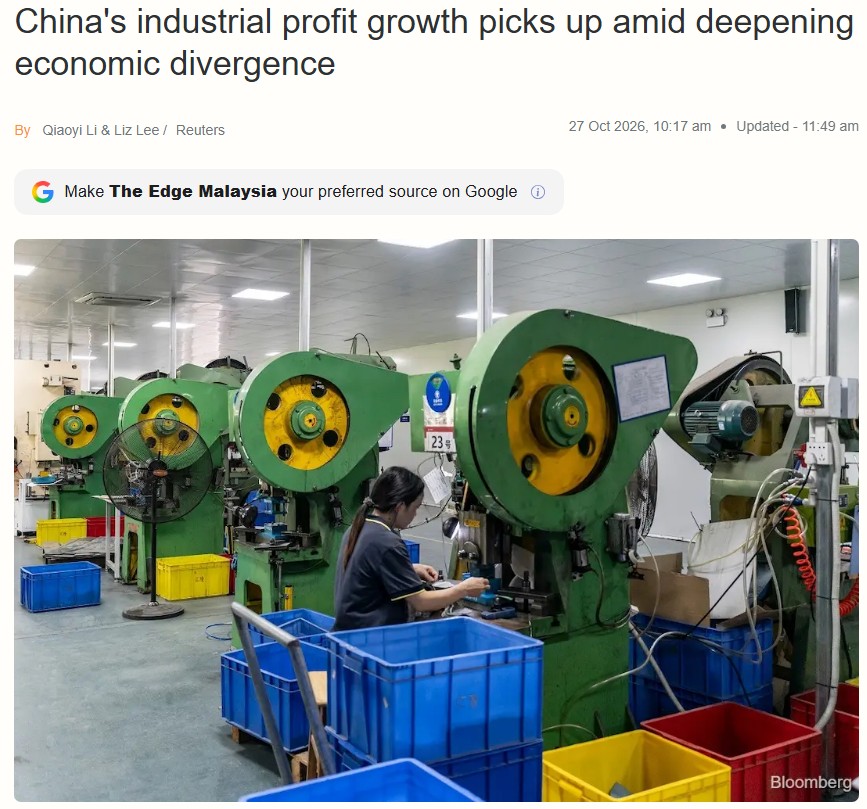
Fact #5 — China’s recovery has the same fault line. September industrial profits rose 14.4% year-on-year, up from 4.2% in August. Electronics profits more than doubled over the first nine months. Furniture-manufacturing profits fell by more than half.
 https://theedgemalaysia.com/node/823358
This is not a rising tide lifting every factory.
It is an AI supply-chain boom sitting beside substantial weakness elsewhere. In a panic, investors may sell both. That is when indiscriminate selling can begin creating selective value.
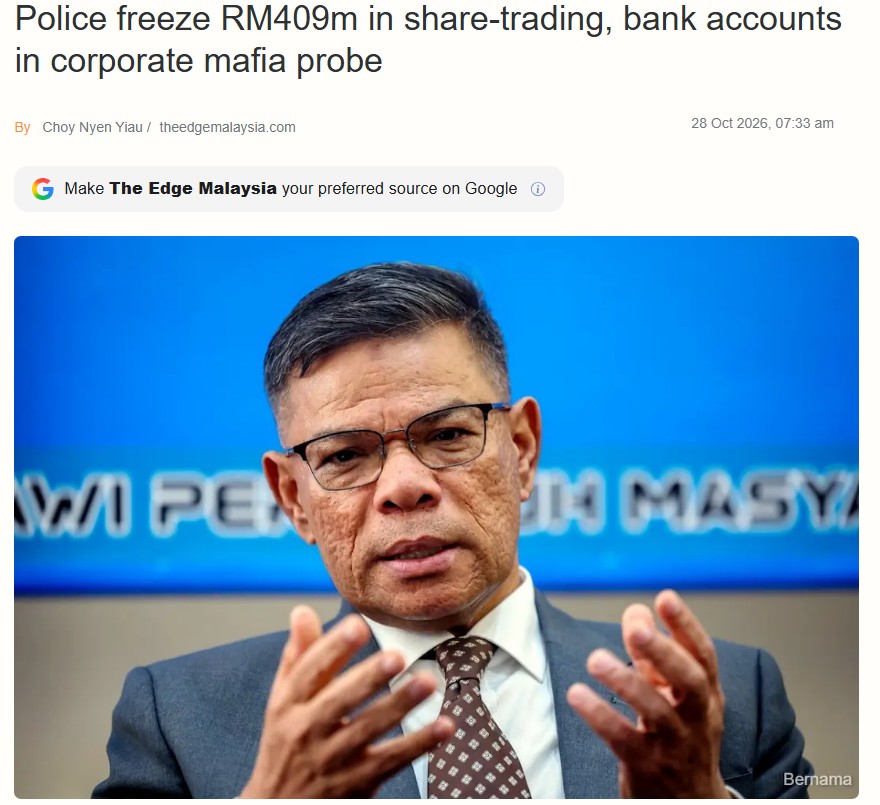
Fact #6 — Malaysia’s corporate-mafia investigation is a governance issue, not an automatic market-crash thesis. Police reported accounts involving RM409.21 million frozen or seized: approximately RM323.59 million across 70 share-trading accounts and RM85.62 million across 404 bank accounts. Investigations continue, and no MACC officers had been identified as involved based on witnesses questioned thus far.
Authorities have disclosed the aggregate value of frozen accounts, but have not named their owners in this parliamentary update.
 https://theedgemalaysia.com/node/823538
That deserves forensic attention.
It does not justify declaring every Malaysian small-cap uninvestable. Fear is useful when it sends you back to the documents. It is expensive when it makes you sell without reading them.
Fact #7 — AirAsia’s vulnerability exists whether or not the broader market crashes. The Transport and Finance Ministries are reviewing possible assistance, but no decision has been made. Transport Minister Anthony Loke emphasized employment and connectivity, including the airline’s approximately 26,000 employees.
Notice what the government is trying to protect: flights, jobs and connectivity.
Not your cost basis.
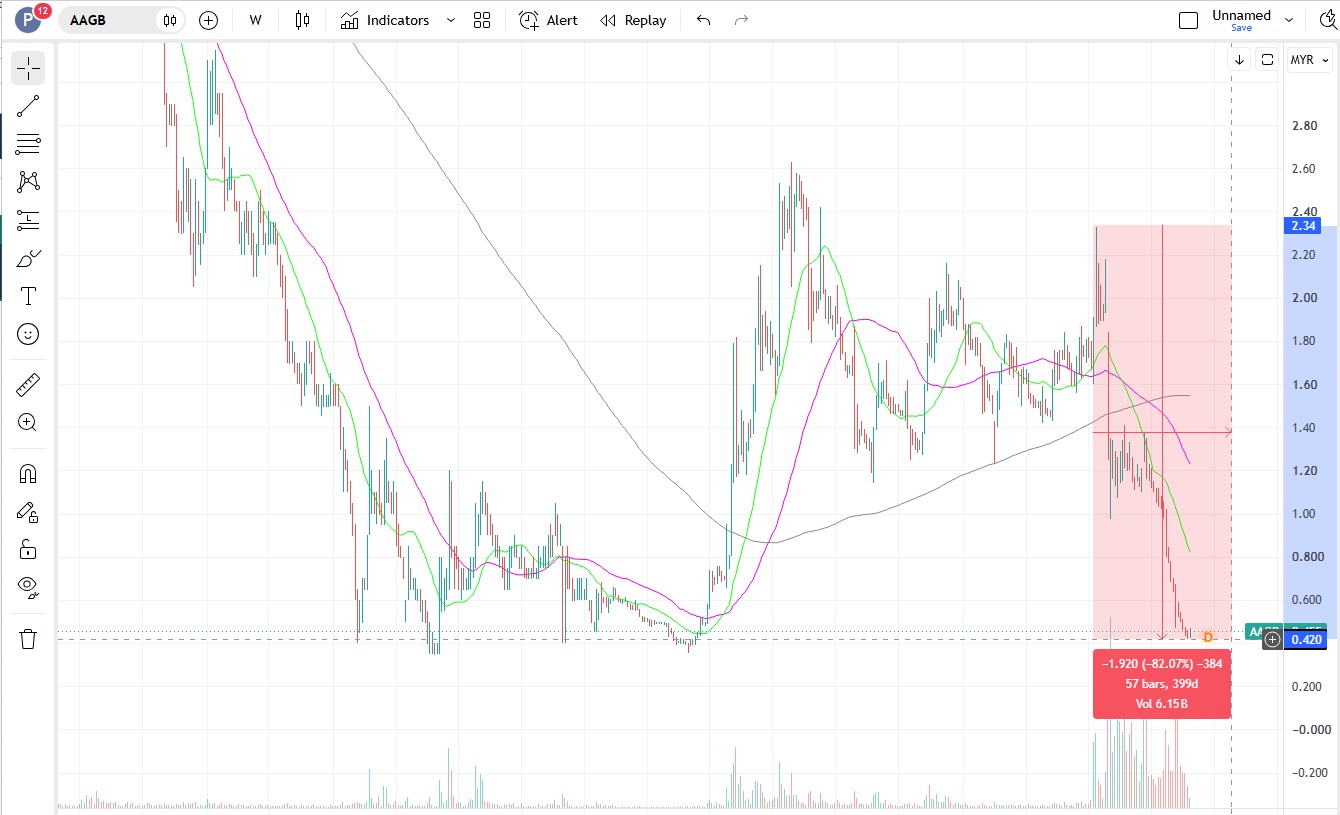 A weak market may make financing harder, but the fundamental equity question already exists: how much value could remain for existing shareholders after creditors, lessors and any new capital providers are accommodated?
Fact #8 — Dufu shows why operating improvement and valuation risk must be assessed separately.
Quarterly net profit rose 48% to RM15.55 million, while revenue increased 25.6%. Earnings included a RM2.8 million fair-value gain, and the stock had already climbed ~97% year to date.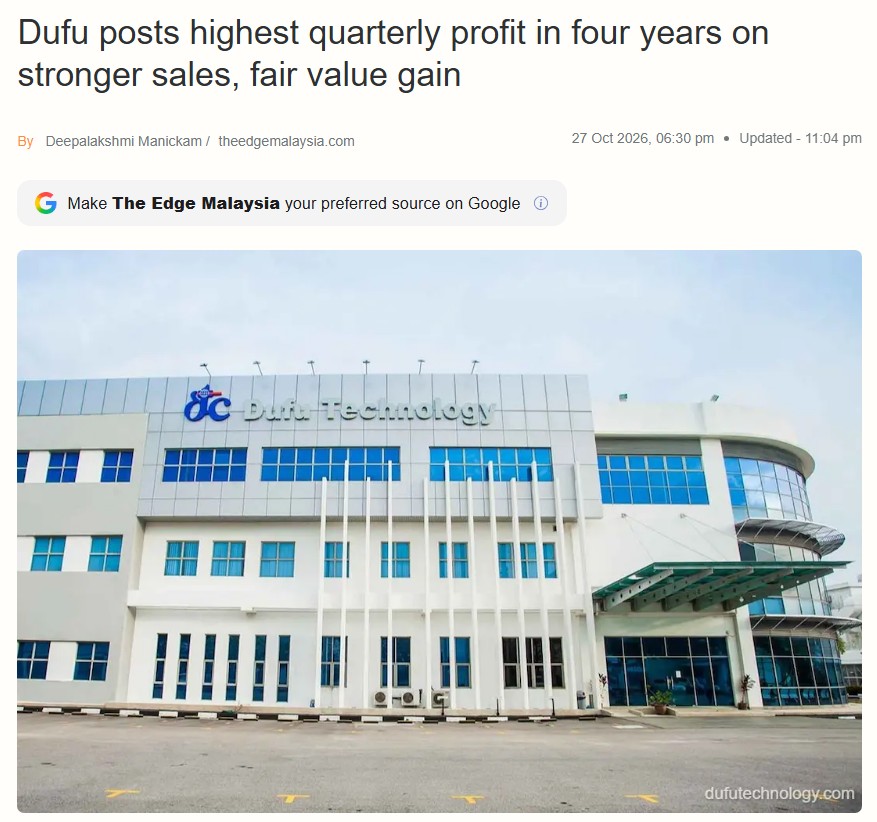 https://theedgemalaysia.com/node/823485
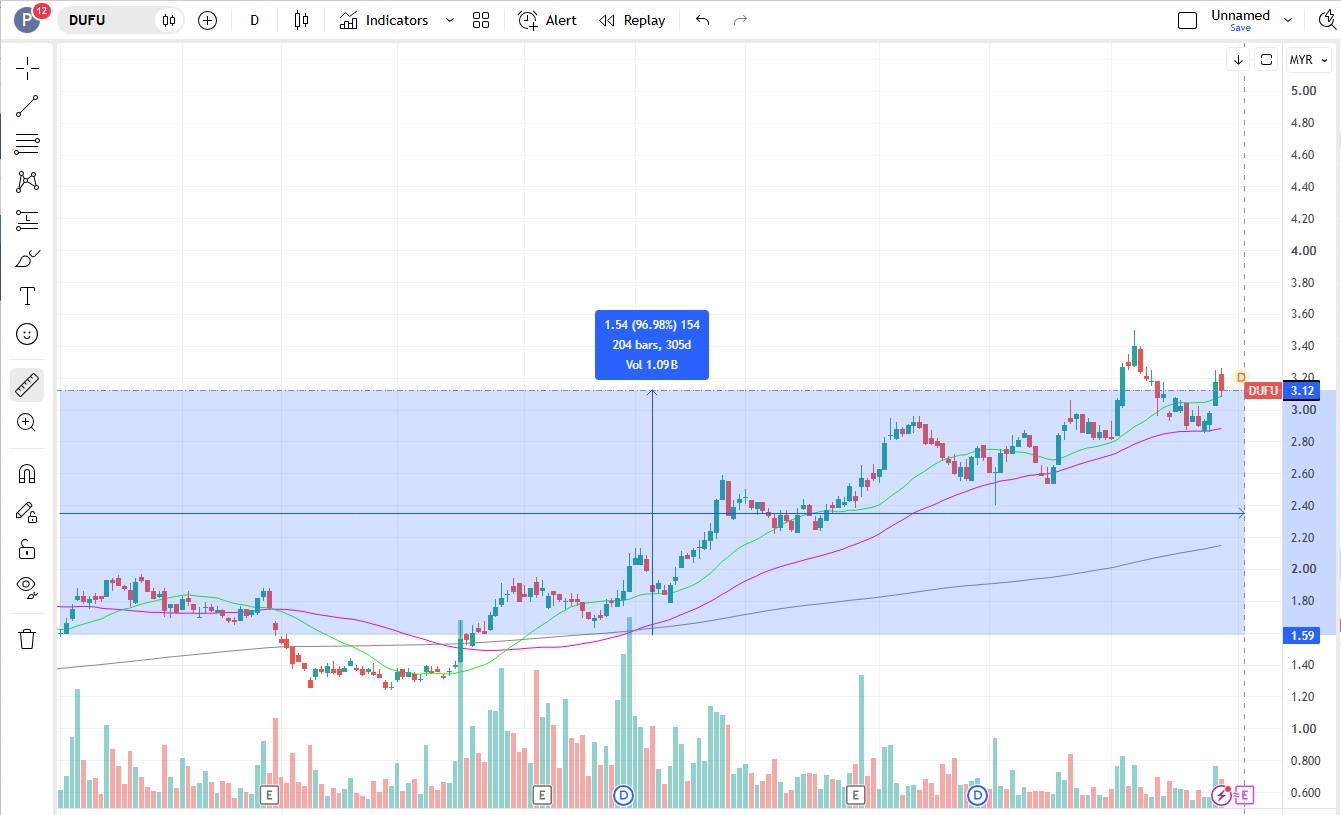 The share-price increase alone does not establish overvaluation. That requires normalized earnings, appropriate valuation multiples, and an estimated intrinsic-value range.
It does, however, mean investors should examine how much future AI-storage growth the current price already assumes.
You do not need to predict a crash to conclude that valuation risk deserves attention.
PART 2: CONNECTING THE DOTS (How A Selloff Becomes Something Worse)
Let me connect these dots, because a crash rarely begins with everyone suddenly becoming stupid.
It usually begins when an assumption meets a cash obligation.
Dot one: Falling prices become more dangerous when refinancing is required. A profitable company with modest debt can ignore its share price for years.
A leveraged borrower cannot ignore the credit market for long.
AI infrastructure now extends across land, power, chips, servers, construction, joint ventures, special-purpose vehicles and debt. If expected returns disappoint, the accident may not begin with a famous technology stock.
It may begin with a borrower trying to refinance a data centre.
Dot two: A Fed pause does not remove the cost-of-capital problem. Markets expected the Fed to hold rates at 3.75%–4.00%, with inflation concerns still alive and another hike possible.
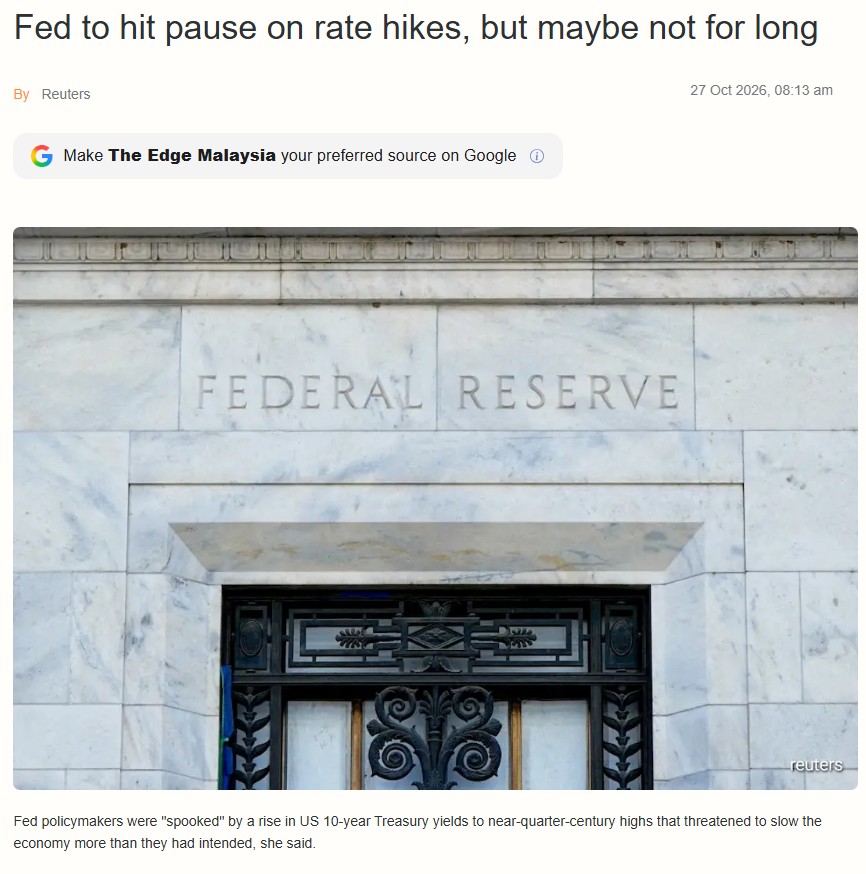 https://theedgemalaysia.com/node/823341
A pause is not a return to free money.
Every project still has to earn its cost of capital. Every refinancing still needs a willing lender. Every equity valuation still competes with a meaningful yield on safer assets.
The market can party through that arithmetic for a while. It cannot repeal it.
Dot three: Concentration turns one spending cycle into a shared vulnerability. The Bank of Korea estimates that slower US technology capital expenditure could leave Korean semiconductor exports US$50 billion–US$100 billion below earlier forecasts, reducing 2027 GDP growth by around 0.4 percentage point.
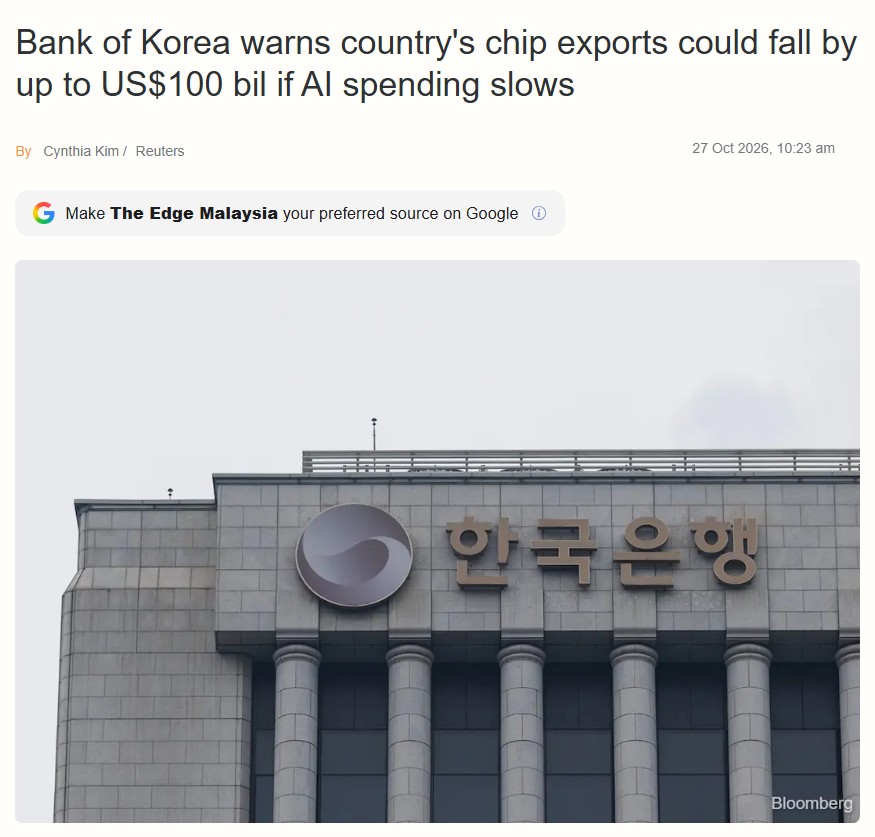 https://theedgemalaysia.com/node/823360
When volumes and prices weaken together, operating leverage starts running in reverse.
The apparent diversification inside an AI portfolio may prove illusory if the chipmaker, cloud company, equipment supplier and infrastructure lender all depend on the same capital-spending cycle.
Dot four: Circular exposure makes correlation difficult to see. Technology companies, developers, chipmakers, lenders and infrastructure vehicles increasingly appear on one another’s income statements and balance sheets.
That does not make the revenue fake.
It means you should not count every dollar as independent demand or every investment as a separate risk.
Dot five: The crash question has no useful date attached. I do not know when the market will fall. Neither does the uncle at the mamak.
What we can know is which holdings need constant refinancing, which valuations require flawless execution, and which businesses can survive a long period of investor hostility.
That is preparation.
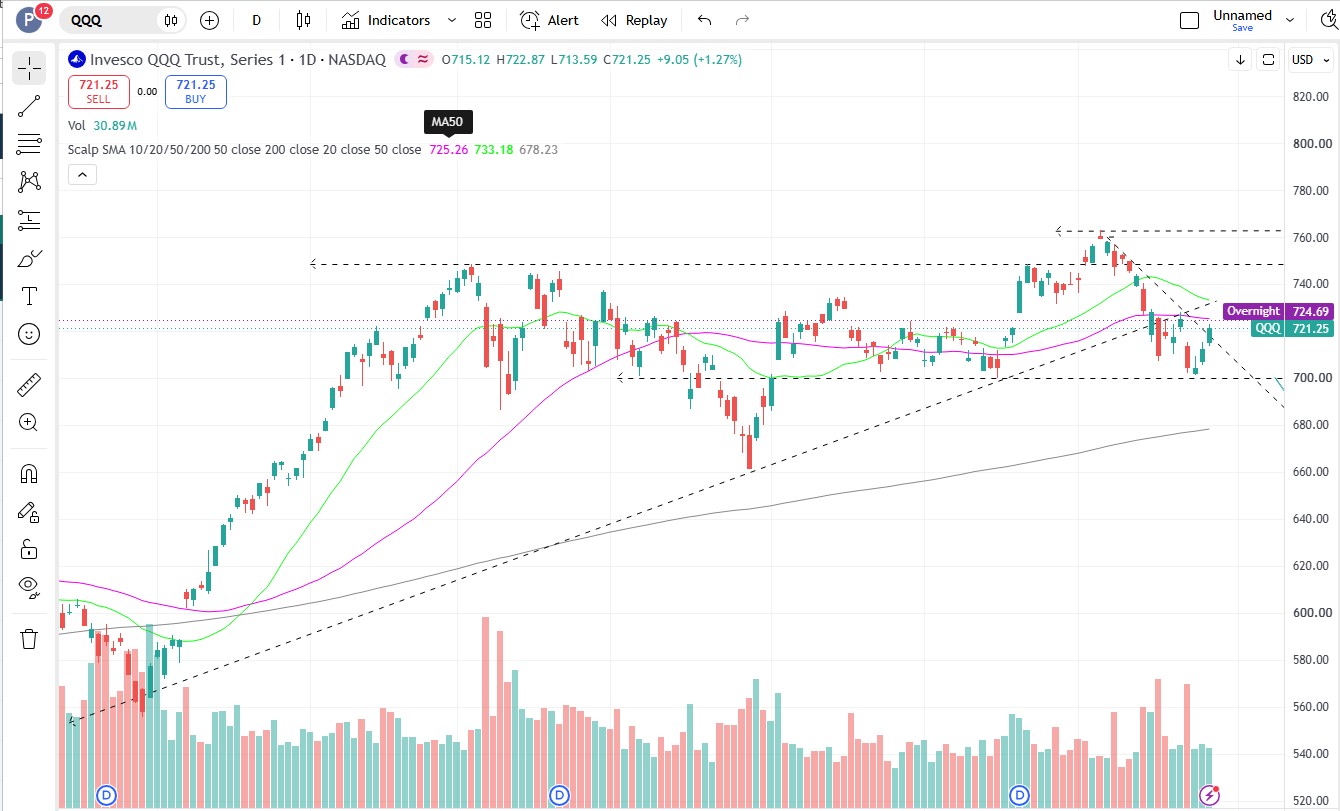 If we use QQQ as one possible gauge, a sustained break below its 50-day moving average, currently at 725.26, would increase the probability of further broad-market weakness.
PART 3: WHAT THIS MEANS FOR YOU IN MALAYSIA
If fear rises, Malaysia will not present one trade.
It will present several very different situations, all conveniently labelled “risk” by people selling first and reading later.
Our job is to separate them.
Directionally; not advice, just how I see the board; this is the work:
Do the ownership work before the panic. The corporate-mafia investigation makes shareholder registers, control changes, related-party transactions and financing relationships essential reading.
Apply discounts where the evidence warrants them. Do not poison the entire market by association.
The best time to investigate governance is before a falling price forces a rushed decision.
Wait for the GLC law, not the speech. Anwar has proposed tighter governance, clearer accountability and limits on the powers of GLC and GLIC leaders, citing Battersea and eFishery among the lessons.
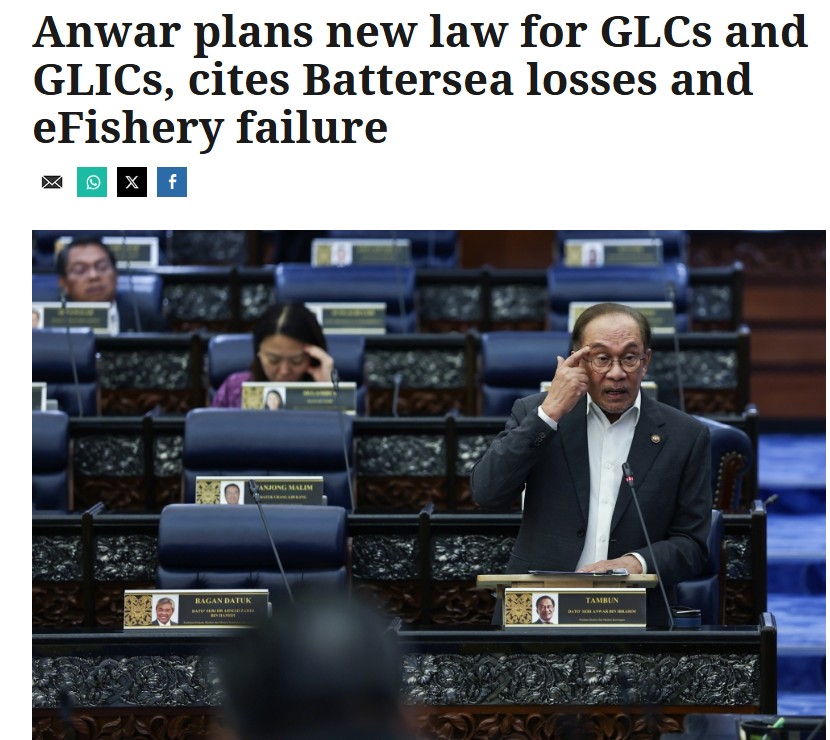 Good intention. No completed governance catalyst yet.
Board independence, disclosure, investment mandates, write-down discipline and enforcement are what will matter. A market selloff cannot substitute for those reforms.
Separate AirAsia’s survival from AirAsia equity’s value. Debt conversion, guarantees, dilution and creditor concessions will shape the outcome for existing shareholders.
A rescue can preserve flights and jobs without delivering an equivalent benefit to equity holders. Existing shareholders face potential dilution or subordination to new capital, but the information available here does not establish that their residual claim is already impaired.
That requires a capital-structure valuation under several restructuring scenarios.
Equally, panic selling would not automatically make the shares cheap.
Normalise Dufu’s earnings before judging its valuation. Establish whether the RM2.8 million fair-value gain is presented before or after tax, then consider any tax effects, non-controlling interests and other non-recurring items before arriving at normalised attributable earnings.
Examine customer concentration, currency exposure and the assumptions embedded in the current valuation.
A stock falling 20% after doubling is not automatically cheap. Nor does the preceding rally prove it was expensive.
Both conclusions require valuation work.
Treat Yinson as a special situation with its own risk clock. The deadline to declare a firm privatisation intention has been extended to 30 November, with the indicative price remaining RM2.35 per share.
 https://theedgemalaysia.com/node/823355
The spread compensates you for financing risk, negotiation risk and the possibility that no firm offer arrives.
If the market crashes but the deal completes, the spread may still be captured. If the deal fails, a calm market will not rescue the thesis.
Different catalyst. Different risk. Different analysis.
THE HIDDEN LESSON
Second-order thinking, explained simply:
First-order thinking asks: “Is the market going to crash?”
Second-order thinking asks: “What happens to each thing I own if it does?”
One holding may merely fall with the index while continuing to generate cash.
Another may lose access to financing.
A third may already carry so much optimism in its valuation that no broader crash is required for disappointing returns.
That is why “get out” is usually the wrong first instruction.
Get out of what? At what valuation? With what maturity profile? Under which capital structure? And compared with what alternative?
The market loves making investors feel that they must make one dramatic decision.
Deep value investing asks you to make dozens of small, boring ones before the drama arrives.
In one line: A crash re-prices assets—and can also weaken demand, collateral values and liquidity. Financing and governance determine how much room a business has to survive the pressure.
💰 INVESTOR TAKEAWAY
For the long-term deep value investor, preparation beats prediction:
Know why you own it. “AI is the future” and “the government will rescue it” are narratives, not valuation work.
Respect the maturity wall. Debt maturities, cash interest and refinancing terms matter more than a company’s presentation slides.
Do not confuse correlation with diversification. Ten AI-linked positions exposed to the same capital-spending cycle may be one large bet wearing ten tickers.
Normalize before you value. Separate recurring attributable earnings from fair-value gains and other non-recurring items, with proper attention to tax and ownership effects.
Prepare the buy list before the red screen. Know which businesses you would want at lower prices, what they might be worth, and what evidence would change your mind.
No leverage. Ever. You cannot wait for value to emerge if your broker forces you out first.
Until next month; and if you’re the uncle from the mamak; my answer is still neither “yes” nor “no.”
 Show me what you own, what you paid, and what has to go right for you to get your money back.
Then we can talk about getting out.
Ewen, The Deep Value Strategist
Simplified Confidentiality Notice
This document is only for you. It’s private, confidential, and you are licensed to use it as a single subscriber only.
You cannot share it. Do not forward, copy, quote large sections of it, or distribute any part of this report, especially the specific investment recommendations.
If you share it, your subscription will be cancelled immediately. The company reserves the right to monitor electronic usage to ensure compliance. If you received this by mistake, please contact the administrators.
Disclaimer: The content of this newsletter is for general informational and reference purposes only, serving as a source for investment ideas, and does not constitute personal investment advice tailored to your individual financial situation or risk tolerance. All investments involve risk, and past performance is never a guarantee of future results; therefore, you are solely responsible for conducting your own thorough due diligence and must consult with a licensed investment or tax professional before making any investment decision.