
March 4, 2026
The first thing I registered this morning was the absence of the alarm.
No five‑thirty shrapnel of sound tearing through the dark, no pre‑dawn negotiation with my own knees. Just the soft, unfamiliar quiet of a weekday where we’d explicitly decided not to get up and let Joseph rearrange our skeletons.
When I finally opened my eyes, light was already edging around the curtains. Elara was on her back, one arm flung out, hair doing whatever it wanted. For a moment, I just lay there and let the relief sink in.
She blinked over at the clock, then at me.
“We survived to a sleep‑in day,” she said hoarsely. “Victory.”
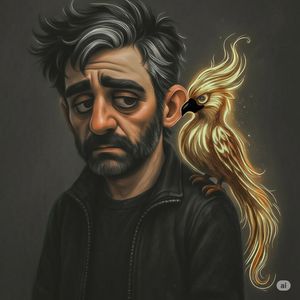
Ash manifested on the dresser, plumage in lazy sunrise tones.
“Behold,” he intoned, “the rare and sacred phenomenon: Wednesday without barbells.”
“Don’t jinx it,” I said.
We drifted into the kitchen a little after seven, which felt decadent. The KafoMaster lit its screen as I approached, displaying:
Good morning, Willie & Elara.
Mid‑week recovery protocol suggested.
Options: Lower‑caffeine blend / Increased hydration alert.
“You see that?” Ash said. “It’s acknowledging your fragility.”
We went with slightly lighter coffee and actual water like civilized people. Breakfast was simple—eggs, toast, some fruit that had been glaring at me from the fridge every time I looked for a snack. No rush, no clock ticking ominously in the back of my mind. Just the luxury of chewing at human speed.
By eight-thirty I was at the Center. The slightly later start made the building feel different—more awake, more voices in the hallway, the everyday hum already established instead of slowly ramping up.
Maria greeted me at the front desk, her kraken in an easy copper‑green sway.
“Look who’s joining the day shift,” she said. “Sleep in?”
“Doctor’s orders,” I said. “Self‑prescribed doctor, but still.”
She grinned. “No crises on your schedule yet. Just the usual people trying to hold themselves together.”
“Best kind,” I said.
On my way to my office, I passed Claire in the hall. Her sphinx relaxed comfortably on her shoulders.
“How’s VIRGIL recruitment going?” I asked.
“Slow but steady,” she said. “We’ve got eight clients who’ve consented in principle. No one’s actually used it yet. People like the idea, but staring at a new machine during therapy is…a hurdle.”
“Fair,” I said. “We’re asking them to externalize their insides on a screen.”
“Exactly,” she said. “We’ll get there. I’d rather roll it out carefully than push it for numbers.”
“Same,” I said.
VIRGIL’s icon sat on my taskbar, pulsing faintly like a heartbeat in idle mode. Waiting. We weren’t there yet. Still in the phase where it lived more in training modules and staff memos than in actual client sessions.
The morning sessions were a familiar mix.
First, a veteran I’d been seeing since late last year—his dragon had been flighty, overreactive, quick to flare at any perceived threat. Today, the dragon stayed closer, less spiky around the edges. He talked about sleeping slightly better, about a nightmare that felt more like a memory than a full‑body ambush.
“Still feel…flat, sometimes,” he said. “Like I’m watching myself from just behind my eyes.”
“Any new treatments?” I asked gently. “Programs, evaluations, medications?”
“Nothing official,” he said. “Just more check‑ins with a unit psych. No new pills. I quit all that years ago. Didn’t like how it made me feel like a ghost.”
We dug into what “flat” meant, where it showed up, how his dragon responded. The whole time, Belladonna sat quietly in the back of my mind—a shadow outline around certain phrases. Numb but functional. Ghost. Watching yourself from outside.
I didn’t say the word. He didn’t need that yet. But my questions about past programs, about “special assessments,” were sharper, more focused than they would’ve been a month ago.
Second session was a civilian with a phoenix that had learned to use self‑immolation fantasies as a coping mechanism. No PRISM echoes there, just the ordinary, complicated work of teaching someone that burning themselves down wasn’t the only way to reset.
By noon, I was in a small conference room with Claire and Joseph, lunch containers spread out between us.
Joseph had a salad that looked like it was auditioning for a health magazine. Claire had sushi. I had a sandwich Maria had pressed into my hand on my way in (“because you can’t make good decisions on hypoglycemia, boss”).
We ate for a few minutes in relatively companionable silence. Then I pulled the folder out of my bag.
PROJECT BELLADONNA.
The red stamp seemed brighter in the conference room light.
Claire’s sphinx straightened, sensing a riddle, or a mystery ; Joseph’s golem shifted from idle to attentive.
“Captain Nguyen gave me this yesterday,” I said. “Over lunch at Capitol Steak and Fries. Apparently it’s one of PRISM’s more charming projects.”
I summarized as cleanly as I could: suppression compounds designed to damp or neutralize Monsters, proposed as humane stabilization, actually creating rebound, mutations, dependency. Veterans and active‑duty personnel dosed under euphemistic language. Data massaged. Oversight compromised.
Claire flipped through a few pages, jaw tightening. “Neurochemical interference with monster‑host feedback loops,” she said. “Conveniently vague. This is…badly familiar.”
“It tracks with what Eldritch found in Sarah’s compounds,” I said. “Different name, same architecture. Suppress the Monster, call it stability, ignore the long‑term consequences.”
Joseph exhaled slowly. “Some of my adaptive training vets talk about feeling like their monsters were ‘turned down’ in certain programs,” he said. “They thought it was just stress. Now I’m wondering.”
“We need Nora and Aldous to see this,” Claire said. “They’re already looking at Sarah’s case through the Psychedelic Monster Consciousness lens. If Belladonna is the umbrella project, they should have the context.”
“That was my thought,” I said. “Send it as an update, not a panic. ‘We’ve identified a program that seems to encompass the compounds we’re analyzing. Here are the broad strokes.’”
“And ask,” she added, “how they think VIRGIL will handle clients with this kind of history. If you feed a visualization tool data from a chemically distorted Monster, what does it show us? Are we going to misread fog as ambivalence? Distance as consent?”
“Or mistake a rebound spike for a breakthrough,” Joseph said.
We sat with that for a moment.
“I’ll draft something tonight,” I said. “Loop both of you in. We can send it as a joint update from the Center.”
“Good,” Claire said. “If PRISM is using chemical dampening, we need to make sure our tools don’t accidentally reinforce the damage.”
After lunch, I had a block set aside for Sarah and James Ward. Full couples session.
They arrived together, sitting close on the couch but with that tentative stiffness of people who are trying on a new, fragile version of themselves. Sarah’s kraken was more visible today—less wrapped in fog, though the glass of its form still trembled with each emotional shift. James’s monster—his own kraken, smaller, more structured—sat nearby, coils tighter than usual.
“How has this week been?” I asked.
“Loud,” Sarah said immediately. “In here.” She tapped her chest. “I cry a lot. Over everything. Danny’s room, random songs, commercials with parents and kids. It’s…a lot.”
“Does it feel unbearable,” I asked, “or…appropriate? Real?”
She considered that.
“Both,” she said. “It hurts so much I can barely breathe sometimes. But it also feels like…finally breathing. Like the pain is actually mine, instead of something happening behind glass.”
James swallowed. “I keep wanting to tell her to slow down,” he admitted. “To…take something. Then I hear myself and I want to punch my own face.”
“We’re not punching faces today,” I said. “We’re just noticing.”
Sarah reached for his hand. He took it, fingers lacing through hers.
“I know you were trying to help,” she said quietly. “I know you didn’t wake up one day and think, ‘How can I chemically erase my wife.’”
His eyes filled, but he held my gaze.
“I trusted the program,” he said. “The people. They said the supplements would stabilize you. That if we could quiet your emotional state, you’d suffer less.”
I nodded.
“That’s very close to the language in this,” I said. “In Belladonna. Stabilization. Optimization. Words that sound caring until you look at what they actually do.”
Sarah looked at me sharply. “Belladonna?”
“There’s a PRISM project,” I said, “focused on chemical suppression of Monsters. It uses compounds similar to what you’ve been taking. It promises short‑term relief. It rarely tells people what it costs long‑term.”
“So I was part of that,” she said, voice tight. “Without being told.”
“Most likely,” I said. “With James as the delivery system. Also without full information.”
James flinched.
“I keep thinking,” he said, “about the nights you cried so hard you couldn’t stand. How helpless I felt. When I was shown the data, the case studies, the before‑and‑after charts… I wanted that for you.”
Sarah squeezed his hand. “We both made decisions from a place of grief and fear,” she said. “You trying to save me from drowning. Me letting you because I didn’t want to feel anything anymore.”
I nodded.
“What you’re experiencing now,” I told Sarah, “the waves of grief, the intensity—that’s rebound. Your Monster is finally able to connect to your conscious awareness again. It feels like too much because you’ve been held at arm’s length from your own emotions for so long. But this is what actual mourning looks like. Messy. Loud. Real.”
She cried then—steady, aching tears, not the muffled sort that got stuck halfway to the surface. Her kraken’s fog thinned further as she cried, glass coils more visible, movements more coherent.
“And you,” I said gently, turning slightly toward James, “are dealing with your own version of rebound. Guilt, anger, betrayal—not just at yourself, but at a system that used your love as a delivery mechanism.”
He let out a shaky breath. “I hate that,” he said softly. “That they used how much I love her as a…vector.”
“That rage is valid,” I said. “We’re going to need to find somewhere for it to go that isn’t just inward.”
We spent the rest of the session working on small, tangible things. Practical grief rituals for Sarah. Clear agreements about medication: nothing new without consultation, everything documented, no more compounds whose origin they can’t trace. A commitment from James to start his own individual sessions with me, to process his grief about Danny as something separate from “supporting” Sarah.
“When do we talk to my doctor?” Sarah asked near the end.
“Not yet,” I said. “You’re still stabilizing off the compounds. The most important thing right now is your safety and your emotional footing. Once we have you more grounded—and once we have more information from Eldritch and Johnson—we’ll help you prepare for that conversation.”
She nodded, wiping her face. James nodded too, shoulders squared like a man preparing for a difficult mission.
After they left, I took a few minutes just to breathe. Ash sat quietly in the yellow chair, feathers subdued.
“They’re doing the hard thing,” he said.
“They are,” I said.
“Feels unfair that doing the right thing is sometimes harder than the wrong thing,” he added.
“An unfortunate truth,” I said.
Later in the afternoon, I met with Marcus to talk about the Five Points of Resilience program.
“How’s the cohort?” I asked.
He brightened. His golem echoed the shift with a subtle glow across its stone surface.
“They’re engaged,” he said. “They’re actually using the framework. I had one of the ART trainers tell me a client referenced Point Two—‘Anchoring in safe connections’—during a flare‑up. Said remembering it kept him from pushing everyone away.”
“That’s exactly what you wanted,” I said.
“Yeah,” he said, a little sheepish. “They’re also struggling with Point Five—‘Meaning‑making after impact.’ It’s hard to talk about finding meaning when the wounds are still open.”
“That’s honest,” I said. “Maybe we adjust the language. Less about ‘finding meaning’ and more about ‘staying open to future meaning.’ You don’t have to assign purpose to pain while you’re still in it.”
He wrote that down.
“Thinking about a second cohort in April,” he said. “But I don’t want to lose the intimacy. The small group feel is what makes people talk.”
“Finish this one,” I said. “Document everything. What worked, what didn’t, where people stalled. Then build the second cohort with those lessons. We’re not in a race. Depth matters more than scale.”
He nodded. “How much do we tell them about PRISM stuff?” he asked.
“We don’t turn it into a conspiracy briefing,” I said. “But we can acknowledge that sometimes systems hurt people. And that resilience isn’t about making yourself easier to exploit. It’s about staying yourself in the face of pressure to become something else.”
He smiled. “I like that,” he said. “I’ll work it in.”
“How is Cindah?”
He looked surprised by the question. “Um…how do you mean?” His golem flushed involuntarily while Ash giggled.
“You were teaching her juggling?”
“Oh yes! I forgot you saw us that day at the gym. She’s quite the natural at it. Excellent hand-eye coordination.”
“Good! Hope she sticks with it.”
“I hope she does too.”
“This is painful to watch. He thinks you are going to address that they are enjoying more than just juggling in their time together.”
His golem was doing its best to not bring attention to its deepening blush, which made it harder to not pay attention to it.
I gave him a knowing nod and a smile.
By the time I got home, it was already dark. March still insists on early sunsets, like a reminder that winter isn’t quite done with us yet.
I’d decided on salmon for dinner—baked with a sriracha‑mustard glaze: sriracha, Dijon, a little soy, honey, garlic, brushed over the fillets and roasted until the edges just caramelized. Rice on the side, and some quickly stir‑fried vegetables to satisfy the part of my brain that keeps score on fiber.
Elara walked in as I was plating, hair wind‑tousled, cheeks pink from the last gasp of cold.
“That smells amazing,” she said, dropping her bag and coming into the kitchen.
“I bribed the salmon,” I said. “Promised it a dignified end.”
At the table, the first bite earned an appreciative noise that would have made Ash perform a victory lap if he’d been the one cooking.
“I assisted.” He sniffed from across the table. He and Shoneah were enjoying the emotional sensations of a well prepared meal.
“This is really good,” she said. “Like, I’d‑pay‑for‑this‑in‑a‑restaurant good.”
We ate in companionable silence for a few minutes. Then I pulled a thinner copy of the Belladonna file from the sideboard and set it near her plate.
“Nguyen gave me this,” I said. “I made a copy. Wanted you to see what we’re actually talking about.”
She wiped her fingers carefully before reaching for it. The red stamp caught her eye immediately.
“Project Belladonna,” she read. “That’s a melodramatic name.”
“It’s a melodramatic project,” I said.
She skimmed as she ate, brows knitting. Chemical suppression. Dampening signatures. Rebound, mutations, dependency. Dr. Elise Marrow’s name. Major Storm.
“So this is what they did to Sarah,” she said quietly. “Or a version of it.”
“Most likely,” I said. “Different brand name. Same bones.”
She sat back, letting the pages rest on the table.
“Who knew dating a therapist would be so exciting,” she said wryly. “Classified programs, black SUVs, chemical war crimes.”
Ash huffed audibly from his perch on the counter.
“You’re a Soul Weaver,” he said, acting offended. “Have some respect for the mystique.”
“I’m a Soul Weaver actually.”
She looked back at me. “Explain the difference,” she said. “Therapist versus Soul Weaver. I know the short version, but give me the real one.”
I thought about it for a moment.
“Therapist,” I said, “is training. Degrees, licenses, evidence‑based methods, ethical codes. It’s sitting in the room with someone and helping them untangle their thoughts and behaviors, using tools we can explain and defend to a review board.”
“And Soul Weaver?” she prompted.
“Soul Weaver is…archetypal,” I said. “It’s working at the level of Monsters and meaning. Taking all the threads—trauma, identity, history, Monster expression—and weaving them into something coherent instead of letting them stay frayed. Less about symptom reduction, more about integration. It’s not a credential. It’s what happens when you and your Monster are doing the work together.”
“And you’re both,” she said.
“On my better days,” I said. “It’s an additional discipline, more and different tools.”
She smiled, slow and warm.
“So that’s why my boyfriend is in the museum,” she said. “Makes sense. They needed someone to put on the wall when they talk about archetypes and classification.”
“Please don’t start bringing field trips by my plaque,” I said.
“No promises,” she said.
After dinner, we cleaned up together. The rhythm of shared dishes and divided tasks felt especially grounding after a day spent staring at systems designed to destabilize people.
On the couch, later, I drafted an email in my head to Nora and Aldous. I’d send it tomorrow, with the Belladonna summary attached.
Dear Nora and Aldous,
Additional context on the compounds we’ve been discussing. PRISM project appears to systematize chemical Monster suppression…
I’d ask specifically about VIRGIL. About what happens when a client whose Monster has been chemically distorted sits down in front of a tool designed to visualize Monster states. Would it show us the suppression scar? Or just the current shape without context?
Ash and Shoneah staged a quiet soap opera on the back of the couch while we half‑watched something forgettable on TV. At one point, Shoneah mimed putting on a lab coat and enormous glasses, doing an exaggerated Nora impression. Ash countered with dramatic Aldous, complete with imaginary charts and hand‑waving.
“Tomorrow’s Thursday,” Elara murmured at some point, head on my shoulder.
“Loss Survivors,” I said.
“How you feeling about that?” she asked.
“Somewhere between cautiously willing and deeply avoidant,” I said.
She nodded against me. “You don’t have to be the best at grief,” she said. “You just have to show up.”
“That’s a low bar,” I said.
“It’s also the hardest part,” she said.
In bed, later, the room dark and quiet, I thought about all the threads running through the week. I fell asleep thinking about Belladonna and VIRGIL, healing couples, and juggling.
_______________________________________________________________________________
Civil War Fact of the Day: On March 4, 1861, Abraham Lincoln was inaugurated as President of the United States, taking office while the country was already fracturing. Seven states had seceded; more would follow. In his first inaugural address, Lincoln walked a narrow line—asserting the permanence of the Union and his duty to preserve it, while also pleading for patience and restraint, insisting he had no intention to abolish slavery where it already existed. He spoke of “the better angels of our nature,” hoping words might pull people back from a cliff they were already stepping off.