
December 17, 2025
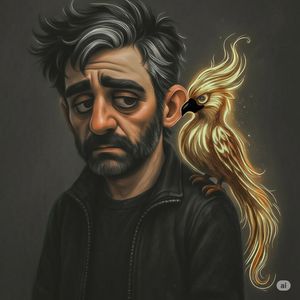
Marcus appeared in my doorway around nine, practically vibrating with enthusiasm. His clay golem was cycling through colors so rapidly it was almost dizzying—white to mercury to white again, excitement made visible.
"I've been thinking," he said, settling into the client chair without waiting for invitation. "The Five Points program is working. All six participants want to continue, and three have colleagues who need it."
"That's excellent, Marcus."
"So I started sketching expansion plans." He pulled out his tablet, showing me detailed proposals. "What if we run two cohorts simultaneously starting in January? Same curriculum, different facilitators. I could train another therapist to lead one while I lead the other."
I leaned back, studying his enthusiasm. "That's ambitious."
"But sustainable, right? Building redundancy into the system from the start. Making sure it's not just me running everything." He scrolled through more plans. "And I was thinking longer term—what if we franchised the model? Trained facilitators at other centers, spread the Five Points framework beyond just our facility?"
"Opening other facilities?"
"Not us directly. But licensing the curriculum, training other therapists, creating a network of centers using the same approach." His golem brightened with each word. "This could help therapists everywhere, not just here."
I sat with that vision for a moment. "Marcus, that's genuinely impressive thinking. Succession planning, sustainable growth, considering impact beyond our walls. That's the mark of real leadership."
He flushed, pleased. "So you think it's feasible?"
"Eventually, yes. But—" I held up a hand before his enthusiasm could run away entirely. "—right now, I need you to slow down. Not stop, just slow down."
His expression fell slightly.
"You've got one cohort that's been running for two weeks," I continued gently. "Before we expand to two cohorts, we need to see the first one through completion. Before we train other facilitators, you need more experience running the program yourself. Before we franchise the model, we need ironclad evidence that it works consistently across different populations."
"But the momentum—"
"Will still be there in six months. In a year." I leaned forward. "Marcus, I'm not saying don't plan for expansion. I'm saying build the foundation properly first. Otherwise you'll scale up quickly and collapse just as fast when you hit problems you didn't anticipate."
He was quiet, processing. "That's frustrating but probably wise."
"Definitely wise. Trust me—I've seen programs fail because they grew too fast." I paused. "Also, take the rest of this year and actually rest. Don't focus on growing the program. Focus on the participants you have now, and focus on yourself. Can you do that?"
"I'll try."
Ash cocked his head, one eyebrow raised in skeptical disbelief, holding a staring contest with Marcus’s uncertain golem.
“Ok, ok boss. Yes I’ll get some rest” he laughed.
"Good. Because enthusiasm is a strength, but sustainable practice requires knowing when to pump the brakes."
Ash fluttered in approval. "He's got real drive. Real vision. You're right to temper it with patience, but don't squash it entirely."
"I'm not squashing. I'm channeling."
"That's good leadership. Also something you learned the hard way."
"Most leadership lessons are learned the hard way."
My eleven o'clock session was with James, the Marine who'd been struggling with post-discharge identity. He settled into the client chair looking noticeably different from our first session—still carrying weight, still showing stress, but more grounded somehow.
"I've been thinking about what you said," he started. "About successful transition not being a single moment but a gradual process."
"How's that been sitting with you?"
"Better than I expected. I stopped telling people I'm 'figuring out my next step' and started telling them I'm 'in transition.' Sounds more legitimate somehow. Like it's a recognized phase instead of me just failing to have a plan."
"That's good reframing."
"My wife asked what I need during this transition. Nobody's ever asked me that before." He looked surprised by his own observation. "Everyone asks what my plans are. She asked what I need."
"What did you tell her?"
"That I need time without pressure. Permission to not have it figured out yet. Space to try things without commitment." He smiled slightly. "She said that was completely reasonable. Made me a reading list of books by veterans who'd transitioned successfully. Not advice books—memoirs. People just telling their stories about the messy middle part."
We spent the rest of the session exploring what "successful transition" actually meant for him specifically—not some theoretical ideal, but what would make him feel like he was moving forward rather than just treading water.
"There's no timeline," I reminded him as the session ended. "Some people figure it out in six months. Some take five years. Both are normal."
"That's weirdly reassuring."
Around two, Claire knocked on my door with Kira in tow. "We've got the consultation set up. The Psychedelic Monster Consciousness Project team can video call in fifteen minutes if you're free."
"The what now?"
"I'll explain when we're in the room. Trust me, they're the right people for this."
We assembled in the small conference room—me, Claire, Kira, and Joseph who'd been brought in for his tactical thinking. Claire's sphinx was doing alert patterns, serious work mode engaged.
Two faces appeared on screen. The first was a woman in her early forties with vibrant purple-streaked hair and multiple ear piercings, wearing what looked like a tie-dye lab coat. The second was a man around sixty with a magnificent silver beard and kind eyes behind round spectacles.
"Dr. Nora Eldritch," the woman introduced herself with infectious enthusiasm. "And this is my colleague Dr. Aldous Johnson. We're with the Psychedelic Monster Consciousness Project—studying the intersection of psychoactive compounds and Aura Monster manifestation."
"We're very excited to meet you, Ded. Falahee," Johnson added, his voice warm. "Your work with the AMP-C framework has been groundbreaking. Claire sent us your documentation on this case, and we're honored to consult."
Ash appeared on my shoulder, immediately intrigued. "Psychedelic Monster Consciousness? That sounds amazing. Are you taking volunteers for psilocybin trials? Because I would absolutely volunteer."
I ignored him. "Thank you for making time on short notice."
"Are you kidding?" Eldritch leaned forward excitedly. "This case is fascinating from a research perspective. Also deeply concerning from an ethics perspective, but fascinating."
Johnson pulled up charts on his end of the screen. "We've reviewed your observations. The fog pattern around the patient's Kraken, the correlation between her husband's presence and symptom severity, the flat affect despite underlying distress—this is consistent with experimental anxiolytic compounds we've been tracking in underground research circles."
"Underground research?" Kira asked.
"Military applications," Eldritch said, her enthusiasm dimming. "There's been chatter in our field about classified programs developing compounds that suppress Monster manifestation without patient awareness. The goal is creating controllable trauma response—soldiers who can function in high-stress environments without visible psychological symptoms."
"That's horrifying," Kira said quietly.
"That's one word for it," Johnson agreed. "We prefer 'ethically catastrophic.'"
"Can you identify the specific compound?" Claire asked.
"Not without blood work," Johnson said. "But the profile matches several experimental formulations. Most concerning is the delivery method—if symptoms improve when the husband travels despite her continuing standard medication, that suggests environmental delivery or direct administration of an additional compound."
"Like aerosol?" I asked.
"Possibly. Or compounds in food, drink, even absorbed through skin contact." Eldritch pulled up molecular diagrams. "Some of these formulations are designed to be undetectable—no taste, no smell, no immediate side effects. The suppression builds gradually."
"Jesus," Joseph muttered.
"The fog pattern is particularly telling," Johnson continued. "Standard anxiolytics reduce anxiety but don't typically create that uniform suppression of Monster manifestation. This is something designed specifically to target the Monster-human connection."
Ash was vibrating on my shoulder. "This is definitely PRISM. Has to be. Sarah's husband works in government research, Marrow talked about pharmaceutical interventions for veteran treatment.
“Burn later, calm now.”
"What do we do?" Kira asked, her voice tight.
"Document everything," Eldritch said firmly. "Continue observations. And start planning how to approach the patient directly."
"But be very careful," Johnson added, his expression grave. "If her husband is conducting unauthorized human trials, he's deeply committed. Cornered people do dangerous things, especially when they're facing potential criminal charges."
"Could you come observe?" Kira asked suddenly. "Next session with Sarah? Have expert eyes on the manifestation patterns?"
Eldritch and Johnson exchanged glances.
"That's risky," Johnson said carefully. "If this is connected to classified programs, our presence might trigger alerts. We're known in certain circles for opposing unethical research."
Joseph laughed, coldy “We’ve got a bit of that around here too.”
"But if you need us," Eldritch said, "we'll come."
"We'll likely take you up on that."
After they signed off, we sat in heavy silence.
"What do we do?" Kira's voice was tight.
"What's the next step?" Joseph asked, his Golem in protective stance.
"Kira, Let’s get those Doc’s here for her next session. Coordinate their schedule and ask Brenda to get their travel needs taken care of." I said. " Meanwhile, Claire continues investigating the husband's employment quietly. And we all start thinking about how to approach Sarah directly without putting her at risk."
Claire’s sphinx stretched in a very feline way “How…uh….’deep’ should I investigate.”
The table paused at the implied question.
“Follow it wherever it leads.”
Everyone nodded, but the weight of what we were dealing with was obvious.
And now we were committed.
That evening, alone at home with simple dinner, I couldn't stop thinking about the implications. If Sarah's husband was part of PRISM trials, if Marrow knew about it, if this was happening to other people—the scope was staggering.
Ash appeared on the kitchen counter. "We need to talk about Elara."
"What about her?"
"If this escalates, if PRISM realizes we're investigating active cases, she could become a target. Leverage against you." His plumage was dark with concern. "We need to keep her in the loop and keep her safe."
"I'm not putting her at risk."
"You're not putting her at risk by telling her what's happening. You're putting her at risk by keeping her ignorant." Ash was unusually serious. "She's former military. She understands operational security. She needs to know what you're dealing with so she can make informed decisions about her own safety."
He was right, and I hated it.
I texted Elara: Can we talk tomorrow? About work stuff. Nothing urgent but important.
Her response came quickly: Of course. Dinner at your place? I'll bring some sodas.
Perfect.
I sat in the quiet, Christmas tree lights glowing, and tried to organize my thoughts. We were investigating what might be illegal human experimentation. We might be opposing a government organization with significant resources. And the woman I loved could become collateral damage if we weren't careful.
The weight of responsibility felt heavy, but necessary. Some things were worth the risk.
____________________________________________________________________________________
Civil War Fact of the Day: Medical practices during the Civil War relied heavily on opioids—morphine and laudanum were standard treatments for pain, administered freely and without understanding of addiction. Soldiers returned home dependent on substances that had been given to help them. The "soldier's disease" of morphine addiction became epidemic. The doctors meant well, believed they were helping, but lack of understanding about long-term consequences caused harm that outlasted the war itself. Good intentions without proper research created suffering that could have been prevented. Medicine requires not just desire to help, but rigorous testing to ensure interventions don't cause more damage than they prevent.