
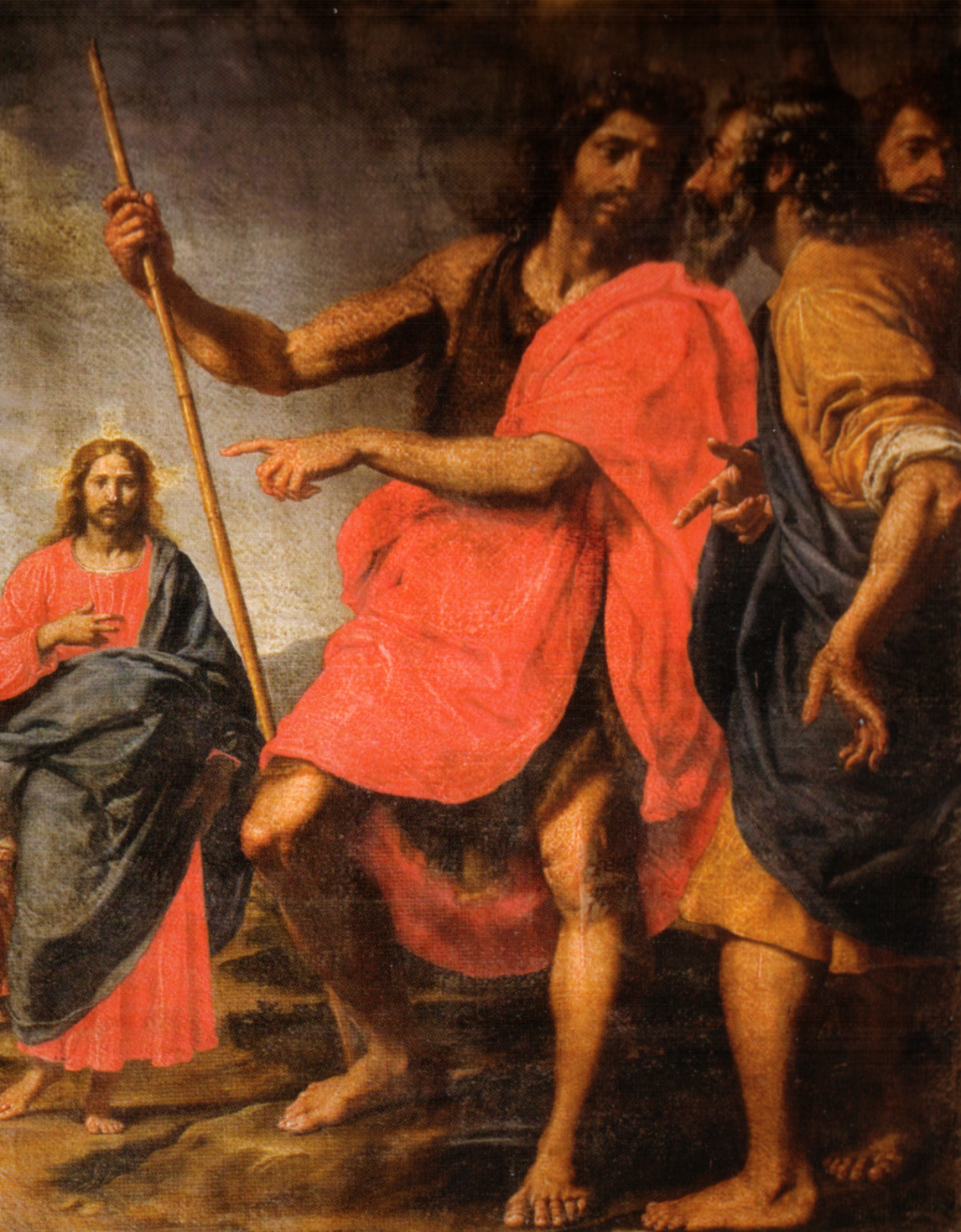
 Art: The Pointer by Ottavio Vannini
The Growing Tension
In this passage, John the Baptiser’s disciples are troubled by the fact that Jesus is gaining more followers than John:
“Rabbi, the one who was with you across the Jordan, to whom you testified, here He is baptising, and all are going to Him.” (John 3:26)
They see Jesus’ success as competition. But John’s response is remarkable:
“He must increase, but I must decrease.” (John 3:30)
John understood his purpose: to point people to Jesus, not himself. His words reflect a humility and clarity of purpose that’s hard to find in a world obsessed with self-promotion.
A Culture of Self-Elevation
We live in a world that elevates the individual. Success is measured by:
Followers, likes, and subscribers.
Personal achievements and wealth.
Even within the Church, faith is often reduced to a purely personal experience, ignoring the greater call to community, justice, and love.
But John’s words challenge this directly:
It’s not about us winning while others lose.
It’s about lifting others up, pointing them to something greater.
It’s about serving rather than being served.
The Tragic Reality — A World of Inequality
When I read John’s words, I couldn’t help but think of South Africa, my beloved home. The most unequal country in the world (according to World Bank reports). Here are some statistics that blew my mind. It wasn’t that I never knew the scale of inequality and poverty, but this humanises those numbers.
In 2015, the top 10% of South Africans controlled 70% of the nation’s wealth. The upper-bound poverty line was R993, and 55% of the population lived below this.
In 2021, the richest 10% of the population owned more than 85% of household wealth, while over half the population had more liabilities than assets, the report showed. Reports showed that 3,500 individuals controlled more resources than 32 million of the country’s poorest citizens.
In 2024, the upper-bound poverty line was R1634, and around 63% of South Africans lived below the poverty line. That means close to 40 million people live on less than what it costs to fill a Fortuner or Hilux.
Yes! 40 million South Africans are supposed to survive on less than what it costs to fill a Hilux.
These are not just numbers. They are people — neighbours, friends, and families struggling to survive in systems that continue to fail them.
Leaders or Masters?
The tragedy is made worse by the fact that many of those meant to bring justice and protection are living their best lives.
Politicians, business leaders, and even some religious leaders live in comfort and luxury, while millions struggle to survive.
The very masters of these systems benefit from injustice rather than seeking to address it.
Too often, the Church also remains silent or complicit, failing to speak out against the suffering right in front of us.
But acknowledging this problem is not enough. The question is, what do we do about it?
A Call to Decrease — A Lenten Challenge
Lent is a season of self-denial, repentance, and reflection. It’s a time to examine our own lives, confront our selfishness, and consider how we can truly live for God and others.
John the Baptiser’s words, “He must increase, but I must decrease,” offer a perfect Lenten challenge:
To decrease our obsession with ourselves and our own success.
To decrease our comfort and complacency, so that God’s justice and mercy can increase through us.
To decrease our tendency to elevate ourselves, and instead use our voice and resources to lift others up.
But what does that actually look like in practical terms?
Practical Ways to Live Out John’s Words
If we are to truly decrease so that God’s kingdom may increase, we need to live out our faith in tangible ways:
Challenge Injustice Where You See It: Whether it’s in your workplace, community, or church, speak out against systems that oppress and exploit.
Support Organisations Doing Good Work: Partner with or support organisations that are actively working to address poverty, inequality, and injustice.
Use Your Privilege to Help Others: If you have resources, influence, or connections, use them to benefit those who don’t.
Listen and Learn: Make an effort to understand the experiences of those who are suffering, rather than assuming you know what’s best.
Examine Your Own Life: Are you living in a way that benefits others, or are you focused only on your own success and comfort?
Lent is not just about giving up small pleasures. It’s about giving up our obsession with ourselves and committing to lift others up, just as Jesus did.
The call to decrease is not about making ourselves nothing for the sake of being nothing. It’s about making space for God’s justice, mercy, and love to flow through us to a world in desperate need.
Reflection Questions
How can you use your resources, privilege, and voice to fight against injustice and help those who are struggling?
What would it look like to truly decrease yourself so that God’s kingdom may increase?
Are you willing to speak up even when it’s uncomfortable?
What does true humility look like for you this Lenten season?
Closing Prayer
“God, help me to decrease so that Your kingdom may increase. Teach me to lift others up, to use my privilege and resources to serve those who are suffering. May I reflect Your love and justice in all that I do. Amen.”