
In our previous article, Why Liu Che Might Last Another Year, we assumed (or did we 👀) :
What if a future infantry commander actually benefits from Smite happening before the first active skill? A Smite before the first active could trigger an effect, apply a damage modifier, or set up a temporary bonus that carries into the active skill.
Now the new infantry commander information has dropped: Yi To, also known as Sejong the Great.
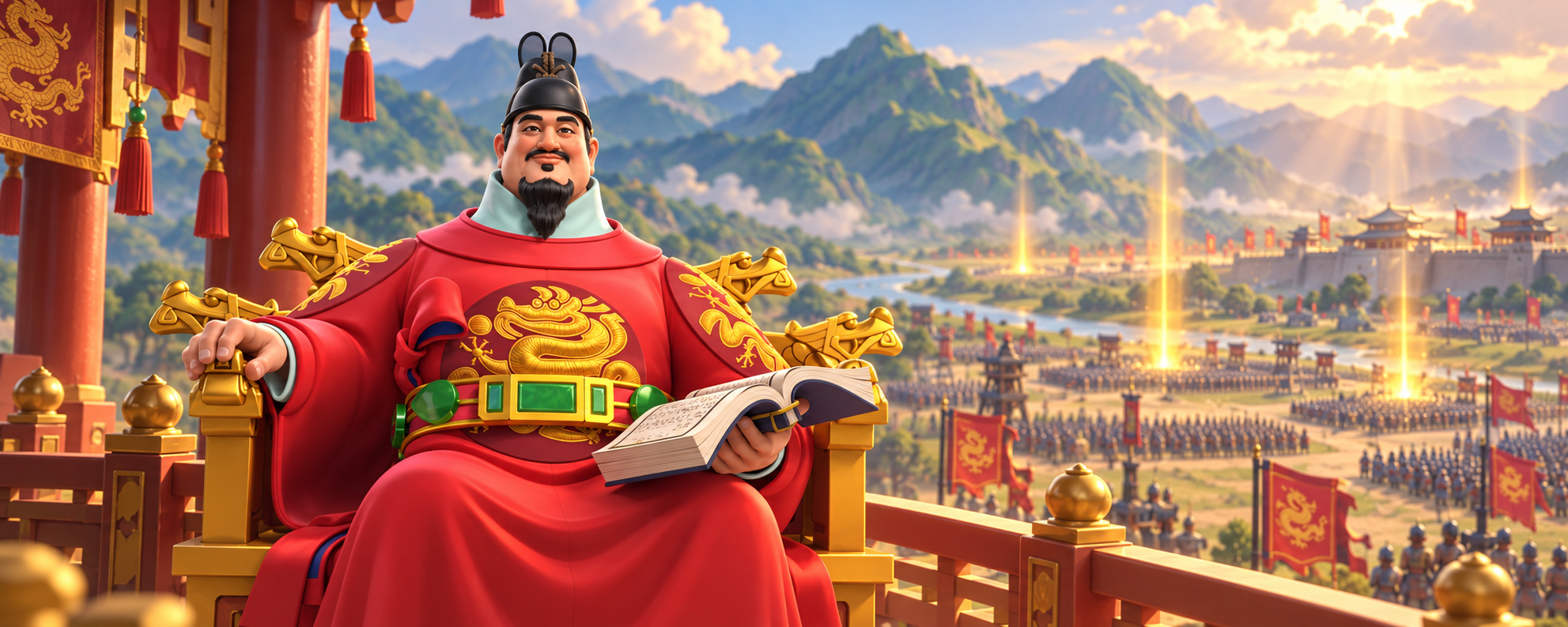 At first glance, many players will see Sun Tzu/Yi To as the obvious best pairing. But there is another question worth asking. Sun Tzu already works with a wide range of Smite commanders—even a 5511 rally commander. The bigger roster question is whether Yi To can help carry a second infantry march.
We had already wondered whether Liu Che’s early Smite could make him a natural partner for the right infantry commander.
So we put Yi To/Liu Che into the Simulation Lab.
Methodology
We simulated 5,000 open-field battles of 30 seconds, with five targets available. We evaluated average effective damage factor per second (eDF/s), average skill cycle, and whether Yi To’s Sustained Momentum normal-damage bonus was active when he cast his first active skill.
Horn was the only accessory equipped. We assumed Pincer Formation with Dominate, reflecting a common setup, and compared skill cycles with and without the rare inscription Charge.
Because target health varies during an engagement, we tested two fixed scenarios: full-HP targets and half-HP targets. These illustrate how Yi To’s active-skill bonus could affect his damage output.
Key results
Without Charge, Yi To/Liu Che produced approximately 3.7% more eDF/s than Bai Qi/Liu Che against full-HP targets. Against half-HP targets, the advantage increased to 17.3% under our assumptions.
Adding Charge shortened the average skill cycle from 7.9 to 7.4 turns, a minimum average improvement of approximately 0.5 turns.
Sustained Momentum was already active for approximately 43% of Yi To’s first active-skill casts. This directly supports the interaction we raised in our previous article: Liu Che can help activate a damage bonus before the primary commander’s first active.
Why does Yi To appear to synergize with Liu Che?
Liu Che can start contributing to Yi To’s mechanics before either commander casts an active skill. His early Smite and Combo Attack events create additional opportunities to gain Shatter stacks. Because Smite and Combo counts as normal damage, each target hit by these instances can also contribute its own stack roll.
Those stacks help Yi To generate additional Smite through Shatter, creating further opportunities to trigger Sustained Momentum and Charge when they are available.
Yi To also benefits from Liu Che’s rage generation. His own kit has no dedicated rage engine, so Liu Che helps the pair reach its active skills more frequently.
Crucially, Liu Che can make Sustained Momentum useful earlier in the engagement. In short encounters, a bonus that starts contributing before the first active skill can matter considerably.
Together, these interactions make Yi To/Liu Che a promising option for players looking to build a second infantry march.
Limitations
This is an early simulation based on newly released commander information. Several mechanics still need testing.
Additional rage from reflected counterattack damage: We did not include the possible 16 rage associated with Yi To’s reflected counterattack events. Whether these events generate that rage needs confirmation.
Incoming AoE damage: We modeled the march attacking without receiving attacks. Incoming normal-damage events, including eligible Smite and Combo Attack hits, could generate additional Shatter stacks and improve its offensive output. The size of that benefit remains untested.
Yi To’s active-skill damage increase: We treated this effect based on troop losses as an extra-multiplier applying only to Yi To’s active skill. Its actual place in the damage formula, and the scope of its application, still need confirmation.
Target health: Full and half HP were fixed scenarios. Actual target health changes throughout an engagement, so these results should not be read as a guaranteed performance range.
What eDF measures: The simulator evaluates damage output and rage cycles. It does not establish trade performance, survivability, or the effects of positioning nor the full context of a battle.
Conclusion
The early results support giving Yi To/Liu Che serious consideration as a second infantry march. It outperformed the Bai Qi/Liu Che benchmark in modeled damage output, and their kits show several complementary interactions.
Liu Che provides early Smite, additional Shatter opportunities, and rage generation. Yi To gives those events more value through his own stack and damage-buff mechanics.
Real testing will determine how well this translates into open-field performance. For now, the results support the idea behind our previous article: the right new infantry commander could give Liu Che another reason to remain relevant.
What do you think will be the strongest two-infantry lineup?