

In the smoke-hazy underground of the Prohibition era, winning at a roulette wheel was rarely a matter of luck. Modern casinos rely on laser-balanced, micro-calibrated equipment, but in 1920, the illegal gambling dens hidden behind dry cleaners and tea shops operated on hardware that was inherently flawed. Wood warped under atmospheric humidity, brass frets between numbers expanded from repeated physical impact, and the hand of a tired croupier often developed a predictable rhythm after hours of continuous spinning.
For a player who viewed the casino floor not through the lens of fortune, but as a system of physical variables, these subtle flaws transformed the house edge into a mathematical vulnerability. Detecting an advantage required patience. A sharp observer would sit silently for hours without placing a single bet, recording hundreds of outcomes to track standard deviations and spot biased pockets where the ball settled just two or three percent more often than pure randomness allowed. Just as modern strategic players seek to maximize their bankroll with initial offers from sites like https://casinosfest.com/casino-bonus/ruby-slots/ before placing a single bet, a disciplined 1920s player used precise bankroll management like the Kelly Criterion to systematically bleed a table dry while remaining entirely invisible to the house enforcers.
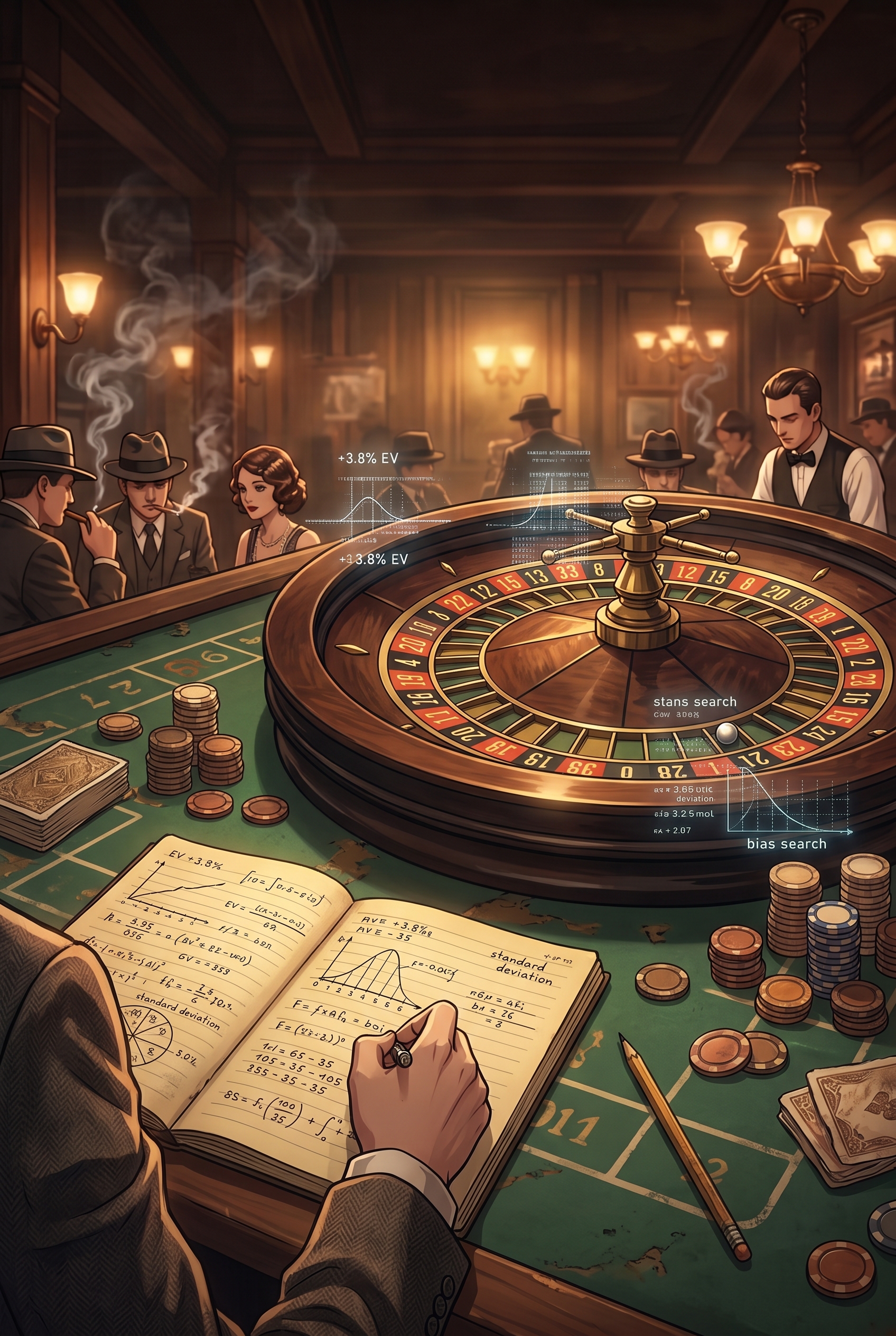
The entire mechanics of these hidden establishments — from the physical bias of hand-crafted wheels to the covert architecture of the tables — inspired the design of the 1920s casino layout that serves as the central setting for my latest writing project. Recreating the tension of a high-stakes heist requires understanding that the real danger in a speakeasy was never the cards or the wheel, but the moment the house realized you were no longer gambling.