
Investing in Times of Uncertainty
Are you feeling uneasy about the recent stock market sell-off? Wondering how to navigate your investments amid economic turbulence? You’re not alone. Many investors are grappling with these questions as the market experiences significant volatility. Let’s explore how you can stay on course and make informed decisions during these uncertain times.
It’s easy to stick to your long-term investing plan when times are good. If your investment portfolio had any U.S. market exposure over the past decade, you’ve likely enjoyed nearly uninterrupted growth. But there are always bumps in the road. What happens when those bumps turn into significant obstacles?
Fast forward to August 2024, and the stock market is experiencing significant turbulence. The S&P 500 sank 1.8% for its first back-to-back losses of at least 1% since April. The Dow Jones Industrial Average dropped 610 points, or 1.5%, and the Nasdaq composite fell 2.4% as a sell-off for stocks whipped all the way around the world back to Wall Street. A report showing hiring by U.S. employers slowed last month by much more than economists expected sent fear through markets. Both stocks and bond yields dropped sharply. What does this mean for your investments?
Investors have been worried about a prolonged stock market crash for years. Those fears heighten each year that stocks continue to rise. Surely this can’t last forever. Now, there’s anxiety over inflation and rising interest rates. This has put downward pressure on stock prices. Worries are rising that the Federal Reserve may have kept its main interest rate at a two-decade high for too long. This could choke the economy. How should you respond to these concerns?
In uncertain times, we look to economic forecasts and predictions of what’s to come. There’s no shortage of opinions, so it’s easy to find one that fits your narrative. It’s hard not to listen when legendary investors like Jeremy Grantham call this the greatest bubble since 1929. But what should you really be focusing on?
What Should Investors Do?
So, what’s an investor to do when the stock market is experiencing significant sell-offs and economic indicators are causing concern? U.S. stocks had already appeared to be headed for losses before the disappointing jobs report thudded onto Wall Street. Several big technology companies turned in underwhelming profit reports. This continued a mostly dispiriting run that began last week with results from Tesla and Alphabet. What impact will this have on your portfolio?
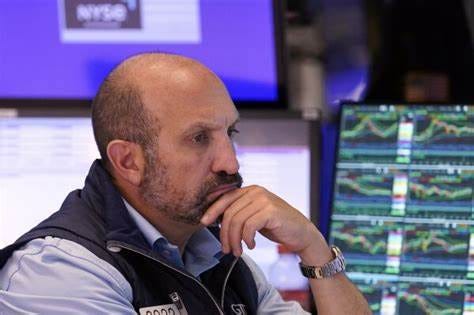
Amazon fell 8.8% after reporting weaker revenue for the latest quarter than expected. The retail and tech giant also gave a forecast for operating profit for the summer that fell short of analysts’ expectations. Intel dropped even more, 26.1%, for its worst day in 50 years. The chip company’s profit for the latest quarter fell well short of forecasts. It also suspended its dividend payment and forecast a loss for the third quarter, when analysts were expecting a profit.
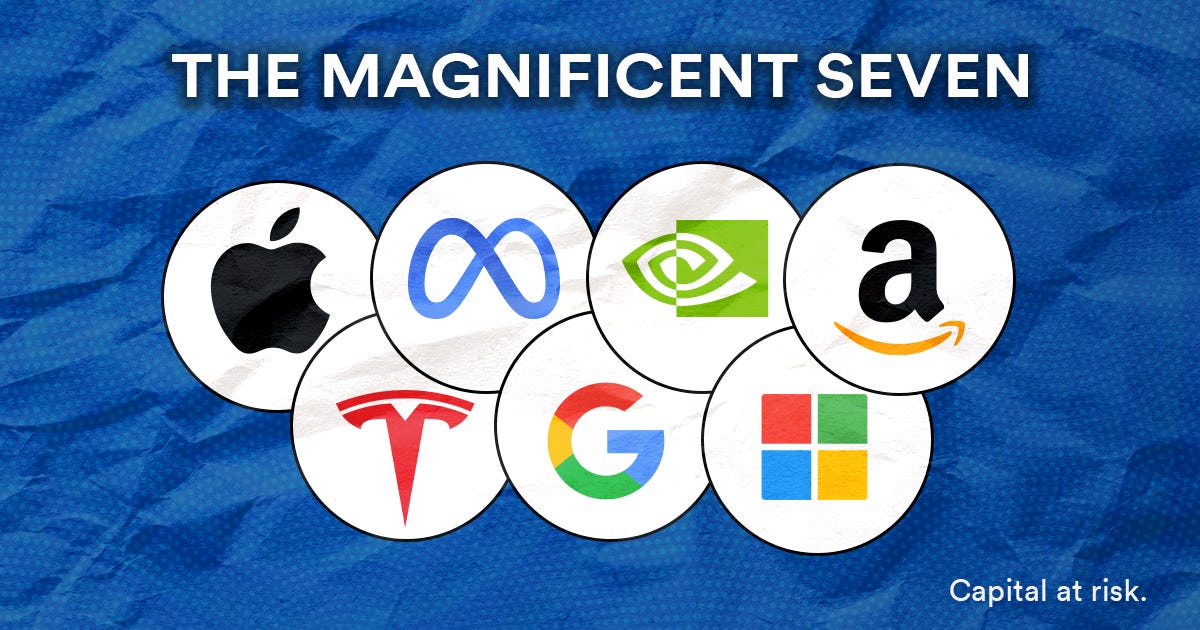
Apple held steadier, up 0.7%, after reporting better profit and revenue than expected. Apple and a handful of other Big Tech stocks known as the “Magnificent Seven” were the main reasons the S&P 500 set dozens of records this year. This was in part due to a frenzy around artificial-intelligence technology. But their momentum turned last month on worries investors had taken their prices too high. What does this shift mean for your investment strategy?
With these developments, it’s crucial to reassess your investment strategy. Are you properly diversified? Is your portfolio as diversified as it should be? Does it have a mix of Canadian, U.S., International, and Emerging Market stocks? A mix of short-term and long-term corporate and government bonds? Are you judging your portfolio as a whole or by its individual parts? It’s never easy to see a specific holding fall in value. It makes you wonder why you hold it at all. Investors must be feeling that way right now. But is there a better approach?
Do you think you can predict which assets will lead the way in the coming years? Unlikely. That’s why it’s best to diversify broadly so you can capture market returns without trying to guess where to park your money. What about pulling out all of your investments and moving to cash? Well, cash was the worst-performing asset class in eight of the past 20 years. Even in 2008-09, bonds were the better bet. So, what’s the best course of action?
Have You Rebalanced?
Investors often get distracted by shiny objects like cryptocurrency, technology stocks, and high-flying fund managers. Even seasoned investors were moving more of their money into U.S. stocks, technology stocks, and Bitcoin to capitalize on rising markets. Why hold bonds at all when every other asset class has been soaring? But is this the right move?
The result is a portfolio and asset mix that is likely out of step with your original goals. Rebalancing is counterintuitive because it forces you to sell what’s going up in value and buy more of what’s going down. It’s tough to wrap your head around selling U.S. stocks to buy more Canadian stocks or, worse, to buy more bonds. But could this strategy actually benefit you in the long run?
It’s even more difficult in uncertain times. It’s easy to look back at March 2020 or March 2009 as buying opportunities of a lifetime for stocks. But in the moment, it probably felt terrifying to even be holding stocks at all. So, how do you manage these emotions?
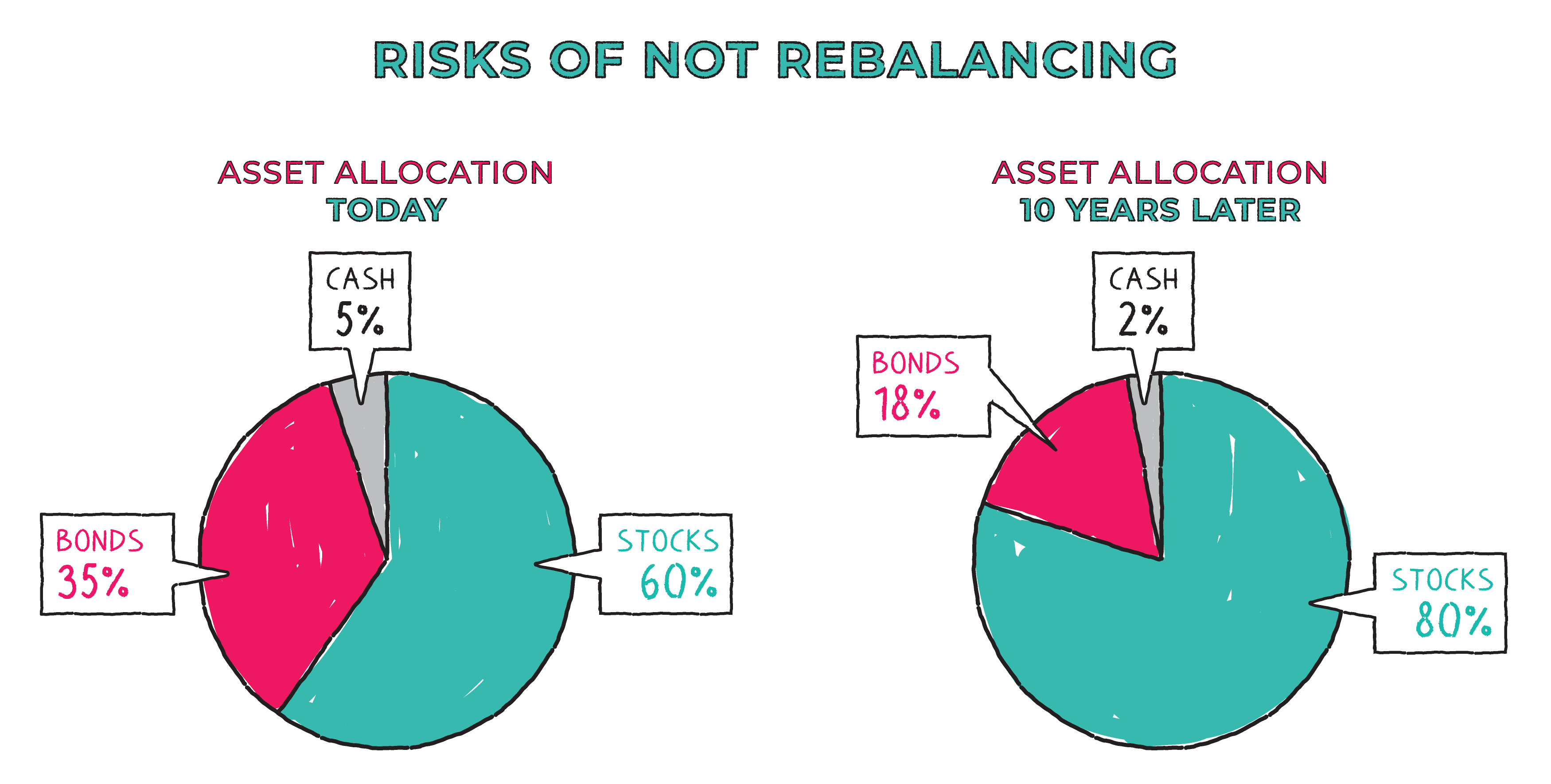
Today, nervous investors are worried about holding stocks. What should be the stable portion of their portfolio is suddenly underwater, and signs of future upside are nowhere to be found. No one really knows if the stock market will continue to decline, but it’s important to look at portfolios with a long-term lens. Investments shouldn’t be allocated based on short-term market performance. In the future, there will be times when stocks are doing well and bonds are underperforming, and vice versa. These times can’t be predicted, and it’s unlikely anyone else can either. So, what’s the key takeaway?
It’s crucial to take a 30,000-foot view and remember the reason your portfolio includes a mix of assets. Diversification is a long-term strategy that improves the stability of your portfolio because different assets often react to changes in the economic environment differently. During most major stock market downturns historically, diversified portfolios have helped cushion losses. But how do you ensure your portfolio is well-balanced?
A well-balanced and diversified portfolio is expected to rise over time—after all, that’s why we invest in the first place. But it’s normal for the same portfolio to suffer minor short-term losses along the way that can sometimes take weeks or months to recover. Also, keep in mind, portfolios would be rebalanced if certain asset classes were to continue to sell-off. This means that should the allocation drop below the rebalancing threshold, some equities would be sold to add to other asset classes. This way, you pick up more of those assets at a cheaper price and better yields. So, what’s the best way to handle this?
Don’t Just Do Something, Stand There!
Your portfolio is like a bar of soap. The more you touch it, the smaller it gets. Yet in times of uncertainty, we can’t help but feel like we need to do something to curb losses or increase gains. But is this really necessary?
The better choice, assuming you have a well-diversified and automatically rebalancing portfolio, is to log out of your investing platform, close your internet browser, and do nothing. Focus on your family, friends, hobbies—anything that will prevent you from logging back on and seeing your investments in the red. Why is this approach effective?
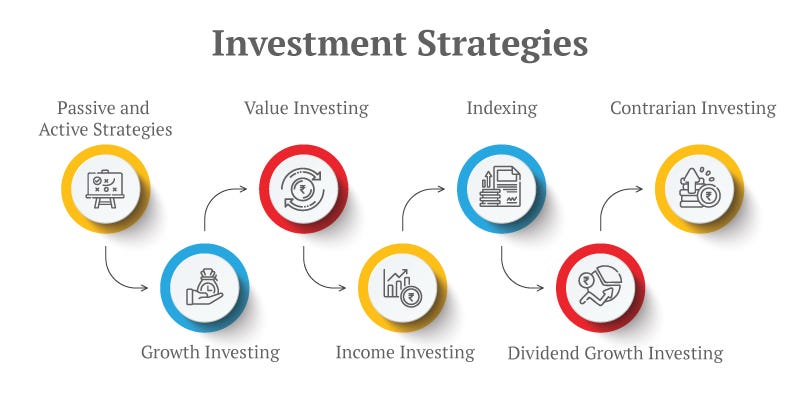
As the saying goes, “your investment strategy shouldn’t change based on market conditions.” That’s right. You identified your risk tolerance and time horizon and chose your original asset mix for a reason. You understand that markets fluctuate, often negatively, for periods of time and that is out of your control. Yet when markets are going through their downswing, you feel compelled to change your approach. But should you?
Let’s go back to the term “uncertainty.” Isn’t the future always uncertain? When are we investing in certain times? Pundits and market forecasters often paint a bleak future, like Grantham’s 1929-style crash or Dr. Doom Nouriel Roubini calling for hyperinflation. The truth is nobody knows how this will play out. So, what should you do?
What if you make a tactical shift to your investment strategy and you’re wrong? There are plenty of investors who moved to cash after the global financial crisis and never found their way back into the stock market. Once you convince yourself of a particular narrative, it’s nearly impossible to admit that you were wrong and change course. So, how can you avoid this trap?
Final Thoughts
It’s reality check time for investors. We’ve been in a bull market for 12 years (minus a few blips). Almost everything has worked, which can lead to overconfidence in your investing skills. Meanwhile, many investors have strayed away from their original goals to chase even higher returns from U.S. stocks, technology stocks, and the like. But is it time to reassess?
It’s time to check in on your portfolio and make sure it’s broadly diversified and risk-appropriate for your age and stage of life. It’s time to rebalance if you hold multiple funds and get back to your original target asset mix. Finally, if you’re already invested in an appropriate asset allocation ETF or robo-advised portfolio, it’s time to do nothing. Don’t change your investing strategy based on market conditions. So, are you ready to take control of your investments?
Key Insights
Diversification is Crucial: The post emphasizes the importance of having a well-diversified portfolio. This means including a mix of Canadian, U.S., International, and Emerging Market stocks, as well as short-term and long-term corporate and government bonds. Diversification helps cushion losses during market downturns and ensures stability over time.
Rebalancing is Essential: Regularly rebalancing your portfolio is key to maintaining your original investment goals. This involves selling assets that have increased in value and buying those that have decreased. Although counterintuitive, this strategy helps keep your portfolio aligned with your risk tolerance and long-term objectives.
Stay the Course: In times of market volatility, it’s tempting to make drastic changes to your investment strategy. However, the post advises against this. Instead, focus on your long-term plan, avoid frequent adjustments, and remember that market fluctuations are normal. Your investment strategy shouldn’t change based on short-term market conditions.
If you find these insights helpful, consider subscribing to the newsletter for more tips and strategies on navigating the financial markets. Stay informed and make confident investment decisions!
The Everyday Investor is a reader-supported publication. To receive new posts and support my work, consider becoming a free or paid subscriber.
😎 SUPPORT THE CONTENT:
► My Real Time Portfolio: https://bit.ly/3otgiDY
► Side Hustle Income / Expense Tracking: https://bit.ly/3KLTjge
► Best Canadian Banks ETF Analyzer: https://t.ly/6O0XQ
► Basic Portfolio & Dividend Tracker Spreadsheet: https://bit.ly/3pqImqz
✅ SPECIAL OFFERS:
► Free 1st Month High Speed Internet by Oxio: https://bit.ly/42piQUJ
► Free Credit Score in under 3 minutes: https://imp.i203032.net/Ry32Kv
► Switch to Freedom Mobile and get $25 Service Credit: https://referme.to/danishg-20
► PolicyMe Free Insurance Quote (No Obligation): https://policyme.pxf.io/P0GMrq
► $20 to try KOHO – a new way to Save and Spend without fees: https://kohofinancial.pxf.io/x96zRk
► Zero Fees on International Money Transfer (Up to $800): https://wise.com/invite/u/danishg13
► $30 Credit from DoorDash: https://drd.sh/xmSwdKmqIflfzCwc
► Earn Cash Back on Online Shopping: https://bit.ly/3aLmGQy
► Earn Money by Completing Short Surveys on your phone: https://bit.ly/3zPimwm