

In the evolving landscape of cybersecurity, attackers are constantly searching for new methods to exploit vulnerabilities. One lesser-known but potent threat is the side-channel attack. These attacks don’t directly target the vulnerabilities in the software or hardware itself; instead, they leverage information leaked during normal operations to gain unauthorized access or compromise security.
So, what exactly is a side-channel attack, and why should we care about it?
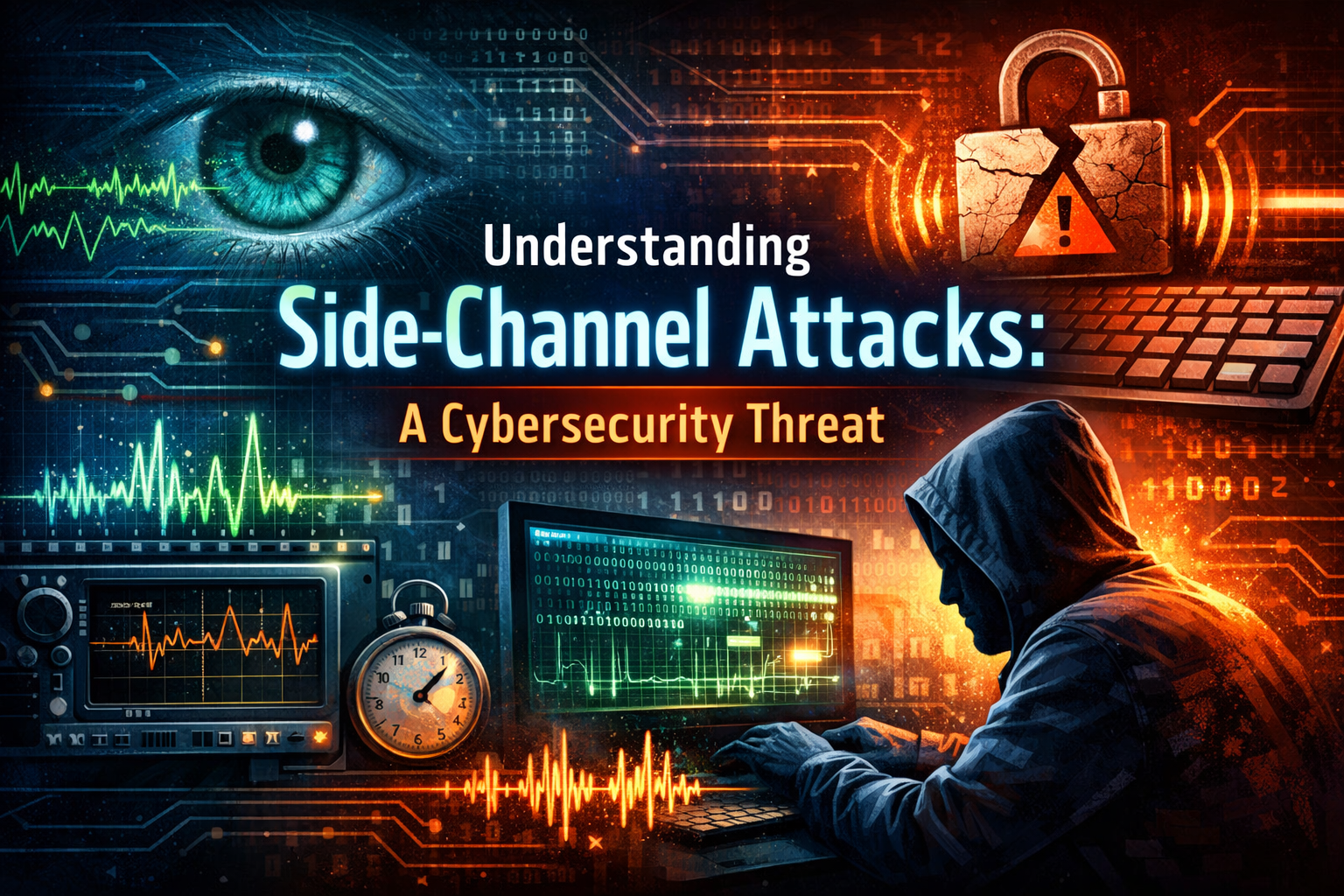
What Are Side-Channel Attacks?
At its core, a side-channel attack focuses on physical data leakage—the unintentional emission of information from a system while it processes data. These emissions, which can be things like electromagnetic radiation, power consumption, timing information, or even acoustic noise, are often rich with clues that hackers can use to deduce sensitive information such as cryptographic keys, passwords, or other confidential data.
Imagine watching someone input their password into a machine. Without directly seeing the screen, you might still infer the password from how long they take between keystrokes or the specific sounds each key press makes. This analogy gives a sense of how side-channel attacks work in a technical context, though at a far more sophisticated level.
Types of Side-Channel Attacks
There are various forms of side-channel attacks, each exploiting different physical characteristics of a system. Some of the most notable include:
1. Timing Attacks:
These focus on the time taken to execute cryptographic algorithms or operations. By measuring execution time differences during encryption or decryption processes, an attacker can potentially deduce sensitive data like cryptographic keys.
2. Power Analysis Attacks:
These rely on analyzing the power consumption of a device during data processing. Techniques like Simple Power Analysis (SPA) and Differential Power Analysis (DPA) are used to observe the power usage patterns, which can expose secrets processed by the system.
3. Electromagnetic (EM) Attacks:
Every electronic device emits electromagnetic waves during operation. By capturing and analyzing these emissions, attackers can glean insights into the operations being carried out on the device, potentially recovering sensitive information.
4. Acoustic Cryptanalysis:
Surprisingly, even the sound generated by devices, such as the noise made by keyboard keys or high-frequency signals emitted by processors, can be exploited. Researchers have demonstrated that specific cryptographic keys can be recovered through careful analysis of these sound emissions.
Why Are Side-Channel Attacks Dangerous?
Side-channel attacks pose a unique threat because they can bypass traditional security defenses like firewalls, antivirus software, and encryption protocols. These attacks exploit the physical implementation of systems rather than the software logic itself, making them harder to detect and prevent using conventional cybersecurity measures.
Additionally, with the proliferation of Internet of Things (IoT) devices and mobile computing, many systems are now smaller, more energy-efficient, and less secure, making them more vulnerable to side-channel attacks. These systems are often in environments where physical access is easier, making the data leakage from side channels more exploitable.
Mitigating Side-Channel Attacks
Protecting systems from side-channel attacks requires a multifaceted approach. Some strategies include:
Randomization: By introducing randomness into operations, such as varying execution times or power consumption, attackers are less likely to detect patterns that could reveal sensitive data.Noise
Injection: Adding noise to physical emissions, whether it be in power signals, electromagnetic waves, or timing, can obscure the leakage of useful information.
Shielding: For hardware-based systems, physical shielding (especially against electromagnetic emissions) can limit the exposure of side-channel signals.
Software Optimizations: Certain cryptographic algorithms and software implementations are more resistant to side-channel attacks. Secure coding practices and constant-time algorithms can mitigate the effectiveness of timing attacks.
Hardware Countermeasures: Some hardware manufacturers incorporate protections directly into their chips, such as tamper resistance, power balancing, or electromagnetic shielding.
Final Thoughts
Side-channel attacks remind us that cybersecurity is not just a software problem. As technology advances and devices become smaller and more interconnected, the risks of side-channel attacks will only increase. Whether it's power consumption, timing, or even acoustic signals, attackers are finding clever ways to exploit the physical world to compromise digital systems.
For cybersecurity professionals, understanding and mitigating these risks is crucial to maintaining robust security in today’s rapidly evolving technological landscape.