

When the UGC notified its regulations on Caste-Based Discrimination, something snapped.
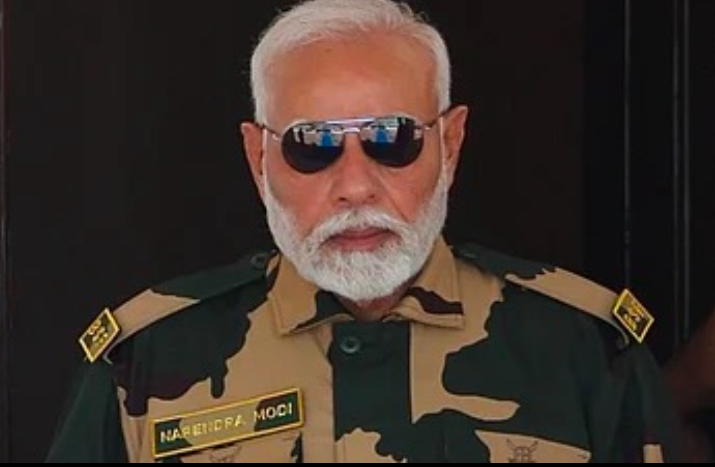
For the first time in years, the so-called General Category did not merely grumble in private or complain on social media. It came out in the open—angry, organised, and defiant. The regulations, by clubbing SCs, STs, and OBCs together as the “oppressed” and implicitly casting the General Category as the historical oppressor, were seen as the final insult. What followed was not just dissent, but revolt. For a brief moment, Indian politics appeared to witness something rare: a Waterloo-like crisis for Narendra “Napoleon” Modi. To understand why, one must go back to 2014.
Napoleon Bonaparte once said, “I found the crown of France lying on the ground, and I picked it up with my sword.” In 2014, Narendra Damodar Modi too saw a crown lying abandoned. The Republic was fatigued—leadership paralysed, institutions adrift, coalitions fracturing the polity, governance reduced to survival politics. Modi did not merely contest an election; he marched into history carrying a shield called development and wielding a sword called Hindutva.
He won. Decisively.
But those who rallied behind him were not a single army. They were legions drawn from different social terrains, bound together more by exhaustion with the past than consensus about the future. By 2017, this vast and uneasy coalition—General, OBC, SC, and ST—was formally stitched together under the BJP–RSS umbrella. It was a political miracle, but also a delicate one.
The General Category saw Modi’s rise as redemption. For decades, they believed Indian politics had been hijacked by Mandal arithmetic and Muslim appeasement. Modi felt like ghar wapsi. The aspirational middle class among them expected a strong, centralised state, ruthless efficiency, and reforms that would propel India into the first world. But another strand within this group dreamt of something else entirely—the restoration of lost social authority, the revival of temple-centric politics, a return of Shankaracharyas to public primacy, and a subtle resurrection of a mythic past. They imagined a modern Purana Yuga. That illusion would not survive contact with reality.
OBCs entered Modi’s camp cautiously. Not all, and certainly not enthusiastically. It was the non-dominant OBCs—those long marginalised by Mandal politics monopolised by Yadavs, Kurmis, and Kushwahas—who saw in Modi a ladder they had never been allowed to climb. For them, BJP was not ideology; it was opportunity.
Scheduled Castes were the most uncertain of all. The collapse of BSP had left them politically orphaned. Independent Dalit politics was losing relevance, and there was no natural home left. In this vacuum, sections of non-dominant SCs drifted towards the BJP—not out of conviction, but out of compulsion.
The BJP leadership read the moment correctly. By 2017, the social composition of the 2014 victory was consciously institutionalised. From booth committees to chief ministers, representation was recalibrated. It was an intricate political architecture, balanced precariously on one pillar: aggressive Hindutva rhetoric on Muslim questions. That rhetoric acted as the adhesive holding together mutually suspicious caste identities.
Then came 2018.
It is a year rarely spoken of, but it is the year that cracked the mirror.
Politics, after all, is driven less by reality than by perception. BJP’s capture of Delhi, Devendra Fadnavis— a Brahmin—becoming CM of Maharashtra, and Yogi Adityanath—a Thakur—taking charge of Uttar Pradesh created a powerful narrative: that Hindutva had become a vehicle for upper-caste restoration.
At the same time, the Left ecosystem was busy constructing another story—of Dalit persecution under Modi-Raj. Articles multiplied, narratives hardened, and incidents like the 2016 Una flogging became symbols of a regime allegedly hostile to Dalits.
Parallelly, the BJP was quietly planning its most ambitious social engineering project yet—fragmenting the OBC bloc. The Rohini Commission of 2017 was meant to sub-classify OBCs, isolating EBCs and MBCs from dominant castes still loyal to SP and RJD.
Then, fate intervened.
On 1 January 2018, history returned with a vengeance. The bicentenary of the Battle of Bhima Koregaon became a theatre where past and present collided. Though it was a British victory over the Peshwas, Dalits had long reinterpreted it as a symbolic triumph over Brahminical oppression. On 31 December 2017, the Elgar Parishad at Pune’s Shaniwar Wada—once the seat of Peshwa power—set the stage. Speeches were delivered, passions inflamed. The next day, Maharashtra burned.
The state responded with force. Arrests followed—Rona Wilson, Shoma Sen, Surendra Gadling, Varavara Rao, Stan Swamy, Vernon Gonsalves, Arun Ferreira. UAPA was invoked. Some would die in custody, many would remain incarcerated. The government did not blink.
Barely months later, the Supreme Court diluted provisions of the SC-ST Atrocities Act. Dalit anger spilled onto the streets. Chandrashekhar Azad “Ravan” mobilised the Bhim Army in Uttar Pradesh. Protests were crushed. Lives were lost. Though Parliament later strengthened the Act, the damage was done. The perception stuck: Modi is anti-Dalit.
Then came another quiet bomb—the 102nd Constitutional Amendment. By transferring OBC identification powers from states to the Centre, the BJP signalled its intent to redraw caste politics altogether. Dominant OBC leaders panicked. Their counter-weapon was the caste census—a demand that threatened the 50% ceiling and alarmed the General Category.
The Supreme Court’s reaffirmation of the Nagaraj verdict further alienated Dalits. The coalition was now visibly cracking.
Cornered, the BJP tried to placate the General Category through the EWS quota—a historic breach of the 50% cap and the introduction of economic criteria into reservations. It appeased one group and unsettled all others.
By 2022, another rupture arrived. The Nupur Sharma episode forced a recalibration of BJP’s Muslim discourse. Hindutva rhetoric softened. Pasmanda politics entered the frame. For the core base, this felt like betrayal. Religion ceased to be the glue; caste impulses surged back.
The Opposition sensed blood. Caste census, constitutional fear-mongering, Ambedkar as shield and sword—everything converged in 2024, when BJP lost its solo majority.
What followed was damage control: relentless invocation of Ambedkar, restoration of state powers via the 105th Amendment, and finally acceptance of caste census in 2025. The core base seethed but held back.
Until 13 January 2026.
The UGC regulation arrived like a matchstick in a room filled with gas. The revolt erupted. Warnings were ignored. Gatekeepers dismissed the storm. But something irreversible had happened.
This may look like Modi’s Waterloo. But history rarely repeats itself so neatly.
Napoleon fell because all of Europe united against him. Modi faces no such alliance. He has survived worse. Like Lincoln, he thrives amid fractures. Whether he can reassemble this shattered coalition—or whether it collapses under its own contradictions—will define the next decade of Indian politics.
One thing is certain: nothing remains the same anymore.