
"The only thing wrong with trying to please everyone is that there's always at least one person who will remain unhappy: You." - Elizabeth Parker, British composer
The Origin
If you’ve followed me long enough, you know I’m learning not to be afraid to speak from my heart. So today, I’m sharing something that has quietly shaped most of my life: The pattern of people-pleasing. I used to believe that the quickest way to feel safe was to stay liked. It took me years to realize how quietly that belief rearranged my life.
This didn’t start in adulthood. It didn’t even start in high school. My earliest memories trace back to grade school, which was the first time I realized that who I naturally was didn’t always match the room. I was expressive, loud, emotional, imaginative, goofy, and full of life… but that didn’t always make me liked, or even understood for that matter. A group of girls in my class told me that if I wanted to stay in their circle, I needed to tone it down. At eight years old, belonging shouldn't have to feel like survival. When it did, I shifted.
And with that, I absorbed the following belief: “You must adjust who you are to be accepted.”
Once that belief settles in your identity, it grows with you, unless you recognize it and intentionally uproot it. At eight years old, I was unaware of how to recognize it. I unknowingly gravitated towards perfectionism and the fear that if I wasn’t the version people wanted, I wouldn’t be invited back. Eventually, the message evolved from “Tone it down” to “Be everything, for everyone, all the time.”
By adulthood, I mastered the ability to excel publicly while struggling privately. At one job, I once worked 90 hours in a week simply because someone else was praised for working overtime. I interpreted that as:
Do more. Prove harder. Outperform everyone. Earn your worth.
No one teaches you how to unlearn that. But you know what? Taking the steps to unlearn it and begin recognizing the steps to heal is a power move.
The Many Sides of People-Pleasing
For years, it didn’t matter where I was; the script and holding pattern of people pleasing and questioning my own self-worth followed me.
In my personal life, I often abandoned my needs if someone else might need something first. I said yes to plans I didn’t have energy for. I gave emotional support when my own brain battery was flashing red.
In my professional life, I became the yes person. I was the reliable one, the eager one, the one who would step up even if no one asked. I wore initiative like armor and productivity like oxygen.
In social media, the hardest and most personal of all, the pressure shifted from performance to identity. Suddenly, it wasn’t just my output on display; moreover, it my presence, tone, energy, consistency, humor, emotional regulation, and resilience. My passion slowly became my paycheck, and when income is tied to identity, slowing down doesn’t just feel scary; it feels unfavorable. At my peak burnout in my social media career, my heart whispered, “Something feels off.” At the same time, my fear screamed, “If you stop, you’ll lose everything.”
People-pleasing, for me, was a lot like ordering an iced coffee, knowing exactly what I wanted, only to hear, “Our ice machine is broken… but we can still make it.” Technically, yes. I could still get the drink. Technically, yes. It would still count as what I asked for. But without the ice, it wouldn’t taste the same, feel the same, or fill me the same. It wouldn’t be whole, even if no one was to blame. That’s how so many of my commitments felt: Well-intentioned, close enough, but missing the very thing that made them feel complete.
And instead of saying, “You know what, I’ll wait,” or “Never mind, that’s okay, I’ll get something else,”
I drank whatever version was handed to me, because I didn’t want to seem difficult, ungrateful, or “too much.” I kept doing it again and again, as if accepting less than what I truly wanted made me easier to love.
But a cup doesn’t magically become full just because you pretend you’re satisfied. You’re allowed to walk away if it won’t fill you, even if no one did anything wrong. Settling is still settling, and half a cup cannot sustain a whole person.
That’s when it clicked: If I kept pouring into what drained me, I would remain misaligned. That’s where the shift started.
The Shift: From Approval to Alignment
Alignment is the place where your values, actions, and identity match, even when it requires tough decisions. In order to take the steps I needed to begin healing, I had to have a difficult conversation with myself. I realized that I had convinced myself of three lies:
(1) If people were disappointed, I failed.
(2) Everything must be perfect to be respected.
(3) If I slowed down even a little, I’d lose everything.
When I was in community college, I took a principles of microeconomics class my freshman year and learned the concept of opportunity cost. Opportunity cost is a concept that emphasizes how every time you choose one option, you’re also choosing to give up something else, even if you don’t realize it. It’s the cost of the next best thing you could have had or experienced if you chose differently. I realized that opportunity cost is also the truth that every choice has a trade-off, even when you don’t notice it.
Identifying opportunity costs finally allowed me to ask myself, "What does it cost me every time I abandon myself to please others?" That realization rerouted my life into a new mantra that I am incorporating into everyday life: Embrace the discomfort.
One of the biggest lessons I’ve learned is that comfort doesn’t create growth. Comfort feels safe, familiar, predictable, and controlled. Embracing the discomfort did not come from a moment of confidence, but instead, self-awareness. Discomfort doesn’t mean you’re failing; it means you’re outgrowing something. It means you’re stepping into territory that you haven’t learned how to celebrate yet. And like anything new, it can be awkward.
There’s a quote from RuPaul’s Drag Race, usually found towards the end of the seasons, that hits me harder every time: “I have consulted with the judges, but the decision is ultimately my own.” Translation: You can ask, listen, reflect, consider, and collect feedback, but your life is not a group decision.
That quote taught me something I desperately needed: Advice is valuable, but alignment is essential. You can always gather opinions, weigh perspectives, and respect guidance; however, you are the one who has to live with the choices you make. Sometimes, the most uncomfortable decision is also the most aligned one. Discomfort doesn’t mean you’re on the wrong path; sometimes, it’s confirmation that you finally stepped off autopilot.
Growth rarely feels graceful. Healing rarely feels polished. Authenticity rarely feels convenient. But damn, it’s worth it. It’s worth it because growth doesn’t give you instant perfection. Instead, it gives you evidence of who you’re becoming.
And sometimes, the path to blooming requires brushing up against a few thorns.
Wabi-Sabi
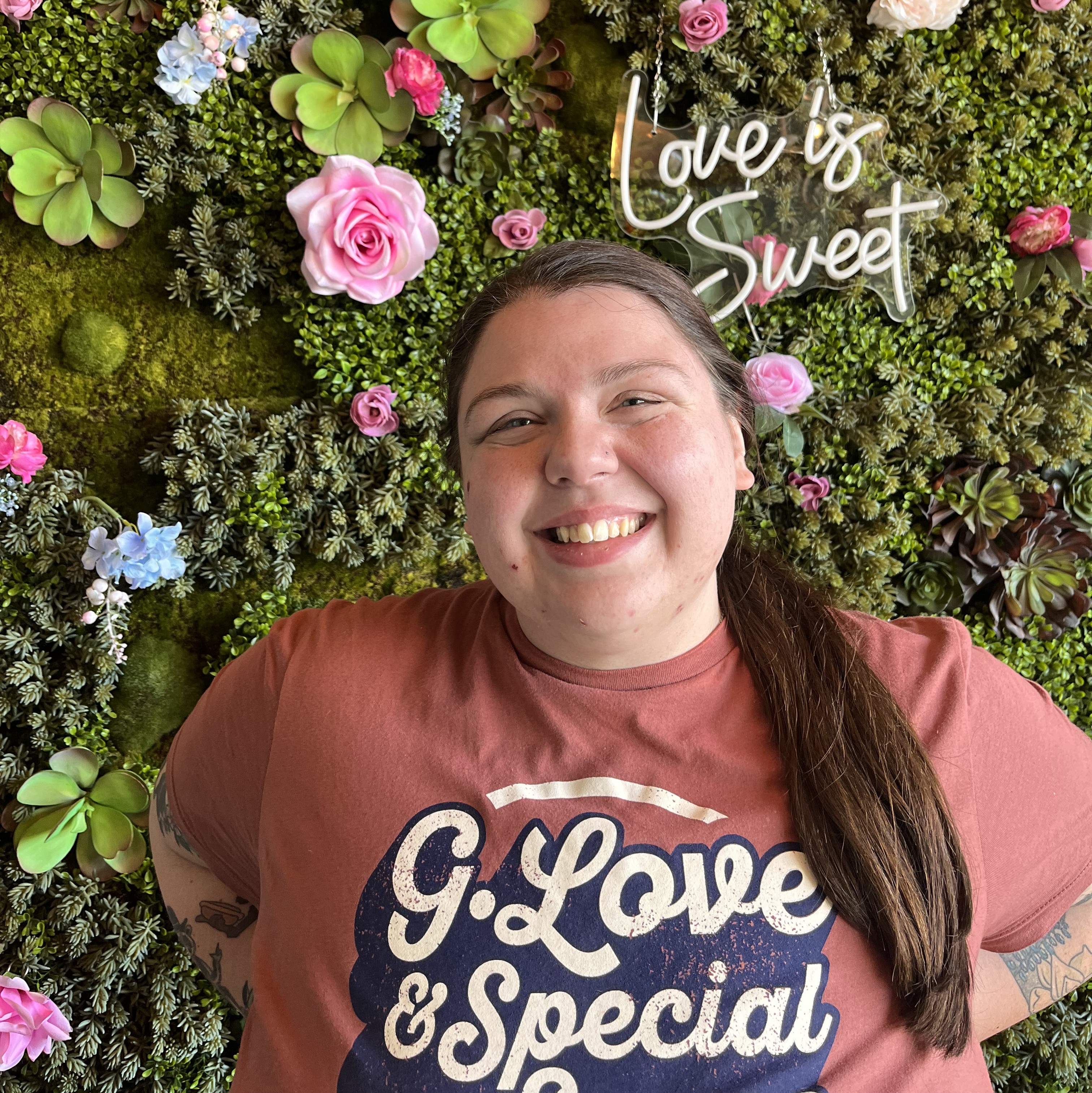
Chasing external approval feels beautiful at first, like reaching for a rose in a garden full of other beautiful flowers. Validation is intoxicating, and recognition is addictive. But the truth is chasing validation can feel like falling into a rose bush. From afar, it looks worth every risk; up close, you realize you’re tangled in thorns. And when you finally pull yourself out, it hurts, and it can leave scars. Luckily, scars are a story of what we've overcome, and the learning experiences that made us stronger.
This reminds me of the concept of wabi-sabi, and funny enough, I didn’t learn it from a self-help book or a TED Talk. I learned it from an episode of King of the Hill. In a particular episode, Hank and Bobby are tending roses. Hank obsesses over creating the perfect bloom, and Bobby gently reminds him of wabi-sabi, described as the Japanese concept of finding beauty in imperfection, incompleteness, and the natural state of things simply as they are.
Roses don’t apologize for uneven petals, crooked stems, or blooms that arrive late. They don’t panic when they grow sideways instead of up. They don’t ask the garden for permission to exist. So why was I demanding perfection from myself at every stage of my own growth? Why was I treating perceived flaws as disqualifiers instead of proof that I was living?
Wabi-sabi taught me that beauty doesn’t disappear when perfection does. Sometimes, that’s the first time we actually notice it. Growth isn’t always pristine, and healing isn’t always graceful. Roses have thorns, and hearts do too, but both still deserve to bloom anyway.
What Purpose Means to Me Now
The best part about purpose, for me, is feeling fully myself while doing something that genuinely lights me up.
Purpose is anything that brings joy in real time, not only in hindsight. Purpose gives you a pat on the back when you choose alignment instead of applause. Passion fuels the flame, but purpose chooses what to burn for. Purpose and passion are partners; if one suffers, both do.
There was a season where I was going live three times a day, because I convinced myself that if I slowed down, even a little, everything I built would collapse. My identity and value felt tied to how consistent and available I could be.
To be honest, there were several days that I I was showing up solely because I was terrified to lose momentum. What I didn’t realize then was that consistency without joy is not fueled by purpose. The shift didn’t happen in a glamorous epiphany; instead, it happened in burnout, silence, and a very real fear that I was losing myself to something I once loved.
That was the moment purpose re-entered my life, not as a motivational phrase, but as a guiding principle. If I don’t protect the reason I started, I would risk losing the passion that built this in the first place. For years, my tank ran on anxiety, urgency, overthinking, and fear of disappointing others. Today, I’m learning to run on healing, mutual respect, authenticity, grace, curiosity, and a little wabi-sabi.
It is empowering to remind myself that I’m here to grow, not to submit a 10/10 perfect performance scorecard. Giving myself permission to be unfinished has been the most healing part of this journey so far.
If You Feel The Same Way, Read This Twice
You do not need permission to evolve. You do not need perfection to be worthy. You do not need to abandon yourself just to remain included. There are people who will love the true version of you, and that kind of love is the kind that lasts.
Feedback can be a gift, but it never gets to own your identity. So give yourself grace. Take what aligns, release what doesn’t, and grow where it matters. And if you get scratched by thorns on the way out, scars make damn good storytellers.
It feels good to finally understand that becoming myself was never the risk, yet abandoning myself was. I’m no longer chasing perfection. I won’t always get it right, but I am finally okay with growing where it feels real.
With Ketchup and Mustard,
Cool Cat Chayse ✨