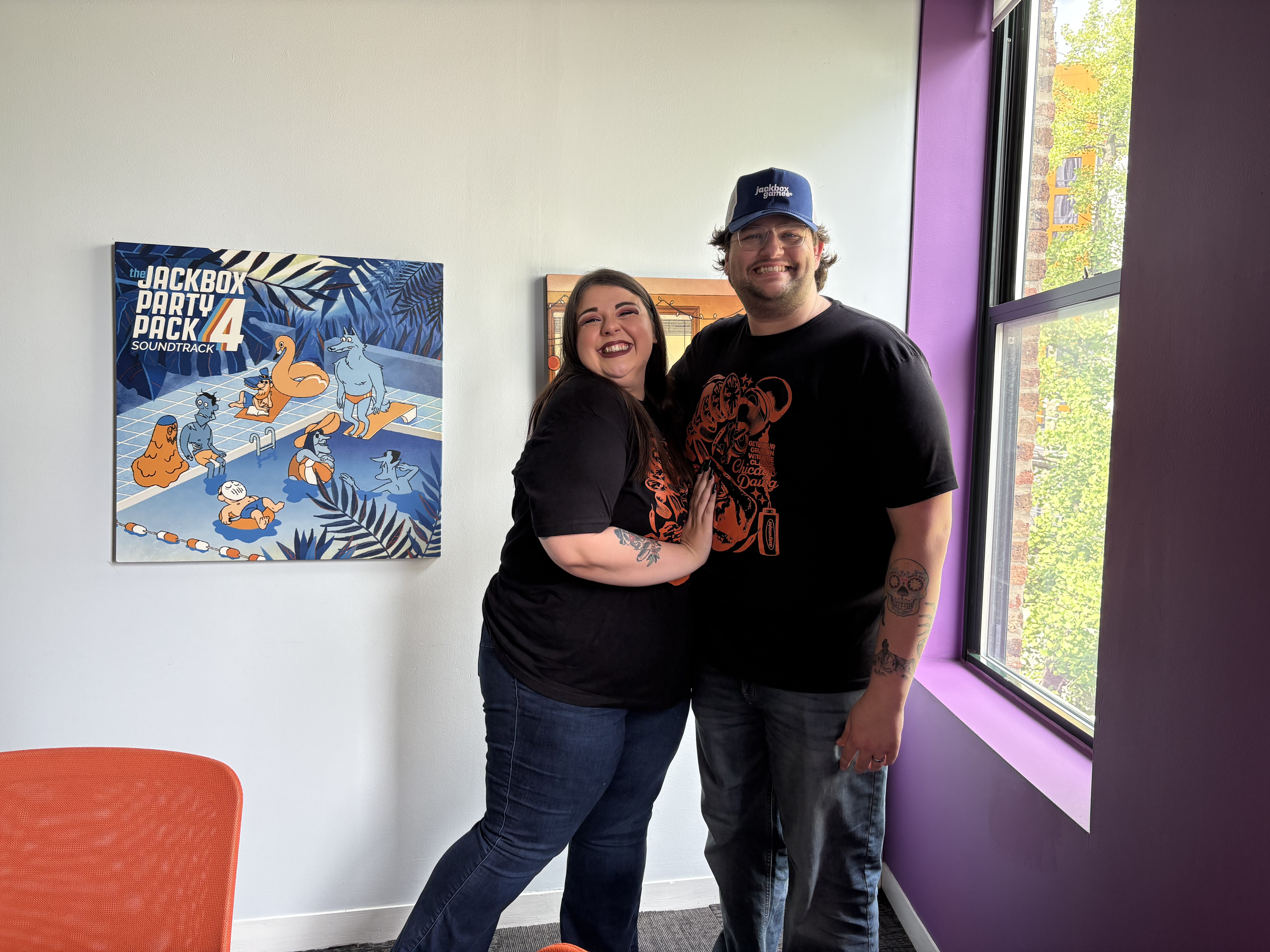

"Don't get so busy making a living that you forget to make a life" - Dolly Parton, American musician
Perhaps the greatest change I have made over the past year is in my understanding of accountability itself. For a long time, I thought taking accountability meant identifying everything I had done wrong and then punishing myself for it. On the opposite end of that spectrum, it was sometimes easier to search for an explanation outside of myself. I would focus on circumstances, stress, expectations, or the influence of others, because explanations can become very convenient when we are not yet prepared to confront our own behavior. I no longer think either approach is particularly productive. I do not need to blame another person for who I became, nor do I need to despise the person I was in order to prove that I have changed. The decisions I made were mine. The words I said were mine. The relationships I neglected, the boundaries I failed to establish, and the impossible expectations I placed upon myself were ultimately mine to confront. There were circumstances that influenced me, as there are circumstances that influence every human being, but influence and responsibility are not the same thing. Understanding why I behaved a certain way can provide valuable context; it does not absolve me of the responsibility to examine what I did with that context.
At the same time, accountability without compassion can very quickly become another form of self-destruction. The woman I was in September 2025 does not need to become the villain of my story simply because I would make different decisions today. She was ambitious, anxious, stubborn, exhausted, determined, and imperfect. She made choices that hurt people she loved, and she made choices that hurt herself. She was also trying desperately to protect something she had worked incredibly hard to build. I can understand why she behaved the way she did without excusing the consequences of her behavior.
One year later, I can regret decisions without rewriting myself as a terrible person for having made them. I can apologize without attaching an explanation designed to lessen my responsibility. Most importantly, I can forgive myself without pretending there is nothing to forgive. I think that is the balance I was missing for a very long time: accountability without compassion becomes punishment, while compassion without accountability becomes an excuse. Growth requires both.
Around this time last year, my burnout in my social media career was at an all-time high. I was dealing with the physical exhaustion that came with hosting our fourth 24-hour Stream-A-Thon, going LIVE multiple times a day, and finally phasing the excruciating treadmill trivia shows out of my regular rotation. More significantly, though, I was holding myself to an extremely grueling and “to-the-T” routine that was completely unrealistic for the life I was living. If I did not complete everything on my to-do list, I interpreted it as a personal failure, yet I made virtually no effort to change the expectations I had created for myself. Instead, I convinced myself that if I followed the routine long enough, I would eventually become accustomed to it. The reality was much simpler: The schedule was not meant for me. At the time, however, changing it felt synonymous with admitting defeat. I had somehow developed the belief that being exhausted demonstrated commitment, that constantly being busy demonstrated success, and that needing help demonstrated an inability to handle the career I had chosen. Looking back now, I understand that none of those things were inherently true. I was not failing because I could not maintain an unsustainable lifestyle; I was failing to recognize that sustainability should have been part of my definition of success in the first place.
For perspective, at this time last year, I willingly chose to operate my business as though I were solely responsible for every component of it rather than asking for help when I needed it. I would get only a few hours of sleep at night because I was working on projects, planning events, preparing trivia, and maintaining the seemingly endless list of responsibilities I had assigned myself. During the afternoon, I would work out, which I had also willingly converted into another TikTok LIVE show. I would shower, prepare for the evening, and then host two separate shows, often finishing late at night. Afterward, I would catch up on whatever trivia or preparation I had not completed for the following day, and many nights would conclude with an afterparty in my Discord server for subscribers. Then, after sleeping for far less time than my body needed, I would wake up and repeat the process. I want to emphasize the word willingly because an important part of reflecting on this period of my life has been resisting the temptation to assign responsibility elsewhere. There were certainly outside influences in my life, as there are in anyone's, but ultimately I made these decisions. I chose to maintain the schedule. I chose not to ask for enough help. I chose to equate productivity with personal value. If I am going to take genuine pride in how much I have changed over the past year, I also have to be willing to acknowledge the behaviors that necessitated that change.
What I failed to recognize at the time was how much this chosen lifestyle was isolating me from the identities I had before social media became my full-time career. When I first began hosting LIVE shows in 2023, I was a wife with obstructive sleep apnea, a full-time employee, a daughter, a sister, a dog mom to my beloved chihuahua, and someone with a very close relationship with my family. Once I left my last office job in 2024, I eventually began relying on TikTok to make ends meet. I had applied for well over 1,000 jobs across practically every platform I could find, and as TikTok became increasingly successful in terms of community growth and financial goals, I made the decision to pursue social media full-time. I do not regret that decision. What I regret is allowing myself to believe that becoming a full-time creator somehow eliminated all of my other responsibilities as a person. I did not stop being a spouse when TikTok became my job. I did not stop being a daughter or a sister. I did not stop being responsible for Robbie. I certainly did not stop being a human being with physical and emotional limitations. Nevertheless, I often overlooked the people who mattered most because I had forced myself into a mentality where my job occupied the highest position in virtually every hierarchy of my life. The scales had become so tipped that I could barely recognize how unbalanced they were. To quote my idol Dolly Parton, I had gotten so busy making a living that I forgot to make a life.
Bailey received the brunt of that imbalance, and acknowledging that has been one of the more difficult parts of reflecting on this period. I legitimately cannot count how many times I put my walls up and responded to him with “I’m working” or “I’m busy.” There were days when I became so preoccupied with whatever task was in front of me that stopping to address a problem in our relationship felt, in my mind, like falling behind at work. There were times when this brought him to tears, and instead of immediately understanding what that should have told me about my priorities, I was still thinking about everything I needed to accomplish. My family experienced a similar version of me. It was incredibly difficult to hear my mother tell me that she sometimes felt as though the only way she could talk to me was by logging into her TikTok account. At the time, I became defensive when concerns like this were brought to my attention. My relationship with my family became shaky and, at certain points, approached no-contact. My sibling ultimately chose to go no-contact with me, and I was not prepared at the time to meaningfully examine my own contribution to the deterioration of that relationship. I want to be careful about what accountability means here. Taking responsibility for my behavior does not mean assuming responsibility for every conflict or every decision another person made. It means acknowledging what belonged to me without immediately searching for a justification. I could have communicated better. I did not, and no amount of context changes that.
My physical and mental health were also paying for a lifestyle that I continued insisting was sustainable. My obstructive sleep apnea requires me to be particularly conscious of getting adequate rest, yet I was routinely surviving on only a few hours of sleep, most of those not being full hours due to oxygen cutoffs. I became sick from stress several times throughout 2025, despite not experiencing illness at that frequency since moving to Arizona in 2019. Mentally, I was anxious almost constantly. I could fixate on one minute detail and allow it to debilitate me for far longer than I would like to admit. There were also times when failing to meet a goal during one individual show would affect my perception of myself and my work. I developed an unrealistic mentality surrounding support from my community, and this is another area where I believe accountability requires uncomfortable honesty. There were moments when I communicated my frustration about goals in ways that may have made members of my audience feel pressured to contribute financially. That was never what I consciously wanted, but intention does not automatically negate impact. I know what I meant, but I also recognize now that what I meant was not always what my attitude communicated. I am responsible for that, and I am not proud of it.
Compounding everything was the fact that I had been off medication for roughly a year. I had previously taken Prozac for symptoms of depression, but after leaving traditional employment, I convinced myself that I would not be able to afford health insurance. From there, I made the assumption that not having insurance meant I could not pursue medication again. In hindsight, that assumption was stubborn and immature because resources were available to me; I simply did not pursue them. More troublingly, I had begun convincing myself that being able to function without medication made me stronger. I treated neglecting something that had previously helped me as another sacrifice required by the career I had chosen. Meanwhile, accomplishments that should have made me proud were frequently followed by nights of emptiness and worthlessness. I could have an incredible show, celebrate a major goal, laugh with hundreds of people, close the LIVE, and still be left alone with a version of myself who felt profoundly unhappy. I had become exceptionally good at performing happiness while simultaneously refusing to address why maintaining that performance was becoming so difficult.
The first major step toward balancing those scales came in October 2025, when I publicly announced that I would begin taking Sundays off to focus on my mental health and give myself one guaranteed rest day each week. I felt incredibly guilty at first. I had committed myself to streaming every single day for approximately two years, and that consistency had become so intertwined with my perception of my work ethic that reducing my schedule felt almost irresponsible. Eventually, I came to understand something that has become central to the way I approach my career now: Something can work until it does not. Streaming every day worked for me until it didn't. That does not invalidate the discipline it required, nor does changing my schedule mean that someone who streams seven days a week is doing something wrong. The “grind” looks different for every creator because sustainability looks different for every human being. Today, Sunday has become a dedicated opportunity to spend time with my mom and dad, and most Sunday nights end with Bailey and me eating pizza together. These are remarkably ordinary experiences, but I think that is precisely why they became so important to me. I had spent so much time pursuing extraordinary moments online that I had forgotten the value of ordinary moments offline.
In November 2025, I quietly removed another rock from the scales by changing the atmosphere of my evenings and establishing more realistic cutoff times for my shows. I also began taking what we called “Golden Glizzy nights,” which more than ten members of my CCCommunity ultimately contributed toward. Those nights meant hosting a shorter show and then allowing myself to spend the remainder of the evening however I wanted. Sometimes, that meant falling asleep on the couch watching King of the Hill. Sometimes, it meant eating a meal with Bailey (and I remember crying while eating at the booth with Bailey, because that’s how much I missed it). Sometimes, it meant having a self-care night without staring at another screen. Then, in January 2026, I was diagnosed with major depressive disorder and generalized anxiety disorder. I began therapy and started three medications to help me emotionally regulate again. Returning to medication was an adjustment, but it was an adjustment I knew I needed to make. I also stopped treating rest as something I had to earn by first meeting a goal. If I was tired, I began admitting that I was tired. If I was sick, I began recognizing that continuing to stream was not automatically evidence of dedication. In February 2026, I ended a LIVE early because I was ill, something I had never done in my entire career as a streamer. Nothing catastrophic happened. My platform did not disappear because I listened to my body for one evening. That experience sounds insignificant on paper, but for me it represented an enormous shift in how I defined professionalism.
I also began opening myself to help, particularly from Bailey. I became more willing to let him assist with books, expense reports, and setting up shows without criticizing him because he approached a task differently than I would. When Bailey later returned to Michigan for a few months, having to readjust to doing so much independently reminded me how much work I had once voluntarily placed entirely on myself. During this period, I also admitted something to him that was incredibly difficult for me to say: In the past, I had spoken poorly about him when he helped with shows while I was unavailable because he had not done things exactly the way I would have, or because he did not follow a protocol precisely as I had written it. He forgave me, but I could tell that admitting it hurt him. I wish I had made different choices, but wishing does not rewrite them. I had every opportunity not to speak negatively about someone who was trying to help me, and I chose otherwise. That responsibility belongs to me. What surprised me about accepting this was that accountability did not destroy me in the way I once thought it would. In fact, it did the opposite. Admitting that I had behaved poorly allowed me to stop wasting energy defending behavior that I no longer wanted to repeat. I began to understand that accountability is not synonymous with self-hatred. It is the process of identifying what I did, understanding its impact, making amends where appropriate, and using that information to make a different decision the next time.
By the summer of 2026, another part of that growth involved learning that healthier boundaries did not require me to stop treating TikTok like a business. This distinction is important to me because I think there is a temptation, particularly when discussing burnout, to swing completely in the opposite direction and suggest that ambition itself was the problem. I do not believe it was. TikTok is still my job, and Bailey and I have always been transparent that the income we make from it helps us make ends meet. This year, I have applied for approximately 200 traditional jobs, attended a handful of interviews, and have yet to find the right opportunity. There was a time when that would have devastated me, particularly because I have two degrees and several transferable skills. I no longer interpret every rejection as a referendum on my worth or capability. I believe the right opportunity is out there, and until I find it, social media remains an important source of income for our household. Much like becoming a content creator did not mean I stopped being a wife or daughter, learning to establish boundaries did not mean TikTok stopped being a job. What changed was my understanding of what running that business responsibly should look like.
Our community has continued developing ways to reach goals while making participation meaningful for people who cannot financially contribute. We have incorporated winner's-choice games and free-play opportunities, while games for BMAH members and TikTok Superfans remain open play without a queue. Over the summer, I also learned to prioritize the people who are genuinely happy when we succeed while becoming more at peace with the reality that some people may not understand why our goals matter. I no longer believe I need universal approval for the way I operate my business. At the same time, I have become much more conscious of the difference between communicating a goal and making someone feel responsible for achieving it. When Bailey was in Michigan, there were periods when I was living paycheck to paycheck. Without BMAH (Buy Me a Hotdog), I would have continued streaming, but I also would have needed to devote significantly more time to my traditional job search to make ends meet. The financial support I received genuinely affected my quality of life, and I will never pretend otherwise. However, one of the most important things I learned during that period was that support extends far beyond money. Someone showing up matters. Someone checking in matters. Someone playing a game, tapping the screen, sharing the LIVE, laughing at a joke, or spending part of their evening with us matters. During a period when it would have been easy to feel isolated again, my community reminded me that I was not alone. When Bailey finally came home, I realized something even more meaningful: we weren't alone.
When I compare September 2025 to September 2026, I do not see a story about someone who completely transformed herself in twelve months, and I do not want to portray it that way. I still have days when I overwork. I still experience anxiety. I still occasionally catch myself assigning too much importance to a task that can realistically wait until tomorrow. The difference is that I recognize those behaviors now, and recognition gives me the opportunity to make a different choice. A year ago, I believed growth meant becoming strong enough to carry everything I placed on my shoulders. Today, I believe growth is also knowing what I need to put down. I cannot recover every night I could have spent with Bailey, every conversation I could have had with my parents, every moment when I should have listened instead of becoming defensive, or every hour of sleep I sacrificed because I thought exhaustion was evidence of ambition. I cannot unsay things I regret, and I cannot go backward and give the September 2025 version of myself the perspective I have today. What I can do is refuse to waste those experiences by learning nothing from them.
Perhaps the greatest change I have made over the past year is that I no longer believe I need to hate the person I used to be in order to prove that I have outgrown some of her behaviors. She was ambitious, anxious, stubborn, exhausted, determined, and imperfect. She made choices that hurt people she loved, and she made choices that hurt herself. She was also trying desperately to protect something she had worked incredibly hard to build. I can have compassion for why I became that person while still holding myself accountable for what I did as her. Those ideas are not contradictory; in fact, I believe maturity requires us to hold both at once. Accountability without compassion becomes punishment, while compassion without accountability becomes an excuse.
A year ago, I thought success was measured primarily by how much I could accomplish and how much I could endure in the process. Today, success has become considerably more complicated, but also considerably more human. Sometimes success is an incredible LIVE with a dozen people laughing together. Sometimes it is reaching a financial goal, creating something I am proud of, or watching the CCCommunity continue to grow. Sometimes, however, success is logging off. It is eating pizza with my husband on a Sunday night. It is answering my mother's phone call without looking at the clock. It is taking my medication, going to therapy, asking for help, admitting when I am wrong, resting before my body forces me to, and understanding that an unfinished to-do list will still be there tomorrow. There will always be another project, another stream, another goal, another notification, and another opportunity to work. There will not always be another ordinary Sunday with the people I love.
I spent a long time learning how to make a living, and I am incredibly proud of the living I have built. I no longer believe that I have to sacrifice my life in order to maintain it. If the last year has taught me anything, it is that personal growth is not a dramatic moment when the old version of you disappears. It is a collection of smaller decisions made repeatedly: Choosing to listen instead of defend, choosing to rest instead of prove, choosing to ask for help instead of struggling privately, and choosing the people you love even when there is still work left to do. I am still Cool Cat Chayse, and I still have goals that I fully intend to reach. I am simply learning that the person behind the screen deserves a life worth living, too. Dolly was right: I had gotten so busy making a living that I forgot to make a life. It took me a year to truly understand what that meant. Now, as I look toward the next one, my goal is not to work less, dream smaller, or care less about what I have built. My goal is to never become so focused on building a life for myself that I forget to actually live it.
_________________________________________________________________________________________________________________
Want to join us for a game? We're LIVE on TikTok Monday through Saturday at 6:00 PM Pacific / 9:00 PM Eastern.
Did you enjoy this article? Consider supporting the CCCommunity by ordering a hot dog. Every hot dog helps us continue creating games, events, and memories together.
As always, #FOTF — Focus on the Fun.
With Ketchup and Mustard,
CCC