Editor's Note
This essay was originally published in Spanish on May 15, 2026, through Roma's Substack as part of my participation in the Roma Creative Residency in Buenos Aires.
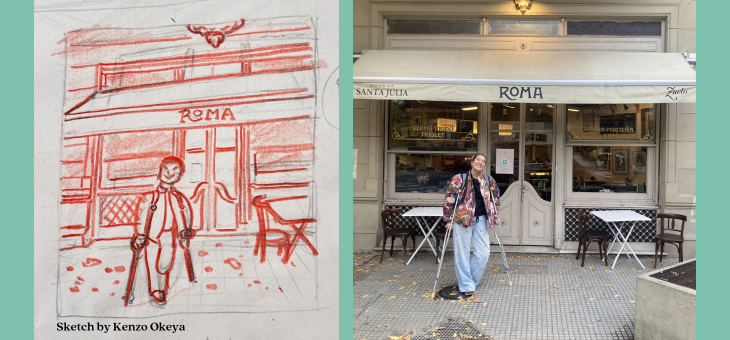
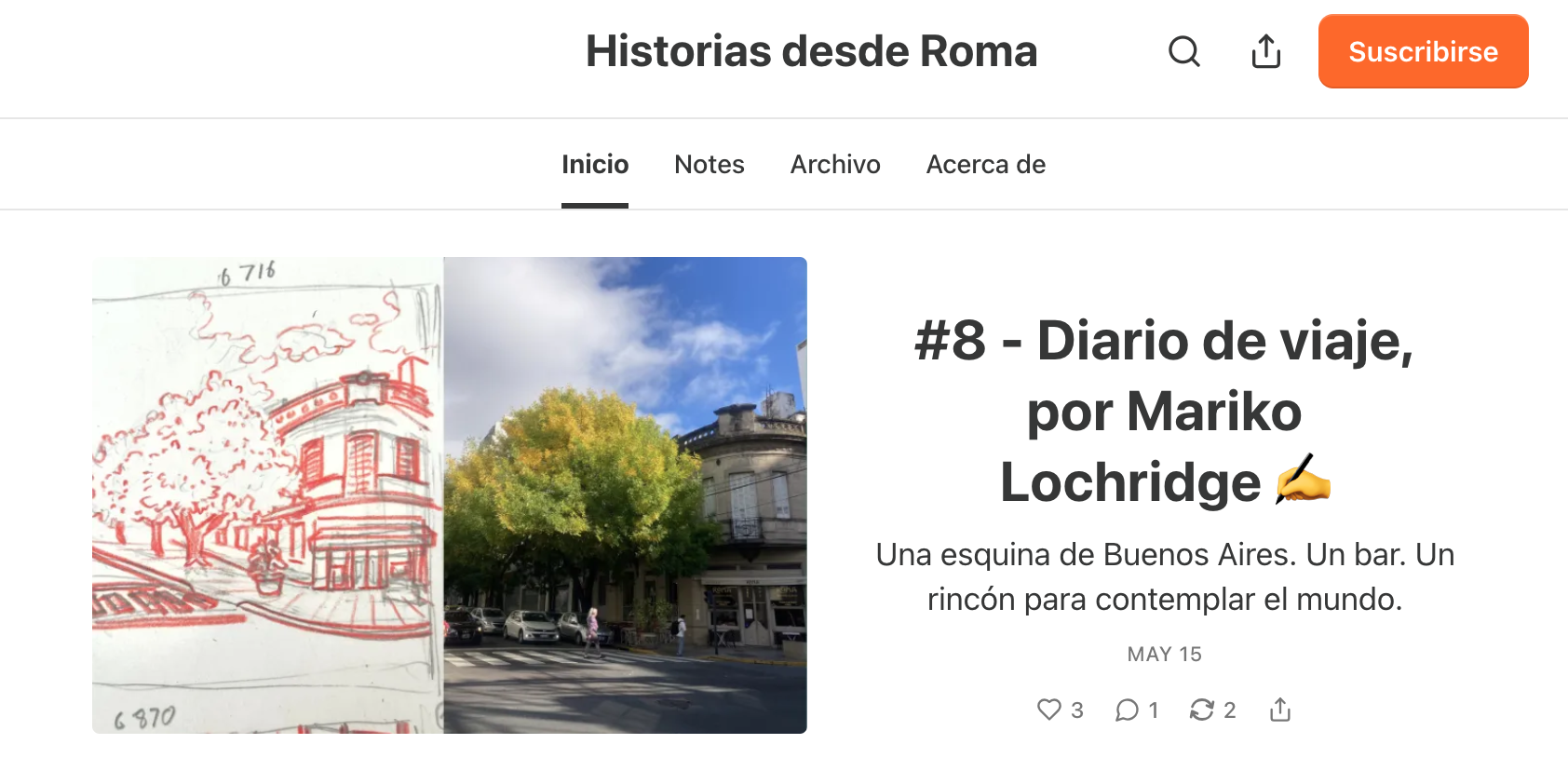 I arrived in Argentina on April 14th for my creative residency to document Roma, a nearly 100-year-old institution in the Abasto neighborhood, and to learn from the city's bares notables. What follows is the original English-language version of one of my essays from the creative residency, accompanied by sketches from illustrator Jon Kenzo Okeya as we developed a visual interpretation of Roma's history, people, and place.
The second essay and completed illustration will be published in Spanish on the Roma Substack at the end of June 2026.
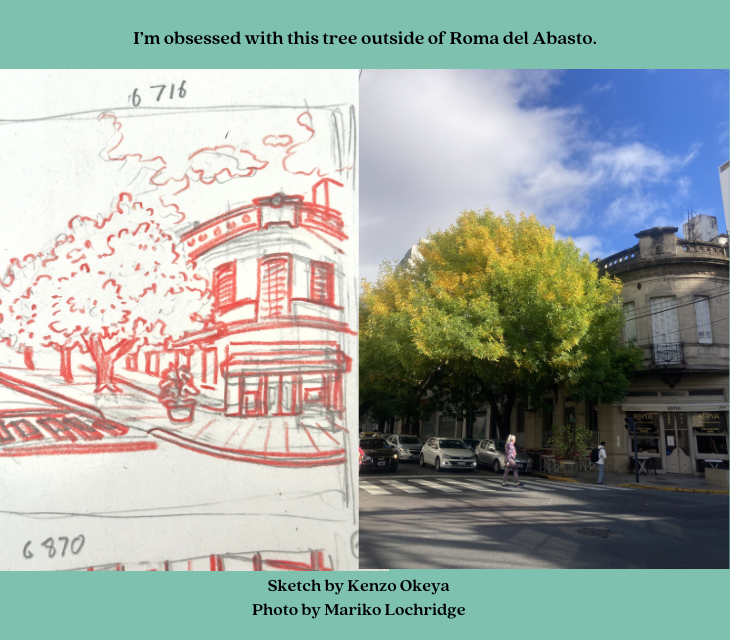 There is a tree outside of Roma that stretches across the entrance and into the street.
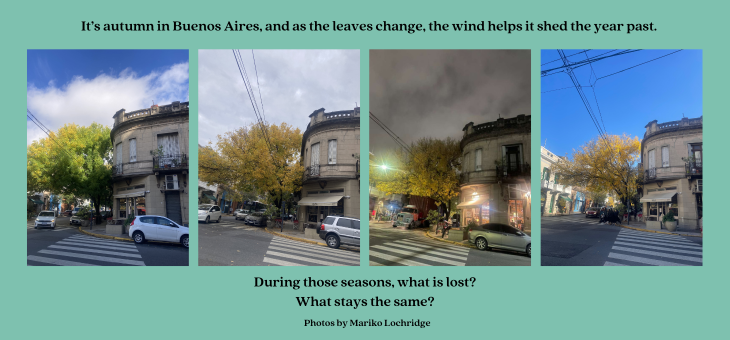
It’s autumn in Buenos Aires, and as the leaves change, the wind helps it shed the year past.
I’m obsessed with this tree.
Martin, one of the owners, told me that a previous owner planted it when he was young.
The tree is older than most of us.
This space is older than most of us.
 I arrived in Buenos Aires from Los Angeles on April 14 to participate in the Roma creative residency.
In Los Angeles, I spent the past eight years working with legacy businesses—many of them rooted in the Nikkei community.
Roma will turn 100 next year.
Unlike many of the businesses I’ve worked with in the United States, Roma has never changed location.
As the world changed around it, Roma stayed.
I came to Buenos Aires to learn from places like Roma— spaces that stay rooted while everything around them changes.
---
During those seasons, what is lost?
What stays the same?
What is new, and what is carried forward?
How does a place remain familiar while making space for change?
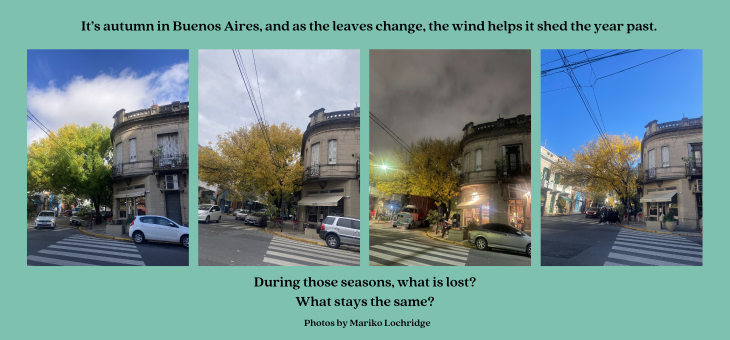 A few weeks ago, I stood outside Roma on a warm Thursday evening.
The traffic light reflected across the changing leaves.
I imagined the seasons moving through this space—
families walking through the neighborhood,
locals commuting through Abasto,
regulars stopping in for pizza or vermouth after work.
We move through spaces like this and age within them.
Places like Roma hold those movements—quietly recording them into the memory of a neighborhood.
---
In Buenos Aires, that memory belongs to porteños.
In Los Angeles, it belongs to generations of Angelenos shaped by migration.
---
When I saw the pizza oven at Roma, I thought of my friend Kenzo.
He creates tiny illustrated worlds inside everyday objects.
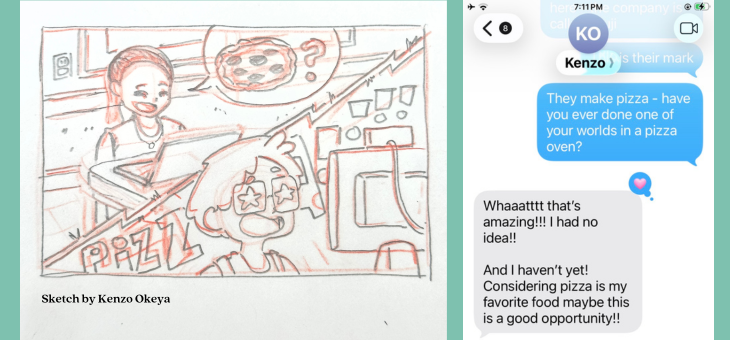
I text Kenzo.
April 17, 8:07 AM (PT)
“Reaching out because I wanted to ask if you’d be up for trying a long-distance illustration.
I’m in Buenos Aires documenting a 100-year-old business. I’d love to include one of your drawings.”
“They make pizza—have you ever done one of your worlds in a pizza oven?”
“Whaaatttt that’s amazing!!! I had no idea!!”
“And I haven’t yet! Considering pizza is my favorite food, maybe this is a good opportunity!!”
 I send him photos.
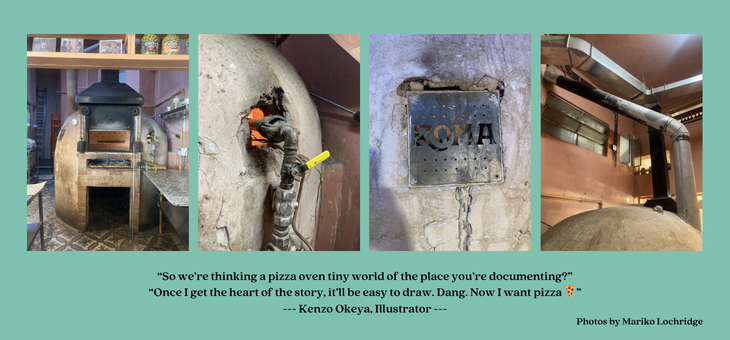 He understands the assignment immediately.
“So we’re thinking a pizza oven tiny world of the place you’re documenting?”
“Once I get the heart of the story, it’ll be easy to draw. Dang. Now I want pizza 🍕”
I tell him I’ll gather stories—
the staff, the owners, the regulars, the artists and the musicians.
There are so many generations of stories here.
Two weeks pass before I message him again.
That same day I first reached out, I broke my leg at jiu jitsu practice. I get emergency surgery at the Italian hospital in Buenos Aires.
I imagine a tiny world of construction workers inside my leg helping me heal.
They break for lunchtime and go to Roma for pizza.
I’m still thinking about Roma.
---
April 28, 12:56 PM (PT)
“Hi Kenzo—sorry for the gap. A lot happened lol”
“I still want to work on the pizza oven illustration. Do you have time for a call?”
We talk.
He’s been thinking about the oven too.
I send more photos—this time of a small slide connecting the ground floor to the basement.
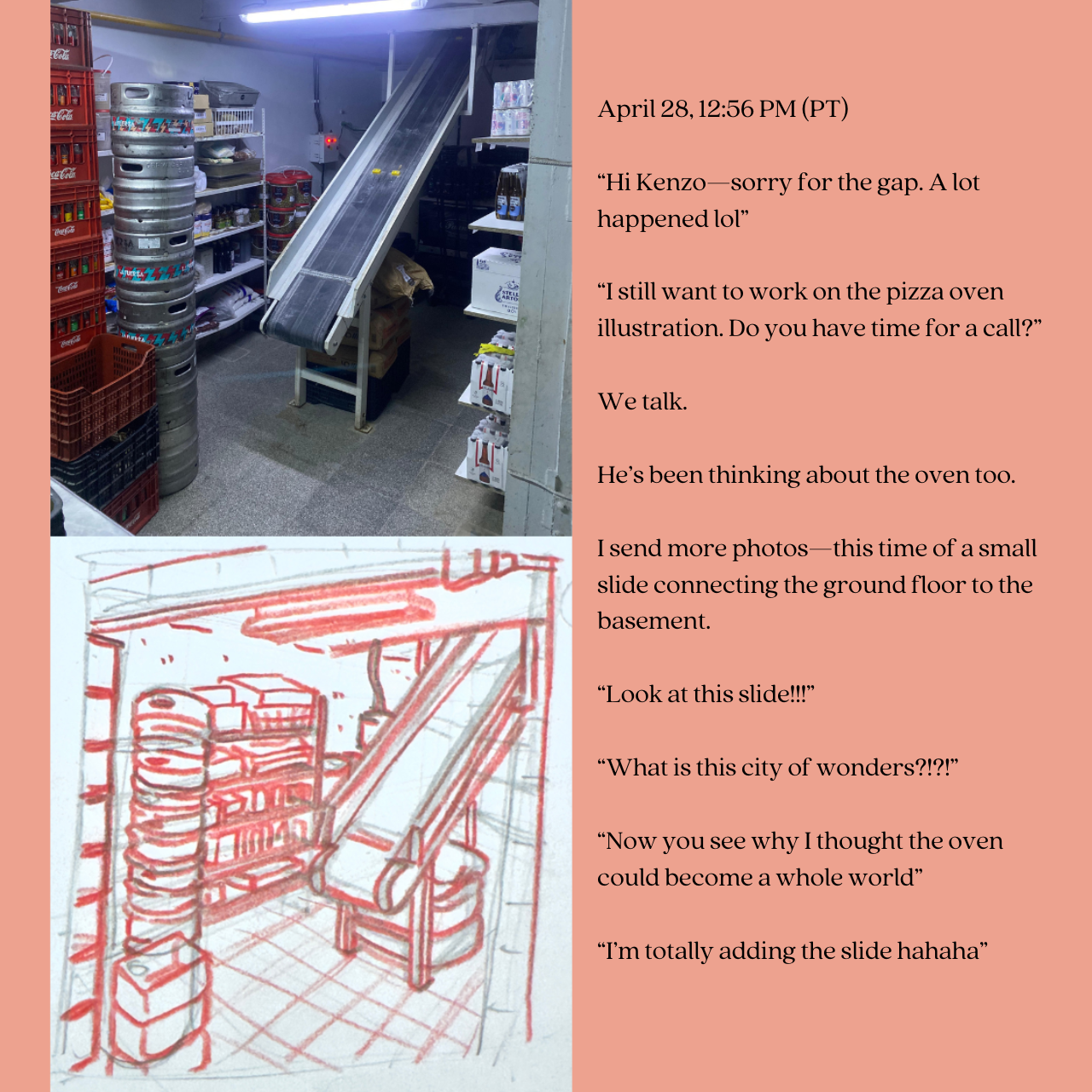
“Look at this slide!!!”
“What is this city of wonders?!?!”
“Now you see why I thought the oven could become a whole world”
“I’m totally adding the slide hahaha”
I came to Buenos Aires to learn from its bares notables—
to better understand how to support legacy businesses in Los Angeles.
I didn’t expect to break my leg nearly 10,000 kilometers from home.
But now I dream about pizza in Spanish.
Mariko Lochridge documents small businesses as living parts of a neighborhood—places where memory, routine, and community meet. Based in Los Angeles, she spent eight years supporting legacy storefronts and neighborhood commercial corridors before returning to journalism and storytelling. Previously a breaking news journalist for Reuters Television, Mariko now writes about the everyday histories, worn counters, and familiar faces that keep neighborhood businesses alive.
Jon Kenzo Okeya is a Japanese American illustrator from Los Angeles, California. He creates whimsical food-inspired stories called “Tiny Worlds.” When he isn’t drawing, Kenzo runs Okeya Stationery Co. alongside his wife Audrey, selling illustrated stationery from their small cart. He also loves cooking for guests and hosts a YouTube series called The Shokudo!.