
Recently, I came to know that some people diagnosed with Typhoid fever can also show neurological or psychiatric symptoms. In some cases, they are even misdiagnosed with a primary mental illness. This surprised me and pushed me to read more.
I found case reports where patients had fever along with abnormal behavior like hallucinations, delusions, confusion, or catatonia. Some were initially treated with antipsychotic medicines. Later, tests confirmed typhoid, and after proper antibiotic treatment, their psychiatric symptoms improved within days or weeks.
Three short case examples:
An 18-year-old developed fever and within a day started showing delusions and disorientation. Tests confirmed typhoid, and his mental condition improved after antibiotics.
A 38-year-old with fever began hearing voices and had strong religious delusions. Blood culture showed Salmonella paratyphi A. After treatment, he fully recovered.
In a large group of typhoid patients, many developed delirium and some had psychosis-like symptoms. Most of these symptoms reversed after proper treatment.
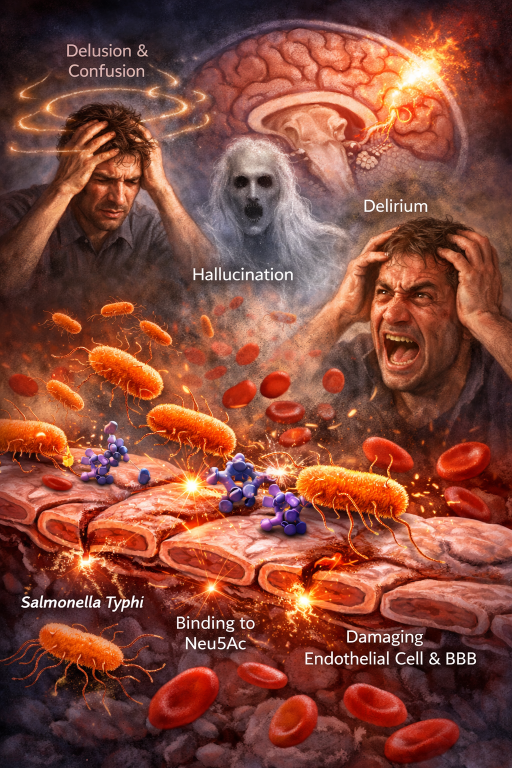
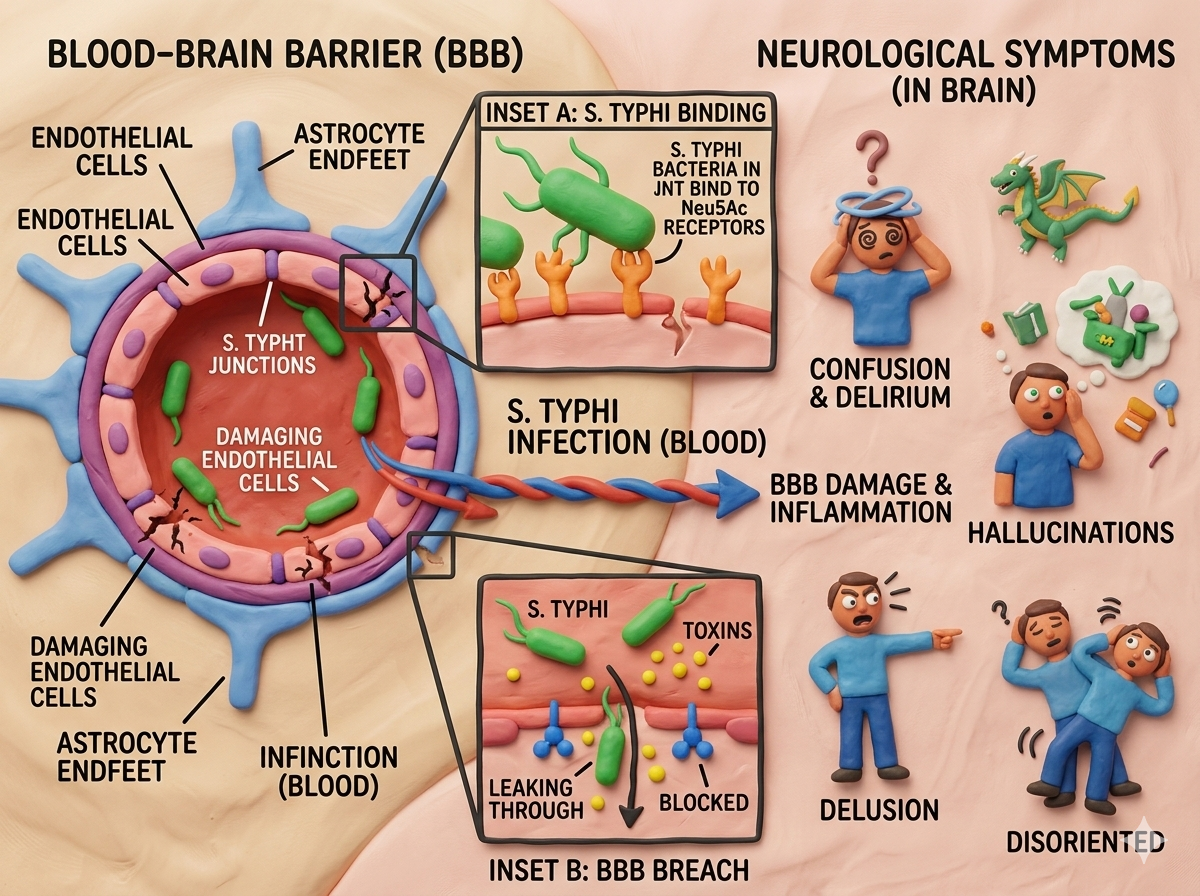
What I found most interesting was a recent study from Yale School of Medicine published in Nature Microbiology. Earlier, scientists believed that the toxin from Salmonella Typhi directly damaged brain cells. But the new research shows that it mainly damages the blood–brain barrier (BBB), which protects our brain. When this barrier is disrupted, inflammation and swelling happen, leading to confusion, delirium, and sometimes psychosis.
I then tried to connect this understanding with Schizophrenia. Schizophrenia is often described as a “self-disorder,” where a person’s sense of identity and reality becomes disturbed. While reading, I learned about a sugar molecule called Neu5Ac (N-acetylneuraminic acid). This molecule is present on human cells and plays a role in how our body recognizes “self.” The toxin from Salmonella Typhi specifically binds to cells that carry this Neu5Ac sugar.
Since this glycan layer is present on human cells and is important for cellular identity, I became curious whether damage or interaction at this level could have any link to disorders involving the sense of self. In one research study on Typhoid fever, around 0.7% of patients showed schizophrenia-like symptoms during their illness. This made me wonder the reverse question: how many people diagnosed with schizophrenia might have had an underlying or past typhoid infection? and.. I got below quick answer from google...
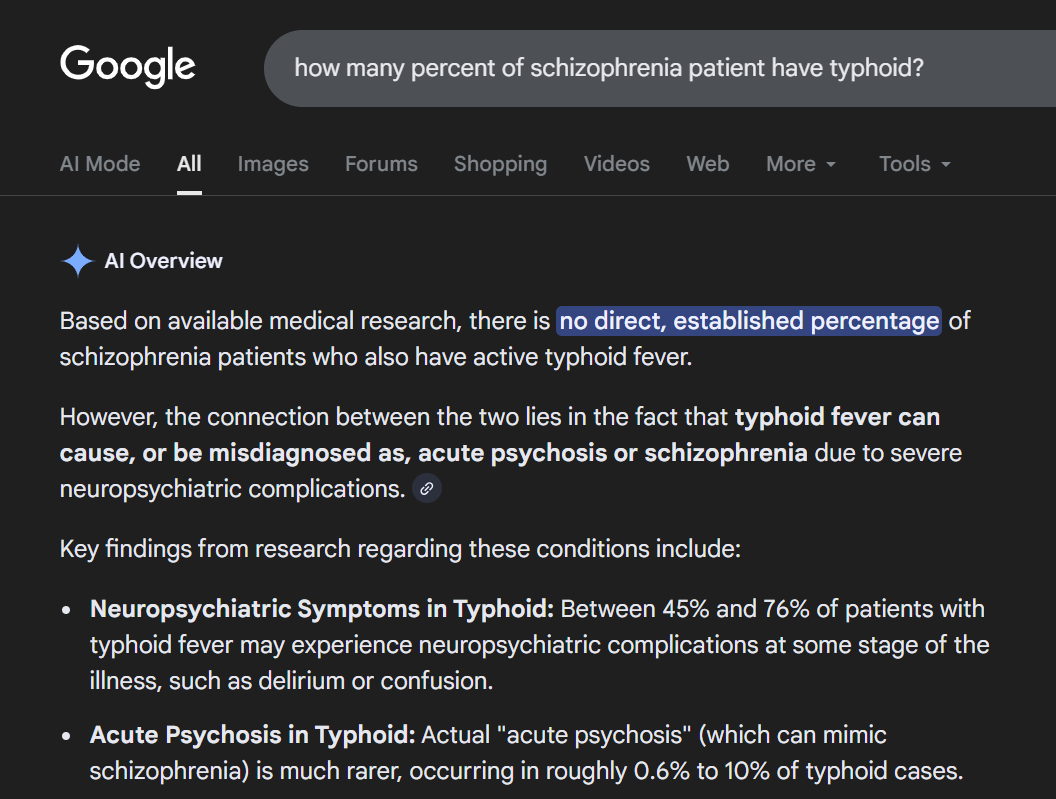
After studying all this, one important question came to my mind: if typhoid can cause acute psychosis, shouldn’t doctors rule it out before diagnosing severe mental illnesses like schizophrenia, especially in countries where typhoid is common? I did not find any strict global rule about this, but many guidelines recommend doing a proper medical evaluation in first-episode psychosis.
References:
https://sci-hub.box/10.1016/S0377-1237(03)80023-0
https://sci-hub.box/10.1016/j.npbr.2017.02.002
https://sci-hub.box/10.1001/archneur.1972.00490130009002