
Abstract
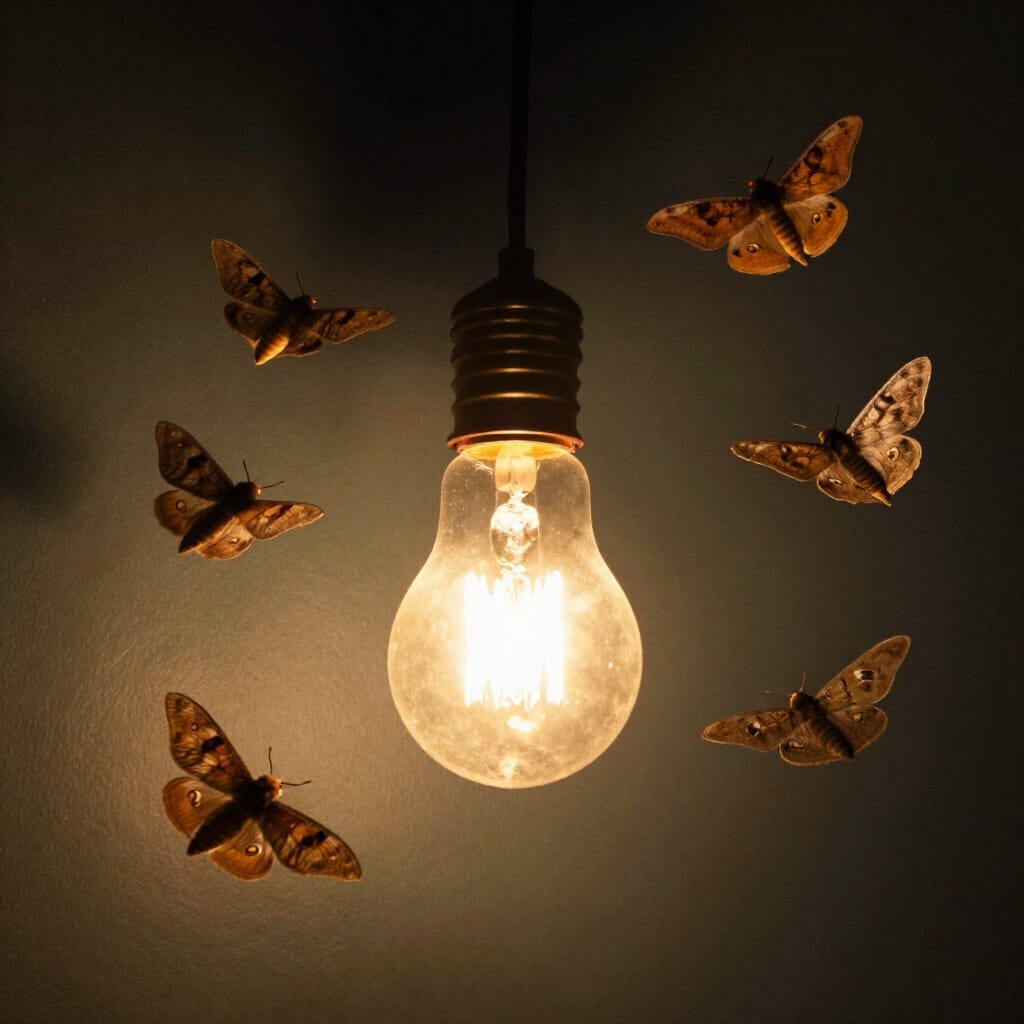
This paper explores the psychological dynamics behind the phenomenon of "strongman" leadership, the projection of power, the hunger of populations for protection and meaning, and the tragic mismatch between image and substance. Drawing on the metaphor of moths drawn to a false sun, this analysis examines how vulnerable populations, driven by deep psychological needs, are drawn to charismatic but hollow figures who project strength while practicing cowardice. The paper contrasts the historical expectation that leaders share in the sacrifices of their people with the modern reality of leaders who hide in bunkers and boardrooms while others bleed. Ultimately, it argues that what we call "strongman" leadership is not strength at all, but a carefully constructed illusion, a bright bulb mistaken for the sun.
Introduction
There is a peculiar tragedy unfolding across the modern political landscape. Men who have never known hardship, who have never bled for a cause, who have never risked anything of genuine value, present themselves as the embodiment of strength. They puff their chests. They speak in absolutes. They promise protection. And millions follow, not because they are foolish, but because they are desperate.
This paper seeks to understand the psychology of this dynamic. Why do people follow those who would never sacrifice for them? Why do we project strength onto those who hide? And what does "strength" even mean in a world where the powerful have removed themselves from the consequences of their own decisions?
The metaphor at the heart of this inquiry is simple but profound: the moth and the false sun.
Part I: The Psychology of Need
The Hunger for Protection
Human beings are fundamentally vulnerable creatures. We are born helpless. We live in a world of uncertainty, disease, disaster, violence, and chaos lurk at the edges of every life. This vulnerability creates a deep, primal need for protection.
Throughout history, this need has been met by various structures: tribes, communities, religions, and leaders. In times of stability, the need is diffuse, we spread our trust across institutions and systems. But in times of crisis, uncertainty, or fear, that need condenses. It focuses. It looks for a single point of light in the darkness.
This is not stupidity. It is survival instinct.
The Idealized Protector
Psychologically, we project onto leaders the qualities we wish we had ourselves. We want someone who is:
Certain, because we are uncertain.
Fearless, because we are afraid.
Decisive, because we are paralyzed by complexity.
Strong, because we feel weak.
The idealized protector becomes a container for our anxieties. We don't have to be strong if they are strong for us. We don't have to know the way if they will lead us.
This is the psychological foundation upon which leader worship is built. It is not a flaw in the individual follower, it is a human universal that has been exploited throughout history.
The Darkness of Uncertainty
When the world feels safe, we choose leaders carefully. We weigh options. We demand accountability.
But when the world feels dark, when systems fail, when trust erodes, when the future is opaque, our standards change. We become less discerning. Any light will do.
This is the moment the moth seeks the flame. Not because the moth is foolish. Because the moth navigation sensors are fooled.
Part II: The Projection of the Strongman
The Costume of Strength
The strongman does not become strong. The strongman performs strength.
Every element of the strongman's presentation is calculated:
The harsh, clipped language.
The refusal to apologize or admit error.
The physical posturing, broad shoulders, jutting jaw, direct gaze.
The denigration of weakness in others.
The promise of swift, decisive action.
These are not the attributes of a person who has faced danger. They are the attributes of a person who has studied power. The strongman is not a warrior. The strongman is a student of the warrior archetype, and he performs it flawlessly.
The Hollow Core
But behind the performance? There is often a vacuum.
The strongman cannot admit doubt, because doubt is "weak."
The strongman cannot compromise, because compromise is "weak."
The strongman cannot retreat, because retreat is "weak."
The strongman cannot share risk, because risk is for others.
And so the strongman constructs a life entirely free of genuine vulnerability. He surrounds himself with sycophants. He isolates himself from criticism. He removes himself from consequences.
The result is a leader who is perfectly protected, while demanding that others be perfectly exposed.
The Absence of Skin in the Game
This is where the illusion becomes visible, if we choose to look.
Consider the modern strongman in wartime:
He does not fight.
He does not march.
He does not bleed.
He does not lose sleep over the bodies he creates.
He commands from a bunker. A boardroom. A distant capital. He sends others to die for his vision, while he remains untouched by the reality of what he has set in motion.
In the ancient world, this would have been unthinkable. A king who called for war was expected to stand with his soldiers. Not because he was the best fighter, but because:
Shared risk = shared respect. You cannot ask someone to die for you if you are not willing to risk the same.
Visible sacrifice = moral authority. A leader who bleeds earns the right to command.
Consequences create clarity. When your own life is on the line, you choose your battles more carefully.
The modern strongman operates under no such constraints. He is insulated from consequence. And this insulation, far from being a sign of strength, is the defining feature of his weakness.
Part III: The Illusion of Strength
What Is Strength, Really?
Let us be precise.
Strength is not the ability to dominate others. That is power, and power is cheap. Any tyrant, any bully, any brute can dominate. It requires no virtue, no wisdom, no character.
Strength is not the ability to avoid consequences. That is privilege, and privilege is abundant among the wealthy and powerful. It requires nothing but resources.
Strength is not the ability to project confidence. That is performance, and performance is a skill, learned, rehearsed, polished. It requires no genuine substance.
True strength is something else entirely.
Strength as Resilience
True strength is:
The ability to fall and rise again, unfazed.
The willingness to share the burden, not to offload it.
The courage to admit error, and correct course.
The integrity to sacrifice, not to demand sacrifice from others.
The humanity to feel, and still act.
This is the strength of the worker who shows up exhausted. The strength of the parent who gives when they have nothing left. The strength of the child in the slum who shares their last scrap of bread.
These people have nothing to hide behind. No bunker. No PR team. No golden parachute.
And yet they keep going, unfazed, not because they are invulnerable, but because they have no other choice. That is strength.
The Strongman as False Sun
Now we return to the metaphor.
The false sun is bright. It radiates heat. It draws the moth. But it is not the sun.
The false sun consumes.
The false sun burns.
Blinds navigation, to rotate around the false light.
The false sun destroys what comes near it, not out of malice, but out of nature. It has no warmth to give. It only takes. For the moths that do not get burnt they loose energy and time, that they should of been applied to living, breeding, feeding.
The strongman is the same. He projects light. He promises warmth. He draws the desperate, the vulnerable, the hungry. And then, inevitably, he burns them.
Not because he is evil (though he may be).
Not because he intends harm (though he may).
But because he has nothing real to offer. He is a bulb. Bright. Hollow. Empty.
The tragedy is that the moth does not know. The moth sees light and follows. The moth is not stupid, the moth is needy. And the false sun exploits that need.
Part IV: The Human Cost
Those Who Follow
It is easy to mock those who follow strongmen. It is easy to call them fools, sheep, or worse.
But this is both cruel and inaccurate.
The followers of strongmen are often:
People who have been failed by institutions.
People who have been ignored by elites.
People who have been left behind by progress.
People who are afraid, and justifiably so.
They do not follow because they are weak. They follow because they are human, and humans need something to believe in.
The strongman offers that something. It is counterfeit. It is hollow. But it is there. And in the darkness, even a counterfeit light is better than none.
The Betrayal
The betrayal comes later, but it always comes.
The strongman cannot deliver what he promises. He cannot protect. He cannot save. He cannot provide the meaning he claimed to possess.
And when the betrayal happens, the follower faces a terrible choice:
Admit they were deceived, and confront the shame.
Double down, and blame themselves, the "enemy," anyone but the leader.
Many double down. Not because they are blind, but because the alternative is unbearable.
This is the final cruelty of the false sun. It burns the moth, and then makes the moth believe it deserved to burn.
Part V: A Quiet Alternative
The Steady Flame
If the strongman is a false sun, what is the alternative?
Not a bigger, brighter sun. Not a louder voice. Not a more aggressive performance.
The alternative is a small, steady flame.
A flame that:
Does not pretend to be the sun.
Does not promise what it cannot deliver.
Does not consume those who come near.
Endures, not through brilliance, but through consistency.
This is the strength of the person who simply keeps going. Who gets up after being knocked down. Who stays unfazed, not because they don't feel pain, but because they refuse to be defined by it.
This is the strength of the worker, the parent, the child in the slum. They are not the sun. They do not project power. They are not worshipped.
But they are real. And in a world of false suns, reality is the rarest thing of all.
The Return to Skin in the Game
There is a deeper lesson here, one that cuts to the core of leadership itself.
A leader who shares the risk of their decisions is a leader who can be trusted. A leader who insulates themselves from consequence is a leader who has forfeited moral authority.
If we are to rebuild trust in leadership, if we are to move beyond the age of the strongman, we must demand that leaders stand where we stand. Not in a bunker. Not in a boardroom. Not behind a wall of privilege.
In the mud. In the struggle. In the uncertainty.
Only then can they claim the title of strong, and only then will it mean something.
Conclusion
The moth does not choose the false sun out of stupidity. The moth chooses it out of need.
And the strongman is not strong. The strongman is protected. There is a profound difference, one that we have forgotten, to our collective peril.
The true measure of strength is not the ability to avoid suffering. It is the ability to face it, and keep going, unfazed. It is the willingness to share risk, not to offload it. It is the courage to stand with others, not above them.
The false sun burns the moth, and blinds the moth to true navigation, through the world. The strongman burns his followers, blind his followers to the real world. And the tragedy is that the follower, cold, afraid, desperate, will keep flying toward the light until there is nothing left.
But there is another way.
We can choose to see the false sun for what it is. We can choose to be a steady flame instead of a bright bulb. We can choose to keep going, unfazed, not because we are invincible, but because we are human. And humans, at our best, are not moths drawn to destruction. We are beings of endurance, capable of rising, again and again, with our dignity intact.
Final Reflection
"Life is not about winning. It is about getting up after being knocked down, and keeping going, unfazed. The strongman is not strong. The strongman is a false sun, bright, hollow, consuming. Real strength is found in the mud, not the bunker. In the work, not the speech. In the child who shares their last crust, not the leader who demands sacrifice from others. So I keep going. Not because I have all the answers. But because I would rather be a steady flame in the dark than a false sun that devours those who come near."