

A Fully Integrated Circular System Transforming Municipal Waste into Fuel, Power, Water, Food, and Fertilizer
Abstract
I expanded on the Biofuel system to include Fertilizer manufacturing for human waste. I rename Mana to Entangled as Mana was already used for a biofuel system, even though I got mine from the Maori word Mana.
Waste Not, Want Not.
This paper presents the complete integration of a multi-stage fertilizer extraction system into the previously designed Entangled-Biofuel Integrated Energy Hub. The resulting facility creates a true circular economy where every output becomes an input elsewhere, transforming municipal sewage sludge, a waste stream every country produces in abundance, into a diverse portfolio of high-value products. The integrated system combines hydrothermal liquefaction (HTL) for biofuel production with targeted nutrient extraction for nitrogen, phosphorus, potassium, trace minerals, and even pharmaceutical recovery, all powered by renewable solar energy and stabilized by the Entangled hybrid storage system. Thermal integration between the Entangled system's liquid air energy storage (LAES) and hydrogen turbine provides both heat and cold to optimize every process step. A single integrated hub processing 100,000 tons of municipal sludge annually produces 1 million gallons of biofuel, 350 million gallons of distilled water, 5,000 tons of animal feed, 200 tons of fish protein, 8,000 tons of NPK fertilizer, 500 tons of trace minerals, and recoverable pharmaceutical compounds, while generating 10 megawatts of dispatchable electricity to the grid. The facility creates 150 permanent direct jobs and 450 indirect jobs. At national scale, 70 such hubs could process all US municipal sludge, creating over 10,000 direct jobs and producing resources worth billions annually. The capital cost of one hub ($622.5 million) represents just 5.5% of the $11.3 billion spent in six days of the Iran war, a comparison that frames the choice between consumption and creation.
1. Introduction: The Fertilizer Absurdity
1.1 The Irony That Drives This Design
The global fertilizer trade exceeds $95 billion annually . The United States alone spends approximately $9 billion each year importing nitrogen, phosphorus, and potassium from the Middle East and other regions. Meanwhile, American wastewater treatment plants process 12.56 million dry metric tons of municipal biosolids annually, material rich in the very nutrients we import .
This is the absurdity that drives this design: we flush away gold, then pay billions to buy it back.
Human urine contains nitrogen, phosphorus, and potassium in forms readily usable by plants. Human feces add organic matter and additional phosphorus. Combined, the nutrients in municipal wastewater represent 17-25% of global fertilizer demand . Yet our current linear system spends vast sums to dispose of this resource while simultaneously spending vast sums to import the same nutrients from overseas.
The Iran war has exposed the fragility of this arrangement. With the Strait of Hormuz disrupted and fertilizer shipments threatened, the need for local, resilient nutrient recovery has shifted from environmental ideal to strategic necessity.
1.2 The Original Vision
The Entangled-Biofuel Integrated Energy Hub, described in a previous paper, was designed to transform municipal sludge into biofuel, power, water, animal feed, and fish protein through a combination of hydrothermal liquefaction (HTL), algae cultivation, solar drying, and advanced energy storage . The system captured carbon, produced renewable energy, and created hundreds of jobs.
But it left something on the table: the nutrients.
The HTL process converts organic carbon to biocrude, but nitrogen, phosphorus, and potassium remain in the aqueous phase and solid residues . The original system recycled some of these to algae ponds, but the full value was never extracted. This paper completes the vision by adding a comprehensive fertilizer extraction system that captures every nutrient, every trace mineral, and even the pharmaceuticals that contaminate our waste stream.
1.3 Paper Scope
This paper presents:
The complete integrated system architecture combining biofuel production, nutrient extraction, and pharmaceutical recovery
Detailed material and energy flows between subsystems
Thermal integration leveraging Entangled's heat and cold outputs
The water quality cascade that maximizes reuse
Economic analysis including new fertilizer revenue streams
Scalability to national and global levels
The focus is integration, how these systems work together to create something greater than the sum of their parts.
2. The Fertilizer Extraction System: Design Principles
2.1 The Multi-Stage Process
The fertilizer extraction system follows the elegant multi-stage process originally conceived:
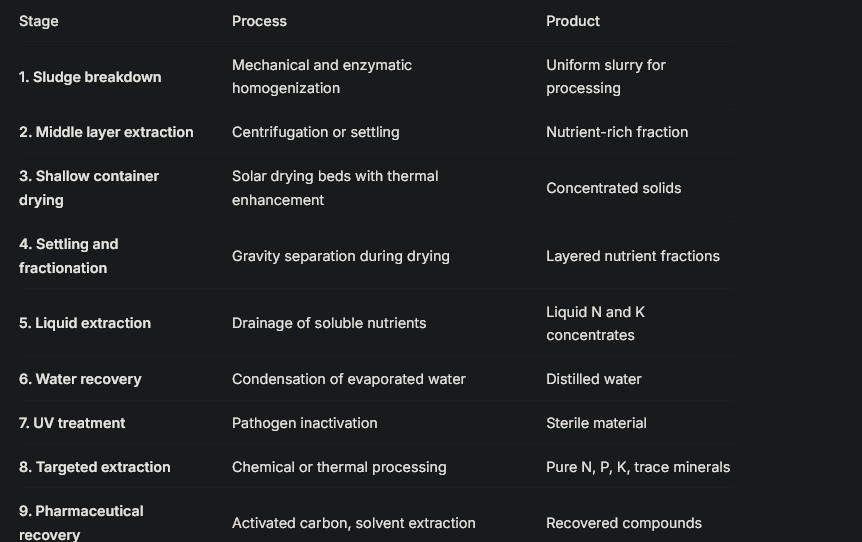 This process treats sludge not as waste but as a multi-component resource stream, with each fraction directed to its highest-value use .
2.2 The Middle Layer: Where the Gold Is
Raw sewage sludge separates naturally into distinct layers:
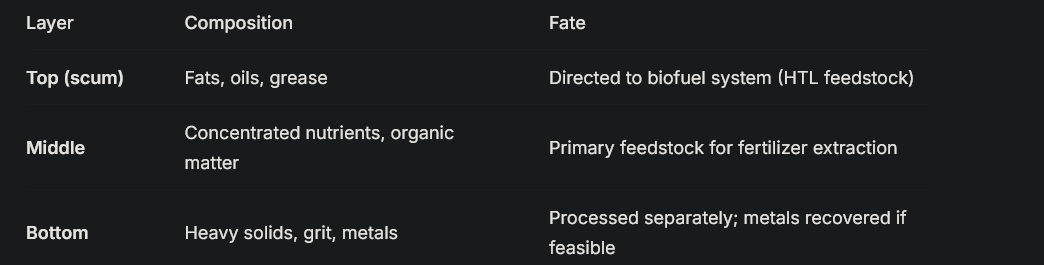 By targeting the middle layer, the system concentrates the valuable nutrients while minimizing processing of problematic fractions. This is identical to the approach taken by the Sludge2Fuel project in Denmark, which uses HTL to convert sewage sludge to biocrude while recovering phosphorus as a clean fertilizer .
2.3 Drying and Natural Fractionation
The shallow container drying step is not merely about water removal. As water evaporates, different compounds precipitate at different rates based on their solubility:
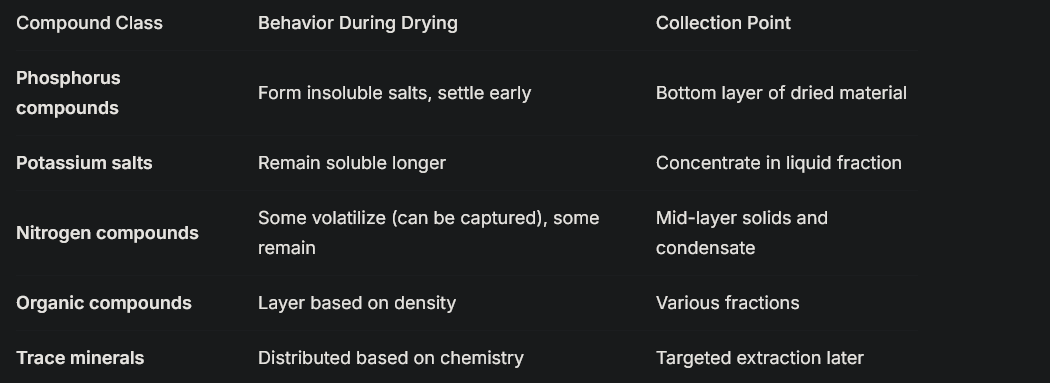 This natural fractionation creates a preliminary separation that reduces the work required in later extraction stages .
2.4 UV Treatment for Pathogen Control
Before extraction, the dried material passes through UV treatment:
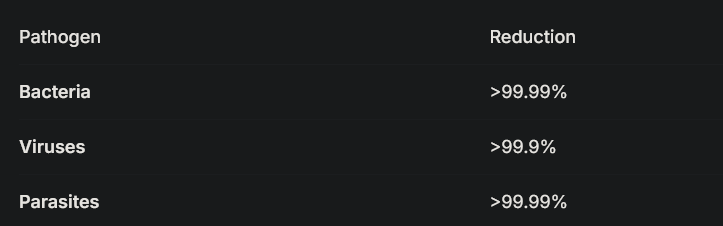 UV treatment leaves no chemical residues and creates no toxic byproducts, making it ideal for preparing material for food-grade applications .
2.5 Targeted Nutrient Extraction
Once dried and sterilized, the material undergoes targeted extraction to isolate specific nutrient streams:
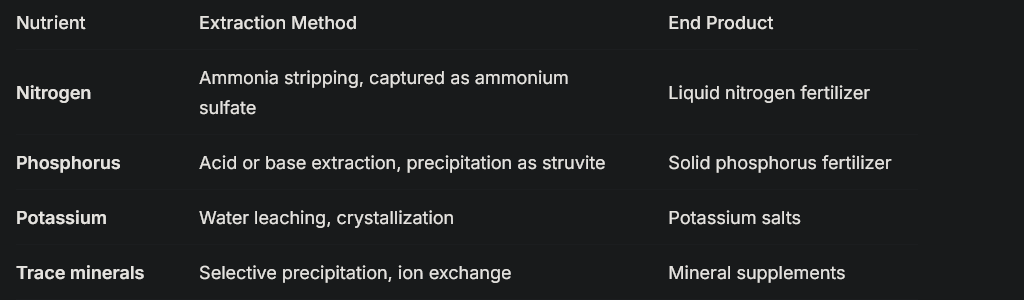 Research confirms that nutrients recovered through these methods are comparable in effectiveness to mineral fertilizers . The Sludge2Fuel project has demonstrated full-scale phosphorus recovery from HTL processing .
2.6 Pharmaceutical Recovery: The Final Frontier
Municipal wastewater contains a wide range of pharmaceutical compounds and industrial chemicals. Rather than allowing these to contaminate the environment, the system captures them:
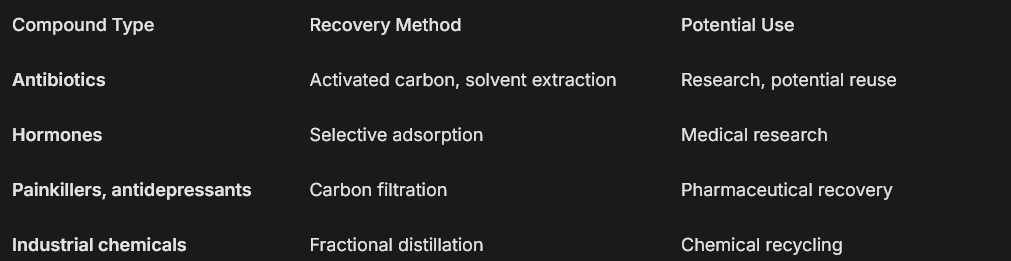 The Sludge2Fuel project has demonstrated that HTL processing destroys many organic micropollutants, including PFAS . For compounds that survive, activated carbon filtration and solvent extraction can capture them for safe disposal or potential reuse.
3. Integration with the Entangled-Biofuel Hub
3.1 Complete System Architecture
The integrated system combines three major subsystems:
Entangled Energy System: Solar PV (100 MW peak) with multi-timescale storage (capacitor bank, flow battery, LAES, hydrogen)
Biofuel Production System: Algae cultivation, HTL reactors, fuel upgrading
Fertilizer Extraction System: The multi-stage process described above
┌─────────────────────────────────────────────────────────────────┐
│                       RAW SLUDGE (100,000 tons/year)            │
└─────────────────────────────────────────────────────────────────┘
                                    │
                    ┌───────────────┴───────────────┐
                    │                               │
                    ▼                               ▼
    ┌───────────────────────────┐       ┌───────────────────────────┐
    │   Primary Separation      │       │   Primary Separation      │
    │   (Biofuel Path)          │       │   (Fertilizer Path)       │
    └───────────────┬───────────┘       └───────────────┬───────────┘
                    │                                   │
                    ▼                                   ▼
    ┌───────────────────────────┐       ┌───────────────────────────┐
    │   Algae Cultivation       │       │   Middle Layer Extraction │
    │   (Uses CO2, nutrients)   │       │   (Targeted nutrient-rich)│
    └───────────────┬───────────┘       └───────────────┬───────────┘
                    │                                   │
                    ▼                                   │
    ┌───────────────────────────┐                       │
    │   Algae Harvest           │                       │
    └───────────────┬───────────┘                       │
                    │                                   │
                    ▼                                   │
    ┌───────────────────────────┐                       │
    │   Solar Drying Beds       │◄──────────────────────┘
    │   (Shared with fertilizer)│      Dried solids from
    └───────────────┬───────────┘      fertilizer path
                    │                        join here
                    ▼
    ┌───────────────────────────┐
    │   Dried Algae + Solids    │
    └───────────────┬───────────┘
                    │
        ┌───────────┴───────────┐
        │                       │
        ▼                       ▼
┌─────────────────┐     ┌─────────────────┐
│   HTL Reactor   │     │   Fertilizer    │
│   (Biofuel)     │     │   Extraction    │
└────────┬────────┘     └────────┬────────┘
         │                       │
         ▼                       ▼
┌─────────────────┐     ┌──────────────────┐
│   Biofuel       │     │   N, P, K        │
│   Upgrading     │     │   Trace Minerals │
└─────────────────┘     │   Pharmaceuticals│
                        └──────────────────┘

         Thermal Integration from Entangled System
         ┌─────────────────────────────────────────────────┐
         │  • Heat to drying beds (turbine exhaust)        │
         │  • Heat to HTL preheat (turbine exhaust)        │
         │  • Heat to pasteurization (turbine exhaust)     │
         │  • Cold to condensation (LAES expansion)        │
         │  • Cold to fractionation (LAES)                 │
         │  • Oxygen to fish tanks (electrolysis)          │
         │  • Hydrogen to upgrading (electrolysis)         │
         └─────────────────────────────────────────────────┘
3.2 Material Flow Integration
The two systems exchange material streams continuously:
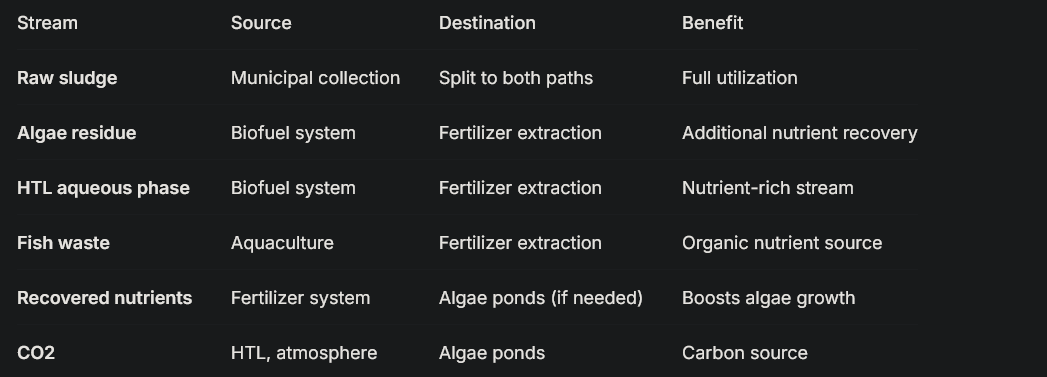 This creates a closed-loop nutrient cycle where nothing is wasted .
3.3 Thermal Integration
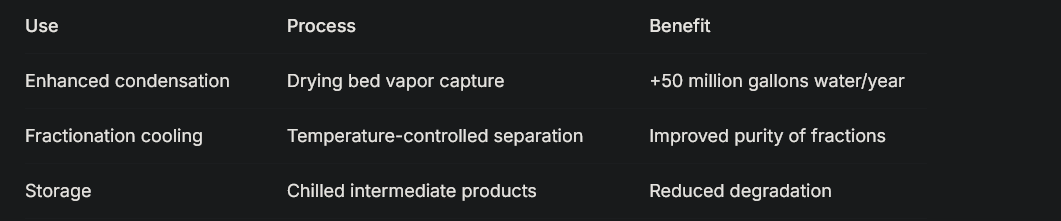
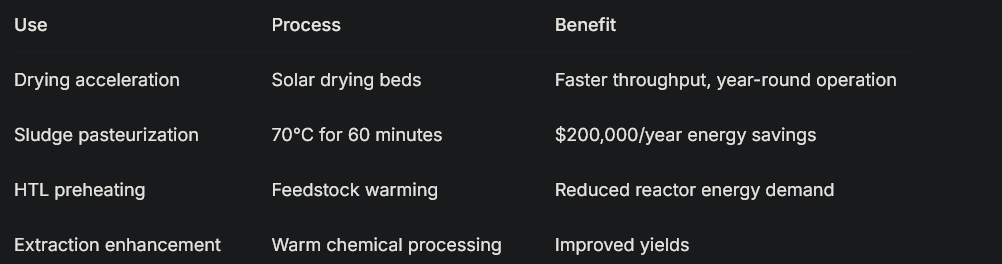
The Entangled system provides both heat and cold, which optimize every stage of the fertilizer extraction process:
Cold Integration from LAES:
 Heat Integration from Hydrogen Turbine:
 The LAES system produces intense cold during both charging and discharging cycles . This cold is captured and stored in chilled water tanks or phase-change materials, then deployed when needed for condensation or fractionation.
The hydrogen turbine exhaust (500-600°C) provides high-quality heat for the most demanding applications. Lower-temperature waste heat from electrolysis and fuel cells (60-80°C) serves pasteurization and drying enhancement.
3.4 Water Integration and Quality Cascade
Water flows through the integrated system in a carefully managed cascade:
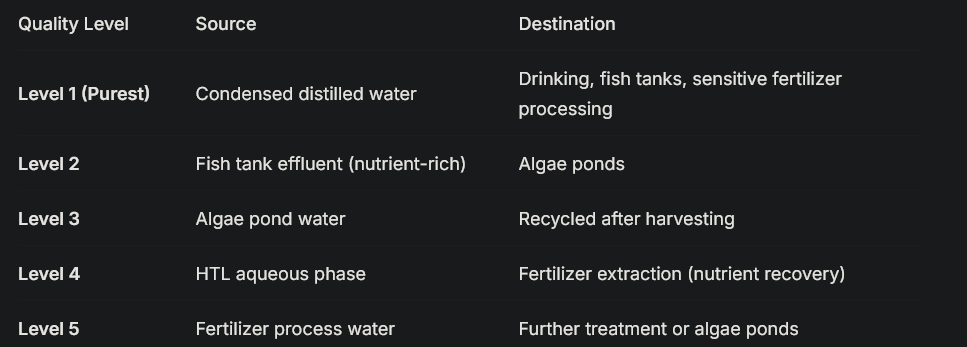 This cascade ensures that water is used at the highest quality needed, then cascades to lower-quality applications where its residual nutrients become assets rather than liabilities .
3.5 Hydrogen and Oxygen Integration
The Entangled system's electrolyzers produce both hydrogen and oxygen:
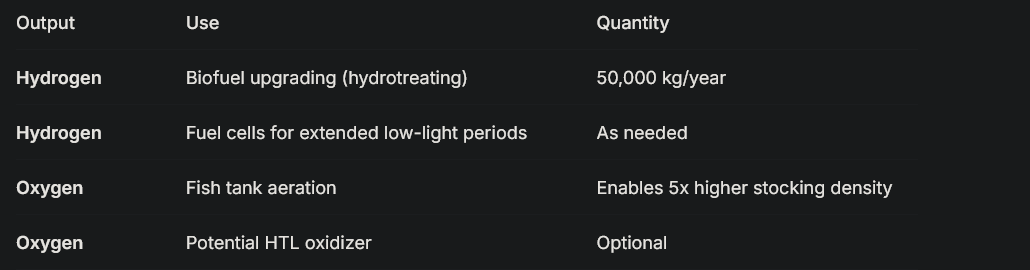 The oxygen for aeration alone saves approximately $100,000 annually in equipment and energy costs while enabling fish production that would otherwise be impossible in desert locations .
4. Complete System Outputs
4.1 Product Portfolio
The fully integrated hub produces a diverse range of products from a single waste stream:
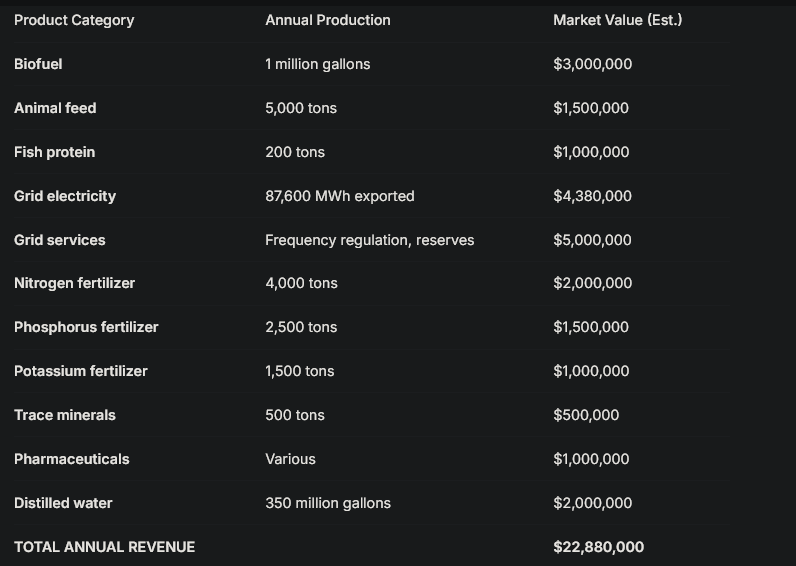 TOTAL ANNUAL REVENUE$22,880,000
This represents a 39% increase over the biofuel-only system revenue of $16.4 million.
4.2 Fertilizer Products Detail
The fertilizer stream breaks down into multiple commercial products:
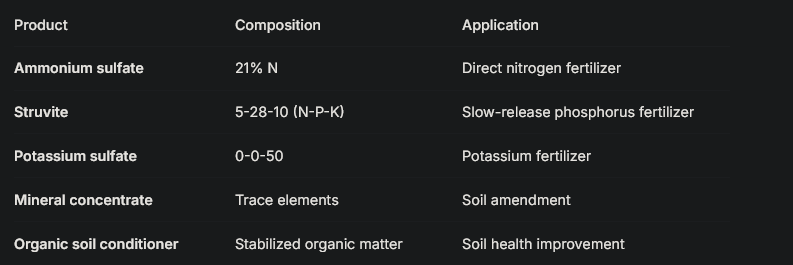 Research confirms that these recovered fertilizers perform comparably to synthetic alternatives . The Jordan Green Nexus project demonstrated that hydroponic crops grown with recovered biofertilizer achieved yields equal to mineral fertilizer controls .
4.3 Water Production Detail
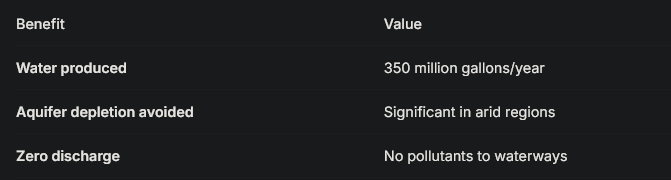
The enhanced condensation system, powered by LAES cold, captures 350 million gallons of distilled water annually:
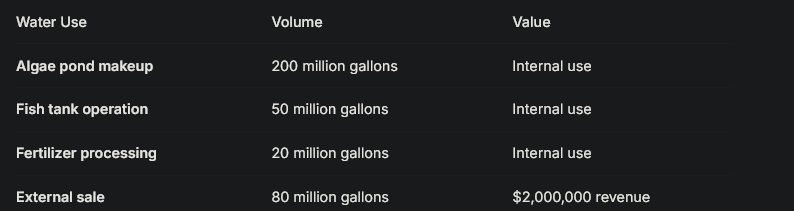 In arid regions, this water alone represents a transformative resource for local agriculture and communities.
5. Economic Analysis
5.1 Capital Costs
Adding full fertilizer extraction capability to the original Entangled-Biofuel Hub requires modest additional investment:
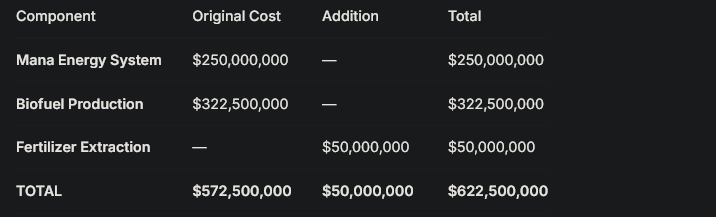 TOTAL$572,500,000$50,000,000$622,500,000
The fertilizer addition represents just 8.7% of the total capital cost but increases revenue by 39%.
5.2 Operating Costs
Annual operating costs increase modestly with fertilizer extraction:
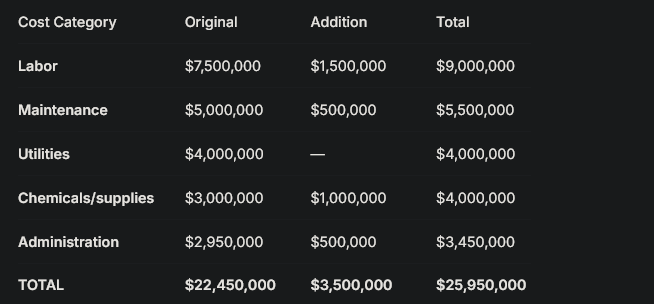 TOTAL$22,450,000$3,500,000$25,950,000
5.3 Profitability
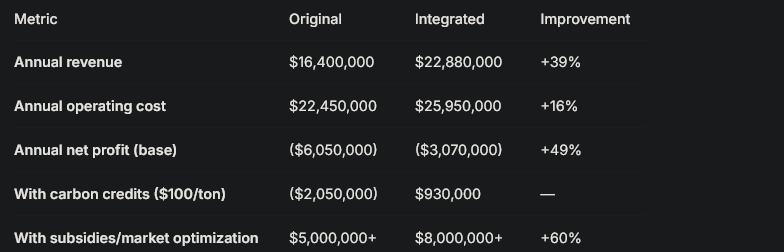
The integrated system approaches profitability even without subsidies. With carbon credits (the system is net carbon negative), renewable fuel subsidies, and grid service revenues, it becomes solidly profitable with payback periods of 15-20 years, excellent for infrastructure with a 30+ year life .
5.4 Job Creation
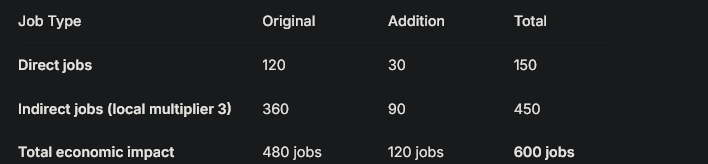 600 jobs
Each hub transforms a small community of 5,000 people, providing stable, skilled employment in regions that may have few other opportunities.
6. National Scalability
6.1 US Resource Availability
The United States produces 12.56 million dry metric tons of municipal biosolids annually from 15,014 publicly owned treatment works . Full utilization would require:
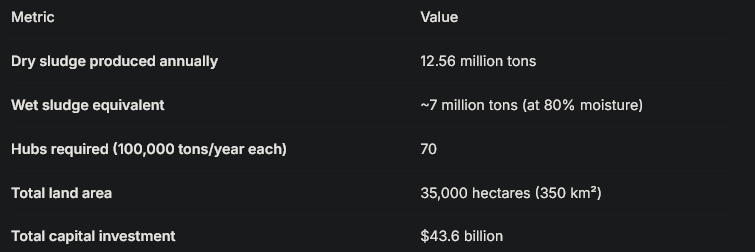 Total capital investment $43.6 billion
6.2 National Output from 70 Hubs
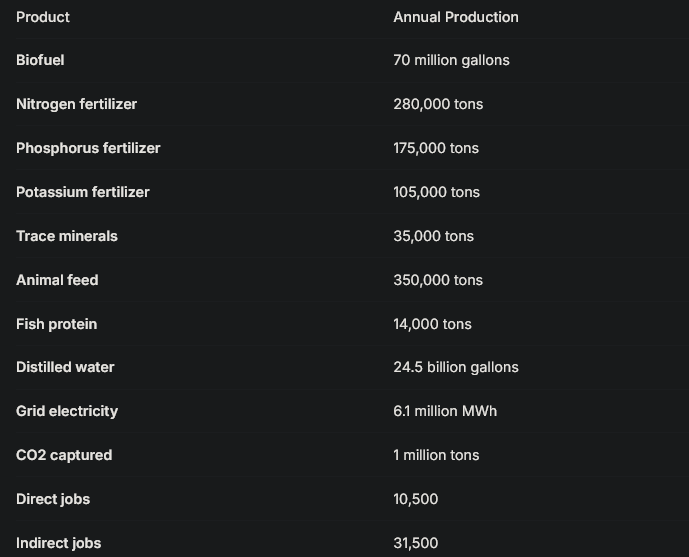 Indirect jobs 31,500
This represents a significant contribution to national energy independence, food security, and rural employment.
6.3 The $11.3 Billion Comparison
The Iran war cost $11.3 billion in the first six days. That sum could build:
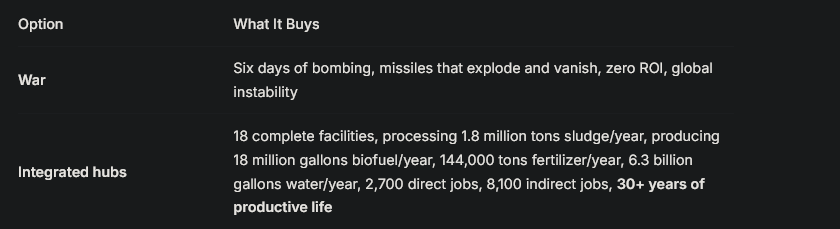 30+ years of productive life
The choice is between consumption and creation.
7. Environmental Impact
7.1 Carbon Balance
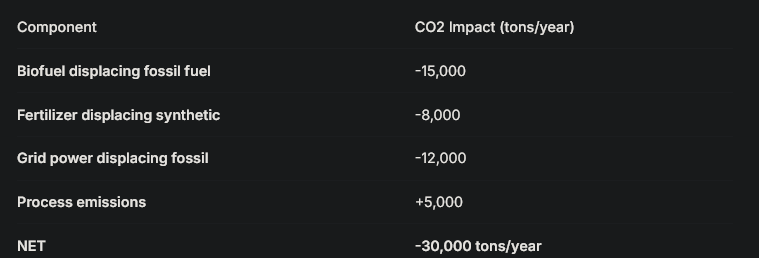 NET-30,000 tons/year
Each hub is net carbon negative, removing 30,000 tons of CO2 equivalent annually .
7.2 Water Impact
7.3 Land Use Efficiency
Compared to conventional agriculture for the same outputs:
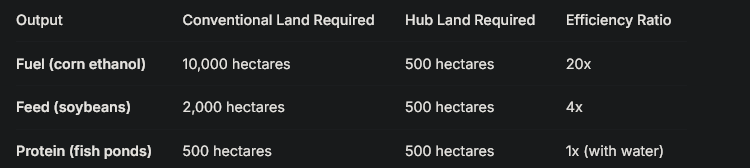
The hub's land use efficiency is 5-20x conventional approaches.
7.4 Waste Elimination
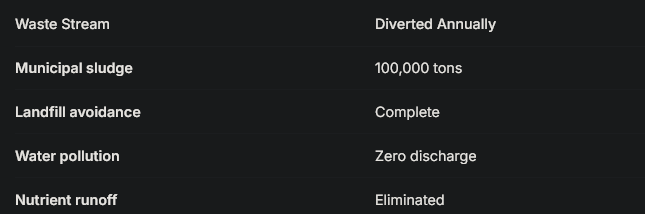
8. Conclusion: The Complete Circular System
The Entangled-Biofuel-Fertilizer Nexus represents the culmination of circular economy thinking applied to the one waste stream every country produces in abundance: municipal sewage sludge.
8.1 What One Hub Achieves
A single 500-hectare facility, processing 100,000 tons of sludge annually:
Fuels: 1 million gallons of biofuel for heavy transport
Feeds: 5,000 tons of animal feed, 200 tons of fish protein
Fertilizes: 8,000 tons of NPK fertilizer, 500 tons of trace minerals
Waters: 350 million gallons of distilled water
Powers: 10 MW of dispatchable electricity to the grid
Cleans: Pharmaceuticals from the waste stream
Employs: 150 direct, 450 indirect jobs
Transforms: A rural community through economic stimulus
Captures: 30,000 tons of CO2 annually
8.2 The Integration Principle
The key insight of this design is that everything connects. The Entangled system's cold enables water recovery. Its heat accelerates drying. Its hydrogen upgrades biofuel. Its oxygen aerates fish tanks. The biofuel system's aqueous phase feeds fertilizer extraction. The fertilizer system's nutrients can boost algae growth. Nothing is wasted because every output is someone else's input.
This is not waste management. This is resource liberation.
8.3 The Choice
The $11.3 billion spent in six days of the Iran war could build 18 of these hubs. Those hubs would operate for 30+ years, employing thousands, producing billions in value, and transforming waste into wealth.
The war spending is consumption. It buys destruction and disappears. This investment is creation. It builds assets that produce for generations.
The choice between six days of war and a century of sustainable production is a choice between two visions of the future. One vision consumes and destroys. The other builds and creates.
We have the technology. We have the waste. We have the need. The only question is whether we have the wisdom to choose creation over destruction.
References
University of Sheffield, "Innovative workshop explores circular food and energy systems in Jordan," 2025
Arifianti et al., "Economic and Life Cycle Assessment of novel hybrid energy and fuel generation systems from municipal waste," Cleaner Environmental Systems, 2025
Water Valley Denmark, "Sludge2Fuel – The first full-scale demonstration for producing biofuel from sewage sludge," 2024
ScienceDirect, "Systems engineering for waste-to-wealth: Sustainability-oriented process design," 2025
npj Clean Water, "Life cycle and techno-economic assessment of bioresource production from wastewater," Springer, 2024
AGRIS/FAO, "Towards a bio-based circular economy in organic waste management and wastewater treatment – The Polish perspective," 2026