

Abstract
Dietary fat has been systematically excluded from the modern diet, its reputation tarnished by decades of misleading nutritional guidance. Yet fat is not merely an energy source, it is the body's primary structural and functional molecule. This paper presents a comprehensive biochemical and physiological analysis of dietary fat: its digestion, absorption, transport, storage, and oxidation. We examine fat's dual role as both a carrier of essential nutrients (its receptive, "yin" expression) and a dense, on-demand energy reserve (its active, "yang" expression). We explore the structural roles of fat in cell membranes, its function as the precursor to steroid hormones and signaling molecules, its critical role in brain health, and the emerging understanding of fat as an endocrine organ in direct communication with the brain. We conclude with an integrated model of the human fat system from ingestion to excretion, highlighting the causal chain linking fat availability to mental health, metabolic function, and overall vitality. The evidence compels a single conclusion: fat is not the enemy. Fat is the hero, and restoring it to its rightful place in human nutrition is the most urgent health priority of our time.
1. Introduction: The Fat That Was Exiled
For over four decades, the "war on fat" has dominated dietary guidelines across the Western world, particularly in common-law countries such as the United States, Australia, and New Zealand. Fat was labeled as the cause of obesity, heart disease, and metabolic dysfunction, a villain to be eliminated from the human diet.
The evidence presented in this paper directly challenges that conclusion. Fat is not a metabolic toxin; it is the body's preferred long-term energy reservoir, the building block of every cell membrane, the precursor to every steroid hormone, and an indispensable carrier of fat-soluble vitamins. When dietary fat is restricted, the body's fundamental systems suffer, metabolic, hormonal, neurological, and psychological.
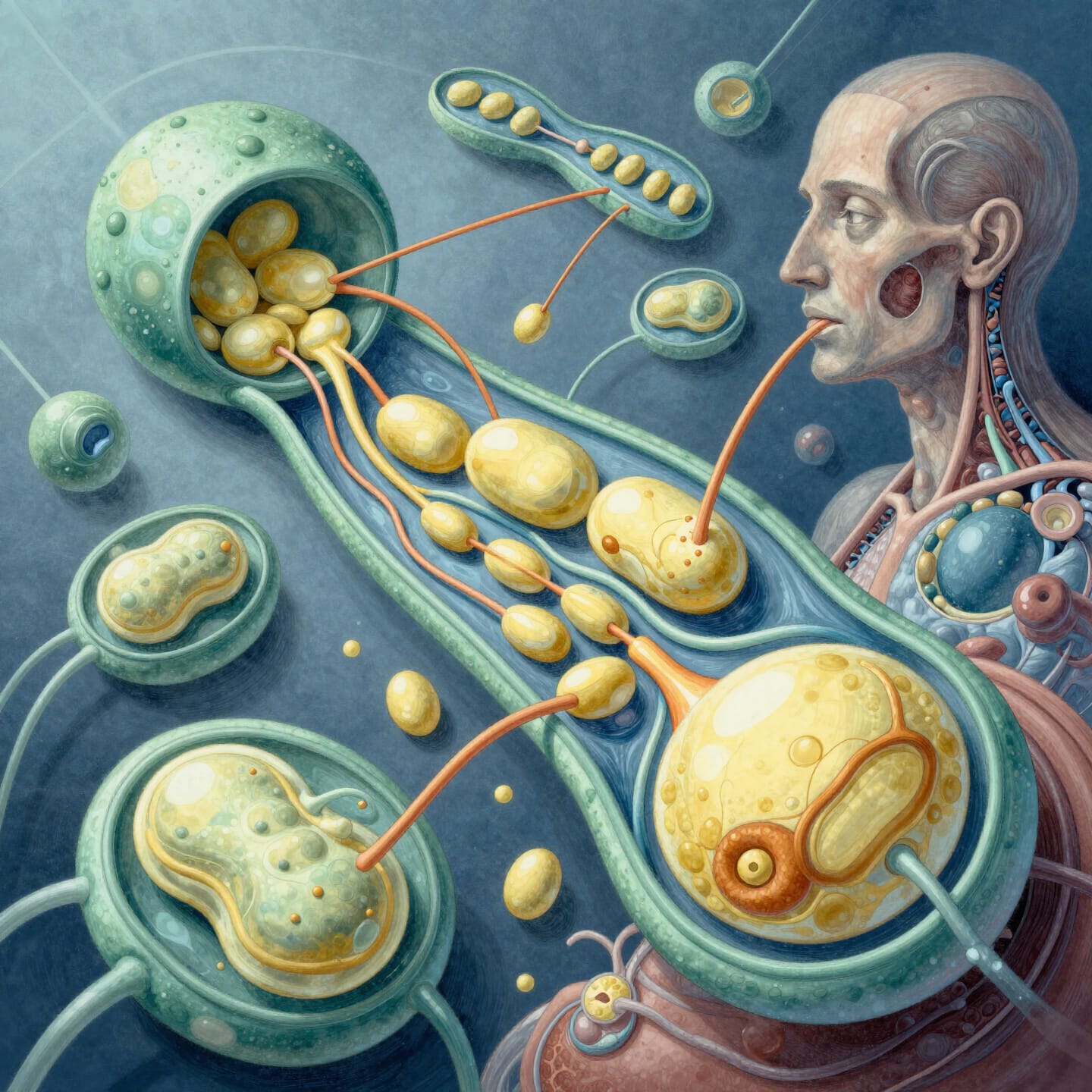
We present the journey of dietary fat from consumption to utilization, exploring each step in the process. This account is based on peer-reviewed physiological research and biochemical principles, integrating recent discoveries about fat's role in brain signaling, endocrine function, and mental health.
2. The Yin and Yang of Fat: Structure and Function
In traditional Chinese philosophy, yin represents receptivity, storage, and nourishment, while yang represents activity, energy, and expression. These concepts map remarkably well onto the dual roles of fat in human physiology.
2.1 The Yin and Yang of Fat: A Comparison

2.2 Detailed Breakdown
Yin (Receptive) - Fat as Carrier and Structure
Role: Transports fat-soluble nutrients and forms cellular structures.
Process: Enables absorption of vitamins A, D, E, K; builds phospholipid membranes; creates steroid hormone precursors.
Outcome: Delivers essential nutrients, maintains cellular integrity, supports hormone synthesis.
Yang (Active) - Fat as Fuel
Role: Provides dense, on-demand energy for metabolism.
Process: Breaks down stored fat (lipolysis); burns fatty acids (β-oxidation); produces cellular energy (ATP).
Outcome: Supplies sustained energy for physical activity and cognitive function; facilitates fat loss.
2.3 Summary Sentence
Fat is both the container (yin) and the content (yang). It stores essential nutrients and cellular building blocks, and it provides the body's most concentrated and sustainable source of energy.
3. The Path of Dietary Fat: From Mouth to Mitochondria
3.1 Digestion: Emulsification and Hydrolysis
Dietary fat, consisting primarily of triglycerides, is not water-soluble. This presents an immediate challenge: the small intestine is an aqueous environment. The digestive system solves this problem through a two-step process of emulsification and enzymatic breakdown.
The Role of Bile Salts
Bile salts, synthesized in the liver and stored in the gallbladder, are secreted into the small intestine during meals. Their chemical structure is unusual: a planar arrangement of both hydrophobic (water-repelling) and hydrophilic (water-attracting) moieties. This amphipathic property enables bile salts to act as powerful detergents, breaking large fat globules into microscopic droplets, a process called emulsification.
Emulsification dramatically increases the surface area of fats available to digestive enzymes. Without this step, pancreatic lipase, a water-soluble enzyme, would have minimal access to its substrate.
Pancreatic Lipase and Colipase
Triglycerides consist of three fatty acid chains attached to a glycerol backbone. Pancreatic lipase hydrolyzes the ester bonds, removing two of the three fatty acid chains and leaving a monoglyceride.
However, bile salts, while essential for emulsification, inhibit pancreatic lipase at high concentrations. This paradox is resolved by colipase, another pancreatic enzyme that binds to bile salts, restoring lipase activity. This intricate regulatory mechanism ensures that fat digestion proceeds efficiently without self-limiting.
Medium-Chain vs. Long-Chain Fatty Acids
Not all fats are digested equally. Medium-chain triglycerides (MCTs) can be absorbed intact and travel directly to the liver via the portal vein. Long-chain fatty acids (LCFAs), which constitute the majority of dietary fats, require the full emulsification and chylomicron pathway described below.
3.2 Absorption: Micelles and Enterocytes
The products of fat digestion, free fatty acids, monoglycerides, cholesterol, and fat-soluble vitamins, must be transported across the unstirred water layer adjacent to the intestinal epithelium. This is accomplished by bile salt micelles.
Micelles are molecular assemblies formed by bile salts arranged around a central core of hydrophobic lipids. The hydrophilic exterior of the micelle allows it to diffuse through the aqueous environment, while the hydrophobic interior carries nonpolar cargo such as fatty acids, monoglycerides, cholesterol, and vitamins A, D, E, and K.
These micelles transport lipids to the brush border of intestinal epithelial cells (enterocytes). Once at the cell membrane, the lipids diffuse across the membrane and enter the enterocyte's cytoplasm.
3.3 Transport: Chylomicrons and the Lymphatic System
Inside the enterocyte, long-chain fatty acids and monoglycerides are reassembled into triglycerides. These triglycerides are packaged with cholesterol, phospholipids, and specialized carrier proteins called apolipoproteins to form chylomicrons, large, triglyceride-rich lipoprotein particles.
Unlike other absorbed nutrients that enter the portal circulation directly, chylomicrons are too large to pass through capillary walls. Instead, they are secreted into the lymphatic system, traveling through the thoracic duct before entering the bloodstream at the subclavian vein.
This lymphatic route explains why the absorption of dietary fat is slower than that of carbohydrates or proteins. It also means that the liver is not the first organ exposed to dietary fats; instead, peripheral tissues (including muscle and adipose tissue) have the first opportunity to clear chylomicrons from circulation.
Short-chain and medium-chain fatty acids, in contrast, bypass this lymphatic pathway and travel directly to the liver via the portal vein.
3.4 Storage: Triglyceride Synthesis and Adipose Tissue
Once chylomicrons reach the bloodstream, they are hydrolyzed by lipoprotein lipase, an enzyme found on the surface of capillary endothelial cells, particularly in muscle and adipose tissue. Lipoprotein lipase breaks down chylomicron triglycerides into free fatty acids and glycerol, which are then taken up by nearby tissues.
Fatty acids that are not immediately oxidized for energy are reassembled into triglycerides and stored within the lipid droplets of adipocytes (fat cells). This storage process is the body's primary long-term energy reserve.
The storage capacity of human adipose tissue is substantial. A 70-kilogram (154-pound) adult with 20% body fat stores approximately 70,000 to 140,000 calories (300–600 megajoules) of energy in adipose tissue. This reserve can sustain an individual for weeks without food, a remarkable evolutionary adaptation that has become maladaptive in the context of constant food abundance and a carb-locked, filler-driven dietary environment.
4. The Yang Expression: Fat as Active Fuel
4.1 Lipolysis: Releasing Stored Energy
When the body requires energy, during fasting, sustained exercise, or carbohydrate restriction, hormonal signals (including adrenaline and a fall in insulin) trigger lipolysis: the breakdown of stored triglycerides into free fatty acids and glycerol.
The released fatty acids bind to albumin (a protein carrier) in the bloodstream and are transported to tissues requiring energy, primarily muscle and the liver.
4.2 Beta-Oxidation and ATP Production
Once inside a cell, free fatty acids undergo β-oxidation in the mitochondria. This process converts fatty acids into two-carbon units of acetyl-CoA, which enters the citric acid (Krebs) cycle to produce reduced coenzymes (NADH and FADH₂). These coenzymes then drive the electron transport chain, generating adenosine triphosphate (ATP), the universal energy currency of the cell.
Fatty acids yield significantly more ATP per gram than carbohydrates. One gram of fat provides approximately 9 calories of energy, compared with 4 calories per gram of carbohydrate or protein. Fat is the most energy-dense macronutrient by a substantial margin.
4.3 Fatty Acid Oxidation during Fasting and Exercise
During prolonged low-to-moderate-intensity exercise and periods of fasting, fatty acids become the predominant fuel source for muscle tissue. Resting muscle derives a significant fraction of its energy from fatty acid oxidation.
This explains why individuals who are fat-adapted (carbohydrate-restricted) experience sustained energy levels without the dramatic crashes that follow carbohydrate-rich meals. Fat provides a steady, slow-release energy source, a 2-8-2-8 oscillation, rather than the 8-2-0-0 spike-crash pattern characteristic of carbohydrate metabolism.
4.4 The Fate of Fat during Weight Loss
Contrary to popular belief, fat is not "burned" into energy and heat alone. The complete oxidation of stored triglyceride follows a precise stoichiometry:
C₅₅H₁₀₄O₆ + 78O₂ → 55CO₂ + 52H₂O + energy
This equation reveals that fat is primarily exhaled as carbon dioxide, with water as the other major product. The oxidation of 10 kilograms of human fat requires 29 kilograms of inhaled oxygen and produces 28 kilograms of carbon dioxide and 11 kilograms of water. When a person loses weight, most of the mass is breathed out, not excreted, not converted to muscle, not lost as heat.
5. The Yin Expression: Fat as Carrier and Structure
5.1 Fat-Soluble Vitamins: A, D, E, and K
The vitamins A, D, E, and K (collectively ADEK) are fat-soluble, meaning they cannot be absorbed from the intestine without dietary fat. These vitamins depend on the same micellar transport system that carries dietary lipids: they are incorporated into bile salt micelles and absorbed alongside fatty acids and monoglycerides.
Without adequate dietary fat, deficiencies in these critical vitamins develop, leading to a cascade of health problems:
Vitamin A deficiency: Night blindness, immune dysfunction, skin disorders.
Vitamin D deficiency: Impaired calcium absorption, bone loss (osteoporosis), immune dysregulation, and mood disorders.
Vitamin E deficiency: Oxidative stress, nerve damage, muscle weakness.
Vitamin K deficiency: Impaired blood clotting, bone weakening.
Cooking vegetables with a small amount of healthy oil significantly enhances the absorption of these fat-soluble nutrients. Lycopene, the antioxidant in tomatoes, is similarly absorbed more efficiently when consumed with dietary fat.
5.2 Phospholipids and Cell Membranes
Every cell in the human body is enclosed by a phospholipid bilayer membrane. Phospholipids are composed of a glycerol backbone, two fatty acid chains, and a phosphate-containing head group. The fatty acid tails are hydrophobic and face inward, while the phosphate head is hydrophilic and faces the aqueous environment outside and inside the cell.
The fatty acid composition of these membranes influences their fluidity, permeability, and the function of embedded proteins, including ion channels and hormone receptors. Dietary fatty acids, particularly omega-3 polyunsaturated fatty acids, are incorporated into membrane phospholipids, directly affecting cellular function.
The fatty acid composition of cell membranes also influences the gut barrier's integrity, with implications for inflammatory conditions, toxin exposure, and systemic inflammation.
5.3 Cholesterol: The Precursor to Steroid Hormones
Cholesterol, despite its controversial reputation, is an essential molecule. It is synthesized primarily in the liver and serves as the precursor to all steroid hormones:
Gonadal hormones: Testosterone, estradiol, progesterone.
Adrenal hormones: Cortisol (stress response), aldosterone (salt and water balance).
Bile acids: Essential for fat digestion.
Vitamin D: Synthesized from cholesterol in the skin upon sunlight exposure.
5.4 Prostaglandins and Local Hormones
Fatty acids stored in cell membranes are also precursors to prostaglandins and other local hormones, short-lived signaling molecules that regulate inflammation, blood flow, blood clotting, and smooth muscle contraction. The balance between pro-inflammatory and anti-inflammatory prostaglandins depends on the dietary intake of different fatty acids.
6. Fat as an Endocrine Organ: Communication with the Brain
Recent research has fundamentally revised our understanding of adipose tissue. Fat is not an inert storage depot; it is an active endocrine organ that secretes hormones and signaling molecules that communicate directly with the brain.
6.1 Sensory Innervation of Fat Tissue
In a landmark 2022 study, researchers discovered sensory nerve cells that extend directly from fat tissue to the brain in mammals. Using advanced imaging techniques, they identified that nearly half of the nerve cells contacting fat tissue were not part of the classic "fight-or-flight" network but were actually sensory neurons connected to brain regions where sensory information is processed.
These sensory nerves act as a "brake" on fat burning. When the researchers selectively destroyed these sensory neurons in mice, the animals experienced elevated body temperature and increased fat burning, essentially removing the brake and allowing the fight-or-flight "gas pedal" to operate unrestrained.
This discovery challenges the conventional view that circulating hormones are the sole messengers between fat tissue and the brain. The body possesses a direct, dedicated neural communication pathway between adipose tissue and the central nervous system, a pathway that influences metabolism, body temperature, and likely hunger and energy balance.
6.2 Fatty Acid-Sensing Neurons
Fatty acid-sensitive neurons are present in the brain, particularly in the hypothalamus, and play a key role in the neural control of energy balance, glucose homeostasis, feeding behavior, and insulin secretion. These neurons detect circulating fatty acids and adjust metabolic activity accordingly.
This finding links fat availability directly to neurological function, and to mental health. When dietary fat is restricted (carb-locked), the brain receives insufficient fatty acid signals, which may contribute to the low-energy, low-motivation state we have described as depression.
6.3 The Broader Network: Pituitary, Bone, Adipose, and Brain
The endocrine network linking fat tissue to the brain extends beyond direct innervation. Pituitary hormones, including follicle-stimulating hormone (FSH), have been shown to influence fat metabolism, bone density, and even cognitive function, a far broader role than previously recognized. This cross-talk between the pituitary, bone, adipose tissue, and brain highlights the fundamental integration of fat metabolism with whole-body homeostasis and neurological health.
7. Fat and the Brain: The Missing Link
The brain is the most fat-rich organ in the body, composed of approximately 60% fat by dry weight. Fatty acids are essential for:
Myelination: The insulating sheaths that surround axons, enabling rapid nerve conduction.
Membrane fluidity: Maintaining the flexibility and permeability of neuronal cell membranes.
Neurotransmitter synthesis: Many neurotransmitters and their receptors depend on fatty acid availability.
Inflammation regulation: Pro-inflammatory and anti-inflammatory signaling in the brain is mediated by fatty acid derivatives.
Fatty acids do not cross the blood-brain barrier efficiently; they must be delivered to the brain in a timely manner. When dietary fat is chronically restricted (as in low-fat, high-carbohydrate diets), the brain may become starved of these essential components, a state that manifests as brain fog, low motivation, depression, and cognitive dysfunction.
8. The Integrated Model: From Carb Lock to Fat Availability
The comprehensive science of fat, its digestion, absorption, transport, storage, oxidation, and signaling functions, reveals a clear mechanism for the relationship between dietary composition and health outcomes. The modern diet, dominated by processed carbohydrates and stripped of natural fats, produces a state of chronic carb lock: insulin remains elevated, fat remains locked in adipose tissue, and the body is starved of its preferred fuel and structural materials.
 The solution is not found in pharmaceutical interventions or behavioral modification alone. It is found in restoring dietary fat to its essential, central role in human nutrition, fat as a carrier (yin), fat as fuel (yang), and fat as a signaling molecule that communicates directly with the brain.
9. Conclusion: Restoring the Hero
The war on fat was a catastrophic error. The evidence presented here, drawn from peer-reviewed biochemical and physiological research, demonstrates that fat is not a metabolic poison but an indispensable nutrient, the hero of human metabolism.
Fatty acids:
Enable the absorption of essential vitamins (yin: carrier function).
Form the structural basis of every cell membrane (yin: structural function).
Serve as precursors to steroid hormones and signaling molecules (yin: precursor function).
Provide the body's most energy-dense, sustained fuel source (yang: energy function).
Communicate directly with the brain to regulate metabolism and energy balance (endocrine function).
The modern filler economy has systematically removed fat from processed foods, replacing it with carbohydrate-based fillers that create chronic carb lock. This dietary shift is directly responsible for the epidemics of metabolic disease, mental health dysfunction, and sleep disruption observed across common-law countries.
Restoring dietary fat to its rightful place, as the foundation of human nutrition, is not a matter of individual choice alone. It requires regulatory reform, public health education, and a fundamental revision of dietary guidelines. Fat is not the enemy. Fat is the hero, and it is time to welcome it back.
Why Fat Has a Bad Name: The Misuse of a Good Tool
The Bulk Eating Adaptation
Chronic carbohydrate consumption, particularly from refined starches, sugars, and filler-based processed foods, teaches the stomach to expect volume. Carbohydrates provide approximately 4 calories per gram. To obtain 1,000 calories from a typical high-carb meal, the stomach must accommodate 250 grams of food (approximately two cups of cooked rice or pasta).
Over years of such meals, the stomach stretches. The stretch receptors that signal "fullness" become habituated to large volumes of food. A person eating a standard modern diet requires a substantial bulk of food to feel satisfied.
This is not natural. It is an adaptation to low-density fuel.
The Density Problem
Dietary fat provides approximately 9 calories per gram, more than twice the energy density of carbohydrates. The same 1,000 calories from fat requires only 111 grams of food (approximately half a cup of oil or one cup of nuts).
When a person accustomed to bulk eating attempts to switch to a fat-based diet without reducing stomach volume, they encounter a serious problem.
 The person eats 111 grams of high-density food. Their stretched stomach registers minimal volume. The stretch receptors do not fire. The brain receives no fullness signal. They eat more. And more. And more.
They consume 2,000, 3,000, or 4,000 calories of fat, far beyond their energy needs, because their stomach is still calibrated for bulk carbohydrate.
The Result: Sickness, Not Health
The person experiences:
Nausea (the digestive system is overwhelmed by concentrated fat).
Diarrhea or loose stools (fat malabsorption due to insufficient bile production, a condition that resolves as the digestive system adapts).
Weight gain (excess calories stored as body fat).
Lethargy (the body diverts energy to process the overload).
Conclusion: "Fat is bad. A high-fat diet made me sick."
This is not a failure of fat. This is a failure of transition protocol.
The Correct Approach: Less for More
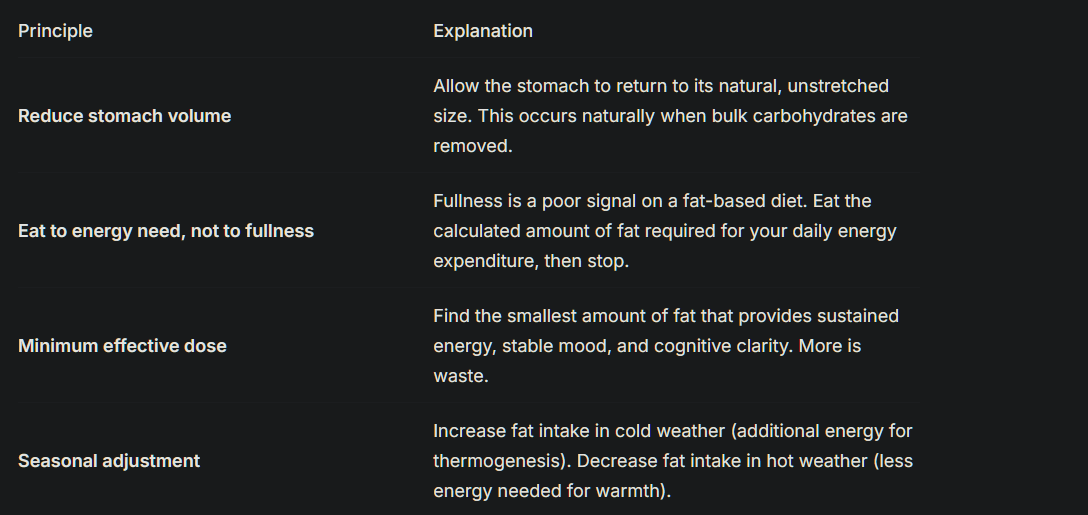
The philosophy of a fat-based diet is not "more is more." It is less for more.
The Stomach Shrinks
When bulk carbohydrates are removed, the stomach is no longer stretched by large volumes of low-density food. Over time, typically two to four weeks, the stomach returns to its natural size. The stretch receptors recalibrate.
A person eating a fat-based diet with a normal stomach will feel satisfied by 100-150 grams of food per meal, not 250-300 grams. The signal changes from "I am full of volume" to "I have received sufficient energy."
Minimum Fat for Maximum Function
I am currently investigating your own minimum effective dose of fat. This is a critical area for future research.
The Takeaway
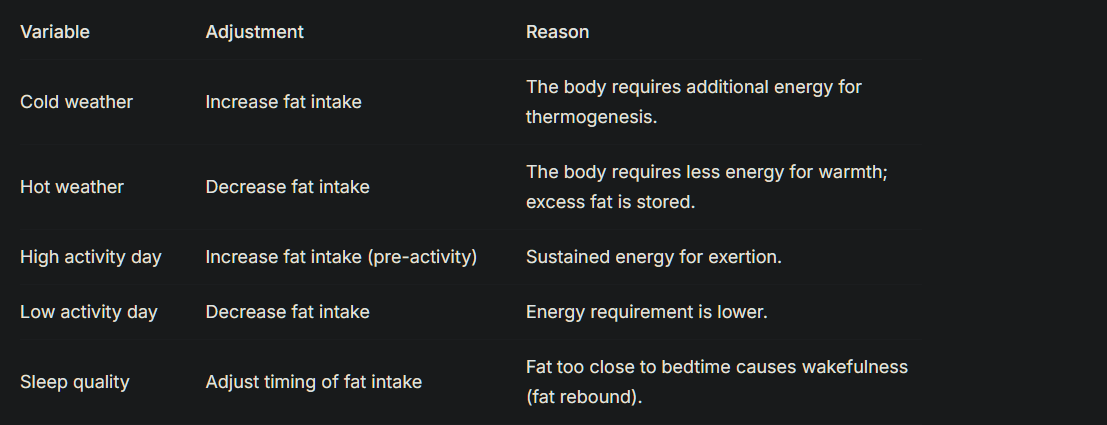
A fat-based diet is not a simple substitution of fat for carbohydrates, calorie for calorie, volume for volume. It requires:
Stomach recalibration (allow the stomach to shrink).
Portion control by energy need, not fullness (calculate, do not guess).
Minimum effective dosing (find the smallest amount that works).
Seasonal and activity-based adjustment (fat needs vary).
People who try a high-fat diet by simply adding fat to their existing high-carb diet, or by replacing carb calories with fat calories at the same volume, will fail. They will feel sick, gain weight, and blame the fat.
The problem is not the fat. The problem is the approach.
Fat is a dense fuel. Treat it as such. Less for more. Always.
The Duration of Effect: Complex Fat vs. Simple Fat
Not all fats are equal in duration. The length of time a fat meal sustains mental energy, mood stability, and cognitive function depends on the type of fat consumed.
Complex Fats (Animal Fats, Fatty Meats)
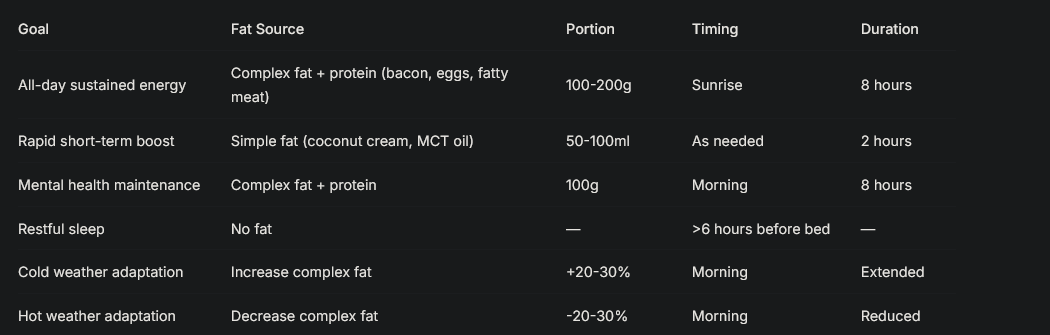
Based on self-experimentation with a 100g portion of bacon (approximately 25g protein, 30-40g fat, 0g carbohydrate), the positive mental effect, stable mood, grounded energy, resistance to anxiety, lasts approximately 8 hours under resting conditions (no physical stress, no additional fuel).

This 8-hour window provides a full day of functionality from a single meal. It is sufficient for:
A full workday.
A full school day.
A day of caregiving.
A day of creative or intellectual work.
Simple Fats (Coconut Cream)
Coconut cream, in contrast, provides a shorter duration of effect. A 100ml portion (approximately 20-25g fat, minimal protein) produces a detectable mental and energy effect lasting approximately 2 hours.

Why the Difference?
 The protein content is critical. Bacon provides both fat and protein. The protein acts as a scaffold (the 4-4-4-4 steady state) that binds the fat oscillation (2-8-2-8), creating a sustained, stable energy release. Coconut cream, without adequate protein, provides a rapid burst of energy that fades quickly.
Practical Application

Meal Frequency: One to Two Meals per Day
The 8-hour duration of a complex fat + protein meal enables a reduced meal frequency. I currently operate on one to two meals per day, with all food consumed during daylight hours.
Sunrise Eating
Eating at sunrise (or within 1-2 hours of waking) aligns fat availability with the body's natural cortisol awakening response. The morning meal:
Provides sustained energy for the entire day.
Prevents the mid-morning crash associated with carb-heavy breakfasts.
Eliminates the need for lunch (reducing total meal frequency).
Night Fasting for Restful Sleep
Consuming the final meal of the day before sunset (or at least 4-6 hours before bedtime) allows:
Fat levels to decline naturally by sleep onset.
No fat rebound wakefulness at 2-3am.
The body to enter a true fasting state during sleep, promoting repair and restoration.

The One-Meal Day
A single sunrise meal of complex fat + protein (100-200g bacon, eggs, or fatty fish) provides:
8 hours of mental and physical energy.
No hunger (fat is satiating).
No energy crash (fat provides sustained release).
No lunch or dinner required.
A full overnight fast (16-18 hours) that promotes fat adaptation and metabolic flexibility.
This pattern, one meal at sunrise, no food until the next sunrise, is the natural eating rhythm for a fat-adapted human. It requires no willpower, only the correct fuel.
The Minimum Effective Dose: Finding Your Number
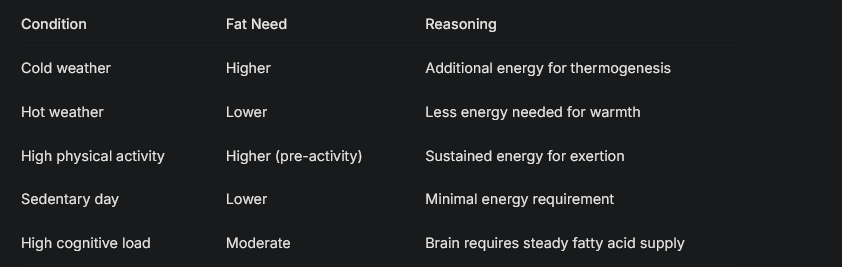
I am currently investigating the minimum amount of fat required to function at 100% under different conditions. This is the correct engineering approach.
The Rule of Less for More
A fat-based diet is not "more is more." It is less for more.
 The goal is not to eat as much fat as possible. The goal is to eat enough fat, and no more.
Summary Table: Fat Protocol by Goal
The Metabolic Context: Fat Adaptation Changes Everything
The effect of dietary fat is not absolute. It depends entirely on the current metabolic state of the person consuming it.
The Fire Analogy
 A person who is already fat-adapted, whose metabolism is primed to oxidize fatty acids, experiences dietary fat as an immediate, clean energy source. The fat enters the bloodstream, the cells uptake it, the mitochondria burn it. The result is sustained energy, stable mood, and mental clarity.
A person who is carb-locked, whose metabolism runs primarily on glucose, with fat stores locked away by insulin, experiences dietary fat very differently. Their cells are not prepared to oxidize fatty acids. The fat enters the bloodstream but cannot be efficiently used. The body must expend energy to shift metabolic pathways. The result is sleepiness, lethargy, and a feeling of heaviness.
The Butter Spectrum
The spectrum of fat effect durations:
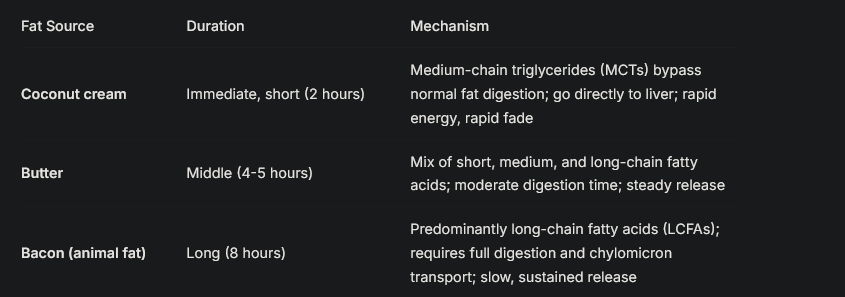
Coconut cream acts almost like a carbohydrate, rapid energy, rapid fade, because MCTs are metabolized differently. Butter sits in the middle. Animal fat provides the longest, most sustained effect.
The Energy State Variable
Energy state modulates all of these effects.
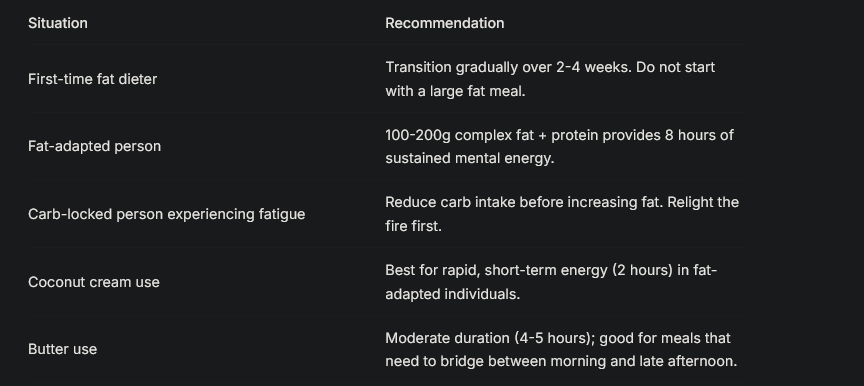
 This explains why someone trying a high-fat meal for the first time often reports feeling "heavy" or "tired." Their fire is out. The wood does not burn. They need to relight the fire first, through carbohydrate reduction, fasting, or gradual fat adaptation.
The Adaptation Period
The transition from carb-locked to fat-adapted takes approximately two to four weeks. During this period:
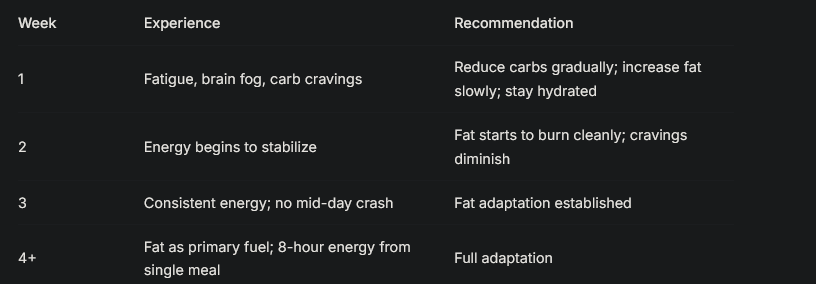 Once adapted, a person can eat 100g of bacon and feel sustained energy for 8 hours. Before adaptation, the same meal would cause sleepiness.
Practical Implications
The Summary Rule
Fat burns cleanly only when the metabolic fire is already lit. If the fire is out, fat will not burn, it will smother.
This is why so many people try a high-fat diet, feel terrible, and conclude fat is bad. They tried to throw wood on an extinguished fire. The problem was not the wood. The problem was the fire.
Adapt first. Then add fuel.
References
Meerman, R., & Brown, A. J. (2014). When somebody loses weight, where does the fat go? British Medical Journal, 349, g7257.
Wang, Y., Leung, V. H., Zhang, Y., & Ye, L. (2022). The role of somatosensory innervation of adipose tissues. Nature, 609, 569–574.
Kim, S. M., et al. (2024). FSH, bone, belly and brain. Journal of Endocrinology.
Fatty acid metabolism. Wikipedia.
Nutrition and Diet. (2019). Fat Metabolism. Life in the Fast Lane.
Human digestive system - Fats. Encyclopædia Britannica.
StatPearls. (2026). Biochemistry, Lipids. NCBI.
Bio 130: Lipids. SUNY Create.
Guyton and Hall Textbook of Medical Physiology. Ch. 65: Digestion and Absorption.
Lipids – BIO130. SUNY Create.
Bile salts in digestion and transport of lipids. Advances in Colloid and Interface Science, 2019.
JOVE Science Education. (2023). Fats as Energy Storage Molecules.